If there’s one question almost everyone installing an EV charger at home asks, it is: Can I use a NEMA 14 50 outlet for EV charging?
And it’s a valid question.
After all, these outlets are widely available, relatively affordable to install, and work with a wide range of Level 2 EV chargers.
Now, the short answer is: Yes, you can use a NEMA 14 50 outlet to charge your EV.
But it’s only safe and effective if it’s installed correctly and built for EV charging loads. Otherwise, it can lead to overheating, equipment damage, or even fire risks.
In this blog, I will explain it all. You’ll learn:
- What a NEMA 14 50 outlet actually is
- Why it’s commonly used for EV charging
- The risks of using the wrong type of outlet
- Whether or not it’s the best option for your home
- Safer alternatives to consider
So, let’s get started.
Key takeaways
- A NEMA 14 50 outlet is commonly used for Level 2 EV charging
- It provides 240V power and typically supports up to 40 amps continuous load
- Not all 14 50 outlets are safe for EV charging
- Cheap or residential-grade outlets can overheat under continuous use
- A dedicated circuit and proper installation are essential
- Hardwired EV chargers are often safer and more reliable long-term
What is a NEMA 14-50 outlet?
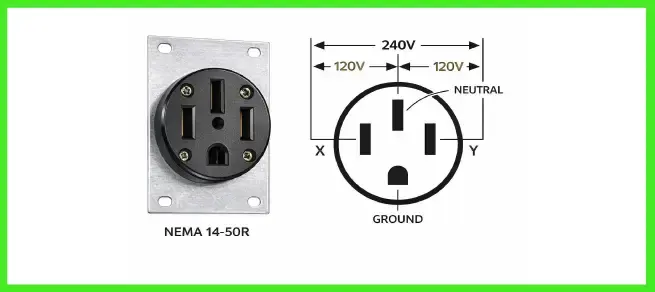
A NEMA 14 50 outlet is a 240-volt, 50-amp electrical outlet that’s commonly used for high-power appliances like electric stoves and RV hookups.
In simple terms, it’s an outlet designed to deliver a lot more power than a standard wall outlet.
It comes with four connections:
- Two hot wires
- One neutral wire
- One ground wire
This setup allows it to safely handle higher electrical loads, which is exactly what EV charging requires.
That’s why it has become a go-to option for Level 2 EV charging at home.
You see, most EV chargers need a steady and powerful supply of electricity to charge your car efficiently. And a NEMA 14 50 outlet fits that requirement quite well.
In fact, many plug-in Level 2 EV chargers are built specifically to work with this type of outlet, making it a convenient and widely used choice for homeowners.

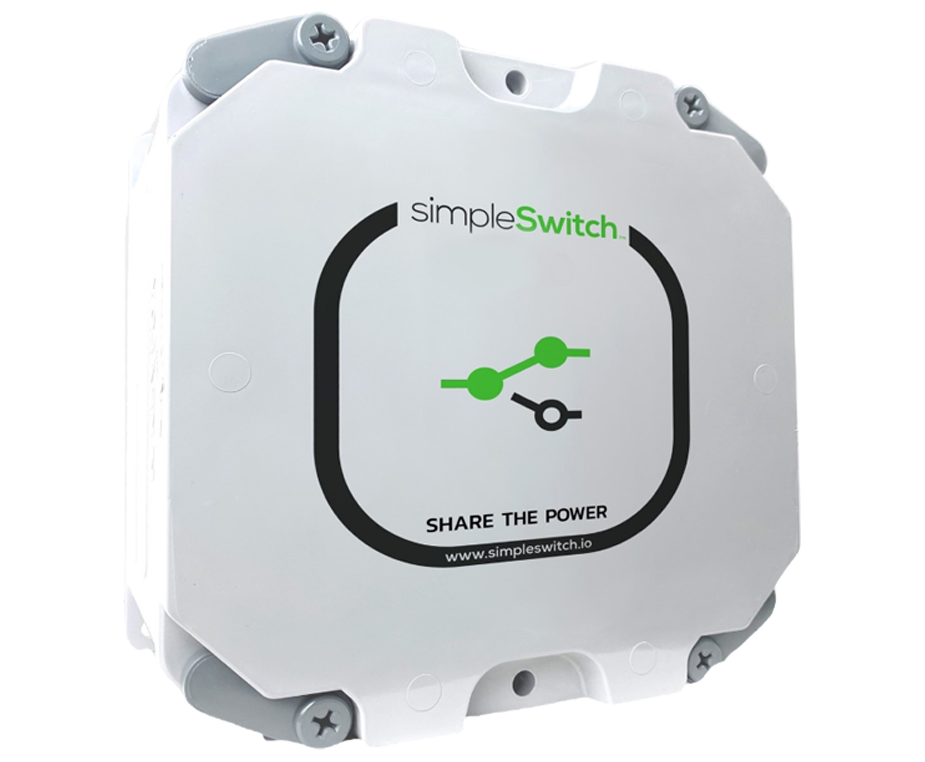
No More $10k Electrical Panel Upgrade to Charge Your EV at Home
simpleSwitch lets you add a Level 2 EV charger to your home without an expensive electrical panel upgrade. Your EV charges safety without panel overload.
 30-day risk-free returns
- NEMA-rated
- Works with your existing panel
Can you use a NEMA 14 50 outlet for EV charging or not?
Here’s a simple answer.
Yes, you can use a NEMA 14 50 outlet for EV charging at home. In fact, many homeowners already do so.
But it’s not as simple as just plugging in and forgetting about it.
For it to work safely, a few things need to be right.
For instance, the outlet should be high-quality, built to handle continuous loads, and installed properly on a dedicated circuit. That’s important because EV charging isn’t a short burst of power, it runs for hours at a time.
If any of these things are missing, problems can start to show up. You could end up with overheating, loose connections, or even long-term damage to your equipment.
So yes, it works; but only when it’s set up the right way.
Why is a NEMA 14 50 outlet so popular for EV charging?
Among all NEMA plug types, a NEMA 14 50 outlet for EV charger feels like the perfect middle ground. That’s because it is powerful, widely available, and doesn’t require a very complex setup.
For many homeowners, it offers a practical way to upgrade from slow charging without going all-in on more advanced systems.
Here’s why so many EV owners use it:
1. It provides faster charging
One of the biggest reasons people switch to a NEMA 14 50 outlet is speed.
Compared to using a 120V outlet for EV charging, NEMA 14 50 delivers 240V power, which makes a huge difference in charging time.
So, instead of waiting for a full day, or more, you can fully charge your car in just a few hours.
For most EV owners, this means your car is ready to go whenever you need it, without long delays.
2. It’s widely compatible
Another big advantage is compatibility.
Most plug-in Level 2 EV chargers are designed to work with a NEMA 14 50 outlet. That means you don’t have to worry too much about matching equipment or dealing with special configurations.
You can simply choose a compatible charger, plug it in, and start charging. This makes the whole setup process much more straightforward.
3. It’s relatively easy to install
Installation is also one of the reasons it’s so popular.
Electricians are already very familiar with NEMA 14 50 outlets because they’ve been used for years with appliances like stoves and RVs.
So installing one doesn’t usually involve anything unusual or complicated.
Compared to more advanced charging setups, this makes it a simpler and more accessible option for many homeowners.
4. It gives flexibility
A NEMA 14 50 EV charger setup also gives you flexibility that hardwired systems don’t.
Since your EV charger plugs into the outlet, you’re not locked into one setup forever. You can upgrade your charger later, replace it if needed, or even take it with you if you move homes.
That level of flexibility makes it a practical choice, especially if your needs change over time.
In short, here’s why NEMA 14 50 outlet for EV charging is so popular:
| Reason | Details |
| Faster charging | 240V outlet provides more power, adds 25-30 miles of range per hour |
| Wide compatibility | Works with most plug-in Level 2 chargers |
| Easy installation | Electricians are familiar with it |
| Flexibility | Plug-in system allows charger swaps or moving homes |
So, what’s the problem with using a NEMA14 50 outlet for EV charger?
If everything sounds perfect so far, this is where things start to get a little tricky.
The main issue with a NEMA 14 50 outlet is this: This outlet wasn’t originally built with EV charging in mind. It was designed for appliances like stoves or RVs that run for shorter periods, not for something that pulls high power continuously for hours.
At first, that difference might not seem like a big deal. But over time, it really adds up.
EV charging puts a steady, heavy load on the outlet. And that kind of demand can damage standard setups like this.
Here’s why EV charging puts more stress on the outlet
When you plug in your EV, it doesn’t just draw power for a few minutes, it keeps pulling power for several hours straight.
This is what electricians call a continuous load, which basically means the system is running at a high level for a long period of time.
And EV charging fits that definition perfectly.
Now here’s the important part.
A NEMA 14 50 outlet is rated for 50 amps at 240 volts. But the rating isn’t meant for continuous loads at the full 50 amps.
According to the National Electrical Code (NEC), any circuit that carries a continuous load (defined as 3 hours or more) should only be loaded to 80% of its rating.
This means the outlet should only deliver around 40 amps continuously.
And if the outlet is used at full 50 amps for long periods, it can overheat both the outlet and wiring.
What happens if you use the wrong NEMA 14 50 outlet?
A NEMA 14 50 outlet for EV charging can work well, but only when everything is set up correctly.
The problem is, not all outlets are built the same, and not all installations meet the right standards.
If you end up using a low-quality outlet or one that isn’t designed for continuous load, small issues can turn into bigger problems over time. And since EV charging runs for hours, those risks only increase with regular use.
Here are the most common problems you might run into:
1. Overheating and melting
Standard residential outlets aren’t designed to handle high power for long hours.
So, when you use them for EV charging, heat starts to build up at the connection points.
Over time, this heat can cause the plastic housing to soften or even melt. Inside the outlet, metal contacts can also wear down, making the connection weaker and less stable.
2. Fire hazards
As heat continues to build, the risks become more serious.
Connections inside the outlet can loosen, which increases electrical resistance. And when resistance goes up, even more heat is generated.
In some cases, this can lead to sparking or arcing inside the outlet.
If left unchecked, this creates a real risk of electrical fires, especially during long charging sessions.
3. Cheap outlets fail faster
Not all NEMA 14 50 outlets are built to the same standard.
Lower-quality outlets often use thinner metal contacts and less durable materials.
They’re fine for occasional appliance use, but not for continuous EV charging. These outlets wear out faster, heat up more easily, and are more likely to fail under regular use.
4. Loose connections over time
With a plug-in setup, wear and tear is unavoidable.
Every time you plug in or unplug your charger, the outlet contacts experience a bit of stress. Over time, this can reduce how tightly the plug fits.
A looser connection creates higher resistance, which again leads to more heat buildup.
5. Code and safety issues
EV charging setups need to follow proper electrical codes and EV charging best practices to be safe.
This usually means having a dedicated circuit, the correct breaker size, and proper protection like GFCI where required.
If these things aren’t in place, you’re not just risking equipment damage, you could also be violating local electrical codes.
Are all NEMA 14 50 outlets unsafe for EV charging?
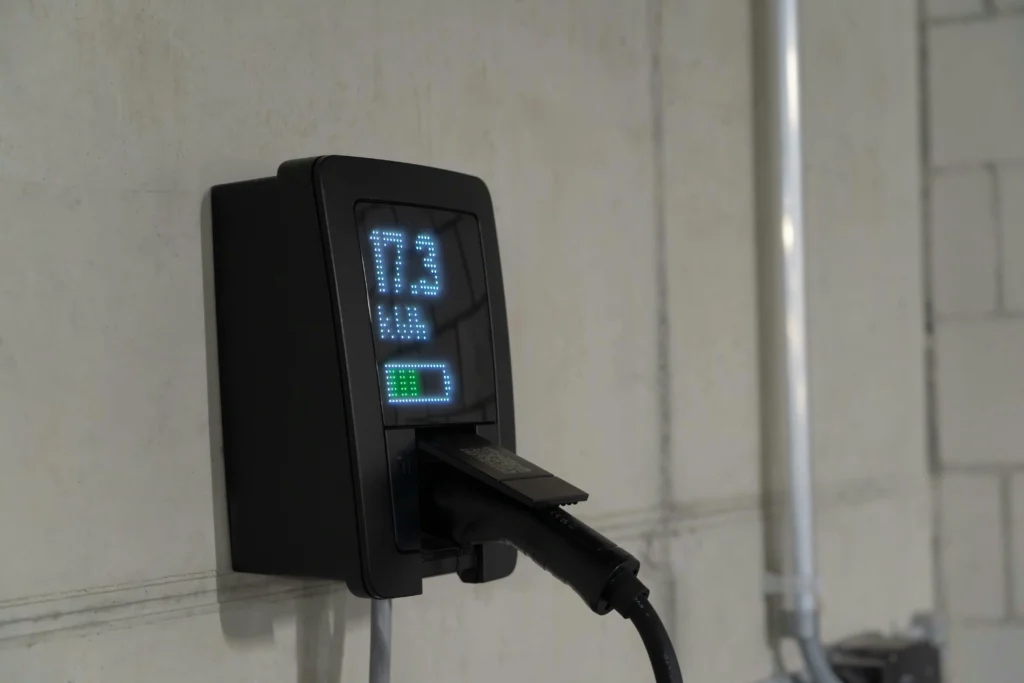
No, not at all.
A NEMA 14 50 outlet can actually be a safe and reliable option for EV charging when it’s done the right way. The issues usually come from using the wrong type of outlet or cutting corners during installation.
If you use a high-quality outlet and follow proper setup practices, it can handle EV charging just fine.
Here’s how you can make sure a NEMA 14 50 outlet for EV charging is safe:
1. Industrial-grade or EV-rated outlet
The type of outlet you choose makes a big difference.
Industrial-grade or EV-rated outlets are built to handle continuous high loads without overheating. They use stronger internal contacts and better materials that can withstand long charging sessions.
This helps maintain a stable connection and reduces the risk of heat buildup over time.
2. Dedicated circuit
Your EV charger should always be on its own dedicated circuit.
Why?
When multiple devices draw power from the same circuit, it increases the load and can lead to overheating or breaker trips.
A dedicated circuit ensures your EV charger gets consistent power safely, without interference from other appliances.
3. Proper wiring
Wiring plays a crucial role in how safely your system operates.
A typical NEMA 14 50 setup uses 6 AWG copper wiring, a 50-amp breaker, and a proper 4-wire configuration. These components are sized to handle the electrical load required for EV charging.
If the wiring is undersized or incorrectly installed, it can overheat and create serious safety risks over time.
4. Professional installation
EV charger outlet installation is not something homeowners should try to do themselves.
A licensed electrician understands load calculations, code requirements, and proper installation techniques. They can make sure everything is set up safely and correctly from the start.
Getting it professionally installed not only reduces risks but also gives you peace of mind that your EV charging setup is reliable.
In short, here’s how to make sure a NEMA 14 50 outlet for EV charging is safe:
| Step | Details |
| Outlet type | Use industrial-grade or EV-rated, UL-listed, heat-resistant |
| Dedicated circuit | No sharing with dryers, ovens, or heavy appliances |
| Proper wiring | 6 AWG copper, 50A breaker, 4-wire configuration |
| Professional installation | Licensed electrician ensures safety and code compliance |
NEMA 14 50 vs hardwired EV charger: Which is better?
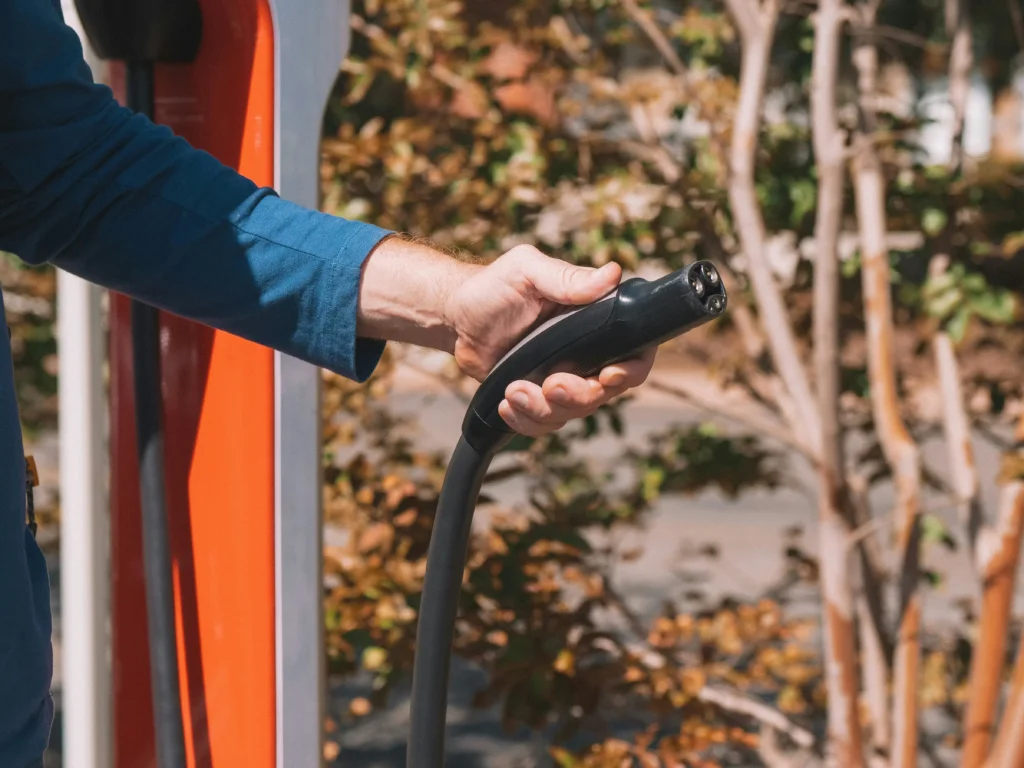
While a NEMA 14 50 outlet works fine, it’s not always the best long-term solution. And at some point, you might feel like getting a hardwired EV charger installed.
That said, the right choice really depends on how often you charge and how much reliability you want from your setup.
Here’s how the two options compare:
NEMA 14 50 outlet
Easier to install
A NEMA 14-50 outlet is generally simpler to install because it follows a familiar setup that electricians already use for appliances like stoves or RV connections.
Lower upfront cost
Since it doesn’t require hardwiring the charger directly, installation costs are usually lower. You’re mainly paying for the outlet, wiring, and basic electrical work.
Flexible (plug-in system)
Since it’s a plug-in setup, you can easily switch chargers, upgrade later, or even take your charger with you if you move to a new home.
Slightly higher risk due to plug connections
The plug and outlet connection can loosen or wear out over time, which might increase resistance and heat buildup, especially with frequent or long charging sessions.
Hardwired EV charger
Direct connection (no outlet)
A hardwired charger connects directly to your electrical system, eliminating the need for a plug and outlet, which reduces potential weak points in the setup.
Fewer points of failure
With no plug or receptacle involved, there are fewer components that can loosen, degrade, or overheat over time, making the system more robust overall.
More reliable for daily use
Hardwired setups are better suited for regular, long-term charging because they handle continuous loads more consistently without the wear and tear of plug connections.
Often safer for continuous loads
Since the connection is permanent and secure, hardwired chargers are generally safer for handling the sustained high power demand that EV charging requires.
In short, here’s how NEMA 14 50 outlet vs hardwired EV charger compare:
| Feature | NEMA 14 50 Outlet | Hardwired Charger |
| Installation | Easier, familiar to electricians | Requires professional hardwiring |
| Cost | Lower upfront cost | Higher upfront cost |
| Flexibility | Plug-in allows easy swapping | Fixed, permanent installation |
| Reliability | Slightly higher risk due to plug wear | Fewer failure points, more reliable |
| Safety for continuous load | Good if high-quality | Generally safer for long-term charging |
No More $10k Electrical Panel Upgrade to Charge Your EV at Home
simpleSwitch lets you add a Level 2 EV charger to your home without an expensive electrical panel upgrade. Your EV charges safety without panel overload.
- 30-day risk-free returns
- NEMA-rated
- Works with your existing panel
You might also want to read: NEMA 6-50 Vs 14-50 Outlet For EV Charging: What’s The Better Option?
Final words
I am sure that by now you have complete clarity on whether or not you can use NEMA 14 50 outlet for EV charging.
You see, this outlet can be used for EV charging, but it’s not as simple as just plugging in your car.
While it’s one of the most popular home charging setups, it only works safely when:
- The outlet is built for continuous load
- The installation follows proper electrical standards
- High-quality components are used
Otherwise, you could be dealing with overheating, equipment damage, or safety risks.
Got more questions or want to install an EV energy management system in your home?
You can get in touch with us!
At simpleSwitch, we bring state-of-the-art, award-winning, EVEMS that help you use Level 2 EV chargers and other high-power appliances at home without an electrical panel upgrade. Our energy management systems are UL-listed and proudly made in the USA.
FAQs about NEMA 14 50 outlet for EV charging
Can I use an existing NEMA 14 50 outlet for EV charging?
Yes, but only if it’s in good condition and rated for continuous use.
Older or standard outlets designed for appliances might not handle EV charging safely.
Will a NEMA 14 50 outlet charge my EV faster?
Yes.
It provides 240V power, which enables Level 2 charging, much faster than a standard 120V outlet.
Is a NEMA 14 50 outlet better than a standard outlet?
For EV charging, yes.
It delivers significantly more power and reduces charging time.
Do I need a special outlet for EV charging?
Not necessarily, but it must be:
- Properly rated
- Installed on a dedicated circuit
- Suitable for continuous load
Is hardwiring better than using a NEMA 14 50 outlet?
In many cases, yes.
Hardwired chargers are:
- Safer
- More reliable
- Better suited for daily charging