If you’ve been thinking about installing a Level 2 EV charger at home, you’ve probably run into this one question: Do I need to upgrade my electrical panel first?
And honestly, it’s a very real concern.
After all, panel upgrades can cost you anywhere between $1,500 to $4,000+, depending on your home and location. More so if you factor in the exorbitant costs that utility companies pass on to you for service upgrades.
But here’s the good part:
- Most homeowners actually don’t need a panel upgrade
- Even if your panel looks full or old, you might still not need one
- A load sharing device like simpleSwitch Io can help you install a Level 2 charger without upgrading your panel at all
In this blog, I will walk you through it all. You’ll know:
- What is an electrical panel upgrade
- Whether or not you really need an upgrade
- Why does your electrician suggest a panel upgrade
- Situations when you might really need an upgrade
- Common myths about panel upgrades for EV charging
So, let’s get started.
Key takeaways
- Most homes don’t need a panel upgrade for a Level 2 EV charger.
- A panel upgrade is needed only for older or undersized panels.
- Electricians may recommend upgrades out of caution or outdated advice.
- Smart load management devices can eliminate the need for an upgrade.
- Old, recalled, or 60-amp panels may require an upgrade.
- Full electrical panels often don’t need an upgrade, thanks to workarounds.
- Charging at night helps avoid overloading your panel.
- A 100-amp panel can support Level 2 charging with smart tech.
What is an electrical panel upgrade?

For starters, your electrical panel is what distributes all the power to different parts of your home, including your lights, appliances, and everything else.
And if you need more power for your appliances (more than your panel’s safe limit), you’ll need an electrical panel upgrade.
Now, there are two types of panel upgrades, namely:
- Service upgrade: It increases the amount of power coming into your home, usually by upgrading from a 100-amp panel to a 200-amp one (or more). This is apt if you need more power for things like installing a Level 2 EV charger at home.
- Panel replacement: In this case, the size of your panel stays the same, but the old breakers and equipment are swapped out for newer and safer hardware. It’s more about improving safety than increasing power.
Both of these upgrades are expensive, require permits, and can take some time to complete. So, before you upgrade, it’s good to know whether you really need one.
In short:
| Type | Description | Purpose |
| Service Upgrade | Increases the power entering your home (e.g., 100-amp to 200-amp panel). | Needed if you need more power for an EV charger. |
| Panel Replacement | Replaces old or unsafe equipment (breakers and hardware) without changing the panel size. | Improves safety, not power. |

No More $10k Electrical Panel Upgrade to Charge Your EV at Home
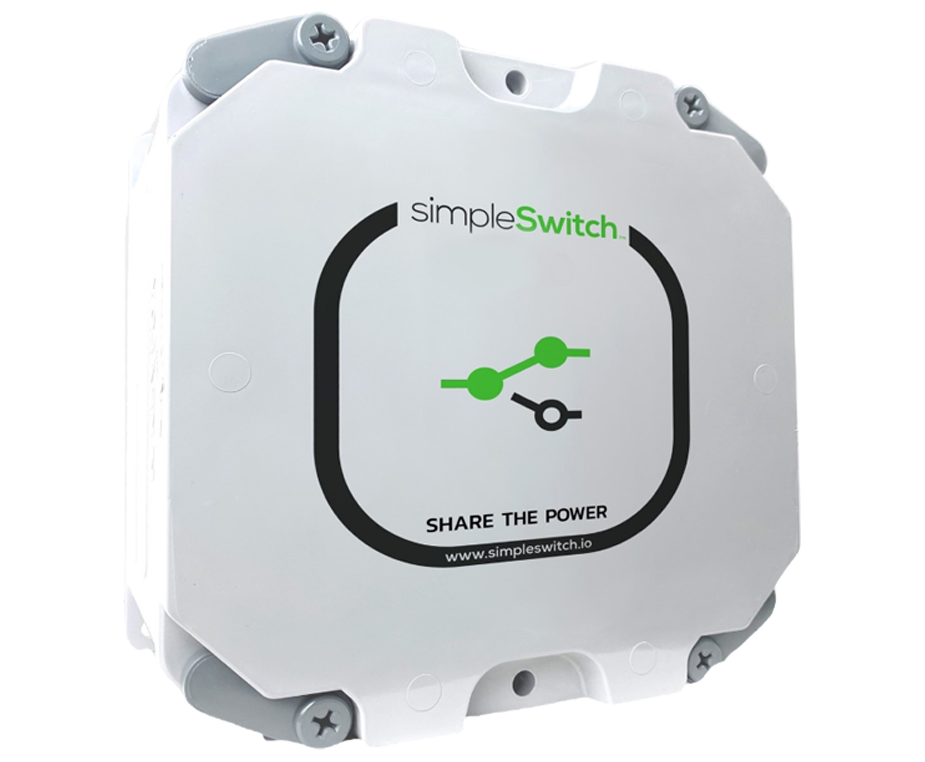
simpleSwitch lets you add a Level 2 EV charger to your home without an expensive electrical panel upgrade. Your EV charges safety without panel overload.
 30-day risk-free returns
- NEMA-rated
- Works with your existing panel
Do you need an EV charger panel upgrade or not?
Most of the time, you don’t.
In fact, 70-80 percent of all electric car charger installations don’t need a panel upgrade at all.
A majority of electricians and EV experts agree to this.
But then, why do so many homeowners are told by their electrician that they need an upgrade?
Let’s clear up the confusion.
Why does your electrician recommend an EV charger panel upgrade?
There are quite a few reasons why the electricians, and even EV charger companies, suggest a full panel upgrade before you can install a Level 2 charger.
Let me break them all down.
1. Electricians are playing it safe
Sometimes, electricians suggest upgrades because it’s the easiest way to avoid doing a more detailed check, like an electrical load calculation.
A panel upgrade is a simpler and quicker option for them. Also, it reduces their liability if anything goes wrong down the line.
Simply put, they don’t want to risk saying you don’t need an upgrade, only to find out later that your panel wasn’t quite up to the task.
2. Your electrical panel looks full
If your panel seems packed with breakers, both you and your electrician might think it has maxed out.
But just because all the slots are filled doesn’t automatically mean you need a full panel upgrade.
Moreover, electricians can often make room by using tandem breakers or rearranging the circuits. This means you can fit new breakers and use more appliances without tearing everything down and starting from scratch.
3. Your home has a 100-amp panel
For those of you who’ve got an older property, your electrician will see a 100-amp electrical panel and immediately say it’s not enough to support EV charging.
Sure, older homes tend to have smaller service panels, sometimes with little or no room to add new breakers.
But here’s the thing: 100 amps is still plenty of power for most modern homes, even with an EV charger.
Most of the time, you just need to efficiently share the power between home appliances.
4. EV chargers draw a lot of power
A typical 240V Level 2 EV charger can draw 32 to 40 amps, which sounds like a lot of power.
So, it’s easy for electricians to assume your home can’t handle it.
But remember, most homes don’t run all their appliances at once. You’re not using the oven, the air conditioner, the dryer, and the microwave at the same time.
Plus, EV chargers often run at night when electricity demand is lower in your home. Meaning there’s usually plenty of room for them to charge without issues.
5. Their advice is outdated
Before smart technologies like load management came along, it was much more common to recommend panel upgrades.
However, with today’s technology, you don’t always need to upgrade your panel to charge an EV safely.
Times have changed, and the tools available to make charging more efficient have made many upgrades unnecessary.
In short:
| Reason | Explanation |
| Playing it safe | Electricians prefer upgrades to avoid detailed checks and reduce liability. |
| Panel looks full | Even if your panel is full, electricians can rearrange or use tandem breakers. |
| Old 100-amp panel | 100-amp panels often get dismissed, but they can still support EV charging with proper load sharing. |
| High power demand of EVs | EVs draw a lot of power, but homes don’t run all appliances at once, leaving room for charging. |
| Outdated advice | Before smart technology, upgrades were more common; today, load management can eliminate this need. |
When do you actually need an EV charger electrical panel upgrade?

While most people won’t need to upgrade their panel, there are a few exceptions.
All in all, here’s when you might need an EV charger panel upgrade upgrade:
1. Your panel is extremely old
If your home was built in the 1950s, 60s, or 70s, your electrical system might be outdated or simply not up to current standards.
You see, old panels are not able to handle modern loads, especially with the extra demands of an EV charger.
2. You have a panel from recalled brands
If your home has a Federal Pacific or Zinsco panel, two brands that have their panels recalled due to safety concerns, you definitely need to replace it.
These panels are known for their potential hazards and should not be used for EV charging or anything else.
3. You have only 60-amp service
A 60-amp panel simply doesn’t provide enough capacity to safely power an EV charger alongside your home’s other electrical needs.
4. You plan to use all appliances at once
If you’re planning to use a heat pump, induction stove, hot tub, and EV charger all at the same time, you need a panel upgrade to handle the extra load.
5. Your load calculation shows you’re maxed out
In very rare cases, your load calculation might show that you’re already using 80 percent or more of your panel’s capacity.
And if this is the case, an upgrade might be necessary.
But, again, this is uncommon, and load management technology can often help in these situations.
In short:
| Situation | Why You Need an Upgrade |
| Extremely old panel | Outdated panels can’t handle modern loads, including EV chargers. |
| Recalled brand (e.g., Federal Pacific, Zinsco) | Unsafe panels must be replaced for safety. |
| 60-amp service | Not enough capacity for EV charging alongside home needs. |
| Using all appliances at once | Heavy demand from multiple appliances requires more power. |
| Load calculation shows maxed-out panel | If your panel is at 80%+ capacity, an upgrade may be necessary. |
Bonus: Here’s how simpleSwitch Io makes panel upgrades almost unnecessary
With an automatic load management system like simpleSwitch, electrical panel upgrades have become unnecessary.
These devices monitor your home’s power usage in real-time and adjust EV charging depending on how much electricity your appliances are using.
For instance, if your home is using a lot of power, and your panel capacity has reached 80 percent, it stops EV charging to avoid overloading the panel.
And when demand drops, it safely resumes charging your car.
This means you can safely charge your EV without the need for expensive rewiring, subpanels, or panel upgrades.
That’s awesome, isn’t it?
Common myths about panel upgrades for EV chargers
Myth 1: 100-amp service is too small for EV charging
Reality: Millions of homes charge EVs daily on 100A service.
Myth 2: If your panel looks full, you need an upgrade
Reality: Not true. Electricians have many workarounds.
Myth 3: EVs need fast charging at home
Reality: Most people only need 20-30 miles range per day, and regular overnight charging is sufficient for this.
Myth 4: Panel upgrades are unavoidable.
Reality: Not anymore. Smart load management avoids overloads.
Myth 5: Level 2 charging always requires 40 amps.
Reality: Not at all. You can charge your EV safely even at 16A, 24A, and 32A capacity.
No More $10k Electrical Panel Upgrade to Charge Your EV at Home
simpleSwitch lets you add a Level 2 EV charger to your home without an expensive electrical panel upgrade. Your EV charges safety without panel overload.
- 30-day risk-free returns
- NEMA-rated
- Works with your existing panel
Final words
As you can see, there’s a good chance you don’t need an EV charger panel upgrade for Level 2 EV charging.
The only time it becomes necessary is when you have an old home with extremely small service or unsafe panels.
In fact, with smart load management system you can safely install a Level 2 charger even if your panel is older, full, and already powering a lot of big appliances.
Need one such load management system for your home?
You can get in touch with us!
At simpleSwitch Io, our load management systems are UL certified and NEMA-rated. And they keep your home safe and Level 2 charger installation affordable.
FAQs about EV charger electrical panel upgrade
Do I really need to upgrade my electrical panel to install a Level 2 home EV charger?
In most cases, no, you don’t.
A panel upgrade is only required in a small percentage of homes. Most houses, even older 100-amp homes, can support Level 2 EV charging without a full service upgrade.
Modern solutions like simpleSwitch use smart load management to make sure your home never pulls too much power at once. This means you can safely charge your EV at Level 2 speeds even if your panel is older or looks full.
How do I know if my panel is too small for an EV charger?
A quick way to check if your panel is safe for EV charging is to look for the following:
- Your panel is below 100 amps
- You constantly trip breakers
- Your home has major electric appliances (heat pump, electric stove, dryer, water heater, etc)
- Your panel is extremely old or unsafe
However, even with a small or busy panel, you still might not need an upgrade if you use load-sharing tech like simpleSwitch.
What size electrical panel do most EV chargers need?
A typical Level 2 charger needs a 40-amp breaker.
But here’s the key:
You don’t need a huge panel to run a 40A breaker. Smart load management can automatically lower charging speeds when your home uses a lot of power and increase speeds when demand drops.
What if my electrical panel looks full and has no empty slots?
A full panel doesn’t automatically mean you need an upgrade.
Electricians have multiple solutions like:
- Tandem circuit breaker
- Load-sharing technology
- Subpanels
- Rearranging existing circuits
Can a 100-amp panel handle a Level 2 EV charger?
Yes, absolutely.
Millions of homes in the country have 100-amp panels and they charge EVs daily.
EV owners typically charge at night when:
- AC is off
- Oven isn’t running
- Dryer isn’t used
- Family is asleep
This creates plenty of headroom for Level 2 charging.