In a previous blog about Tesla charging, I explained how to charge Tesla at home and do so without upgrading your electrical panel. And a lot of people followed up with me, asking what’s the limit to which they should charge their Tesla everyday to maintain battery health.
Now, if you go by Tesla’s official recommendation, a charging limit of 80% is the sweet spot for daily charging.
But then, stop by any Tesla Supercharger near you, and you’ll see Tesla owners topping up their batteries up-to 90%, or even 100% sometimes.
So, who is right?
Well, for starters, the 80% recommendation is not a universal rule for every Tesla. And the recommended Tesla charge limit for your EV can be different depending on your battery and how you use the vehicle.
Also, the 80% charge limit is the safest bet for daily drivers. But you can definitely charge up-to 100% if you are going for a long road trip.
In this blog, I have explained Tesla charging limits in detail as well as when you can exceed those limits. Also, I have shared some Tesla charging best practices you can follow.
So, let’s get into it.
Key Takeaways
- Charging up-to 80% is the best daily limit for most Tesla vehicles.
- Charging up-to 90% makes sense if you need more driving range on a regular basis.
- Charging up-to 100% is useful when you need maximum range, like before a road trip.
- LFP batteries have different charging guidance from Tesla.
- Keep the battery up-to 50% for extended storage when the vehicle won’t be used for a while.
What Is the Tesla charge limit?
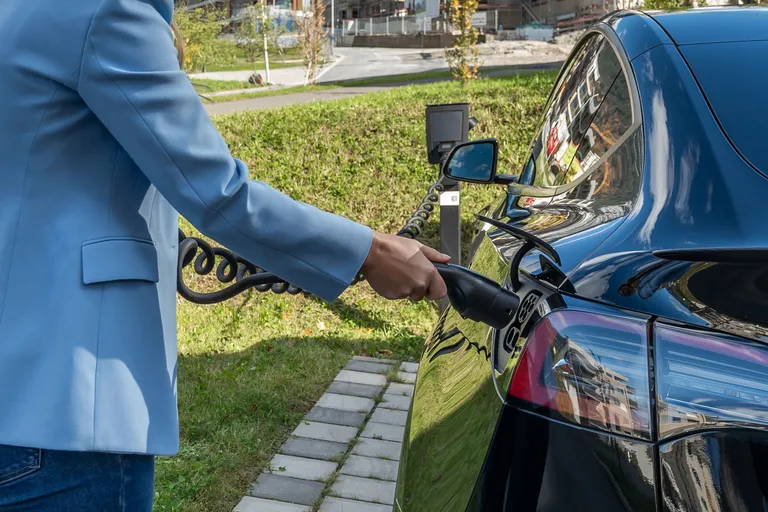
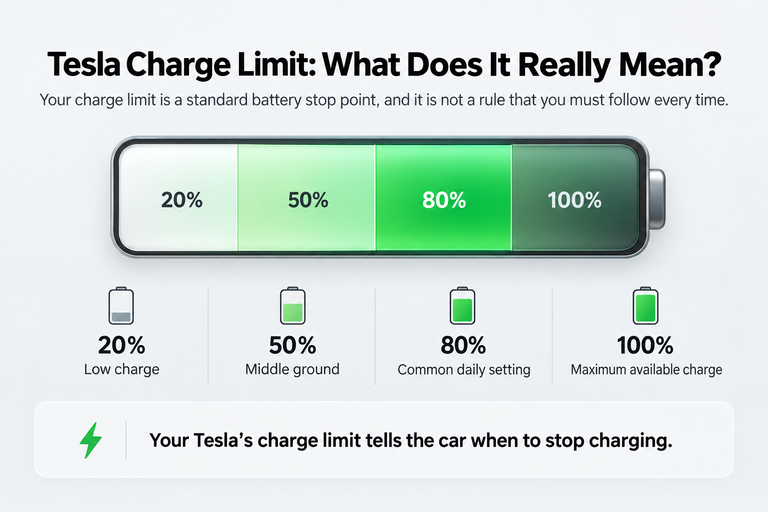
At its basic, Tesla charge limit is the maximum battery percentage you allow your Tesla EV to reach when it is plugged in.
For instance, let’s say you have set the charge limit to 80%, which is also the official Tesla recommended limit. In this case, your EV will charge until the battery reaches about 80%, and then stop charging.
You can adjust this limit using the charging screen in your Tesla or through the Tesla mobile app.
It is quite simple until this point.
But then, your Tesla will also show a recommended daily limit and a higher trip limit, and it can be a little confusing.
However, rest assured, these recommendations don’t prevent you from charging more than 80%. They are there simply to help you choose the right charging level based on how you drive.
For instance, you can choose the daily limit and charge your Tesla up-to 80% for your everyday driving needs. And in case you are going on a long road trip, you can choose the trip limit and charge up-to 90% or even 100%.
Why is my Tesla set to 80% charge?
Your Tesla might be set to 80% as per Tesla recommended daily charging limit. This limit varies from vehicle to vehicle, but in most Tesla EVs, it is 80% and is based on standard EV charging best practices.
The reason behind this is simple: You mostly don’t need a fully charged battery for daily commute. And if you charge your EV up-to 100% everyday, the battery will degrade much faster compared to the degradation rate at 80% charge.
So, at 80% charge, you have enough range for daily driving while also prolonging your battery life.
The best part
Tesla allows you to change this limit anytime. Meaning if you need a higher range for a road trip or longer commute, you can easily charge up-to 100%. And then, you can return back to the 80% limit later.
Pro tip: Not every Tesla battery follows exactly the same charging recommendation. If your vehicle has a different daily limit, I suggest you follow the recommendation shown on your Tesla charging screen.

No More $10k Electrical Panel Upgrade to Charge Your EV at Home
simpleSwitch lets you add a Level 2 EV charger to your home without an expensive electrical panel upgrade. Your EV charges safety without panel overload.

 30-day risk-free returns
- NEMA-rated
- Works with your existing panel
80% vs 90% Tesla charge limit: Which Should You Use?
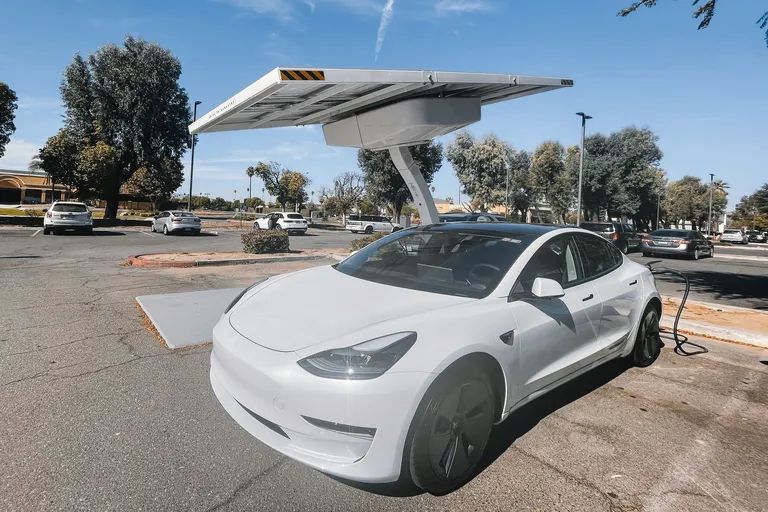
If you look at Tesla owners’ forums online, you’ll find that although 80% is the standard recommended charging limit, people also follow a charge limit of 90%.
And this is for a simple reason: Every Tesla owner has different driving needs, and, thus, their charging limits are different too.
Now, you might ask what’s the better charging limit for you?
Well, for regular everyday driving needs, 80% is a good limit. It gives you enough range while also ensuring that the battery doesn’t degrade fast.
But if you drive long distances almost everyday, a 90% charge limit makes sense. That’s because it gives you some extra range while also not degrading your EV battery as quickly as regular 100% charging would do.
Here are some practical Tesla charging limits you can follow while charging your Tesla:
| Your driving needs | Practical charging limit |
| Short daily commute | Charge up-to 80% may be more than enough |
| Moderate daily driving | Charge between 80-90% |
| Longer daily driving | Charge up-to 90% |
| Long road trip | Charge up-to 100% |
| Tesla with LFP battery | Follow the recommend limit on your Tesla charging screen |
Is it bad to charge a Tesla to 100%?
Not at all.
In fact, you can safely charge your Tesla to 100% whenever you need more range.
But the concern with charging up-to 100% regularly is that your battery can degrade faster.
So, if you are going on a long road trip tomorrow morning, charge it to 100% tonight and you will have the maximum available range.
But if you drive your Tesla everyday to your office or to run errands, and you only use 20-30% of the battery, there’s no point of charging up-to 100% every night.
What about a Tesla with an LFP battery?
Teslas with LFP batteries are an exception in this entire equation.
You see, a lot of older Tesla Model 3 variations, and also other Tesla models, use Lithium Iron Phosphate (LFP) batteries. And for these EVs, the Tesla recommendation says you charge to 100% for daily use and charge to 100% at least once a week.
Also, you should not let the charge go below 20%.
How often to charge Tesla?
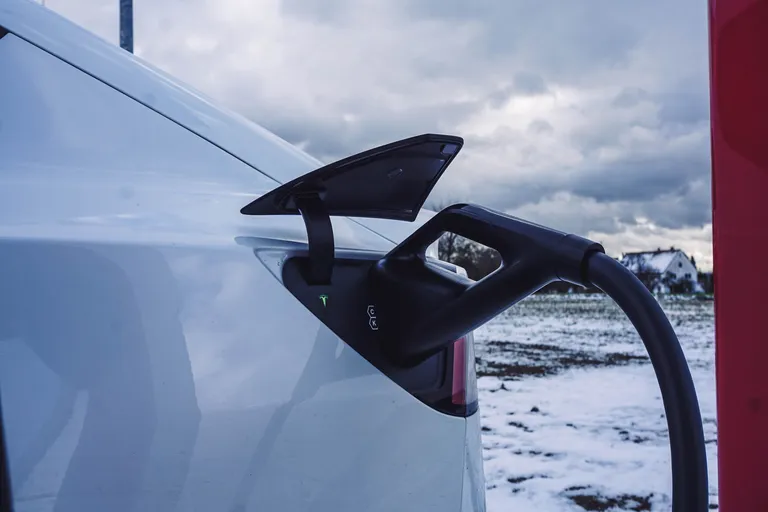
There is no fixed charging timeline that you need to follow. You can decide how often to charge your Tesla based on how much you drive, your Tesla’s available range, and your access to EV charger.
For instance, if you charge only 20-30 miles everyday, you need not charge daily. You can charge up-to 80% every alternate day.
But if you drive more, you can charge your Tesla at home overnight daily. I particularly recommend charging at home overnight because that is when the cost to charge Tesla at home is the lowest, thanks to off-peak rates.
Also, if you don’t have a reliable EV charger at home, and you charge at your workplace or a shared charging point, it makes sense to charge your Tesla everyday.
No More $10k Electrical Panel Upgrade to Charge Your EV at Home
simpleSwitch lets you add a Level 2 EV charger to your home without an expensive electrical panel upgrade. Your EV charges safety without panel overload.
- 30-day risk-free returns
- NEMA-rated
- Works with your existing panel
Bonus: Here are some Tesla charging best practices you should follow
| Best practice | Why it is essential |
| Follow your Tesla’s recommended daily limit | Your vehicle’s recommendation accounts for its battery configuration |
| Use 80% if that’s your recommended daily limit | It provides a good balance for everyday driving |
| Charge higher when you need more range | A higher limit can be useful before longer trips |
| Don’t fear occasional 100% charging | Full charging once in a while when you need maximum range does no harm |
| Don’t leave the battery at 100% unnecessarily | Avoid keeping the battery at a very high charge for long periods |
| Plug in when convenient | You don’t need to wait until the battery is nearly empty |
| Follow LFP-specific guidance | LFP batteries have different charging recommendations |
| Think about your actual driving needs | The best Tesla charge limit depends on how you drive your Tesla |
Frequently asked questions about Tesla charge limit
Why is my Tesla set to 80%?
Your Tesla might be set to 80% because Tesla recommends that charge level for daily use on most of its vehicles.
A lower daily limit helps avoid keeping the battery at a very high state and reduce the rate of battery deterioration.
Is it okay to charge a Tesla to 100%?
Yes. Charging your Tesla to 100% is okay when you need more range, like before a long road trip. But don’t leave the battery at 100% for long periods unnecessarily.
How often should I charge my Tesla?
There is no fixed charging schedule for every Tesla owner. How often you charge depends on how much you drive and how much range you need.
Is 80% or 90% better for a Tesla?
Neither percentage is automatically better for every Tesla.
If your vehicle recommends 80% for daily use and that gives you enough range, there is no reason to charge up-to 90% every day. But if you regularly need more range, a higher limit of 90% can be practical.
What is the Tesla recommended charge limit for an LFP battery?
Tesla provides different charging guidance for vehicles with LFP batteries. Tesla recommends charging LFP-equipped vehicles to 100% for daily use and reaching 100% at least once a week.
To sum it up
The best Tesla charge limit for most Tesla owners is 80%. Even Tesla recommends this as a daily limit for most of its EVs.
But you can definitely charge higher when you need more range, including before a long road trip.
And no, charging to 100% once in a while does not mean you are damaging your Tesla battery. The concern is unnecessarily keeping the battery at a very high state of charge for long periods.
Also, don’t just follow a charging percentage you found online. Check your Tesla’s recommended limit, understand your battery type, and choose a charge level that fits your daily driving.
I hope this guide helped you understand the Tesla charge limit and how much you should charge your Tesla more clearly.
Got more questions or want to charge your Tesla at home without upgrading your electrical panel?
You can get in touch with us!
At simpleSwitch, we bring state-of-the-art load sharing devices that help you install a Level 2 EV charger and charge your EV using the existing electrical panel capacity. Our devices share power from other high-power appliances like dryers and ovens to safely charge your EV, and you save up-to $10,000 in unnecessary electrical panel upgrades.
Our devices are UL-listed and proudly made in the USA for quality and durability.