Have you ever peeked behind a big appliance and thought why is that plug so huge?
Or maybe you noticed that some outlets look totally normal while others look complicated.
Well, a lot of us have that curiosity.
For starters, these are just two main outlet types in our homes, namely 120V and 240V outlets. And each is used to power different appliances.
Now, very few of us really understand why these outlets are different, or which we should be using for our appliances and gadgets.
But once you get the basics, it’s actually really simple.
In this guide, I will make all the differences between a 120v vs 240v outlet crystal clear, no matter whether you’re:
- Charging an electric vehicle at home
- Running a dryer or oven
- Installing new appliances
- Setting up a workshop
- Wondering if your electrical panel can handle new loads
So, let’s get started.
Key takeaways
- 120V outlets power everyday appliances like lamps and TVs.
- 240V outlets power high-demand appliances like dryers and ovens.
- EVs can charge on both, but 240V outlets can power Level 2 charger for fast charging.
- Most homes already have 240V without needing a panel upgrade.
- Smart devices like simpleSwitch let two appliances share a 240V circuit safely.
120V vs 240V outlet: What’s the difference?

Let’s start with the basics of 120V and 240V residential outlets.
The easiest way to picture it is this:
- A 120V outlet is your everyday power. This is what runs your lights, TV, laptop, phone charger, toaster, basically anything you plug into a normal outlet.
- A 240V outlet is your big power. This is what big appliances use, like your dryer, oven, water heater, or an EV charger.
Now, the reason these bigger appliances need a 240V outlet is simple: It provides more power at once. This is like giving your appliance a stronger push so it can run smoothly without struggling.
High-demand appliances need this extra push, which is why they rely on 240V instead of the regular 120V.
What do 120V and 240V outlets look like?
120V outlet
A standard 120V outlet has two vertical slots and a round ground hole underneath. It’s the outlet you’ve seen your entire life, and it fits all your everyday household plugs.
240V Outlet
A 240V outlet looks noticeably different. It comes in different shapes and sizes, like NEMA 14-30, 14-50, 6-20, and more.
An outlet like this is usually larger with unusual-looking prong configurations. And you’ll find these near dryers, EV chargers, ovens, etc.
Although each of these 240V outlet configurations serve a slightly different purpose, they are usually compatible with all EV charging outlet types.

No More $10k Electrical Panel Upgrade to Charge Your EV at Home
simpleSwitch lets you add a Level 2 EV charger to your home without an expensive electrical panel upgrade. Your EV charges safety without panel overload.
 30-day risk-free returns
- NEMA-rated
- Works with your existing panel
What appliances use a 120V outlet?
Most of the outlets in your home are 120V, and you probably use them all day without ever thinking about it.
These outlets power almost everything we consider normal household electronics. This includes things like lamps, TVs, laptops, phone chargers, coffee makers, microwaves, and small kitchen gadgets.
In fact, 120V outlets are perfect for anything that doesn’t draw a lot of power and for everyday convenience.
Bonus: Not sure if your device is 120V?
If the plug on your appliance looks like the typical two and three-prong outlets you see everywhere, it’s almost always a 120V device.
What appliances use a 240V outlet?
240V outlets, on the other hand, are meant for the appliances that need a lot more energy to run.
You’ll find these outlets near your dryer, oven, or in a garage where someone might use large workshop tools.
Common 240V appliances include clothes dryers, electric ovens and cooktops, water heaters, many air conditioners, welders, and Level 2 EV chargers. Also you can use these outlets for dryer outlet for EV charging.
These appliances need strong, steady power to run safely and efficiently, which is exactly what a 240V outlet provides.
Without it, these appliances wouldn’t operate properly, and in some cases, they wouldn’t run at all.
TL;DR, here are all the differences between 120V vs 240V outlets:
| Feature | 120V | 240V |
| Typical Appliances | Lamps, TVs, laptops, coffee makers | Dryers, ovens, water heaters, EV chargers |
| Power Provided | Everyday use | High-demand appliances |
| Outlet Appearance | Standard 2 or 3-prong | Larger, special prongs (NEMA types) |
| Safety Tip | Safe for small devices | Always check outlet & appliance label |
120V vs 240V outlet: What is better for EV charging?

If you’re thinking about charging an electric vehicle at home, the difference between a 120V vs 240V outlet suddenly becomes very important.
The good news?
This is actually really simple once you understand the basics.
Let’s have a look up close.
Charging your EV with 120V outlet
Every EV comes with a Level 1 charger, and it works anywhere you have a standard 120V outlet.
Here, you can simply charge your EV from a regular outlet. It is convenient and beginner-friendly as you don’t need an electrician to install a charger outlet or do electrical upgrades.
However, Level 1 charging adds only about 3-4 miles of driving range per hour, which means charging a fully drained battery can take well over a day.
If you only drive 10–20 miles a day and you don’t mind waiting overnight, it works perfectly fine. But if you take long drives, commute far, or rely on your EV daily, you’ll almost definitely start wanting something faster.
Here are the pros and cons of charging your EV with 120V outlet:
Pros
- No electrician needed
- Works in any standard household outlet
- Very safe and simple
- Perfect for light, low-mileage driving
- Zero installation cost
Cons
- Extremely slow (3-4 miles of range per hour)
- Can take over 24 hours to fully charge a battery
- Not ideal for long commutes or busy drivers
- May not keep up with everyday mileage in some households
Charging your EV with 240V outlet
This is the upgrade most EV owners eventually choose. If you want to use a Level 2 charger for faster EV charging, you’ll need a 240V outlet, the same kind your dryer or oven uses.
In fact, use a 240V outlet with a Level 2 charger and you’ll get a charging speed of 20-40 miles of range per hour. This is fast enough to fully charge most EVs overnight.
A 240V EV charging outlet, however, needs a dedicated circuit, and many old homes need an electrician to install it. Also, you might need an EV charger panel upgrade unless you use an energy load management device.
Here are the pros and cons of charging your EV with 240V outlet:
Pros
- It is much faster (gives you 20-40 miles of range per hour)
- Can fully charge most EVs overnight
- Better long-term experience for daily driving
- Often healthier for EV battery
- Works for all driving lifestyles, short or long
Cons
- Requires a dedicated 240V circuit
- Usually needs an electrician to install
- Might require a panel upgrade (unless you use load management system like simpleSwitch)
- Upfront cost is higher than Level 1
TL;DR, here how 120V vs 240V outlets compare for EV charging:
| Charging Type | Voltage | Pros | Cons | Speed (Range/hr) |
| Level 1 | 120V | No electrician, works anywhere, very safe | Very slow, not good for long commutes | 3-4 miles |
| Level 2 | 240V | Fast, overnight charging, better battery care | Needs dedicated circuit & electrician | 20-40 miles |
120V vs 240V outlet: What size outlet should you use?

Choosing between a 120V vs 240V outlet can feel confusing, but it really comes down to what you’re trying to power.
Here’s the simplest way to think about it:
Choose a 120V outlet if you:
1. Only need to power small appliances
For everyday items like lamps, TVs, phone chargers, or countertop kitchen gadgets, a regular 120V outlet is all you’ll ever need. These devices don’t pull much power, so a standard outlet handles them easily.
2. Don’t drive many miles per day
If your EV usage is light; for instance, maybe you drive 10–20 miles a day, Level 1 charging on a 120V outlet can keep up just fine. It’s slow, but it does the job if you’re not burning through a lot of range.
3. Want basic plug-and-go EV charging
A 120V outlet is the easiest way to start EV charging at home. No installation, electrician, or extra setup are needed. Just plug in and let it charge overnight.
4. Don’t want to install a new outlet
If you’re trying to avoid electrical work or extra costs, sticking with 120V can make things simple. Homes have these outlets everywhere, so it’s the fastest and cheapest option.
Choose a 240V outlet if you:
1. Need to power a dryer, stove, AC, or water heater
These appliances use a lot more energy and must have a 240V outlet to run safely. If you’re upgrading or replacing one of these, a 240V outlet is non-negotiable.
2. Want faster EV charging
A 240V outlet gives you Level 2 charging, which means 5-10 times faster charging speeds. It’s the difference between waiting all day and waking up to a full battery every morning.
3. Use high-power workshop tools
Things like welders, air compressors, and large saws often require 240V for proper performance. So, if you’re setting up a home workshop or garage, this outlet might be essential.
4. Want better efficiency
240V delivers power more efficiently, especially over long runs or with heavy-duty appliances. This ensures less strain on the wiring, less heat, and smoother performance overall.
TL;DR, here’s when to choose a 120V vs 240V outlet:
| Choose 120V if | Choose 240V if |
| You are powering small appliances | You are powering dryers, stoves, water heaters |
| You are driving few miles/day (EV) | You need faster EV charging (Level 2) |
| You want simple plug-and-play EV charging | You are using high-power workshop tools |
| You don’t want to install a new outlet | You want better efficiency & performance |
Bonus: You can use a 240V outlet safely with simpleSwitch
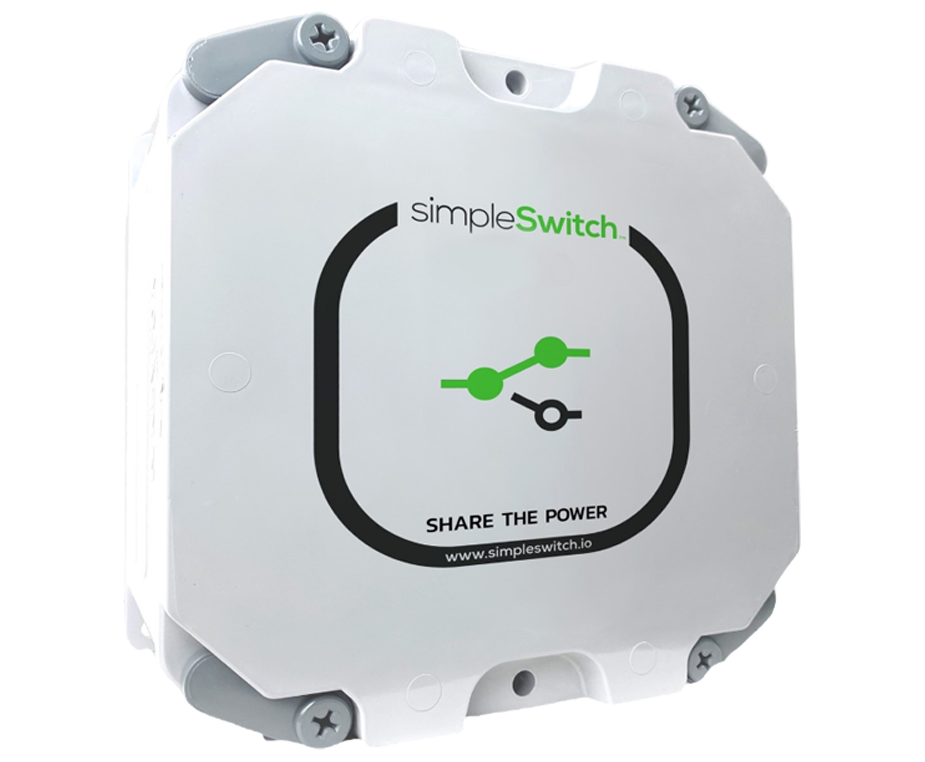
simpleSwitch is a smart energy management device that lets two appliances share one 240V circuit without tripping breakers or overloading your panel.
For instance, you can use both a dryer and EV charger on the same circuit. Here, simpleSwitch will pause the secondary appliance when the primary appliance is running. It will then switch back the second appliance on when the main appliance is not in use.
This means:
- You don’t need an electric panel upgrade to use high-capacity appliances
- You don’t need new wiring for a separate EV circuit
- You get faster Level 2 EV charging
Sounds awesome, doesn’t it?
No More $10k Electrical Panel Upgrade to Charge Your EV at Home
simpleSwitch lets you add a Level 2 EV charger to your home without an expensive electrical panel upgrade. Your EV charges safety without panel overload.
- 30-day risk-free returns
- NEMA-rated
- Works with your existing panel
Final words
By now, I am sure you know all the differences between a 120V vs 240V outlet. It might seem complicated at first, but it really isn’t if you know the following:
- 120V handles everyday stuff.
- 240V handles high-power appliances.
- EV charging works with both, but 240V outlets are way faster.
- Most homes can support 240V without a panel upgrade when you use smart load management like simpleSwitch.
Got more questions or need a smarter way to use the power you already have?
You can reach out to us!
At simpleSwitch our award-winning automated load management device helps you power high-power appliances like EV charger, dryer, etc., without expensive panel upgrade. It is safe, reliable, UL-listed, and proudly made in the USA with highest-quality materials.
FAQs about 120V and 240V Outlets
What is the main difference between 120V and 240V?
120V outlets power everyday devices like lamps, TVs, laptops, and phone chargers. They’re perfect for small, low-power appliances.
240V outlets, on the other hand, are for high-power appliances like dryers, ovens, water heaters, and Level 2 EV chargers. They deliver energy more efficiently, which is why big appliances need them.
Can I plug a 120V device into a 240V outlet?
No, you shouldn’t do it.
Plugging a 120V device into a 240V outlet can instantly damage your appliance or even create a fire hazard. So, always make sure the device and outlet match.
Do all homes have 240V power?
Yes, most homes in the country get 240V service by default
To use 240V, you just connect to a double-pole breaker, which combines the two 120V lines safely.
Is it safe to charge an EV on 120V?
Yes, it’s called Level 1 charging.
It’s very safe and works anywhere you have a standard outlet.
The downside?
It’s slow, usually adding only 3-4 miles of range per hour. It’s fine if you drive short distances, but for daily long commutes or frequent use, it’s often too slow.
Do I need 240V for Level 2 EV charging?
Yes. Level 2 chargers require 240V to deliver faster charging speeds. If you want to charge your EV overnight or maintain battery health, 240V is the best way to go.
Will I need a panel upgrade to install a 240V outlet?
Not always.
Many homes, even older ones, have enough capacity for a 240V outlet.
If you’re worried about overloading your panel, smart devices like simpleSwitch can help share power safely without needing an expensive upgrade.
Does using 240V save energy?
For large appliances, yes. 240V uses lower current to deliver the same power, which reduces heat and energy loss.