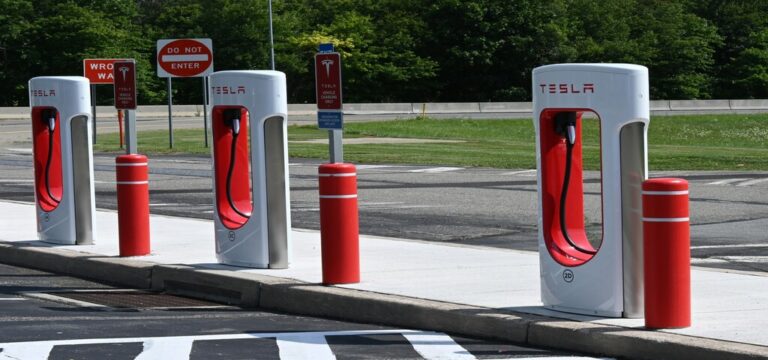
If you have been driving an EV for some time now, you already know that the cost to charge EV at home is much lower than at public charging stations. So much so that you can save up-to 4 times on charging costs just by charging your EV at home.
But what if I told you that this difference can go up-to 8 times simply based on what time of the day you choose to charge your EV?
Yes, that’s right!
You see, a lot of utility companies offer off peak electricity rates, which is much lower than the typical electricity rate you pay.
This is the time of the day when less people are using electricity. And if you charge your EV during this time, you can bring down your monthly EV charging costs significantly, sometimes by over 50 percent.
But the only catch is off-peak electricity rates aren’t the same everywhere. Also, not every utility company offers this. So how much you save will depend on your utility provider, rate plan, and how much you charge during off-peak hours.
I have explained what are off peak hours for electricity, how off peak electricity rates work, which utility companies offer this, and what time of the day it kicks in.
So, let’s get into it.
Key takeaways
- Off-peak hours are times when electricity rates are lower, mostly at night or early in the morning.
- Charging your EV during off-peak hours can reduce your monthly charging costs.
- Off-peak hours savings can differ by utility provider, rate plan, and location.
- Compare flat-rate and time-of-use plans to find the cheapest option for your household.
- Use your EV or charger’s scheduling feature to charge during your utility’s lowest-rate hours.
What are off peak hours for electricity?
Off peak hours are that time of the day when electricity rates are lower because the demand on the grid is less. They are part of a time-of-use (TOU) electricity rate plan where different electricity rates apply depending on when you use power.
Most of the utility companies in the country offer lower rates during late in the night and early in the morning. But some companies also offer lower rates during midday hours, depending on local electricity demand.
Here’s a simple way to understand off peak electricity rates:
| Period | Usual timing | What it means for you |
| Peak hours | Late afternoon and evening | Electricity will cost more |
| Off-peak hours | Mostly late at night and early morning | Electricity will cost less |
| Super off-peak hours | Specific low-cost periods, mostly overnight | The lowest rate will be available |
Note: These are general electrical demand charge timelines and not a fixed schedule. Different utilities offer different cheaper rates at different times. For instance, while some companies offer cheaper electricity after 9 PM and until 5 AM, others offer their lowest rates after 11 PM and until 6 AM.
Also, utility companies offer different off peak hours for summer and winter, weekdays and weekends, and different rate plans. So do check the time of use electricity rates that your utility provider offers for your plan.

No More $10k Electrical Panel Upgrade to Charge Your EV at Home
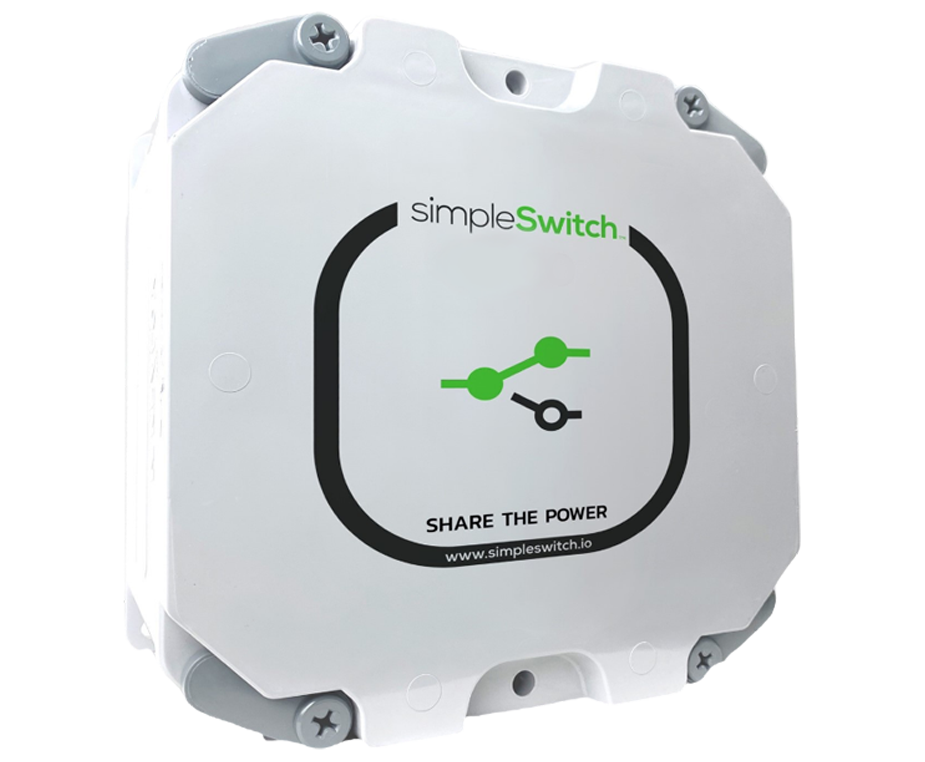
simpleSwitch lets you add a Level 2 EV charger to your home without an expensive electrical panel upgrade. Your EV charges safety without panel overload.
 30-day risk-free returns
- NEMA-rated
- Works with your existing panel
How do off peak electricity rates reduce EV charging costs?
The reason why off peak electricity rates lower your EV charging cost is simple: Your electricity provider is charging less per kilowatt-hour (kWh) during these hours, so you pay less to charge your car.
For instance, let’s say you own a Tesla Model Y Long Range RWD, and it uses about 300 kWh of electricity per month for home charging. Also, let’s say the peak and off peak electricity rates of your utility company is $0.40/kWh and $0.15/kWh.
In this case, you will pay about $120 to charge your EV every month during peak hours and $45 for EV charging per month during off peak hours. This means you can save up-to $75 every month on EV charging cost simply by charging during off peak hours.
Here’s how this math works:
| Charging rate | Monthly charging cost |
| Peak rate: $0.40/kWh | $120 |
| Off-peak rate: $0.15/kWh | $45 |
| Monthly savings | $120 – $45 = $75 |
Not to mention, at these off peak rates, if you continue to use 300 kWh electricity per month for an entire year, and save $75 a month, you will end up saving $900 by the end of the year.
Also, you need not physically plug in your EV during off peak hours, you can simply schedule charging during the best time to charge EV. Your EV’s smart charger will automatically begin charging when the lower rates are applicable.
What are off peak hours for electricity in different states and how much they save you on EV charging?
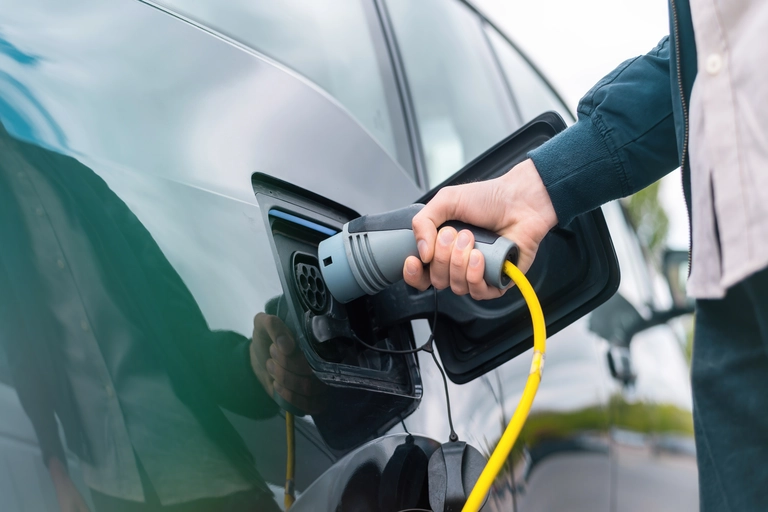
Different state utilities offer different time-of-use electricity rates. These aren’t available to everyone in the state though. The exact benefits you get will depend on your electricity provider and the utility plan you are on.
Here are some examples of different state utility companies and their off peak electricity hours and rates rates:
| State and utility | Off-peak hours | Rate or charging benefit | How much you can save 300 kWh energy use |
| California: Southern California Edison | Summer: Weekdays, 9 PM to 4 PM the next day. Weekends have mid-peak rates from 4 PM to 9PM. | Summer off-peak rate: $0.26/kWh; weekday peak rate: $0.61/kWh. | Up to $105, comparing those two rates. |
| Texas: El Paso Electric | June to September: Weekdays, 7 PM to 2 PM the next day. All other hours are off-peak. | Summer peak: $0.31826/kWh; summer off-peak: $0.08638/kWh; October-May off-peak: $0.11247/kWh. | $69.56 in summer, if all 300 kWh charging shifts from peak to off-peak rates. |
| Alabama: Alabama Power | 9 PM to 5 AM. | Eligible EV owners receive a $0.017155/kWh discount. | About $5.15. |
| Massachusetts: National Grid | 9 PM to 1 PM. the next day, every day. | Eligible EV charging incentive of $0.05/kWh in summer and $0.03/kWh in other months. | $15 in summer or $9 in other months. |
| New Jersey: Atlantic City Electric | 8 PM to 8 AM on weekdays; all day on weekends. | Eligible customers earn $0.02/kWh for net off-peak charging. | Up to $6, assuming all 300 kWh qualify as net off-peak charging, |
| Oklahoma: Public Service Company of Oklahoma (PSO) | 11 PM to 6 AM, every day for super off-peak charging. | Special EV rate; the applicable tariff determines the savings. | Depends on the applicable tariff. |
Note: These are examples from specific utility programs, not statewide guarantees. Rates and program terms can change, so do check the current tariff and eligibility rules before switching to the above plans.
Flat rate vs time of use energy plans: Which is better for EV owners?
Now that you have an idea about how time of use electricity rates can reduce your EV charging costs, you might be thinking about switching to one such electricity plan.
But before you switch, to compare the time of use electricity rates your utility company offers with your current flat rate plan. That’s because the cheapest option between the two plans depends on when your home uses most electricity and not just when you charge EV.
Here’s how flat rate vs time of use energy plans compare:
| Feature | Flat-rate plan | Time-of-use (TOU) plan |
| Electricity price | The same rate throughout the day. | Changes based on the time of day. |
| Best suited for | Homes with different or unpredictable electricity use. | Homes that can shift more usage to cheaper hours. |
| Main benefit | It is easy to predict your electricity costs. | You save when you use electricity during lower-rate periods. |
| Main drawback | You might miss out on special off-peak savings. | Peak-hour electricity costs more. |
Overall, a time of use energy plan can work well if you can schedule EV charging overnight while also running most high-energy appliances during off peak hours.
But if your home uses a lot of electricity during peak hours, flat rate works better. For instance, if you use air conditioning, cook dinner on an induction cooktop, do laundry, etc., during peak hours, it is better to stick to a flat rate plan.
What is demand charge and does it affect home EV charging?
A demand charge is a fee based on how much electricity you draw at one time, rather than how many kilowatt-hours you use throughout the month.
For instance, your utility company might measure your highest electricity demand over a specific period. And if you run your EV charger, air conditioner, and other powerful appliances simultaneously during that period, you can create a higher peak in electricity use. This can become the demand charge that your utility company charges you.
However, demand charges don’t apply to every residential electricity plan. Most homeowners pay for the energy they use without a separate demand-based fee.
A demand charge is different from a time-of-use rate, here’s how:
| Charge type | What determines the cost |
| Energy charge | How many kWh you consume |
| Time-of-use rate | When you consume those kWh |
| Demand charge | Your highest measured electricity demand during a specified period |
Bonus: Here’s how to find your off-peak hours and schedule EV charging
| Step | What to do |
| 1. Check your bill | Find your electricity plan and check if it offers off-peak rates. |
| 2. Visit your utility’s website | Confirm off-peak hours, seasonal changes, and plan requirements. |
| 3. Compare electricity plans | Check whether a time-of-use plan can lower your total household electricity bill. |
| 4. Schedule EV charging | Set your EV or charger’s app to charge during the cheapest hours. |
| 5. Review your next bill | Check whether your charging costs have decreased. |
| 6. Consider using solar power | If you have rooftop solar, do compare charging costs for solar panels to charge EV with overnight electricity rates. |
FAQs about what are off peak hours for electricity
What are the usual off peak hours for electricity in the country?
Most utilities offer off-peak rates overnight or early in the morning, but there is no standalone schedule. You should check your electricity provider’s current rate plan for the exact hours.
Is electricity always cheaper at night?
No. Some plans offer cheaper overnight electricity, while others have different low-cost periods, such as mid-day. Your utility’s rate schedule determines when electricity is cheapest.
How much can off-peak charging save an EV owner?
It depends on your charging needs and the difference between your peak and off peak electricity rates. For instance, shifting 300 kWh of EV charging from $0.40/kWh of peak rate to $0.15/kWh of off peak rate can reduce the energy cost by $75 for that month.
Are off-peak electricity rates and demand charges the same?
No. Off-peak rates depend on when you use electricity. Demand charges depend on your highest measured electricity demand during a specified period. Some residential plans include both, while others don’t have demand charges.
How do I know if my utility offers an EV charging discount?
You should check your utility’s official EV program page or contact its customer service team. Ask whether it offers a special EV rate, a time-of-use plan, or a separate credit for charging during designated hours. Also, confirm eligibility requirements and current rates before enrolling.
No More $10k Electrical Panel Upgrade to Charge Your EV at Home
simpleSwitch lets you add a Level 2 EV charger to your home without an expensive electrical panel upgrade. Your EV charges safety without panel overload.
- 30-day risk-free returns
- NEMA-rated
- Works with your existing panel
Final words
I am sure that, by now, you know exactly what are off peak hours for electricity, what off peak electricity rates are available during this time, and how much it can save on EV charging cost.
As you can see, off peak electricity hours can help you reduce your home EV charging costs. But the exact savings depend on your utility’s rates and your home’s energy habits.
Got more questions or want to install a load sharing device for EV charging instead?
You can get in touch with us!
At simpleSwitch, we manufacture award-winning load sharing devices that allow you to use a Level 2 EV charger safely even if your home’s electrical panel capacity is limited. This helps you save up-to $10,000 in unnecessary electrical panel upgrades.
Our load sharing devices are all UL-listed and proudly made in the USA.