



If you’ve taken your EV on a road trip, chances are you’ve used a DC fast charger.
Unlike Level 2 chargers, DC chargers recharge your EV in a fraction of the time. This is why they’re common along highways, public charging stations, and other locations where drivers need to get back on the road quickly.
Now, if you’re an EV enthusiast like myself, I am sure you’d have wondered how DC chargers are so much faster than AC charging.
Also, you might be curious whether using fast chargers regularly is bad for your EV battery. After all, this is what people claim on the internet.
So, in this blog, I have explained everything know about DC charging, including:
- What DC charging is
- How DC fast charging works
- How DC charging compares to AC charging
- How fast DC chargers really are
- When you should use a DC fast charger
Let’s get right into it.
Key takeaways
- DC charging delivers direct current straight to your EV’s battery, which is why it charges much faster than AC charging.
- A DC fast charger converts AC electricity into DC power inside the charging station instead of inside the vehicle.
- Most EVs charge fastest when the battery is at a lower state of charge, with charging speeds typically slowing after around 80%.
- DC fast charging is ideal for road trips and long-distance travel, while Level 2 AC charging is the better choice for everyday charging.
What is DC charging?
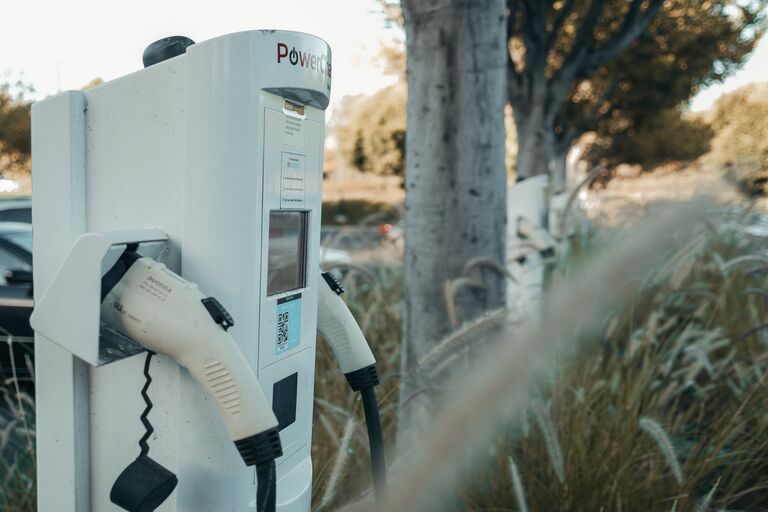
For starters, DC charging or Level 3 charging is the fastest way to charge your electric vehicle.
You see, regular Level 2 EV chargers for home charging first send alternating or AC current to your vehicle and then convert it into direct or DC current.
A DC charger performs that conversion before the electricity even reaches your car. It then sends DC power directly to the battery, allowing it to charge much more quickly.
That’s exactly why DC fast chargers deliver a much higher amount of power than Level 1 or Level 2 chargers combined.
These chargers are ideal whenever you need to recharge your battery in a short amount of time.
You’ll find DC charging stations at places like:
- Highway rest stops
- Public EV charging stations
- Shopping centers
- Gas stations with EV charging
- Fleet charging depots

No More $10k Electrical Panel Upgrade to Charge Your EV at Home
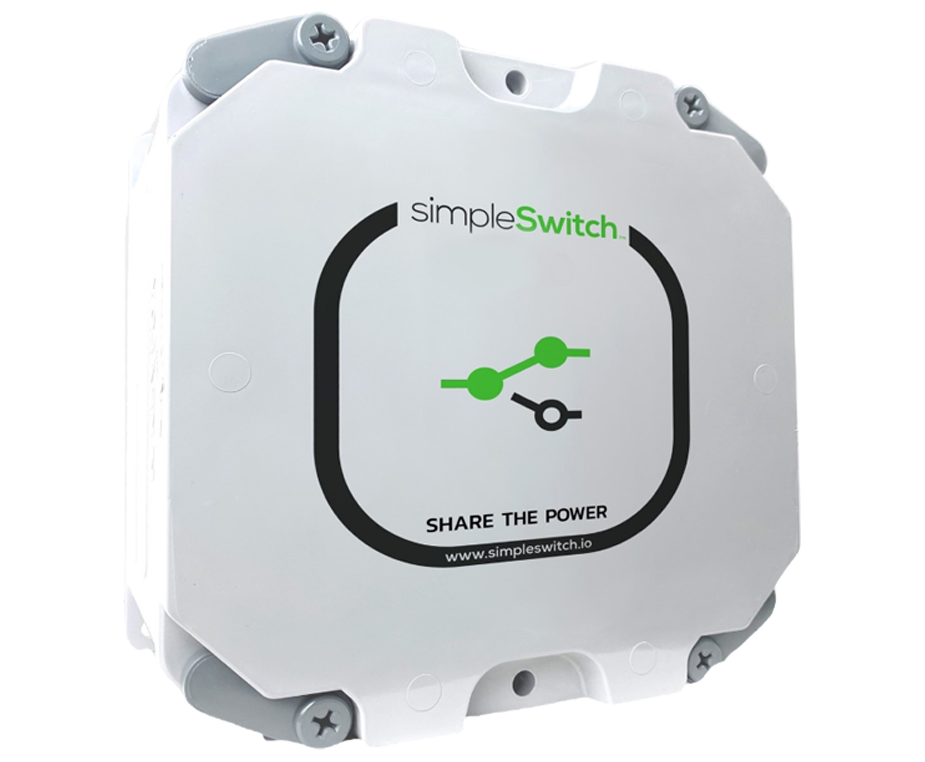
simpleSwitch lets you add a Level 2 EV charger to your home without an expensive electrical panel upgrade. Your EV charges safety without panel overload.
 30-day risk-free returns
- NEMA-rated
- Works with your existing panel
How does DC fast charging work?
At first, charging an EV from a DC fast charger might seem like charging from any other charger.
But behind the scenes, there’s a lot happening to make sure your battery charges as quickly and safely as possible.
Here’s how charging happens:
Step 1. The charger takes electricity from the grid
Just like your home, a DC charging station receives alternating or AC current electricity from the electrical grid.
Step 2. The charging station converts AC into DC
Instead of sending AC power to your vehicle, the charger uses powerful electrical equipment inside the station to convert it into direct current before it leaves the charger.
Since EV batteries store energy as DC power, this eliminates the need for the vehicle’s onboard charger to perform the conversion itself.
Step 3. DC power flows directly to the battery
Once the conversion is complete, the charger sends DC electricity straight to your EV’s battery, allowing it to accept much higher charging power than most onboard AC chargers can handle.
Step 4. The charger and the vehicle communicate
Before charging begins, the charger and your EV communicate through a digital handshake and exchange information. For instance, the charger checks:
- How much power your EV can accept
- The battery’s current charge level
- The battery temperature
- Whether it’s safe to begin charging
This communication happens in just a few seconds, but it’s an important part of the charging process. It ensures the charger delivers the right amount of power without damaging the battery.
Step 5. The charging speed changes as the battery fills up
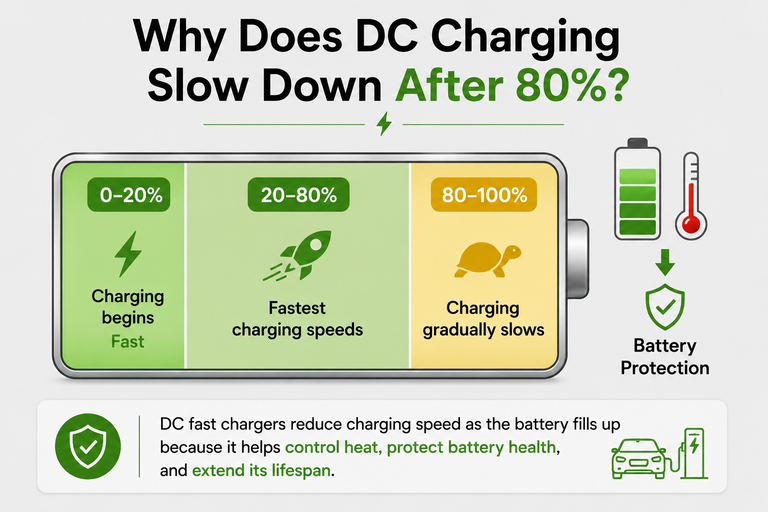
DC charging starts out very fast but gradually slows down as an EV charging best practice, especially when your battery has charged up-to 80%.
That’s because when your battery is at a low state of charge (10% or 20%), it can safely accept a large amount of power. But as the battery gets closer to being full, the charging speed automatically decreases to protect the battery and prevent overheating.
That’s why many EVs charge from 10% to 80% much faster than they can charge from 80% to 100%. In fact, the last 20% often takes nearly as long as the first 80%.
In short, here’s how DC fast charging works:
| Step | What happens |
| 1 | The charger receives AC electricity from the grid. |
| 2 | The charger converts AC power into DC power. |
| 3 | DC electricity flows directly to the EV battery. |
| 4 | The charger and vehicle communicate to determine a safe charging speed. |
| 5 | Charging gradually slows as the battery approaches full charge. |
DC charging vs AC charging: What’s the difference?
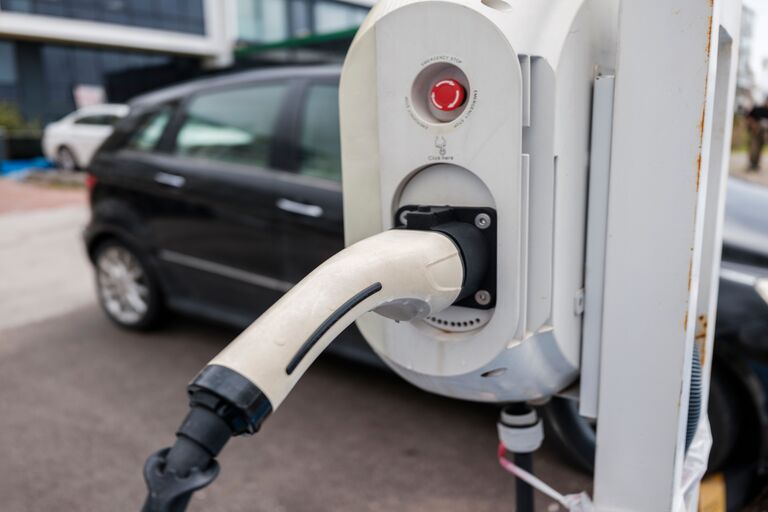
The biggest difference between DC and AC charging comes down to where the electricity is converted.
With AC charging, your home or public Level 2 charger sends alternating current to your EV. And your vehicle’s onboard charger then converts that AC power into DC before it reaches the battery.
With DC charging, the conversion happens inside the charging station instead. The charger sends DC power directly to your battery, allowing it to deliver much higher charging speeds.
Here’s a quick comparison:
| Feature | AC Charging | DC Charging |
| Charging level | Level 1 or Level 2 | Level 3 (DC Fast Charging) |
| Power conversion | Inside the EV | Inside the charging station |
| Charging speed | Slower | Much faster |
| Best for | Everyday home charging | Long-distance travel and quick top-ups |
| Typical locations | Homes, workplaces, public parking | Highways, public fast-charging stations |
How fast is DC charging?
DC fast chargers are available in several power levels, including:
- 50 kW: Commonly found at older public charging stations.
- 100-150 kW: Common at many highway fast-charging locations.
- 250 kW: Available at many newer charging networks.
- 350 kW: Currently among the fastest public DC chargers available and designed for EVs that support ultra-fast charging.
Here, the higher the charger’s power rating, the faster it can potentially charge a compatible electric vehicle.
However, your EV’s battery, its charging limits, and even its temperature all play a role in determining the actual charging speed.
For instance, how fast your EV charges depends on two things:
- The maximum power output of the charger.
- The maximum charging speed your EV can accept.
So, even if you plug into a 350 kW DC fast charger, your vehicle will only charge as fast as its battery allows.
How long does DC fast charging take?
There’s no single answer to this because EV battery size, charging power, battery temperature, and the battery’s current charge level all affect charging time.
That said, most modern EVs, especially the EVs with NACS charging port, can charge from about 10% to 80% in 20 to 45 minutes when connected to a DC charger.
Also, some newer EVs that support ultra-fast charging, like the Tesla Cybertruck, can do it even faster, while older models might take longer.
Bonus: Here are some factors that affect DC charging time:
| Factor | Impact on charging speed |
| Charger power output | Higher-power chargers can deliver energy faster. |
| EV’s charging limit | Your vehicle can only accept power up to its maximum charging rate. |
| Battery state of charge | Charging is fastest when the battery is low and slows as it fills. |
| Battery temperature | Batteries typically charge faster when they’re within their ideal temperature range. |
Is DC charging bad for your EV battery?
If you’re wondering whether or not does fast charging affect EV battery life, the short answer is no. At least not when it is used as intended.
You see, most EVs are designed to handle DC fast charging safely. They include sophisticated battery management systems that continuously monitor battery temperature, voltage, and charging speed to help protect the battery during charging. These systems automatically adjust the charging rate whenever needed.
That said, most manufacturers still recommend using Level 2 AC charging for your everyday charging needs and saving DC fast charging for situations where you need a quicker recharge, such as road trips or longer drives.
Simply put, occasional DC fast charging is a normal part of owning an EV. It is only frequent, repeated fast charging over long periods that contribute to slightly faster battery wear.
When should you use DC charging?
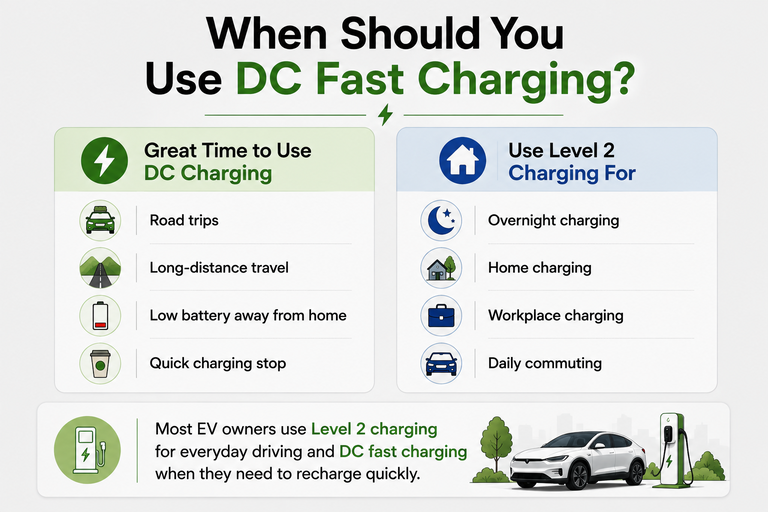
DC charging is the best choice whenever you need to charge your EV quickly and get back on the road.
For instance, DC fast charging makes the most sense when you’re:
- Taking a road trip.
- Traveling long distances.
- Running low on battery while you’re away from home.
- Looking to add a significant amount of driving range during a short stop.
On the other hand, if you’re charging EV overnight at home, a Level 2 charger is the most practical and cost-effective option. More so because Level 2 chargers can be used even at those homes that have a limited electrical panel capacity, thanks to load sharing devices like simpleSwitch.
No More $10k Electrical Panel Upgrade to Charge Your EV at Home
simpleSwitch lets you add a Level 2 EV charger to your home without an expensive electrical panel upgrade. Your EV charges safety without panel overload.
- 30-day risk-free returns
- NEMA-rated
- Works with your existing panel
Conclusion
I am sure that you now have a much better understanding of how DC fast charging works.
As you can see, DC charging is much faster than AC charging because the electricity is converted into direct current inside the charging station instead of inside your vehicle. This allows power to flow directly to the battery, significantly reducing charging times.
Now, although DC fast charging is convenient for road trips and longer drives, Level 2 charging is still the better choice for everyday home charging.
Got more questions or want to make home EV charging more affordable?
You can get in touch with us!
At simpleSwitch, our EV energy management systems help homeowners safely install Level 2 EV chargers without overloading their electrical systems. Our EVEMS devices automatically balance power between your EV charger and other high-power appliances, helping you avoid an expensive electrical panel upgrade.
FAQs about DC charging
What is a DC fast charger?
A DC fast charger is a Level 3 EV charger that converts AC electricity into DC power inside the charging station and delivers it directly to your EV’s battery. This allows it to charge much faster than Level 1 or Level 2 chargers.
How fast is DC charging?
It depends on both the charger and your EV.
Most public DC fast chargers provide between 50 kW and 350 kW of power, although your vehicle will only charge as fast as its maximum charging rate allows.
How long does DC fast charging take?
In most cases, an EV can charge from 10% to 80% in around 20 to 45 minutes when connected to a compatible DC fast charger. Charging from 80% to 100% usually takes longer because the charging speed automatically slows down.
What’s the difference between AC and DC EV charging?
With AC charging, electricity is converted into DC inside your vehicle by the onboard charger.
With DC charging, the conversion happens inside the charging station, allowing electricity to flow directly to the battery at much higher speeds.
Can every EV use DC charging?
Most modern battery electric vehicles support DC fast charging, but the maximum charging speed varies by model. Some older EVs and certain plug-in hybrid vehicles might not support DC fast charging at all.


