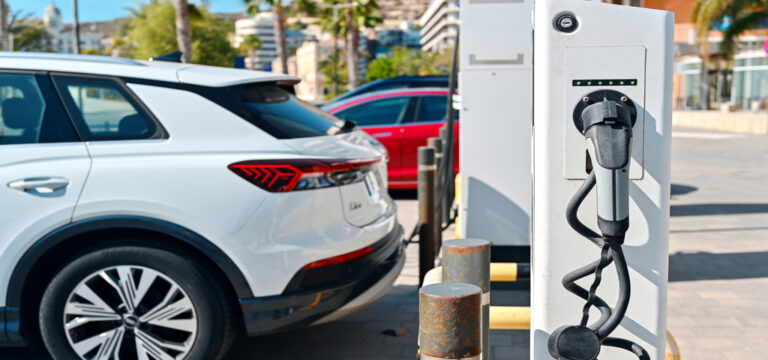
How much does it cost to charge an electric car at home?
This is one question new EV owners almost certainly ask me.
And I am sure you’re curious about it too. After all, while gas prices are easy to check, electricity costs feel a little more complicated to figure out.
Now, the good part is, the cost of charging electric car at home is way cheaper than filling up a gas tank. So much so that you can expect to save hundreds, and sometimes even thousands, of dollars every year.
Talking about the exact cost of home EV charging, it depends on things like your local electricity rates, your car’s battery size, how much you drive, and when you charge.
In this guide, I will break it all down, giving you exact home EV charging cost estimates.
So, let’s get started.
Key takeaways
- Charging at home is cheaper than gas and public stations.
- EV cost depends on battery size and electricity rate.
- On average, small EVs cost about $6, mid-size EVs about $10, and large EVs about $15 per full charge.
- Home EV charging cost per mile is just 4-5 cents.
- Monthly home charging cost is about $40-$45.
- Charging at night (off-peak charging) saves more.
How much does it cost to charge an electric car on average?

The average cost to charge electric car at your home depends on two things:
- The size of your car’s battery
- How much your electric company charges per unit of electricity
For instance, as per the U.S. Energy Information Administration most homeowners across the country pay anywhere between $0.12 and $0.18 per kilowatt-hour (kWh) for electricity.
While some states, like Texas and Florida, have lower electricity rates, others, such as California and New York, have a bit higher rates.
So, we can assume that the average national electricity rate sits right around $0.15 per kWh.
Now, here’s what it means for real life EV charging:
Let’s say your EV has a 65 kWh battery. In this case, a full charge at home would cost about $9 to $10.
It’s a simple math:
65 × $0.15 = $9.75
In short, here’s a simple way to calculate the average cost of home EV charging:
| Point | Summary |
| Electricity rates in the country | $0.12-$0.18 per kWh, national average ~$0.15 |
| Cost for a 65 kWh EV | 65 × $0.15 = $9.75 per full charge |
| State variations | Electricity rates are lower in Texas and Florida, higher in California and New York |
| Key takeaway | Home charging is predictable, simple, and cheaper than gas |

No More $10k Electrical Panel Upgrade to Charge Your EV at Home
simpleSwitch lets you add a Level 2 EV charger to your home without an expensive electrical panel upgrade. Your EV charges safety without panel overload.

 30-day risk-free returns
- NEMA-rated
- Works with your existing panel
How much does it cost to charge an electric car based on car size?

The size of your EV’s battery plays a big role in how much it costs to charge at home.
But the good part is that home charging is surprisingly affordable even for EV with bigger batteries.
In fact, notwithstanding the size of your car, a full charge still costs far less than a tank of gas.
Let’s look at how much does it cost to charge an electric car at home in practice. Here, we will assume that you’re using a standard Level 2 EV charger, and paying the national average cost of $0.15 per kWh of electricity.
1. Small EVs (40-50 kWh battery)
If you drive a smaller electric car like a Nissan Leaf or Mini Cooper SE, your battery is usually around 40 kWh. This means a full charge at home costs roughly $6.
Here’s how:
40 × $0.15 = $6
Now, for many drivers, this $6 can cover an entire week of commuting.
You see, these cars are especially efficient, so even partial charging goes a long way. And if most of your driving is around town, your monthly charging costs can feel almost negligible.
2. Mid-size EVs (60-75 kWh battery)
Mid-size EVs like the Tesla Model 3, Hyundai Ioniq 5, or Chevy Bolt typically have batteries around 65 kWh. And charging one of these from empty to full costs about $9 to $10 at home.
Here’s how:
65 × $0.15 = $9.75
In these cars, a single charge can easily deliver 250-300 miles of range. And for the average driver, this translates to spending less than $50 a month on electricity, while driving as much or more than a traditional gas car.
3. Large EVs and electric SUVs (90-100+ kWh battery)
Bigger vehicles like the Tesla Model Y or Ford F-150 Lightning have much larger batteries, often close to 100 kWh.
Even so, a full home charge usually costs around $15.
Here’s how:
100 x $0.15 = $15
This might sound high at first, but it can provide 300+ miles of driving.
In short, here’s the average cost to charge electric car at home based on car size:
| Car Type | Battery Size | Cost per Full Charge | Notes |
| Small EV | 40 kWh | ~$6 | Covers a week of commuting; very efficient |
| Mid-Size EV | 60-75 kWh (~65 kWh) | ~$9-$10 | 250-300 miles per charge; under $50/month typical |
| Large EV / SUV | 90-100+ kWh (~100 kWh) | ~$15 | 300+ miles per charge; still under $20 for full charge |
| Key takeaway | Even big EVs are cheaper than a gas tank. |
Note: Most people don’t charge from 0% to 100% every day. So, you might still find it to calculate the exact cost of home EV charging.
So, in the next sections, we’ll look at cost per mile, monthly charging costs, and real-world examples so that you can easily relate to these numbers.
What is the per mile cost of charging an electric car at home?
One of the easiest ways to understand how much does it cost to charge an electric vehicle is to look at how much you pay per mile driven.
This makes it much easier to compare an electric car to a gas car without getting lost in battery sizes or charging percentages.
You see, most electric vehicles average about 3 to 4 miles per kilowatt-hour (kWh). So, if we use the national average electricity rate of $0.15 per kWh, you’re spending roughly 4 to 5 cents per mile when charging at home.
In everyday terms, driving 100 miles in an EV might cost you around $4 to $5 in electricity.
Now compare that to a typical gas car. If your vehicle gets 25 miles per gallon and gas costs $3.50 per gallon, you’re paying about 14 cents per mile. Meaning, that same 100-mile drive suddenly costs $14 instead of $5.
In short, here’s the cost to charge electric car at home per mile and how it compares to gas prices:
| Point | Summary |
| EV efficiency | 3-4 miles per kWh |
| Cost per mile (EV) | ~$0.04-$0.05 |
| Cost per mile (Gas car) | ~$0.14 (25 mpg, $3.50/gal) |
| Comparison | EVs are 3-4 times cheaper per mile than gas cars |
| Key takeaway | Lower electricity costs per mile make EV driving very affordable |
Is the monthly cost of charging EV at home cheaper than using a gas car?

Yes, it surely is.
Let’s look at a very typical driving scenario where you drive about 1,000 miles per month and compare both home EV charging and gas costs.
A. Monthly cost of charging an EV at home
An average electric vehicle gets around 3.5 miles per kWh. So, to drive 1,000 miles, you’d use roughly 285 kWh of electricity.
Now, at the national average rate of $0.15 per kWh, your monthly EV chagrin cost comes out to about $40-$45 per month.
B. Monthly cost of driving a gas car
Now compare that to a gas vehicle getting 25 miles per gallon.
Driving 1,000 miles means burning 40 gallons of gas. And at $3.50 per gallon, that’s about $140 per month spent at the pump.
So, if you drive an EV and mostly use a home EV charger, you save up-to $95 saved every month. Also, this translates to $1,100+ in savings every year
In short, here’s how the monthly cost of electric car charging compares to driving a gas car:
| Point | Summary |
| Average monthly driving | 1,000 miles |
| EV electricity needed | ~285 kWh |
| EV monthly cost | ~$40-$45 |
| Gas car monthly cost | ~$140 (25 mpg, $3.50/gal) |
| Savings | ~$95/month, $1,100+ yearly |
| Key takeaway | Home charging is much cheaper than fueling a gas car monthly |
Bonus: Here’s the hidden cost to charge electric cars at home
One thing you might not realize is that your car doesn’t receive every unit of electricity that comes from the wall.
You see, during EV charging, a small amount of energy is lost as heat through the charger, battery management system, and electrical components. This is known as charging loss.
Now, most home EV chargers operate at about 85-95% efficiency, meaning roughly 5-15% of the electricity you pay for never reaches the battery.
For instance, if your EV has a 65 kWh battery and charging losses are around 10%, your home will actually consume about 71.5 kWh of electricity for a full charge.
Here’s how: 71.5 × $0.15 (average electricity cost per kWh) = $10.73
So, instead of $9.75 (65 kWh x $0.15), the real-world cost to charge electric car at home might be closer to $10.50-$11.00.
How much does it cost to charge an electric car at home compared to public charging?

In almost every case, the cost to charge electric car at home is much cheaper than using public chargers.
That’s exactly why most EV owners don’t want to charge their cars at a public charging station every day. They use it mainly for road trips or emergencies.
Here’s how how home and public EV charging costs compare:
A. Home charging
When you charge at home, you’re paying your regular residential electricity rate, usually between $0.12 and $0.18 per kWh.
Here, the price is predictable, stable, and doesn’t change day to day like gas prices.
Even better, you can decide your best time to charge EV, which is usually at night. Here, you can plug in at night and wake up to a fully charged car, especially when using an ev energy management system to optimize charging during off-peak hours.
B. Public charging
The cost of recharging an electric car increases at public chargers. Level 2 public chargers often charge $0.25 to $0.40 per kWh, while DC fast chargers can range from $0.40 to $0.60 or more per kWh.
These are convenient when you’re traveling, but they add up quickly if used often.
In short, here’s how much does it cost to charge an electric vehicle at home vs public chargers:
| Type | Cost per kWh | Notes |
| Home charging | $0.12-$0.18 | Predictable, stable, overnight charging |
| Level 2 public chargers | $0.25-$0.40 | Convenient for travel, expensive daily |
| DC fast chargers | $0.40-$0.60+ | 2-4 times more than home charging |
| Key takeaway | Home charging is the cheapest and most convenient daily option |
Bonus: Here’s how much is it to charge an electric car at home based on state
| State | Avg Cost per kWh | Cost per Full Charge (65 kWh) |
| Florida | $0.14 | ~$9 |
| Texas | $0.13 | ~$8.50 |
| California | $0.22 | ~$14 |
| New York | $0.21 | ~$13.65 |
| New Jersey | $0.17 | ~$11 |
| Illinois | $0.15 | ~$9.75 |
| Ohio | $0.14 | ~$9 |
Note: Rates can vary based on your utility company and plan.
No More $10k Electrical Panel Upgrade to Charge Your EV at Home
simpleSwitch lets you add a Level 2 EV charger to your home without an expensive electrical panel upgrade. Your EV charges safety without panel overload.
- 30-day risk-free returns
- NEMA-rated
- Works with your existing panel
Final words
By now, I am sure you know exactly how much does it cost to charge an electric car at home based on the size of your car.
Also, you know the per mile home EV charging cost and how it compares to the cost of driving a gas car.
You see, charging an electric car at home is cheaper than gas and even public charging. And it is far more convenient.
Plus, instead of watching prices at the pump, you get predictable costs and the freedom to charge your car right in your own garage.
Now, the only challenge you might face with home EV charging is limited electrical panel capacity. Your electrician might tell you to upgrade your electrical panel, which is up-to $5,000 in upfront investment.
This is where devices like simpleSwitch come in handy. They help you charge your EVs safely and efficiently without upgrading their electrical panel.
Sounds awesome, doesn’t it?
FAQs about how much does it cost to charge an electric car at home
What is the average cost to charge an electric car in your home?
The average cost of charging electric car at home is about $9-$10 based on the average national electricity cost. This can be either higher or lower for you based on your EV model and battery size.
How long does it take to charge an electric car at home?
Charging time depends on your charger and your car’s battery size.
Most homeowners use a Level 2 home charger, which can fully charge an EV in 6-10 hours. So, you can plug in your car overnight and wake up to a full battery.
Slower Level 1 charging works too, all you’ve got to do is plug your EV into a regular outlet. But it’s good only for short daily driving.
How does charging time affect how much to charge an electric car?
Many utility companies offer time-of-use plans, where electricity is cheaper during off-peak hours, usually overnight.
For instance, daytime electricity might cost $0.22 per kWh, while overnight rates drop to $0.09 per kWh.
So, if you charge a 65 kWh EV battery overnight, your cost could be $5-$6 instead of $14.
How much for electric car charge for an entire year?
A lot of people wonder how much does it cost to charge an EV car for an entire year.
So let’s assume you drive 12,000 miles per year, which is close to the average annual mileage for many drivers.
Now, an EV averaging 3.5 miles per kWh would consume approximately: 12,000 ÷ 3.5 = 3,430 kWh annually
And at $0.15 per kWh electricity rate and 3,430 kWh annual energy consumption, the average cost for charging an electric car will be $515.
Here’s how: 3,430 × $0.15 = $515 per year
Does solar power reduce EV charging costs?
Yes, sometimes dramatically.
If you have solar panels, your EV can be partially or even fully powered by the energy your home produces. This can push your cost to recharge electric vehicle close to zero.
Even without a battery, net-metering credits or daytime charging can significantly reduce costs.
How much to charge electric car at night?
Nighttime electricity is often cheaper because demand is lower.
If you’re on a time-of-use plan, charging overnight can cut your overall EV charging costs by 30-60%.
How much does home charging increase my electric bill?
Most EV owners see their electric bill increase by $30 to $60 per month, depending on how much they drive and local electricity rates.
While that sounds noticeable, it usually replaces $120-$200+ per month in gas costs.
So even though your electric bill goes up, your overall transportation costs go way down.
Can you lower what does it cost to charge an electric car?
Absolutely. The easiest ways to save more include:
- Charging overnight on off-peak rates
- Using energy-efficient EV chargers
- Avoiding public fast chargers when possible
- Pairing EV charging with solar
- Tracking usage to avoid peak pricing
Tools like simpleSwitch help automate all of this, so you save money without having to think about it.
How much does it cost to install a home Level 2 EV charger?
While the cost of charging EV car at home is low, charger installation can be expensive.
That’s because typical Level 2 EV charger installation cost includes:
| Item | Typical Cost |
| Level 2 Charger | $400-$800 |
| Installation Labor | $300-$1,500 |
| Electrical Upgrades (if needed) | $500-$5,000+ |
Most homeowners spend somewhere between $700 and $2,000 for a complete installation, although homes that require panel upgrades pay more.
Is public charging ever cheaper than charging at home?
In most cases, no.
Public chargers, especially DC fast chargers, are usually two to four times more expensive than home charging.
They’re great for road trips or emergency charging, but not for daily use. This is why most EV owners do 80-90% of their charging at home and treat public charging as a backup, not their main source of power.
So, is charging an electric car at home really worth it?
In one word: Yes.
Most EV owners spend $30-$60 per month charging at home instead of $120-$200+ on gas. That adds up to thousands in savings per year.
On top of that, you get quieter driving, lower maintenance costs, and fewer emissions.