As an EV owner, you might have heard about a Level 2 EV charger. More so if your EV charger takes all night (or maybe longer) to charge your car and you’re on the lookout for a faster solution.
But what is a Level 2 EV charger and how is it different from your regular Level 1 charger?
After all, both chargers do the same thing, i.e., they power up your electric car.
You see, the difference lies in charging speed, convenience, and how the charger fits into your home’s electrical panel.
A Level 1 charger works right out of your standard wall outlet. You plug in your EV into your regular outlet, and you’re all set.
On the other hand, a Level 2 charger uses a higher voltage outlet (like your dryer outlet). And it charges your car several times faster.
Both are safe, get the job done, but Level 2 chargers are definitely better suited for daily EV use.
In this blog, I will break it all down for you. You’ll know:
- What is Level 1 EV charger
- What is Level 2 EV charger
- Difference between Level 1 vs Level 2 EV charging
- How much Level 2 EV charging setups cost
- How to save money on electrical panel upgrade when installing Level 2 charging
So, let’s get started.
Key takeaways
- Level 1 charger works with a standard outlet. It charges slowly but works well for short daily commutes or plug-in hybrids.
- Level 2 charger uses a 240V outlet and charges 4-6 times faster than Level 1 chargers. It is ideal for daily EV use and longer commutes.
- Level 2 charger setups can cost $1,200-$4,000, depending on electrical upgrades.
- Level 1 charger adds a range of 2-5 miles per hour, while Level 2 charger provides 20-40 miles per hour.
- Level 2 chargers offer faster and more convenient charging. Plus it adds value to your home and supports long-distance EV driving.
- Level 2 charging might require a panel upgrade, but electrical load management systems like simpleSwitch can help avoid this.
What is a Level 1 EV charger?

Let’s begin with the Level 1 EV charger, one you might already be using to charge your car.
A Level 1 charger is what most EVs come with right out of the box. It plugs directly into a standard 120-volt outlet, the kind of which you use for a phone charger, coffee maker, etc.
You don’t need any special setup or fancy equipment. Just plug the EV charger in your regular outlet, and your car starts charging.

No More $10k Electrical Panel Upgrade to Charge Your EV at Home
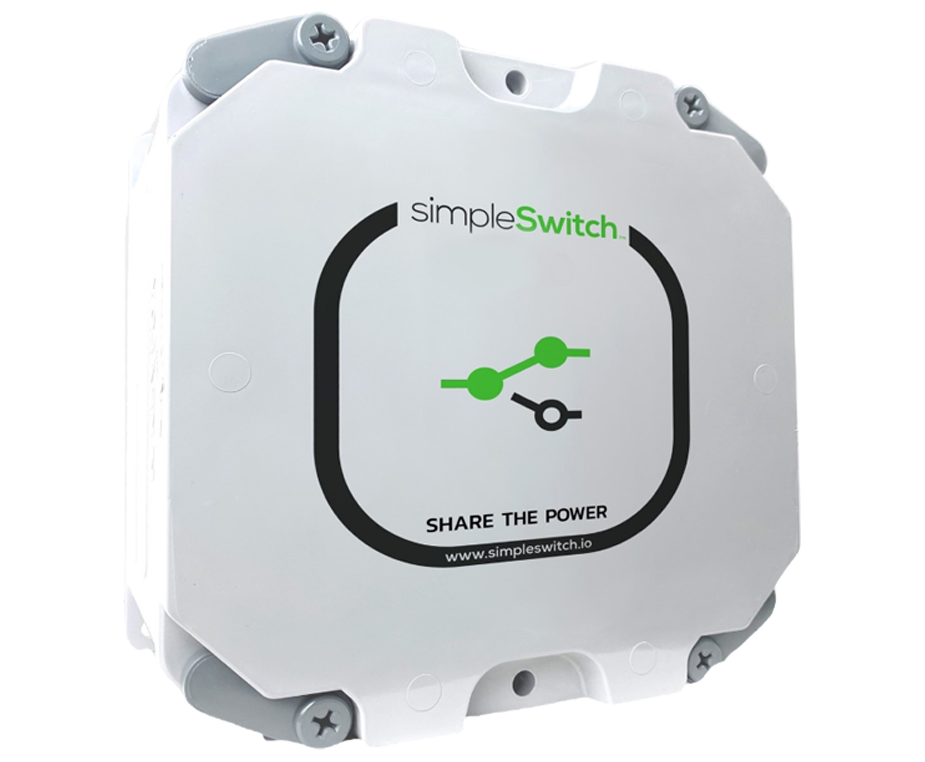
simpleSwitch lets you add a Level 2 EV charger to your home without an expensive electrical panel upgrade. Your EV charges safety without panel overload.
 30-day risk-free returns
- NEMA-rated
- Works with your existing panel
But how fast is a Level 1 charger?
Level 1 charging adds about 2 to 5 miles of range per hour. Meaning, if you plug in your EV at night for about 10-12 hours), you’ll get roughly 20 to 50 miles of range.
This is good enough for short daily commutes, errands, or plug-in hybrid vehicles with smaller batteries.
For instance, if you drive a plug-in hybrid like a Prius Prime or Chevy Volt, Level 1 can handle your needs just fine. You’ll wake up with a full charge most days without spending a dime on installation.
But for full battery-electric vehicles like a Tesla, Mustang Mach-E, or Hyundai Ioniq 5, Level 1 charging can feel a bit too slow.
It is like trying to fill a swimming pool with a garden hose. You’ll get there eventually, but it is going to take a while.
Pros and cons of Level 1 charging
Pros:
- You don’t need a special electrical set-up, just plug in and get going.
- This is the cheapest way to charge your EV since you already have a regular outlet.
- This is perfect for low-mileage drivers or hybrids.
Cons:
- Level 1 EV charging is slow, so much so that it can take over 24 hours to fully charge a large EV battery.
- Not ideal for cold weather since charging slows even more.
- It might not keep up if you drive long distances daily.
In short, Level 1 EV charging is reliable, but it’s not built for speed or heavy daily use. So, if you want something that fits your larger EV charging needs, you should definitely upgrade to Level 2 charger.
What is a Level 2 EV charger?

As you can see, Level 1 charging is reliable but slow. And Level 2 is something charger most EV owners eventually upgrade to.
A Level 2 EV charger runs on 240 volts, similar to what’s used by your electric dryer, oven, or water heater.
This extra voltage makes a huge difference as it can deliver four to six times faster charging than a regular 120V outlet.
In terms of mileage, it adds about 20 to 40 miles of range per hour, depending on your vehicle model and charger type.
So, in just 6-10 hours, you can go from near-empty to full charge (this can take over 24 hours on a Level 1 charger).
What are the different types of Level 2 chargers?
There are two types of Level 2 chargers, namely:
- Hardwired units that are permanently installed and professionally wired into your home’s electrical panel.
- Plug-in units that are connected to a dedicated 240V outlet (like a NEMA 14-50) and can be unplugged if you move.
Here, notwithstanding your charger type, you’ll need a licensed electrician to install the outlet or charger safely.
Why are the advantages of using a Level 2 charger?
For anyone driving a fully electric car, Level 2 chargers offer fast, safe, and convenient charging.
Here’s why EV owners prefer Lever 2 charging:
- It takes your EV from near-empty to full charge overnight. You wake up to a full battery every morning.
- It supports long commutes and is ideal if you drive around 30-60 miles a day.
- It adds resale value of your home as properties with EV-ready garages appeal to modern buyers.
- It is compatible with almost all EVs, Tesla, Ford, Hyundai, Rivian, you name it.
What are the disadvantages of Level 2 chargers?
While Level 2 chargers are an excellent upgrade, they do come with a few downsides. For instance:
- Unlike Level 1, which you can just plug into a regular outlet, Level 2 requires professional installation. This means hiring an electrician, and upgrading your electrical panel, which can add up to a few thousand dollars.
- Getting a Level 2 charger set up can take time as it’s not a DIY job. Installation can take a few hours or even a couple of days, depending on your home’s layout and electrical upgrade needs.
- You can’t just plug a Level 2 charger into any outlet. It needs a 240V circuit, similar to what you’d use for an electric dryer or oven. This means your home might need some electrical work.
- If you rent, figuring out how to charge your EV at home using a Level 2 charger can be tricky.
Level 1 vs Level 2 charging: Here are all the differences you need to know
Let’s get straight to it. Here’s a simple side-by-side look at how Level 1 and Level 2 EV chargers actually compare.
| Feature | Level 1 Charger | Level 2 Charger |
| Voltage | 120V (standard wall outlet) | 240V (like a dryer outlet) |
| Charging Speed | 2-5 miles of range per hour | 20-40+ miles of range per hour |
| Time to Full Charge | 24-50 hours (depending on battery size) | 4-10 hours (typically overnight) |
| Installation Needed? | No, just plug into a regular outlet | Yes, it requires a dedicated 240V outlet or hardwired setup |
| Cost | $0-$200 (usually comes with the car) | $400-$1,200 for charger + $500-$1,500 installation |
| Best For | Plug-in hybrids, short commutes, or renters | Daily EV drivers, families, and multi-EV homes |
Still can’t decide which charger to use? Here’s how you can figure out
Level 1 charging is a alright if:
- You don’t drive far each day.
- You own a plug-in hybrid (PHEV) car that has a smaller battery.
- You’re renting or don’t want to deal with installation costs.
- You just want to top up overnight and don’t mind slower speeds.
You’ll need to upgrade to Level 2 charging if:
- You’re a daily commuter and you drive over 40 miles a day.
- You want faster, more flexible charging, especially for weekend trips.
- You have multiple EVs at home.
- You want to future-proof your home for new EV models.
How much does it cost to install a Level 2 charger?

On average, the cost of installing a Level 2 EV charger for a full Level 2 EV charging setup. This includes both the charger hardware and professional installation.
Now, that’s a pretty wide range. And the exact cost you’ll end up footing will depend on factors such as:
- Distance from electrical panel: The farther your charging spot is from your main electrical panel, the more wire and labor you’ll need. So, expect higher costs if the garage is far.
- Electrical panel upgrade: If your electrical panel has space for a new 240V circuit, you’ll pay in the lower end. But if your home has older panels that need an upgrade, it can add $2,000-$5,000 to the bill.
- Permits: Some cities require permits for installation, which usually range from $100 to $500.
- Charger hardware: The charger itself can cost anywhere from $400 to $1,200, depending on features like smart controls or energy monitoring.
No More $10k Electrical Panel Upgrade to Charge Your EV at Home
simpleSwitch lets you add a Level 2 EV charger to your home without an expensive electrical panel upgrade. Your EV charges safety without panel overload.
- 30-day risk-free returns
- NEMA-rated
- Works with your existing panel
Bonus: You can install a Level 2 charger even without panel upgrade
We are made to believe that installing a Level 2 charger involves having an expensive electrical panel upgrade.
But that isn’t always true.
You can also use a smart power management system for home like simpleSwitch that lets you add a Level 2 EV charger without upgrading your panel.
A device like this monitors your home’s electrical usage in real time and automatically balances power between major appliances and your EV charger.
For instance, if you’re using a lot of appliances at a time and your home’s electricity usage nears 80 percent of its total capacity, simpleSwitch will automatically pause EV charging. And it will resume charging once you’ve turned off a few appliances and it’s safe to charge your EV.
Conclusion
By now, I am sure you know what is a Level 2 EV charger and how it is different from a Level 1 charger.
You see, Level 2 charger is faster, safer, and fits perfectly into your daily life. You plug in at night and wake up to a full battery.
And the best part?
You don’t have to spend thousands upgrading your electrical panel.
With simpleSwitch, you can have fast all-weather Level 2 charging using your existing panel.
The device automatically manages your home’s energy, keeping things safe and efficient.
FAQs about level 2 EV charging
Can I plug a Level 2 charger into a normal outlet?
No, a Level 2 charger can’t plug into a standard 120V outlet. It needs a 240V outlet, the same kind used for electric dryers or ovens. This is what allows it to deliver 3-7 times faster charging than Level 1.
If you only have regular outlets at home, don’t worry, an electrician can easily install a 240V circuit where your car parks.
And if your electrical panel doesn’t have enough capacity, smart systems like simpleSwitch can help you add Level 2 charging without a costly upgrade.
Do I need an electrician to install it?
Yes, Level 2 chargers require a dedicated 240V circuit, which should always be installed by a licensed electrician. They’ll ensure the wiring, breaker size, and outlet type meet local electrical codes and safety standards.
Electricians can also help you choose the best charger for your home setup and confirm whether your panel can handle the extra load.
How fast does Level 2 really charge?
A Level 2 charger typically adds 20 to 40 miles of range per hour, depending on your vehicle and charger amperage.
This means you can usually go from nearly empty to full in about 4 to 10 hours, perfect for overnight charging.
Can I use Level 2 if I rent my home?
Yes, but you might need your landlord’s approval before installing a 240V outlet or wall-mounted charger.
Many renters use plug-in Level 2 chargers that connect to existing dryer outlets.
Will Level 2 charging increase my electric bill?
Not necessarily.
Your overall energy use depends on how much you drive.
For instance, if you drive 1,000 miles a month and your EV averages 3 miles per kWh, that’s about $35-$45 per month in utility costs (depending on local rates).