For many new EV owners, the one question that comes up early and often is: Can I use an extension cord to charge my EV at home?
After all, your garage or driveway might be a little further from a dedicated 240 volt outlet than the charger cable reaches. And it’s quite tempting to just plug in an extension cord and call it a day.
Plus, you might think an extension cord will reduce the overall cost to charge EV at home by eliminating unnecessary upgrades.
But when it comes to charging a high-power electric vehicle, things aren’t quite that simple.
Now, a short answer to this question is no, you can’t charge your EV out of an extension cord.
Why?
That’s what we will get into in this blog. You’ll learn
- Why extension cords aren’t safe for EV charging
- What risks they create
- Whether any exceptions exist
- Safe alternatives that let you charge without danger
So, let’s get started.
Key takeaways
- A standard extension cord is not safe for EV charging.
- EV chargers draw sustained power for hours, not short bursts.
- Extension cords can overheat, pose fire hazards, and cause voltage drops.
- Some heavy-duty cables may technically work, but are still not recommended.
- The safest option is a dedicated outlet or professionally installed EV charger.
Why does it feel tempting to use an extension cord for EV charging?
Extension cords are pretty normal for using a lot of devices at home.
You plug in a lamp, a light string, a fan, or even a holiday inflatable object. And everything works fine.
So it’s natural for you to wonder: Can I use an extension cord to charge my EV?
More so because your EV charger cord is just another cable.
But then the electric load required to charge an EV is fundamentally different from what a regular extension cord is designed for.
You see, unlike a phone or a lamp, an EV charger doesn’t draw power for a few minutes. Instead, it draws continuous power for hours at a time.
And this sustained high-load is what causes problems if you use an extension cord.

No More $10k Electrical Panel Upgrade to Charge Your EV at Home
simpleSwitch lets you add a Level 2 EV charger to your home without an expensive electrical panel upgrade. Your EV charges safety without panel overload.

 30-day risk-free returns
- NEMA-rated
- Works with your existing panel
What happens when you use an extension cord to charge your EV?
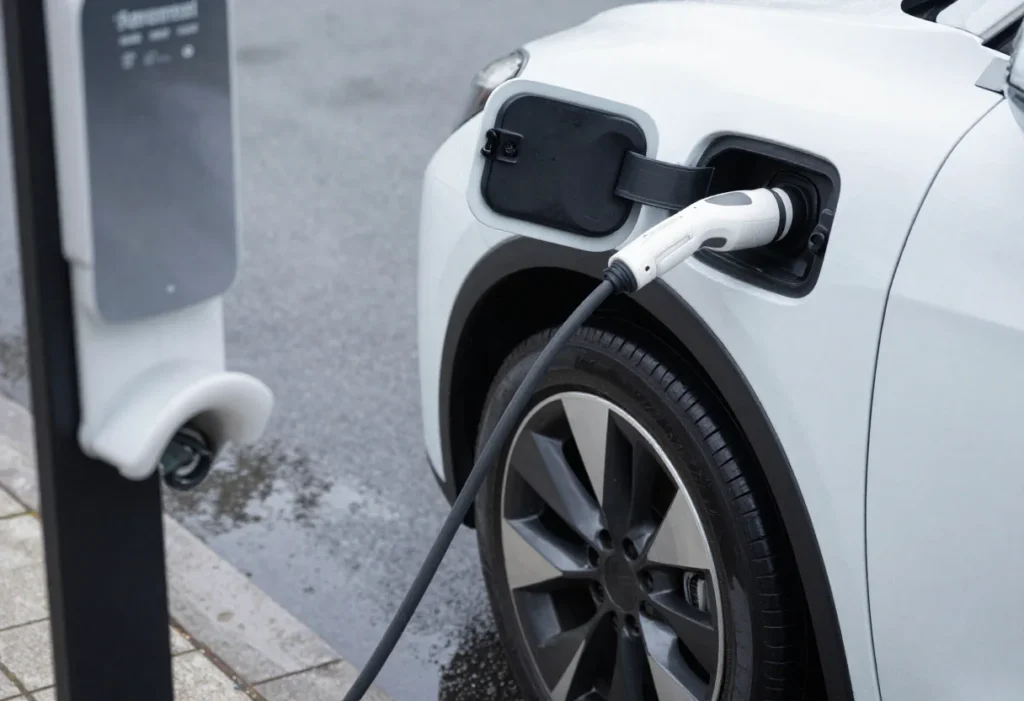
Although using an extension cord seems like an easy EV charging solution when your charging cable doesn’t quite reach, it can create more problems than it solves.
That’s because EV charging pulls steady power for hours, and most extension cords simply aren’t built for that kind of demand.
So, this can lead to overheating, equipment damage, or even safety risks.
Here are all the risks of using an extension cord for EV charging:
1. Extension cords and EV charger can get damaged
Most household extension cords are made for short-bursts of power, like when you run a vacuum or power a drill for a few minutes.
EV charger amperage, on the other hand, is quite high. It draws 8-16 amps of power just on a simple Level 1 EV charger. And for higher-speed Level 2 EV chargers, this is much more.
In simpler words, the charger pulls a continuous load for several hours, which is not what standard cords are designed for.
This mismatch can cause the cord to heat up significantly, which increases the risk of melting extension cord components, EV charger damage, or even fire.
2. Heat buildup increases fire risks
When an extension cord carries more power than it’s meant to, that extra current creates heat.
Initially, the cord may just feel warm. But over hours of charging, that heat can grow to a point where:
- The insulation softens or melts
- Wiring inside the cord degrades
- Plug connections loosen or spark
All of this significantly raises the risk of an extension cord fire and other more severe electrical and fire hazards.
3. Voltage drop results in slower charging
Another problem with charging EV using extension cords is an imminent voltage drop.
You see, long or thin cords create resistance, which lowers the voltage that actually reaches your charger.
And when that happens:
- Charging becomes slower
- Your charger or EV may draw more current to compensate
- Your EV’s charging equipment can get stressed over time
This creates inefficiency and can damage even the best Level 2 EV chargers.
4. Electric shock risks
Many extension cords aren’t designed to be used outdoors or in damp conditions.
So, if you run a cord across a driveway or through a garage opening, moisture or rain can create electric shock risks.
And if the cord’s insulation has already been compromised by heat, the risk becomes even more serious.
5. Manufacturer warranty problems
Automakers and charging equipment makers explicitly forbid using extension cords for EV charging in their manuals.
So, if you use an extension cord and something goes wrong, like a fire or equipment failure, you won’t be able to claim warranty.
That’s because if investigators find an unauthorized extension cord was used, there’s a chance your warranty or insurance claim could be denied.
In short, here are the risks of using an extension cord for EV charging:
| Problem | Effect |
| Continuous load | Cords heat up, risk of fire |
| Heat buildup | Insulation melts, plugs loosen |
| Voltage drop | Slower charging, strain on equipment |
| Outdoor use | Shock hazards in wet conditions |
| Warranty | May void EV or charger warranty |
Are there any exceptions when you can use extension cord for EV charging?
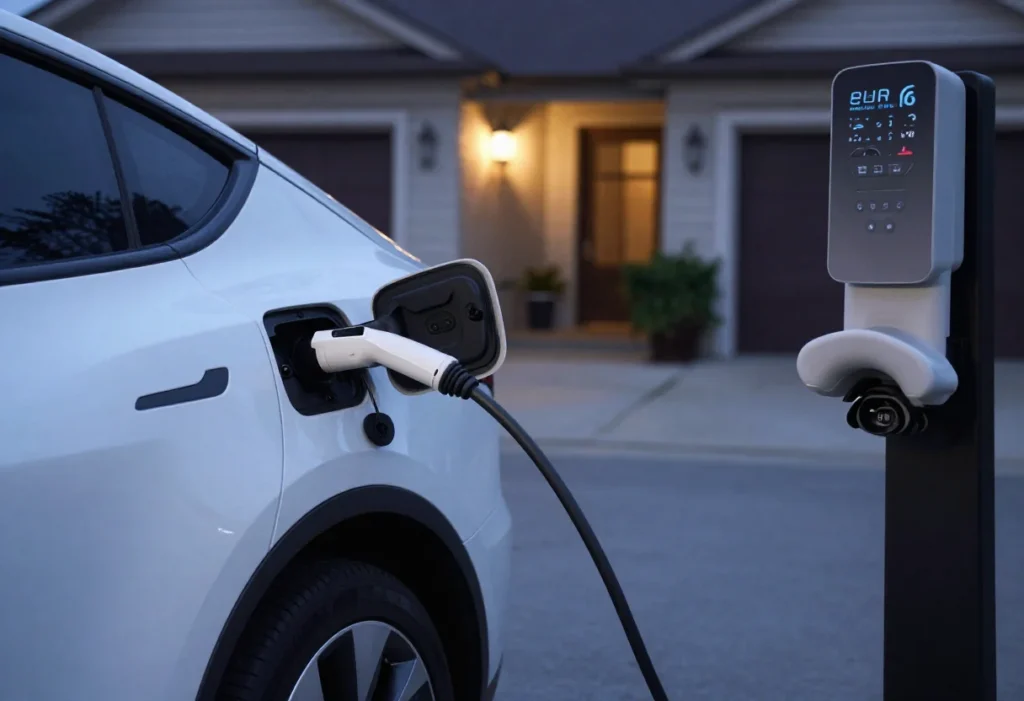
A lot of EV owners wonder if they can use heavy-duty or outdoor extension cords.
After all, there are thicker, heavy-duty extension cables on the market rated for higher current (like 12 AWG or larger).
And since they carry more power, some EV owners do use them temporarily.
But even these extension cords:
- Are not certified for EV charging use
- Still create extra resistance and heat potential
- Add more points of failure (plugs, connectors, contacts)
So, while a heavy-duty cord might work in a pinch, it’s still not the recommended solution, especially for regular charging.
Here’s what should you do instead:
1. Use a longer EV charger cable
Many Level 2 home chargers come with cables up to 25 feet long. So, if your current cable doesn’t reach, a longer one might solve the problem without any unsafe workarounds.
2. Install a dedicated outlet or EVSE
Having a dedicated EV charging outlet installed by a licensed electrician is the safest, most reliable long-term option.
This way:
- You get proper wiring
- The outlet is on its own circuit
- Charging is efficient and safe
Plus, this will also let you safely add an electrical load sharing device if your electrical panel has reached its capacity.
3. Use hardwired home charging stations
Hardwired EV chargers eliminate the need for extension cords altogether, and they charge faster and more reliably.
No More $10k Electrical Panel Upgrade to Charge Your EV at Home
simpleSwitch lets you add a Level 2 EV charger to your home without an expensive electrical panel upgrade. Your EV charges safety without panel overload.
- 30-day risk-free returns
- NEMA-rated
- Works with your existing panel
Final Words
Are you still wondering: Can I use an extension cord to charge my EV at home?
Well, technically, it might work. But it’s unsafe, inefficient, and strongly discouraged by both EV and extension cord manufacturers.
That’s why I suggest you not use extension cord to charge EV.
If you want safe, reliable charging without risking fire hazards or damage to your EV or home electrical system, the best solution is installing a proper EV charging outlet.
Got more questions about EV charging safety or how to set up an EV energy management device in your home?
You can get in touch with us!
At simpleSwitch Io, we offer UL-listed and made in the USA electrical load management systems designed to make EV charging safe, efficient, and future-proof.
Frequently asked questions
Can I use a heavy-duty extension cord for EV charging?
Even if an extension cord is heavy-duty or rated for higher amperage, it’s still not a safe choice for charging an EV.
EV chargers pull continuous, high electrical loads for several hours, something most cords, even thick ones, aren’t designed for.
In fact, using one can cause heat buildup, insulation damage, or fire hazards. So, the safest approach is always a proper dedicated outlet or EVSE.
Will using an extension cord slow down charging?
Yes, using an extension cord can slow down your EV charging.
Long or thin cords create electrical resistance, which lowers the voltage reaching your charger.
This is called voltage drop. And when this happens, your charger may take longer to fill the battery, and it can also put extra strain on the charging equipment.
Is it legal to run a charging cord through a doorway or window?
In many parts of the country, running a charging cord through a doorway or window permanently can violate electrical codes.
Cords in these situations are exposed to weather, foot traffic, or pinching, creating safety hazards like shocks or short circuits.
Even if it seems convenient, this setup is usually not allowed by building regulations.
Can using an extension cord affect my EV warranty?
Yes, using an extension cord can potentially affect your EV warranty.
Automakers and charging equipment manufacturers specifically advise against it in their manuals.
And if damage occurs while using an unauthorized cord, like a fire or charger failure, your warranty claim might be denied.