



One of the first questions that pops up when you think about charging your electric car at home: How many amps do I actually need for my charger?
You search it up online and see numbers like 32, 40, 48, or even 80 amps thrown around. And it can quickly feel overwhelming.
But here’s the good news: You probably don’t need as many amps to charge your EV at home.
In this blog, I will break down everything you need to know about EV charger amperage without all that complicated EV jargon You’ll know:
- What amperage really means for EV charging
- How it affects charging speed
- What amperage your car actually needs
- How to choose the right amperage without overpaying
So, let’s get started.
Key takeaways
- More amps does mean faster charging, but only if your car can handle it.
- 32A-40A is enough for most EV owners.
- Higher amps can be expensive, so don’t pay for power you don’t need.
- Even with a high-amp charger, your car can only take what it can handle.
- Smart load management devices like simpleSwitch allow safe and efficient high amp charging.
What does EV charger amperage really mean?

When we talk about electric car charger amperage, we’re really talking about how much electrical current is flowing into your car while it charges.
And just in case you’re confused, amperage is different from voltage. Here’s how:
- Voltage is like the pressure pushing the electricity through the circuit.
- Amperage is how much electricity is actually moving through your EV charger.
So, the more amps your charger can provide, the faster electricity can flow into your car’s battery.
This does mean faster car charging, but only up to a point.
Here’s the thing: Your car can only take as many amps as its onboard charger can handle.
Meaning even if you install a charger that can deliver a ton of amps, your car won’t use all of it if it doesn’t have the capacity.

No More $10k Electrical Panel Upgrade to Charge Your EV at Home
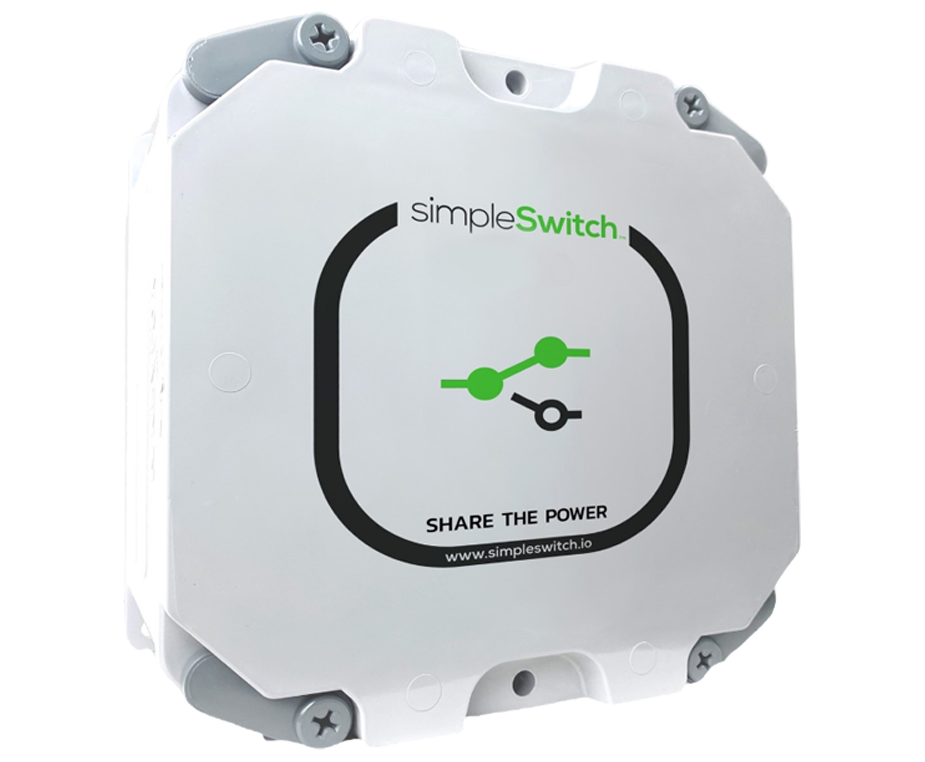
simpleSwitch lets you add a Level 2 EV charger to your home without an expensive electrical panel upgrade. Your EV charges safety without panel overload.
 30-day risk-free returns
- NEMA-rated
- Works with your existing panel
How does amperage affect EV charging speed?
For starters, EV charging speed depends on three things:
- Charger amperage
- Charger outlet voltage (whether you’re using 120V vs 240V outlet)
- Your car’s onboard charger limit
Now, let’s say you use a standard 240V Level 2 EV charger for home charging. In this case, here’s how your Level 2 charger amperage affects charging speed:
| Charger Amps | Approx. Miles Added per Hour | Best For |
| 16A | 10-15 miles/hour | Apartments, very light driving |
| 24A | 15-20 miles/hour | Small EVs, short commutes |
| 32A | 20-25 miles/hour | Most homeowners |
| 40A | 25-30 miles/hour | Longer daily driving |
| 48A | 30-35 miles/hour | Fast overnight charging |
| 64-80A | 35-45+ miles/hour | Rare in homes |
How many amps for EV charger do you really need?

When it comes to choosing the right amperage for your EV charger, the biggest question you need to answer is: How much do you actually drive each day?
For instance, most EV drivers drive around 30-50 miles each day, on average. And they park their car for 8-12 hours overnight at home.
Now, let’s say you drive 40 miles per day. In this case:
- A 32A charger can replace that 40 miles in about 2 hours.
- A 40A charger would do it even faster, likely in just 1.5 hours.
- A 48A charger would finish the job super quickly.
But the point is, higher amperage doesn’t always mean faster or better.
In fact, in most cases, you don’t need a super high electric car charging amperage to cover your daily driving needs. A 32A or 40A charger will usually be more than enough to recharge your car overnight while you sleep.
Here’s a simple guide to choose the right EV charger amperage:
Choosing the right amperage for your EV charger really comes down to a few factors like how much you drive, what your car can handle, and what your electrical panel can support.
Overall, here’s the electric car charger amperage you should go for and why:
Go for 32A charging if:
- You drive under 50 miles per day: If your daily commute or driving distance is on the lower end (think around 30-40 miles), a 32A charger is more than enough. It will charge your car fully overnight while you’re sleeping and won’t put too much strain on your electrical system.
- You want the lowest installation cost: A 32A charger is usually the most affordable to install, especially if your home already has a basic electrical setup.
- Your panel is limited: Not every home’s electrical panel can handle high-amperage chargers. If your panel isn’t that powerful, stick with a 32A charger and you won’t have to worry about costly upgrades.
Go for 40A charging if:
- You drive 50-70 miles per day: If you’re commuting longer distances or taking occasional road trips, a 40A charger will allow you to recharge faster overnight. It is perfect for people who drive a bit more than the average EV owner.
- You want faster overnight charging: If you’d like to add a bit more range during the night, say, 25-30 miles per hour of charging, a 40A charger is a good option.
- You have moderate panel capacity: A 40A charger needs a bigger electrical panel, but it’s not as heavy-duty as a 48A or 80A setup. So, if your home’s electrical panel can handle the extra load without an EV charger panel upgrade this is a great option.
Go for 48A charging if:
- Your car supports it: Some EVs, like the Tesla Model 3 or Ford Mustang Mach-E, can take advantage of the faster charging speed that a 48A charger offers. If your car is designed to handle that kind of power, this could be a good choice.
- You want faster top-ups: If you occasionally need to charge up quickly, like for a road trip or a busy day, a 48A charger will get you more range in less time.
- You use an energy management device: 48A chargers use a lot of energy, and at times they even overload electrical panels and cause breaker trips. So, if you have a home energy management system, you can safely use higher amperage chargers like this without overloading your system.
You don’t really need an 80A charger, so go for one only if:
- You drive very long distances daily: If your daily driving is well over 100 miles, an 80A charger could be useful. It will charge your car really fast, which is important if you need to turn it around quickly for another trip. However, this is only necessary for heavy daily driving.
- You have a large electrical service: An 80A charger needs a strong electrical panel to support it. If you already have a large, modern electrical system with plenty of power, then it could make sense to go for the higher amps.
- You are willing to foot higher costs: While an 80A charger will charge your car super fast, it comes with higher installation costs, both for the charger itself and any potential electrical upgrades needed.
But for the average homeowner, 32A or 40A covers daily needs easily. Overnight charging fully charges your car and makes ultra-fast home charging unnecessary.
In short, here’s how to choose the right EV charger amperage:
| Go with | If you |
| 32A | Drive under 50 miles/day, want low installation cost, have a limited panel |
| 40A | Drive 50-70 miles/day, want faster charging, have moderate panel capacity |
| 48A | Want fast top-ups, use load management, and the car supports it too |
| 80A | Drive long distances daily, have a large electrical system, understand higher costs |
Note: Your car might limit charger amperage
Here’s something many new EV owners are not aware of: Your car has a limit on how many amps it can handle, no matter how powerful your home charger is.
That’s because every EV has an onboard charger that sets the maximum amperage it can accept.
For instance:
- Chevy Bolt’s 2017-2021 models can handle around 32A charger
- Nissan Leaf can handle around 32A charger
- Tesla Model 3/Y can handle around 48A charger
- Ford Mustang Mach-E can handle around 48A charger
So, if your car can only handle 32A, installing a 48A or 80A charger won’t make it charge faster.
You’d just be paying extra for a charger and installation that your car can’t fully use.
Bonus: Your EV charger amps should never be more than 80% of total breaker amps

EV charging is considered a continuous load. And as per National Electrical Code requirements, EV chargers can only use 80% of a circuit’s capacity.
Here’s what it means:
| Breaker Size | Max Charging Amps |
| 40A breaker | 32A charging |
| 50A breaker | 40A charging |
| 60A breaker | 48A charging |
| 100A breaker | 80A charging |
This is why a 40A charger needs a 50A breaker, and a 48A charger needs a 60A breaker.
Does higher amperage affect your electricity bill?
The short answer is: Not really.
You see, your electricity cost depends on how much energy (or kWh) you use, and not how fast you charge.
So whether you charge:
- Slowly at 32A
- Or faster at 48A
You’ll still use roughly the same amount of energy to fill your battery.
But that said, faster charging might:
- Concentrate usage into shorter time periods
- Make it easier to take advantage of off-peak rates
So the real savings come from when you charge, and not your EV charger amperage.
What limits the total electric car charger amps that you can actually use?
You might be thinking if you could just install the highest amp charger possible.
But let me tell you, it’s not always that simple.
That’s because there are a few things that limit how much amperage your home can handle, including:
1. Your electrical panel capacity: If your panel is already near its limit, adding a high-amp charger can overload it.
2. Wiring size: Higher amperage requires thicker wires. If your current wiring isn’t rated for it, it needs to be upgraded.
3. Distance from panel to charger: The farther your charger is from the panel, the more complicated (and expensive) installation becomes.
4. Existing home load: Your AC, oven, and other appliances all share your home’s power. That affects how much extra load you can add.
So even if you want a 48A or 80A charger, your home setup might not support it without upgrades.
What if your electrical panel can’t handle higher EV charger amperage?
There might be situations when your electrical panel can’t handle a high amp EV charger.
Now, if you ask your electrician, they’ll most likely than not suggest you an electrical panel upgrade. And although this solves the problem, the upgrade can cost you $2,000-$5,000 or more.
But what if I told you that a panel upgrade is not always required.
Yes, that’s right.
With an electrical load sharing device like simpleSwitch, you can install and use a Level 2 EV charger without overloading your electrical panel.
simpleSwitch essentially lets your home share available power intelligently instead of forcing you to oversize your electrical system. It ensures you charge your car safely without breaker trips or safety hazards.
The best part?
It is totally legal and in compliance with electrical codes.
That’s amazing, isn’t it?
No More $10k Electrical Panel Upgrade to Charge Your EV at Home
simpleSwitch lets you add a Level 2 EV charger to your home without an expensive electrical panel upgrade. Your EV charges safety without panel overload.
- 30-day risk-free returns
- NEMA-rated
- Works with your existing panel
Final words
By now, I am sure you know exactly how much EV charger amperage you need to charge your electric vehicle at home.
You see, when it comes to EV charger amperage, bigger isn’t always better. That’s because the right amperage depends on:
- How much you drive
- What your car supports
- Your home’s electrical capacity
- Whether you use smart load management
For most homeowners, 32A-40A charging capacity works just fine.
And with ev charger energy management system, you can enjoy safe, flexible Level 2 charging without expensive electrical upgrades.
Got more questions or want to install simpleSwitch in your home?
Get in touch with us now to save money, avoid hassle, and keep your EV charged efficiently.
FAQs about electric car charger amperage
Does a higher-amp EV charger always charge faster?
Not necessarily.
Even if you install a higher-amp charger, your car can only use as many amps as its onboard charger allows.
For instance, if your car can only handle a 32A charging, installing a 48A or 80A charger won’t make it charge any faster.
So, make sure the charger matches what your car can handle to avoid wasting money on extra power that won’t help.
What amperage is best for most homeowners?
For most homeowners, a 32A or 40A charger is the perfect solution. These amperages are perfect for daily driving needs and will easily give you a full charge overnight.
Plus, they also won’t overwhelm your home’s electrical system, so you won’t need expensive upgrades.
How many amps is a fast charger?
When people say fast charger, they’re usually talking about DC fast charging, which is very different from home charging.
Unlike Level 2 chargers (which typically range from 16A to 80A), DC fast chargers operate at much higher amperage and voltage levels.
In most cases, DC fast chargers can deliver anywhere from 100 amps to 500+ amps. Also, some ultra-fast chargers can go even higher depending on the setup
But you won’t find these chargers at home. That’s because DC fast chargers are designed for public/commercial charging stations
For home charging, Level 2 charger amperage in the 32A to 48A range is usually more than enough to keep your EV fully charged for daily driving.
Do EV charger connectors affect amperage?
In most cases, it doesn’t.
Common EV connectors types include:
- J1772 (used by most EVs)
- NACS (used by Teslas and other EVs as a standard connector)
Both support a wide range of Level 2 EV charger amps, depending on the charger and setup.
So the connector itself isn’t a limiting factor.
Will a 48A charger damage my electrical panel?
It can, but only if your electrical panel isn’t strong enough to handle the extra load.
A 48A charger requires a larger, more capable panel, and if your home’s electrical system can’t support it, you might risk damaging the panel or tripping breakers.
That’s why using smart load management systems like simpleSwitch is important. They help manage the power to prevent overloading your system while still giving you the benefits of faster charging.
Do I need a panel upgrade for a higher-amp charger?
Not always.
In many cases, you don’t need to upgrade your electrical panel to use a higher-amp charger.
With smart load management systems, you can install a higher-amp charger and still avoid overloading your electrical panel.
These systems adjust the charging based on how much energy your home is using at any given time. So you get safe and efficient charging without needing an expensive panel upgrade.
How long does it take to charge overnight with 32A or 40A?
Most EVs will fully charge overnight (in 8-10 hours) with a 32A or 40A charger. These amperages are enough to replace the range you’ll need for the day, even if you drive 30-50 miles.
Is higher amperage worth the extra cost?
For most people, higher amperage isn’t worth the extra cost.
While it might seem tempting to go for a 48A or 80A charger, the truth is that most drivers don’t need that much power.


