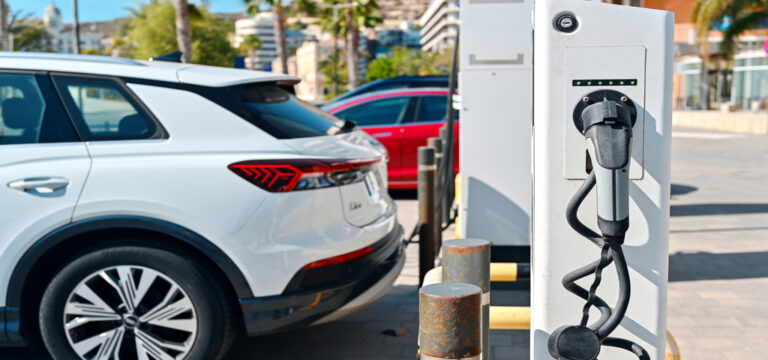
If you’re in the market for a home EV charger, you’ve probably come across either a 32 amp charger or a 40 amp charger.
These are common Level 2 EV chargers and most EV models in the country use.
So, what’s the difference between these chargers?
Well, practically speaking, the difference between a 32 amp and a 40 amp charger isn’t as big as you might think. More so when it comes to your actual day-to-day driving and charging needs.
In fact, a lot of EV owners end up spending more on the 40 amp charger without seeing much of a speed boost.
In this guide, I will explain it all. You’ll know:
- All the differences between a 32 amp vs 40 amp EV charger
- How much faster that 40 amp charger actually is
- What kind of electrical setup you’ll need for each
- The total cost of each charger type
- Which charger is best for most homes
And a lot more.
So, let’s get started.
Key takeaways:
- 32 amp chargers are usually enough for most EVs and homes.
- 40 amp chargers offer a slight speed boost but might require costly electrical upgrades.
- Charging time difference between 32 and 40 amps is minimal for overnight charging.
- Electrical system capacity is more important than choosing a higher-amp charger.
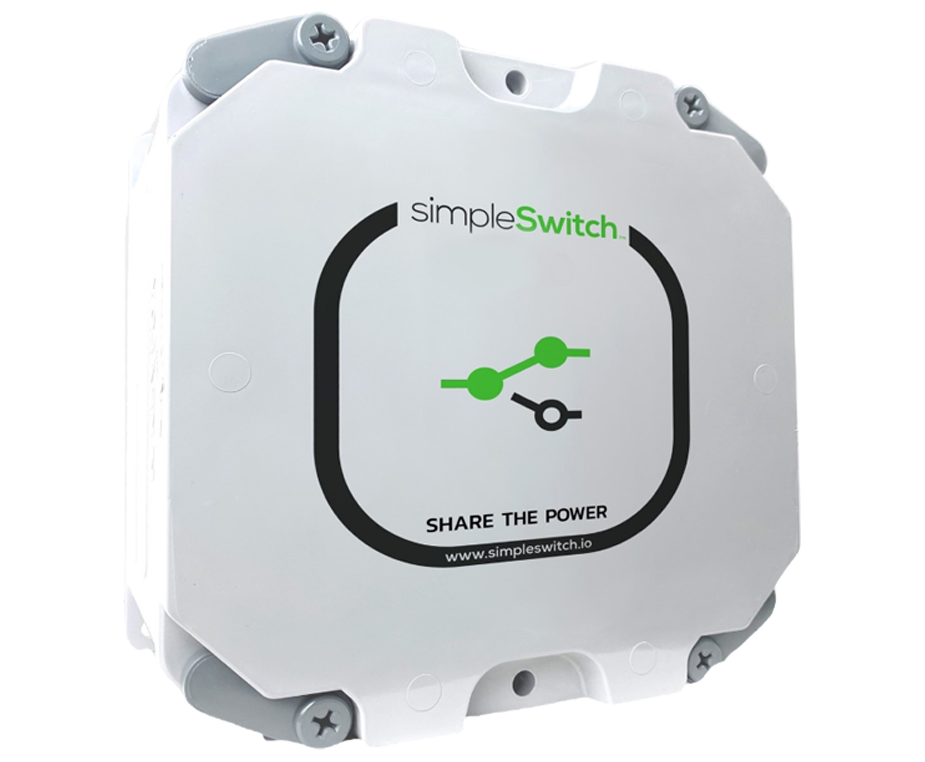
- simpleSwitch can help you charge faster without upgrading your electrical panel.
32 amp vs 40 amp EV charger: What’s the difference?

When you see 32 amp or 40 amp on an EV charger, you’re looking at the maximum electricity that the charger can deliver to your car at any given time.
But what does that really mean for you?
For starters, both 32 amp and 40 amp chargers are Level 2 EV chargers. Meaning they run on 240 volt outlets (read my blog on 120v vs 240v outlets for more on this) and are designed for home EV charging.
So far, so good, right?
The main difference between the two is how much power they can push to your car, and this is where things get interesting.
Here’s how the numbers break down:
- 32 amp charger: Can deliver about 7.6 kW of power to your car.
- 40 amp charger: Can deliver about 9.6 kW of power to your car.
In theory, more power means faster charging, which sounds great.
But here’s the catch: This difference doesn’t always translate to a huge improvement in charging speed when you’re charging at home.

No More $10k Electrical Panel Upgrade to Charge Your EV at Home
simpleSwitch lets you add a Level 2 EV charger to your home without an expensive electrical panel upgrade. Your EV charges safety without panel overload.
 30-day risk-free returns
- NEMA-rated
- Works with your existing panel
How much faster is a 40 amp electric car charger?
Here’s where your expectations can get a little off-track.
You might think that a 40 amp charger will drastically speed up the charging process. But in reality, the difference is smaller than it seems.
Let’s break it down:
- A 32 amp charger adds about 25-30 miles of range per hour of charging.
- A 40 amp charger adds about 30-35 miles of range per hour of charging.
So, the difference is around 5-8 extra miles of range per hour. That’s not a huge jump.
In fact, if you’re charging overnight (let’s say 7-8 hours), both chargers will get you from low to fully charged by morning, notwithstanding the EV charger amperage.
32 amp vs 40 amp EV charger: Here are all the differences in detail

Choosing between a 32 amp and a 40 amp charger can feel a little tricky, but it’s really all about understanding the differences.
Let me break down all the differences in detail so that you can make the best choice for your home.
1. Charging time
Let’s start with charging time.
Imagine you have a typical EV with a 70 kWh battery. Now, here’s how the two chargers compare:
- 32 Amp Charger: Takes about 8 hours to go from near-empty to fully charged.
- 40 Amp Charger: Takes around 6.5-7 hours, saving you about 1 to 1.5 hours.
But here’s the thing: The time savings only really matters if your battery is super low to begin with. And if you’re mostly charging overnight, that 1 to 1.5 hours isn’t a huge deal.
For everyday use, both chargers will likely have you fully charged by morning.
2. Electrical requirements
Both the 32 amp and 40 amp chargers do the same basic job, i.e., let you charge youR EV at home. However, there’s a big difference in how much power they pull from your home’s electrical system.
Let’s break it down:
32 amp Charger
A 32 amp charger is easier on your home’s electrical setup. Here’s why:
- It only requires a 40 amp breaker.
- You’ll need 8-gauge wire, which is relatively standard and not too bulky.
- This setup fits well into most homes without causing too much strain on your panel. For many homes, this is perfect because it won’t push your electrical system to its limits.
Now, because of these reasons, a 32 amp charger is much simpler to install and doesn’t require as much work on your home’s electrical system.
40 amp Charger
A 40 amp charger, on the other hand, pulls more power. Here’s how:
- It needs a 50 amp breaker, which is a bigger, more expensive one.
- The installation requires 6-gauge wire, which is thicker and can be a little more expensive.
- The 40 amp charger uses more continuous power. So it’s more likely to push your electrical panel closer to its limits, especially if you have other large appliances running at the same time.
Essentially, the 40 amp charger can add more strain on your electrical system. And this can lead to more costly upgrades or repairs if your panel is already near its max capacity.
3. Total cost (charger unit, accessories, and installation)
When it comes to setting up an EV charger, the prices can vary quite a bit depending on the type of charger you choose, the installation requirements, and electrical work.
Here’s a breakdown of what you can expect to pay:
32 amp Charger
A 32 amp charger is generally the more affordable option, both in terms of the charger itself and installation. Here’s what you’re looking to pay:
- Charger price: The cost of a 32 amp Level 2 charger typically ranges from $400 to $600.
- Wiring and breaker: For a 32 amp setup, you’ll need 8-gauge wire and a 40 amp breaker. This is fairly standard and requires less heavy-duty equipment, making the overall cost of wiring and materials lower.
- Installation costs: On average, installing a 32 amp charger costs between $500 to $1,000. If your electrical panel is already in good shape, the installation cost will be on the lower end.
- Total cost: You’re generally looking at an all-in cost of around $900 to $1,600 for a full 32 amp EV charger installation.
40 amp Charger
If you go for a 40 amp charger, the cost of installing EV charger will be a bit higher. And while the increase in charging speed isn’t huge, the additional costs do add up.
Here’s what you can expect to pay:
- Charger price: A 40 amp Level 2 charger will usually run between $600 and $900. These chargers can handle more power and may have additional features like Wi-Fi connectivity or app integration.
- Wiring and breaker: For a 40 amp charger, you’ll need 6-gauge wire and a 50 amp breaker. These thicker wires and larger breakers cost more.
- Installation costs: The installation cost for a 40 amp setup is typically between $800 and $1,500. If your home’s electrical panel is older or if you need to upgrade wiring or breakers, this could go higher.
- Total cost: All in all, you’re looking to pay around $1,400 to $2,400 for a 40 amp EV charger installation.
In short, here are all the differences between a 32 amp vs 40 amp EV charger:
| Category | 32 Amp Charger | 40 Amp Charger |
| Charging Time | About 8 hours for a full charge. | About 6.5-7 hours for a full charge. |
| Electrical Requirements | 40 Amp breaker, 8-gauge wire. | 50 Amp breaker, 6-gauge wire. |
| Total Cost | $900-$1,600 total setup. | $1,400-$2,400 total setup. |
| Charger Cost | $400-$600. | $600-$900. |
| Panel Impact | Low impact, works for most homes. | May need panel upgrade. |
| Charging Speed | Adds 25-30 miles per hour. | Adds 30-35 miles per hour. |
| Best For | Single EV, overnight charging. | Multiple EVs, faster top-ups. |
Bonus: Which EV models use 32 amp vs 40 amp chargers?
If you’re wondering which EV models typically use a 32 amp vs a 40 amp charger, here’s what you should know:
32 amp chargers
These chargers are often used by EVs that don’t require ultra-fast charging speeds or have onboard chargers that max out at 32 amps.
Some EV models that use 32 amp chargers include:
- Nissan Leaf
- Chevrolet Bolt EV
- Hyundai Kona Electric
- BMW i3
40 amp chargers
These chargers are better suited for EVs that can handle faster charging or for homes with multiple EVs.
Some popular models that use 40 amp chargers include:
- Tesla Model 3 (Standard and Long Range versions)
- Ford Mustang Mach-E
- Audi e-tron
- Porsche Taycan
In short, here are the EV models that use 32 amp vs 40 amp chargers:
| Charger Type | EV Models |
| 32 Amp Charger | Nissan Leaf, Chevrolet Bolt EV, Hyundai Kona Electric, BMW i3 |
| 40 Amp Charger | Tesla Model 3, Ford Mustang Mach-E, Audi e-tron, Porsche Taycan |
Will a 40 amp charger require a panel upgrade?
The short answer is: It might need a panel upgrade. But there are ways to avoid it (and do so safely).
Here’s how:
Let’s say your home has a 100 amp electrical panel, or you already run a bunch of big appliances like a dryer, oven, and HVAC.
In this case, adding a 40 amp charger might push your system too close to its limits. This could lead to your electrician recommending a panel upgrade, which can be anywhere from $2,000 to $5,000 or more.
But then, you can use an electrical load sharing device like simpleSwitch and install a 40 amp EV charger without upgrading your panel.
A device like this efficiently shares your home’s existing power between high-power appliances. This allows you to use the spare power to charge your EV while other appliances are not in use.
That’s amazing, isn’t it?
32 amp vs 40 amp EV charger: Which one is better for your home?

For most EV owners, a 32 amp charger is usually the better choice. It is a solid and cost-effective option that works well in everyday situations.
But then there are situations where a 40 amp charger makes more sense to install.
Let’s have a closer look at this.
A 32 amp charger makes sense if:
1. You drive under 60 miles per day
If your daily commute is fairly short, let’s say under 60 miles, then the 32 amp charger should be more than enough to keep your car charged overnight.
2. You charge overnight
Most people charge their EVs overnight, and both 32 and 40 amp chargers will get you a full charge while you sleep.
With a 32 amp charger, you’re likely to be fully charged by morning. So the extra power from a 40 amp charger won’t really make a difference for your daily routine.
3. You have a single EV
If you have just one electric vehicle, a 32 amp charger is probably all you need.
Most EVs don’t require more than 32 amps for daily driving and will charge efficiently overnight. Plus, this helps keep your installation costs lower.
4. You want to avoid electrical upgrades
A 32 amp charger is much less likely to require an upgrade to your electrical panel. If your home has a smaller or older electrical panel, the 32 amp option will usually work without putting too much strain on your system.
5. Your car maxes out at 32 amps anyway
Some EVs are only capable of accepting 32 amps for charging. If your car is one of these, you won’t get any faster charging by going with the 40 amp option.
A 40 amp charger makes sense if:
1. You drive long distances daily
If you’re putting a lot of miles on your car each day, say, over 100 miles or more, you might like the slightly faster charging time of a 40 amp charger.
This could help you top up faster, especially if you don’t have much time to charge during the day or if you need to recharge quickly between trips.
2. You have multiple EVs
If you have multiple electric vehicles in your home, a 40 amp charger might make more sense, especially if they both need to be charged simultaneously.
The extra power could help ensure that both cars charge efficiently without slowing down too much.
3. Your panel has plenty of spare capacity
If your electrical panel has a lot of unused capacity and can handle the extra load from a 40 amp charger, then it might be worth considering.
However, you’ll still want to ensure you have a professional check your panel to avoid any issues down the line.
4. Your EV can actually accept 40 amps
Some EVs can handle more than 32 amps of power, and if your car is one of them, a 40 amp charger could be beneficial.
Check your car’s specs to see if it can accept the higher charging rate. If it can, you’ll be able to take advantage of the faster charge times that the 40 amp charger offers.
5. You want faster top-ups, not just overnight charging
If you’re someone who wants to charge quickly during the day or after short trips, a 40 amp charger can give you that extra power boost.
In short, here’s when to choose a 32 amp vs 40 amp EV charger:
| Scenario | Recommended Charger |
| Short daily commute, single EV | 32 Amp |
| Long daily commute, multiple EVs | 40 Amp |
| No electrical upgrades needed | 32 Amp |
| Car can handle higher charging rate | 40 Amp |
No More $10k Electrical Panel Upgrade to Charge Your EV at Home
simpleSwitch lets you add a Level 2 EV charger to your home without an expensive electrical panel upgrade. Your EV charges safety without panel overload.
- 30-day risk-free returns
- NEMA-rated
- Works with your existing panel
Final words
By now, I am sure you know all the differences between a 32 amp vs 40 amp EV charger. Also, you know which one is the right fit for your home based on your EV model, electrical capacity, and charging needs.
For most people, a 32 amp charger is all you need. It is cost-effective, easy to install, and works perfectly fine for daily driving.
On the other hand, 40 amp chargers can give you a slight speed boost, but the difference in charging time isn’t huge.
Also, a lot depends on your EV model, as electric cars by design specify a charger amperage.
For instance, while cars like Nissan Leaf and Chevrolet Bolt accept only 32 amp chargers, the likes of Audi e-tron and Porsche Taycan accept 40 amp chargers.
And in case you’re worried your electrical panel can’t accept a higher amp charger, you can use a smart energy load management system like simpleSwitch. This will let your EV charger safely share power with other high load appliances like dryers.
Sounds awesome, right?
Frequently asked questions
Is a 40 amp charger twice as fast as a 32 amp charger?
Not really.
While a 40 amp charger can deliver more power, the real-world difference in charging speed is usually only about 5 to 8 extra miles of range per hour.
So, a 40 amp charger isn’t twice as fast, and the time saved isn’t huge.
Will a 40 amp charger damage my EV battery?
No, it won’t.
Your EV’s onboard charging system is smart enough to control how much power it accepts from the charger.
It won’t let the charger push more current than it can handle, so there’s no risk of damaging your battery.
Whether you use a 32 amp or a 40 amp charger, your car decides the safe charging rate.
Can I upgrade from 32 amp to 40 amp later?
Yes, but there are a few things to consider.
Upgrading from a 32 amp to a 40 amp charger might require some changes, like new wiring, a larger breaker, or even an upgrade to your electrical panel.
It’s not always as simple as swapping out the charger itself. You’ll want to talk to an electrician to make sure your home’s electrical system can handle the higher power demand.
Is 32 amps enough for overnight charging?
Yes, for most EVs, 32 amps is definitely enough to fully charge your car overnight.
In fact, most people drive less than 60 miles per day, and a 32 amp charger will typically add between 25-30 miles of range per hour of charging.
If you charge for 7-8 hours overnight, your car will likely be fully charged by the time you wake up. So you don’t need to worry about running low on power.