Planning to buy a new EV in 2026?
If yes, I am sure you have heard about tax breaks like the famous $7,500 EV tax credit that save you money and recover some of the up-front cost.
In fact, this might be one of the biggest incentives for you to buy an EV instead of a gas or hybrid car.
However, before we begin, here’s something you should know: The federal New Clean Vehicle Credit that offered up to $7,500 tax credit for new EVs is no longer available after September 30, 2025. This also applies to the federal credits that reduced Level 2 EV charger installation cost.
But this doesn’t mean a new EV in 2026 has no tax benefits. Thanks to the One Big Beautiful Bill, there is now a new federal deduction for interest paid on qualifying car loans. And yes, EVs do qualify for this deduction.
So, do you get a tax break for buying a car in 2026?
Yes, but not in the way it has worked for the past few years.
In this blog, I have explained what tax breaks are available for EVs and how you can avail them. So, let’s get started.
Key takeaways
- You can get a tax break for buying a new car in 2026 through the new car loan interest deduction.
- The old $7,500 federal EV tax credit is no longer available after September 30, 2025.
- Qualifying EV buyers can deduct up to $10,000 in car loan interest per year, subject to income and vehicle requirements.
- A qualifying new EV can benefit from the car loan interest deduction if it meets the U.S. final assembly and other IRS requirements.
- You can also be able to deduct vehicle sales tax if you itemize your federal tax return and meet the requirements.
Do you get a tax break for buying a car in 2026?

Yes, you do get a tax break for buying a new car in 2026, but you don’t get a tax deduction simply because you bought an EV.
You see, the biggest new federal benefit available now is a deduction for interest paid on a qualifying EV loan. Under these rules, you can deduct up to $10,000 of qualified car loan interest per year for tax years 2025 through 2028.
The best part: You don’t have to itemize your deductions to claim it.
But there are some important rules here. For instance, your EV should be:
- New, not used
- Purchased for personal use
- Under 14,000 pounds GVWR
- Finally assembled in the United States
- Financed with a qualifying loan secured by a first lien on the vehicle
The loan must also have been incurred after December 31, 2024. Also, leases don’t qualify for this particular deduction.
And there’s an income limit too. The deduction starts phasing out when your modified adjusted gross income goes above $100,000 for single filers or $200,000 for married couples filing jointly. And it phases out completely at $150,000 and $250,000, respectively.

No More $10k Electrical Panel Upgrade to Charge Your EV at Home
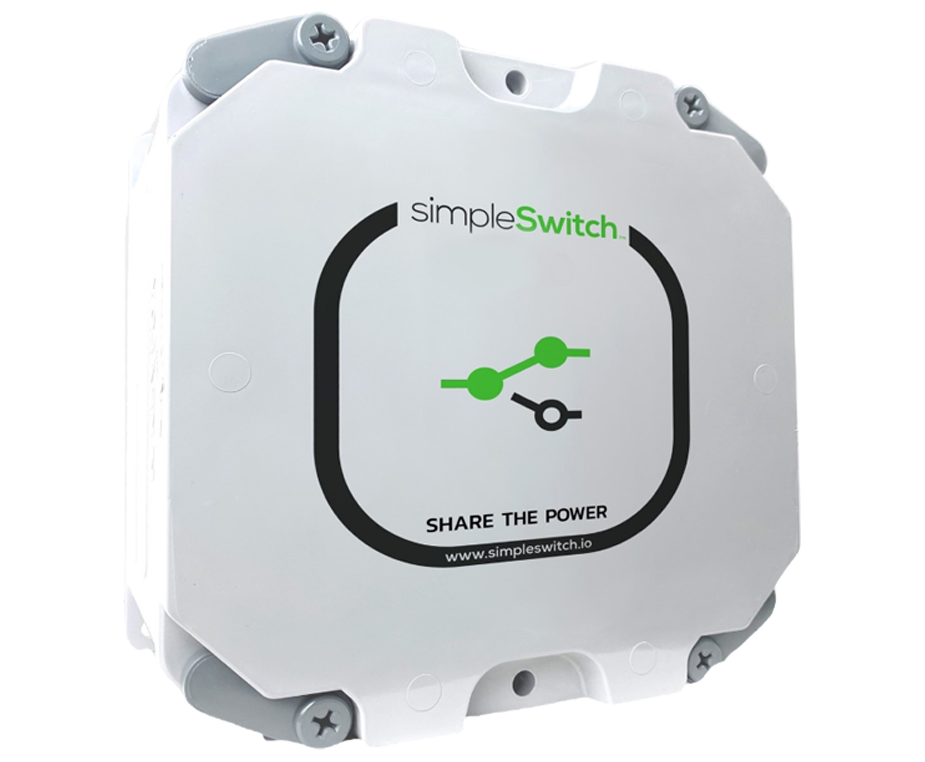
simpleSwitch lets you add a Level 2 EV charger to your home without an expensive electrical panel upgrade. Your EV charges safety without panel overload.
 30-day risk-free returns
- NEMA-rated
- Works with your existing panel
Here’s a simple way to understand whether or not do you get a tax break for buying a car:
| If you | Can you get the deduction? |
| Buy a new car with a qualifying loan | Potentially |
| Buy a used car | No |
| Lease a new car | No |
| Buy a new U.S.-assembled EV | Potentially |
| Take the standard deduction | Yes |
| Pay more than $10,000 in qualifying interest | Only up to $10,000 can be deducted |
Is there a tax credit for buying a new car in 2026?
No, there isn’t.
You see, things have changed quite a bit since the last year.
The federal New Clean Vehicle Credit is no longer available for vehicles acquired after September 30, 2025. The same deadline applies to the federal Previously-Owned Clean Vehicle Credit.
So, if you buy a new EV in 2026, you cannot claim the old $7,500 federal EV tax credit.
You might still find EV websites talking about the $7,500 credit when you search for EV tax incentives. But that information is outdated.
The old credit could provide up to $7,500 for an eligible new clean vehicle, but the One Big Beautiful Bill accelerated its expiration.
That’s why for 2026 EV buyers, the focus has shifted from the old EV credit to other available tax benefits, including state-specific EV tax credits and the new car loan interest deduction.
What was the clean vehicle tax credit?
The clean vehicle tax credit was a federal tax credit that reduced the cost of buying a new or used EV. For new EVs, this credit could be worth up to $7,500.
But if you’re buying a new EV today, you can’t claim that credit. It is only available for qualifying vehicles acquired on or before September 30, 2025.
Pro tip: Don’t assume that because a vehicle is electric, it automatically qualifies for the new deduction. The vehicle still needs to meet the IRS requirements, including the U.S. final assembly requirement.
Does an EV qualify for the new car loan interest deduction?

Yes, an EV does qualify.
But here’s the catch: The tax deduction isn’t an exclusively EV-specific benefit.
The IRS rules apply to all qualifying new passenger vehicles, EV included. This means a qualifying EV receives the same loan-interest deduction as any other car.
Now, in order to avail this loan interest deduction, your car should be new, purchased for personal use, weigh less than 14,000 pounds GVWR, and have undergone final assembly in the United States. Modern EVs with NACS charging port such as Tesla Model S, Hyundai Ioniq 5, do qualify for these requirements.
Also, the loan must be secured by a first lien on the vehicle and originated after December 31, 2024.
Note: You will need to include the vehicle’s VIN on your tax return when claiming the deduction.
TL;DR: Here’s what EV tax benefits look like in 2026
| Question | Answer |
| Can you get the old $7,500 EV credit? | Not for an EV acquired after Sept. 30, 2025 |
| Can an EV qualify for the new loan-interest deduction? | Yes, if it meets all federal requirements |
| Can you deduct up to $10,000? | Yes, up to $10,000 of qualifying interest per tax return per year |
| Does the EV need U.S. final assembly? | Yes |
| Can a used EV qualify for this loan-interest deduction? | No |
| Do you need to itemize? | No |
Can you deduct sales tax when buying a new car?
If you itemize your deductions, you might be able to deduct state and local sales tax you paid when buying a vehicle.
But you’ll have to choose between deducting state and local sales tax or state and local income tax. You can’t deduct both.
This can be particularly useful if:
- You live in a state without an individual income tax, such as Florida or Nevada.
- Your deductible sales taxes are higher than your state and local income taxes.
And yes, the sales tax on a qualifying new EV can count too.
However, as I said earlier, this isn’t an EV-specific tax break. It is a general tax deduction that can apply to qualifying vehicle purchases.
Pro tip: The rules also changed under the new tax law, so don’t assume the old $10,000 SALT (state and local taxes) limit still tells the whole story for 2026. The IRS’s 2025 Instructions now list a $40,000 SALT deduction limit for individuals, subject to an income-based limitation, with a $20,000 limit for married taxpayers filing separately.
So, is buying an EV in 2026 still worth it for the tax benefits?
Yes, EVs are worthwhile. But I wouldn’t buy an EV just because I think I am going to get a big federal tax credit.
The $7,500 federal credit is no longer available for a vehicle acquired after September 30, 2025. So I would look at the larger picture instead.
If I am financing a qualifying new EV, the new car loan interest deduction will reduce my taxable income. And I can still benefit from a sales tax deduction if I itemize and meet the requirements.
Pro tip: Before signing the paperwork, ask the dealer for the vehicle identification number (VIN), the final assembly location, and the loan details. You’ll need accurate information to determine whether you qualify for the deduction.
No More $10k Electrical Panel Upgrade to Charge Your EV at Home
simpleSwitch lets you add a Level 2 EV charger to your home without an expensive electrical panel upgrade. Your EV charges safety without panel overload.
- 30-day risk-free returns
- NEMA-rated
- Works with your existing panel
Final words
So, do you get a tax break for buying a car in 2026?
Yes, you can.
But if you’re buying an EV, the tax situation is very different from what it was until last year.
The old $7,500 federal clean vehicle credit is no longer available for EVs acquired after September 30, 2025.
But you might be able to deduct up to $10,000 of interest paid on a qualifying new car loan, including a qualifying EV.
Thankfully, what’s not changed is how easily you can charge an EV at home and save money.
You see, no matter what EV you buy in 2026, you can charge it at home using a Level 2 charger even if your home’s electrical panel is capacity. All you need is an EV load sharing device like simpleSwitch.
simpleSwitch uses spare electrical power from other high-appliances in your home such as dryer or induction cooktop to safely charge your EV. This saves you up-to $10,000 in unnecessary electrical panel upgrades.
Got more questions or want simpleSwitch for your home?
You can get in touch with us!
We offer nationwide shipping and our team is here to provide technical support and answer all your questions about EV load sharing.
FAQs about car tax breaks in 2026
Do you get a tax break for buying a car in 2026?
Yes.
If you buy a qualifying new vehicle and finance it with an eligible loan, you can be able to deduct up to $10,000 of qualified car loan interest. You can also qualify for a sales tax deduction if you itemize and meet the requirements.
Is there a tax break for buying a new car?
Yes.
For 2026, the main federal tax break for a new personal vehicle is the car loan interest deduction. It can apply to qualifying new cars, trucks, SUVs and EVs, subject to the IRS requirements.
Is there a tax credit for buying a new car in 2026?
Not the old federal EV credit.
The federal New Clean Vehicle Credit is no longer available for vehicles acquired after September 30, 2025.
Can you claim a new car on taxes?
You generally can’t deduct the purchase price of a personal car simply because you bought it.
However, if you finance a qualifying new vehicle, you might be able to deduct the interest paid on the loan. The deduction is available even if you take the standard deduction.
What is the clean vehicle tax credit?
The clean vehicle tax credit was a federal tax credit for qualifying electric, plug-in hybrid and fuel-cell vehicles.
For eligible new vehicles, the credit could be worth up to $7,500. However, the federal credit is no longer available for vehicles acquired after September 30, 2025.