



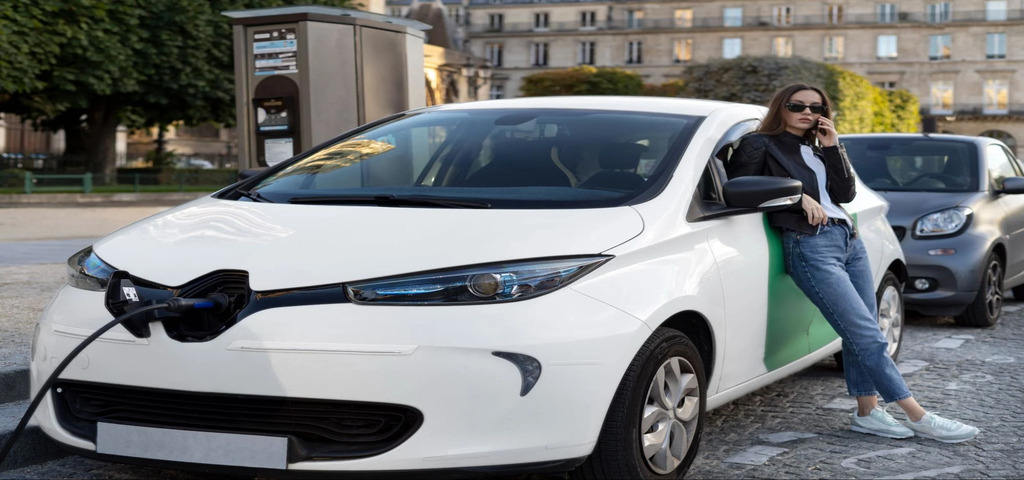
For most US drivers, an electric car is worth buying in 2026 if:
- You own a home with a place to charge
- Drive at least 8,000 miles a year
- Plan to keep the vehicle for five years or more.
Apart from this, the EV math has become too tight, and it makes sense to wait.
The biggest reason is that the $7,500 federal EV credit ended for vehicles acquired after September 30, 2025. This has changed the value equation for every EV buyer in the country.
Thankfully, there are still a lot of incentives such as state programs, utility rebates, manufacturer discounts, and a lower cost to charge EV at home.
But since the tax credit era is over, whether it makes sense to get an electric car now comes down to your own numbers.
In this guide, I will walk you through the real cost of owning, charging, and maintaining an EV in 2026. Plus, a simple 5-question test to help you decide whether it is worth buying an EV now.
Key takeaways
- Electric cars are cheaper to run and maintain than gas cars, but it isn’t cheap to buy one.
- Home charging makes EV ownership much easier and more convenient.
- Most daily driving needs are easily covered by modern EV range.
- Public charging is faster, but home charging is way cheaper and convenient.
- You don’t always need an electrical panel upgrade to charge at home.
Is it worth buying an electric car?
Yes, an electric car is worth buying in 2026 for most drivers who can charge at home. Here, your fuel and maintenance savings run between $1,000 and $1,500 per year compared with a gas car.
Plus, modern EVs handle daily commuting, errands, and weekend trips without the range anxiety that existed a few years ago.
However, you now have to see if the higher upfront price is justified without a federal tax credit. This depends on three things:
- How you charge
- How much you drive
- How long you plan to keep the vehicle
If home charging is available, your annual mileage is above 8,000, and you’ll keep the EV for at least five years, the numbers do work. But if any of these is missing, an EV might not be worth the investment.

No More $10k Electrical Panel Upgrade to Charge Your EV at Home
simpleSwitch lets you add a Level 2 EV charger to your home without an expensive electrical panel upgrade. Your EV charges safety without panel overload.

 30-day risk-free returns
- NEMA-rated
- Works with your existing panel
Why is it worth it to buy an electric car?

There are a lot of reasons why more people are choosing electric cars now than ever before. And it’s not just about trying new technology or being eco-friendly.
In fact, for a majority of EV buyers, it simply comes down to saving money and time, and making everyday driving easier.
After all, from lower fuel and maintenance costs to the convenience of charging at home, EVs remove many hassles that come with gas cars.
Let’s see some of the reasons why people find it worth buying an electric car.
1. Lower fuel costs
Charging an electric car at home usually costs about $8-$10 in utility bills, which is far less than filling up a gas tank.
Plus, electricity prices tend to be more stable than gasoline, which means fewer surprises when it comes to monthly costs.
A lot of utility companies also offer lower off-peak rates, which means charging overnight can be even cheaper.
Over time, these savings add up, saving you over $1,000 each year just by switching from gas to electric.
2. Lower maintenance and repair costs
Electric cars are much simpler than gas vehicles, and they don’t need oil changes, spark plugs, timing belts, or exhaust system repairs.
And since there are fewer moving parts, there’s simply less that can wear out or break. This means fewer trips to the repair shop and fewer unexpected bills.
In fact, a lot of EV owners I talk to tell me that routine maintenance is minimal and far less stressful than what it used to be for gas cars.
3. You can charge at home instead of visiting gas stations
One of the biggest everyday benefits of EV owning is that you can charge your electric car at home.
Here, instead of planning trips around gas stations, you just plug in your car at night and let it charge while you sleep. You wake up in the morning, and your car is ready to go.
This completely removes the weekly gas station routine. It is more convenient, time saving, and makes driving feel easier.
4. Electric cars are better for the environment
As per the Environmental Protection Agency, greenhouse gas emissions from EVs are far lower than from your average gasoline vehicle.
Yes, electricity can come from different sources. But EVs usually create less pollution overall compared to gas cars.
For homeowners who care about reducing their environmental impact, this is a big plus. After all, driving an electric car is a simple way to lower your carbon footprint without changing your daily routine or giving up comfort.
5. EV driving experience is smoother and quieter
Electric cars feel different the moment you start driving.
They’re very quiet, with no engine noise or vibration. Acceleration is smooth and instant, without gear shifts or delays.
This makes city driving and highway merging feel effortless.
A lot of drivers also find EVs less tiring to drive, especially in traffic.
Simply put, once you get used to the smooth, calm driving experience of an electric car, going back to a traditional gas vehicle often feels like a step backward.
6. More choices and better models than before
Today, there are more electric cars to choose from than ever before. That’s because almost every major automaker now offers multiple EV models, including affordable compact cars, SUVs, and family-friendly options.
This also goes for home Level 2 EV charger models that are cheaper, faster, and safer than before.
Also, battery range has improved, and the newer models are designed with everyday drivers in mind.
This means you no longer have to compromise on space, comfort, style, or luxury to go electric.
In short, here’s why it is worth buying an electric car:
| Benefit | Explanation |
| Lower fuel costs | Electricity is cheaper and more stable than gas |
| Lower maintenance | No oil changes or engine-related repairs |
| Home charging | Plug in at night, drive in the morning |
| Environmental impact | No tailpipe emissions while driving |
| Driving experience | Smooth, quiet, and easy to drive |
| More choices | Wide range of models in 2026 |
Bonus: How much does an electric car really cost to own in 2026?
The total 5-year cost of ownership for a typical mid-range EV in the US runs between $32,000 and $42,000. This includes purchase, electricity, insurance, maintenance, and depreciation.
A comparable gas vehicle over the same period costs between $36,000 and $48,000.
Here’s where your money actually goes after you buy a car:
| Cost bucket | Typical EV (for 5 years) | Typical gas car (for 5 years) |
| Fuel or electricity | $3,900 | $10,250 |
| Maintenance | $2,500 to $3,500 | $4,500 to $6,000 |
| Insurance | $8,500 to $10,000 | $7,500 to $9,000 |
| Depreciation | 45% to 55% of purchase | 40% to 50% of purchase |
| Home charger setup | $800 to $2,500 one-time | N/A |
Note: Although the EV comes out ahead by $3,000 to $8,000 for the average driver, the gap narrows for low-mileage EV drivers.
Should I buy an electric car now or wait?

The answer comes down to three things: Home charging, annual mileage, and how long you’ll keep the vehicle.
Buy an EV now if you can charge at home, you drive at least 8,000 miles a year, and you can lock in manufacturer discounts or a state incentive that hasn’t run out of funding.
Wait if you’re hoping the federal credit returns, if you drive fewer than 8,000 miles, or if you can’t set up home charging.
Let’s see when you should switch to an EV right away and when you should wait in detail.
You should buy an EV now if:
1. You can install a home EV charger
If you can install a Level 2 EV charger at home, owning an electric car becomes super easy. You’ll save money on charging, avoid public charging stress, and start each day with a full battery ready for your daily driving.
2. You mainly drive short to medium daily distances
Electric cars are perfect for commuting, errands, school runs, and local trips of about 30, 40, or 50 miles a day. If most of your driving fits within a normal daily range, an EV can easily handle your needs without constant charging.
3. You plan to keep your vehicle for several years
The longer you own an electric car, the more you benefit from lower fuel and maintenance costs. Over time, these savings make a big difference compared to owning a gas vehicle.
4. Incentives or rebates are available in your area
Some states, utilities, cities, manufacturers, and other programs offer EV-related discounts or rebates that help reduce the up-front cost.
And although the IRS has discontinued the $7,500 federal tax credit for EVs bought after September 30, 2025, local incentives can still help you save money.
Note: The federal New Clean Vehicle Credit and Previously-Owned Clean Vehicle Credit are no longer available for EVs bought after September 30, 2025. So don’t decide whether or not to buy an EV based on IRS incentives you might have heard or read about earlier.
You should hold off from buying an EV if:
1. You cannot charge at home and rely only on public chargers
Without home charging, owning an EV can feel less convenient and more expensive. That’s because public charging involves waiting, higher costs, and less flexibility, especially during busy times.
You can of-course own an EV without home charging, but you should run the numbers first. If most of your charging will happen at public DC fast chargers, some of the fuel savings we talked about earlier can disappear.
2. Your local charging network is still very limited
If fast chargers are hard to find where you live or travel, daily EV ownership might feel stressful, especially if you need emergency charging. So, I suggest you wait until more chargers are available.
This is especially important if you regularly take long road trips. An EV can be perfectly practical for your daily commute. But it will be inconvenient if your daily route involves driving through Route 50 in Nevada or Route 83 from North Dakota to Texas that feature severe charging deserts.
3. Your current car is new and fully paid off
If your gas car is reliable, fully paid-off, and doesn’t cost much to maintain, there’s no urgent need to switch.
After all, replacing a perfectly good paid-off car with a new EV means taking on a new monthly payment, insurance costs, depreciation, and the upfront cost of the vehicle. And even with lower fuel and maintenance costs, it won’t make this investment financially worthwhile.
4. You prefer to wait for even lower prices or new models
Electric cars will continue to improve, and prices are likely to drop further, which will reduce more barriers to EV adoption. So, if you’re not in a rush, waiting could give you more choices and better deals in the future.
Note: There’s a downside to waiting too. You could spend another year or two paying for gasoline and maintaining your current car while waiting for the perfect EV to arrive. So, instead of waiting, I suggest you switch to EV if you have a good EV charging setup, you like an EV model, and the ownership math works for you.
In short, here’s when to buy an electric car now and when to wait:
| Situation | Buy Now or Wait? |
| You can charge at home | Buy now |
| You drive daily short distances | Buy now |
| Local incentives are available | Buy now |
| Your car is new and paid off | Wait |
| No home charging available | Wait |
| Local chargers are limited | Wait |
Bonus: You can buy an EV and charge it at home even with limited electrical panel capacity

Yes, that’s right.
Homeowners are told by their electricians that they must upgrade their electrical panel before installing an EV charger.
But in reality, that is not always necessary.
That’s because you can use an electrical load sharing device like simpleSwitch. This way, your EV charger can safely share power with other appliances in your home.
It makes installing a home EV charger possible without spending thousands of dollars in electrical panel upgrades.
No More $10k Electrical Panel Upgrade to Charge Your EV at Home
simpleSwitch lets you add a Level 2 EV charger to your home without an expensive electrical panel upgrade. Your EV charges safety without panel overload.
- 30-day risk-free returns
- NEMA-rated
- Works with your existing panel
Should I buy an electric car? A 5-question test
Use this test whether you’re buying a new or a used electric car. You should buy an EV in 2026 if you can answer yes to at least four of these five questions:
- Do you own or long-term rent a home where you can install a charger?
Without home charging, most of the fuel savings disappear.
2. Do you drive at least 8,000 miles per year?
Low-mileage drivers never accumulate enough savings to offset the higher purchase price.
3. Do you plan to keep the car for five years or more?
EV depreciation curves punish short-term owners.
4. Does your state offer an active EV rebate worth at least $2,000?
Without the federal credit, the state incentive is doing the heavy lifting on upfront cost.
5. Can you comfortably absorb a purchase price roughly $5,000 higher than a comparable gas car?
Financing that gap eats into the running-cost savings.
Is EV worth it if you live in cold weather?
An electric car is worth buying in a cold climate if its rated range is at least 40% higher than your typical daily driving needs. That’s because EVs lose roughly 20% to 40% of range in freezing temperatures, mostly to cabin heating and battery conditioning.
So if you drive 40 miles a day, look for an EV rated at 200 miles or more, and you’ll still have comfortable margin through winter.
Is a used electric car worth buying?
A used electric car is worth buying in 2026 if it is less than four years old, has at least 70% battery capacity remaining, and comes with transferable battery warranty coverage.
Steep first-owner depreciation on EV models means you can often get a 2 or 3 year old vehicle for 40% to 50% off its original price. This is where the used EV math becomes really attractive.
Pro tip: Battery degradation is different from battery failure. A battery that has lost some of its original capacity can still be perfectly usable for years.
So, is buying an electric car worth it in 2026?
An EV can be an excellent purchase if you can charge at home, drive predictable distances, keep the car for several years, and choose a model that fits your budget.
Here, you’ll spend less on fuel and routine maintenance, and you’ll get the convenience of starting most days with a charged car.
But if you depend on public charging, have a short-term ownership plan, or are replacing a perfectly good paid-off car, the financial case might not be as strong.
Thankfully, you don’t have to guess.
Look at the purchase price, expected fuel savings, maintenance, insurance, depreciation, charging costs, and home installation costs. Then compare that number with what you would spend keeping your current gas car. That’s the number that will tell you whether an EV is actually worth it for you.
You might also want to read: Do You Get A Tax Break For Buying A Car In 2026?
Conclusion
By now, I am sure you know why is an electric car worth it and why it isn’t.
Simply put, if you are someone who can charge at home and want lower operating costs, fewer maintenance issues, and a better daily driving experience, EVs are absolutely worth the investment.
That’s because EV technology is more mature, more affordable, and easier to live with than ever before.
Got more questions or want to install an energy load management system for home EV charging?
You can get in touch with us!
At simpleSwitch, we bring state-of-the-art EV energy management systems that let you charge your EV at home without upgrading your electrical service. Our award-winning EVEMS devices are UL-listed and proudly engineered and made in the USA.
Frequently asked questions
Is it cheaper to own an electric car than a gas car?
Yes, it is.
Electric cars cost less to operate because electricity is cheaper than gasoline and maintenance costs are lower.
You do not need oil changes, and there are fewer parts that can wear out.
Over several years, drivers end up spending less overall compared to owning a traditional gas vehicle, especially if they charge at home.
Can I charge an electric car at home without upgrading my electrical panel?
Yes, in many homes it is possible to charge an electric car without upgrading the electrical panel.
Energy load management systems like simpleSwitch allow your EV charger to share available power with other heavy-load appliances safely.
This helps avoid overloading your electrical system and removes the need for a costly panel upgrade.
How long does it take to charge an electric car at home?
With a standard Level 2 home charger, most electric cars can be fully charged overnight. This is usually enough to cover normal daily driving.
Slower wall-outlet charging is also possible, but it adds much less range per hour and is better suited for light driving needs.
Are electric car batteries reliable in 2026?
Yes.
Modern EV batteries are designed to last for many years and come with long warranties, often around eight years or more.
Nowadays, battery technology has improved significantly, and real-world data shows that most batteries lose capacity very slowly when properly used.
Do electric cars depreciate faster than gas cars?
Some EVs do depreciate faster than comparable gas cars, but this isn’t true for every model.
Also, if you plan to keep your EV for many years, depreciation will matter less than it does for someone who changes vehicles every two or three years.
Are electric cars more expensive to insure?
They can be.
Some EVs can cost more to insure because repairs and replacement parts may be more expensive.
Should I wait for electric cars to become cheaper?
Electric cars are expected to continue becoming more affordable over time.
However, prices have already dropped compared to earlier years, and incentives are still available in many regions.
If you can charge at home and plan to use your EV on a daily basis, buying an EV now makes good financial sense.
Is public charging enough if I cannot charge at home?
Public charging can work, but it is usually less convenient and more expensive than home charging.
What happens to an electric car’s range in winter?
Cold weather can reduce EV range.
Recurrent’s 2025/2026 winter study of more than 30,000 EVs found that the vehicles retained an average of about 78% of their maximum range at 32°F and about 70% at 20°F. Much of this range loss comes from the energy required to heat the cabin and manage the battery in cold temperatures.
So, if you live somewhere with very cold winters, don’t buy an EV based only on its advertised range. Look at its real-world winter range and make sure it still comfortably covers your normal driving.


