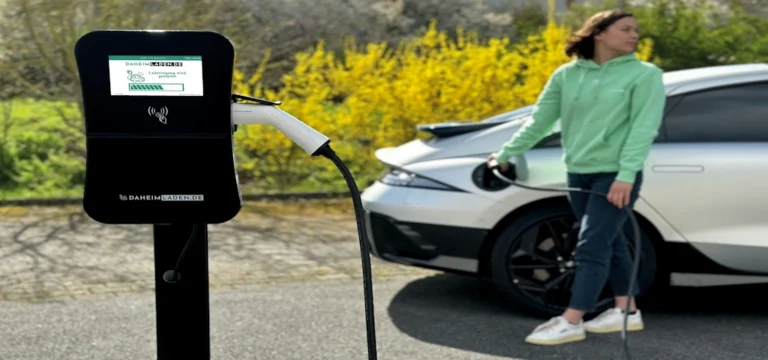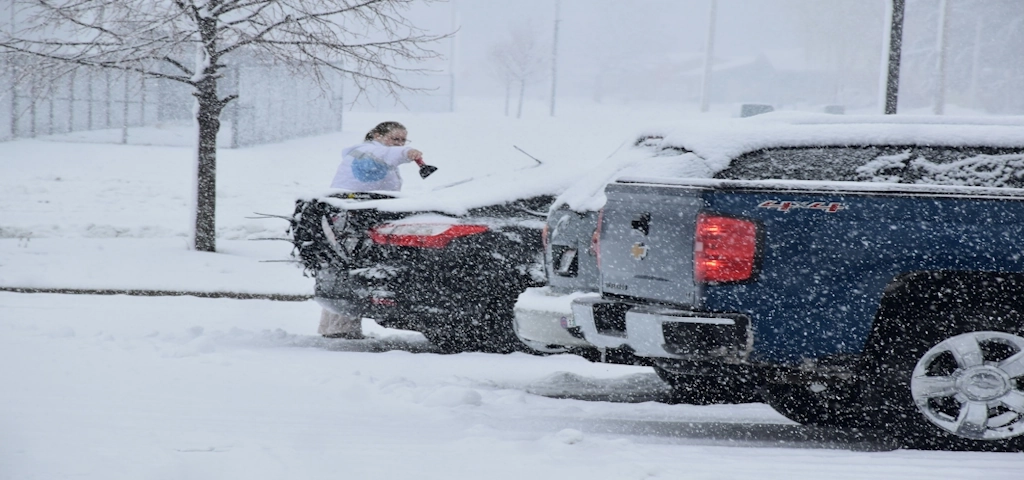
If you’ve ever plugged in your EV on a freezing winter morning, you’ve likely noticed that it charges way slower than usual.
And it isn’t just your car. Cold temperatures do slow down EV charging, reduce driving range, and even make DC fast charging take longer than expected.
So, if your EV is charging slower than it did a few months ago, it doesn’t necessarily mean there’s something wrong with your battery or charger.
You see, EV batteries work best within a certain temperature range. When they get too cold, the battery automatically limits how quickly it can accept power to protect itself.
This is a completely normal process and something every EV experiences during colder months.
Also, there are simple ways you can improve the speed of EV charging in cold weather.
In this blog, I will explain why EVs charge slower in cold weather and what you can do to get the best performance from your EV all winter long.
So, let’s get started.
Key takeaways
- Cold weather slows the chemical reactions inside EV batteries, reducing charging speed.
- Most EVs automatically limit charging in low temperatures to protect the battery.
- DC fast charging is affected more than Level 2 charging during winter.
- Battery preconditioning can significantly improve charging performance in cold weather.
- Charging after driving and keeping your EV plugged in can help reduce winter charging delays.
Why is EV charging in cold weather slower than usual?
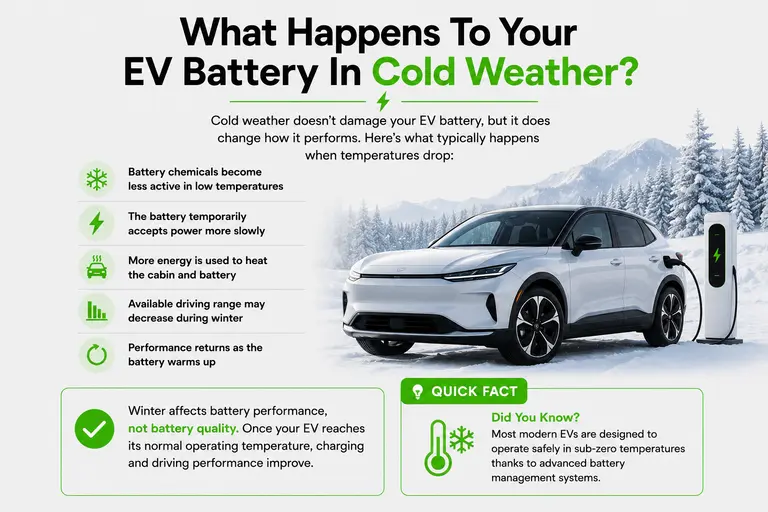
If you’re wondering why charging EV in cold weather takes longer, let me tell you it has nothing to do with EV charging standards or protocols. Instead, the answer comes down to how lithium-ion batteries work.
You see, every EV battery relies on chemical reactions to store and release energy. These reactions happen most efficiently when the battery is within its ideal operating temperature. But when temperatures drop, those chemical reactions naturally slow down.
As a result, the battery can’t accept electricity as quickly as it normally would. So, instead of allowing maximum charging speeds, your EV’s battery management system automatically reduces the amount of power flowing into the battery. This helps protect the battery cells from unnecessary stress and long-term damage.
That’s why EV charging in cold weather takes longer, even if you’re using the same charger you use every day.
This effect is even more noticeable when you’re trying to use a DC fast charger. That’s because even though the charger is capable of delivering a large amount of power, your vehicle will only accept what the battery can safely handle at its current temperature.

No More $10k Electrical Panel Upgrade to Charge Your EV at Home
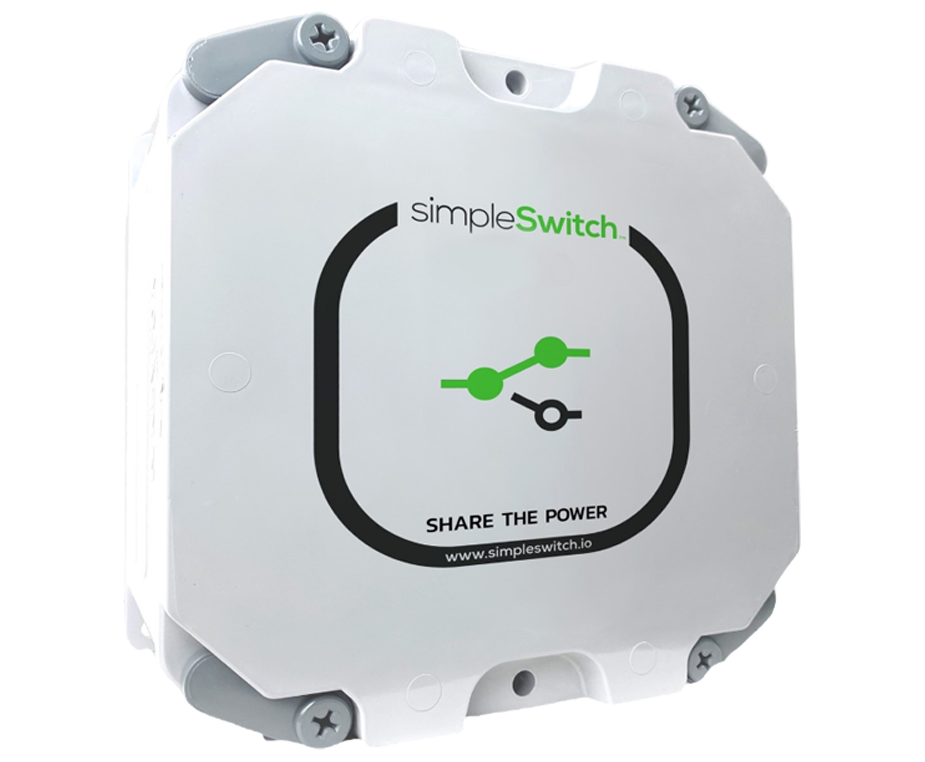
simpleSwitch lets you add a Level 2 EV charger to your home without an expensive electrical panel upgrade. Your EV charges safety without panel overload.
 30-day risk-free returns
- NEMA-rated
- Works with your existing panel
5 Biggest reasons why charging EV in cold weather is so slow
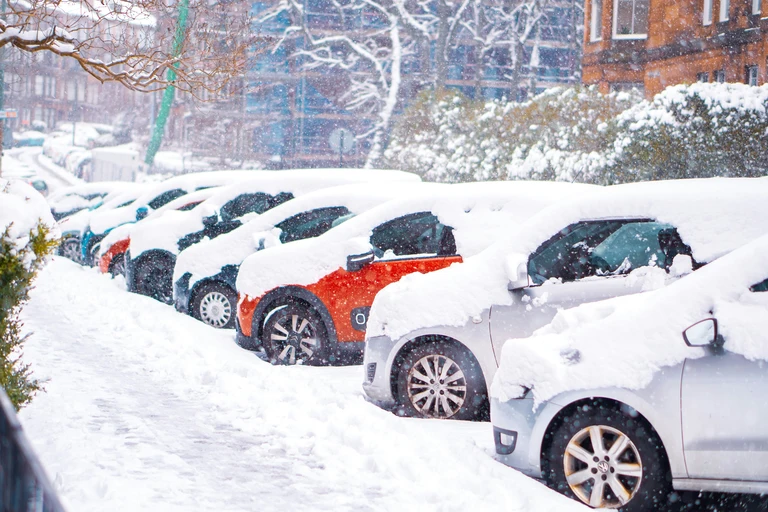
Now that you know why EV charging in cold weather slows down, let’s take a closer look at the biggest factors behind it.
Although cold temperatures are the main reason behind slow charging, they’re not the only thing affecting charging performance. In most cases, it’s a combination of your battery’s condition, charging method, and how your EV manages power during winter.
Here are the five biggest factors that slow down EV charging in cold weather:
1. Cold batteries can’t accept power as quickly
The biggest reason your EV charges slower in winter is that the battery itself is cold.
As I said earlier, lithium-ion batteries rely on chemical reactions to move energy between the battery’s electrodes. When temperatures drop, these reactions slow down, making it harder for the battery to accept power at its normal charging rate.
This is why you notice slower charging speeds first thing in the morning after your car has been sitting outside overnight. The battery simply needs time to warm up before it can charge at its normal speed.
2. Your EV automatically limits charging to protect the battery
Sometimes people assume their charger or type of EV connector they use are the reasons charging slows down in winter. But in reality, it’s usually the vehicle itself making that decision.
You see, every modern EV has a Battery Management System (BMS) that constantly monitors battery temperature, voltage, and overall health. And when the battery gets too cold, the BMS reduces charging speed to help protect the battery cells.
Simply put, your EV is choosing to charge more slowly because it’s safer for the battery.
While this can be frustrating when you’re in a hurry, it is actually helping extend your battery’s lifespan over the long run.
3. Your EV battery accepts even DC fast charging very slowly
If you’ve tried fast charging EV batteries in cold weather, you might have noticed that charging speeds are pretty much like regular Level 2 home charging.
That’s because DC fast chargers can only deliver as much power as your EV is willing to accept.
For instance, your EV might normally charge at 150 kW on a DC fast charger during mild weather. But on a freezing day, the battery might only accept a fraction of that until it warms up. And that’s completely normal.
Level 2 charging, on the other hand, is generally less affected because it already delivers power at a slower, more consistent rate. Also, since most Level 2 charging happens overnight, the battery also has more time to gradually warm up while charging.
4. Lack of battery preconditioning also slows down charging
Many newer EVs come with a feature called battery preconditioning. If your vehicle supports it, this feature warms the battery before you arrive at a charger, helping it reach a more efficient operating temperature. As a result, the battery can accept power much more quickly once charging begins.
For instance, if you’re heading to a DC fast charger on a cold day, your EV might automatically start warming the battery while you’re driving there. And by the time you plug in, the battery is already much closer to its ideal temperature, which significantly improves charging performance.
However, not every EV includes this feature. So, if your EV lacks battery preconditioning, EV charging in cold weather can be slow.
5. Your battery’s charge level also affects winter charging speeds
Cold weather isn’t the only thing determining how fast your EV charges. Your battery’s state of charge also plays an important role.
Just like during warmer months, EV batteries charge fastest when they’re relatively low and gradually slow down as they fill up. Now combine that with a cold battery, and charging can become even slower.
For instance, if your battery is already at 85% on a freezing day, your EV will significantly reduce charging speed because the battery is both cold and nearly full.
That’s why many manufacturers recommend charging to around 80% for everyday driving unless you need the extra range for a longer trip.
In short, here’s why EV charging in cold weather is slow:
| Factor | How it affects charging |
| Cold battery | Slows the battery’s chemical reactions, reducing charging speed |
| Battery Management System | Limits charging to protect the battery in low temperatures |
| DC fast charging | Charging speeds are reduced until the battery warms up |
| No battery preconditioning | The battery starts charging while still too cold |
| High battery charge level | Charging naturally slows as the battery gets closer to full |
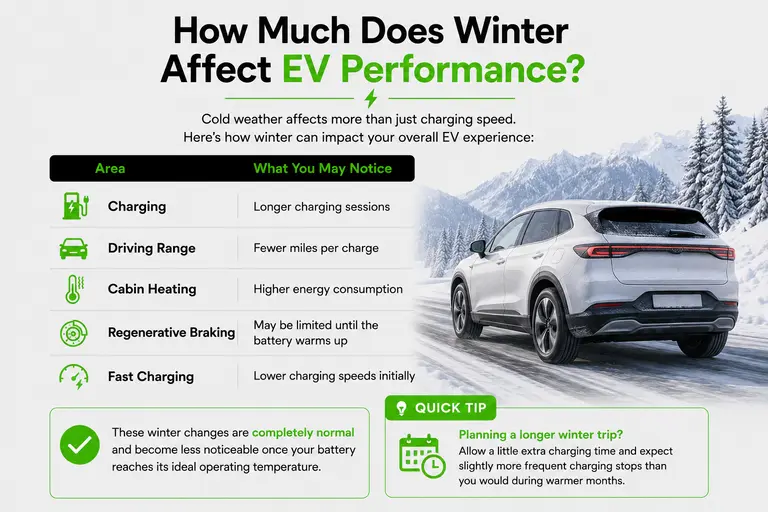
How to fix slow EV charging in cold weather?
While you can’t control the weather, there are several things you can do to improve EV charging in cold weather.
Most of these tips are simple, require very little effort, and can help your EV charge more efficiently throughout the winter.
Here are some of the best ways to speed up winter charging:
1. Charge your EV after driving
One of the easiest ways to improve charging performance is to plug in your EV soon after you’ve been driving.
Why?
That’s because the battery is already warmer than it would be after sitting outside for several hours. And a warmer battery can accept power more efficiently, which results in faster charging speeds.
So, instead of waiting until late at night, you can plug in your EV when you get home from work or after running errands.
2. Use battery preconditioning if your EV supports it
If your EV has battery preconditioning, make sure to use it during winter. This feature warms the battery before charging, allowing it to reach a more suitable operating temperature.
Many modern EVs automatically start preconditioning the battery when you navigate to a DC fast charger. Others let you manually enable the feature through the vehicle’s infotainment system or mobile app.
This is one of the most effective ways to improve fast charging EV batteries in cold weather.
3. Park indoors whenever possible
Keeping your EV in a garage or another sheltered area can help prevent the battery from getting as cold overnight.
Even if your garage isn’t heated, it will usually be warmer than the outside air, especially during freezing temperatures.
This means your battery starts the day at a higher temperature, which can reduce charging delays the next morning.
4. Keep your EV plugged in during very cold weather
If you’re expecting extremely cold temperatures, it’s a good idea to leave your EV plugged in when it’s parked at home.
Electric vehicles can use a small amount of power from the charger to help maintain the battery’s temperature instead of relying only on the battery itself.
This doesn’t mean the battery stays warm all the time, but it can help reduce the effects of extreme cold and improve charging performance when you need to drive again.
5. Use Level 2 charging for everyday winter charging
If you’re still relying on a standard household outlet, winter might be a good time to install a Level 2 charger at home.
Level 2 charging delivers more power than Level 1 charging, making it a much more practical option for everyday charging, especially during colder months.
For most homeowners, plugging in overnight with a Level 2 charger means waking up to a charged vehicle that’s ready for the day ahead.
6. Preheat the cabin while your EV is still plugged in
Unlike traditional cars, EVs don’t need to idle to warm up the motor. However, preheating the cabin before you leave can make winter driving much more comfortable.
Better yet, if your EV is still plugged in while you’re preheating, it can use electricity from the charger instead of drawing as much energy from the battery. This can help preserve your EV range in cold weather, giving you more miles once you hit the road.
In short, here’s how to improve EV charging in cold weather:
| Tip | Why it helps |
| Charge after driving | The battery is already warmer, so it charges more efficiently. |
| Use battery preconditioning | Brings the battery closer to its ideal charging temperature. |
| Park in a garage | Helps keep the battery from getting extremely cold overnight. |
| Leave your EV plugged in | Helps the battery better manage cold temperatures. |
| Install a Level 2 charger | Makes overnight winter charging faster and more convenient. |
| Preheat while plugged in | Improves comfort while helping preserve driving range. |
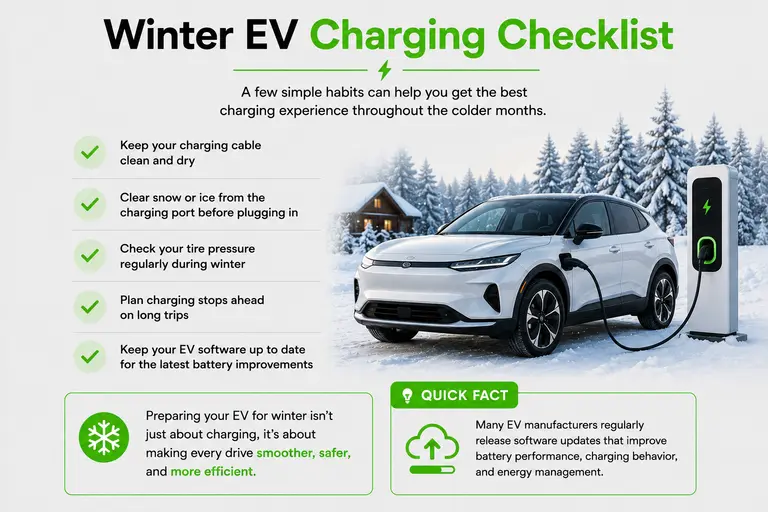
Can a load sharing device help in winter?
Yes, it can.
While a load sharing device won’t warm up your EV battery, it can make Level 2 home charging much easier to install, something especially valuable during winter.
How?
You see, many older homes weren’t designed with electric vehicles in mind. As a result, they often don’t have enough spare electrical capacity to support a Level 2 EV charger without upgrading the electrical panel.
A load sharing device like simpleSwitch solves this problem. It allows you to safely install a Level 2 charger using your existing electrical service by sharing power from other high-power appliances to charge EV.
No More $10k Electrical Panel Upgrade to Charge Your EV at Home
simpleSwitch lets you add a Level 2 EV charger to your home without an expensive electrical panel upgrade. Your EV charges safety without panel overload.
- 30-day risk-free returns
- NEMA-rated
- Works with your existing panel
Final words
As you can see, EV charging in cold weather is naturally slower than it is during warmer months.
But that doesn’t mean there’s anything wrong with your EV. Cold temperatures slow down the battery’s chemical reactions, and your vehicle automatically reduces charging speeds to protect the battery until it reaches a safer operating temperature. This is simply how modern EVs are designed to operate.
The good news is that a few simple habits can make a noticeable difference. For instance, charging after driving, using battery preconditioning, parking indoors when possible, and relying on Level 2 charging at home can all help improve your winter charging experience.
Got more questions or looking to upgrade your home EV charging setup?
You can get in touch with us!
At simpleSwitch, our EV energy management system is designed to help homeowners safely install a Level 2 EV charger without upgrading their existing electrical panel. Our EVEMS devices are UL-listed and proudly made in the USA.
FAQs about EV charging in cold weather
Does cold weather affect EV charging?
Yes, it does.
Cold temperatures slow down the chemical reactions inside lithium-ion batteries, making it harder for them to accept power quickly. As a result, your EV may charge more slowly during winter, especially if the battery is very cold.
Do EVs charge slower in cold weather?
Yes. Most EVs automatically reduce charging speeds in low temperatures to protect the battery from unnecessary stress. Once the battery warms up, charging speeds usually improve.
How much range do EVs lose in cold weather?
The amount of range loss varies depending on the vehicle, battery temperature, driving conditions, and how much energy is used to heat the cabin.
In general, it’s normal to see some reduction in EV range in cold weather, particularly during freezing temperatures. However, the exact amount will differ from one EV to another.
Do electric cars lose charge in cold weather?
Cold weather doesn’t usually cause an EV battery to lose charge while it’s parked. However, low temperatures can temporarily reduce the battery’s available energy, making it seem like the battery isn’t lasting as long.
Using features like cabin heating can also increase energy consumption during winter, which can reduce your overall driving range.
Do electric cars need to warm up?
Unlike gasoline-powered vehicles, electric cars don’t need to idle before driving.
However, preheating the cabin and, if available, using battery preconditioning while the vehicle is plugged in can improve comfort, preserve driving range, and help the battery perform more efficiently.
How can I keep my EV battery warm in winter?
The best way to keep your EV battery warm in winter is to park indoors, leave your EV plugged in, and use battery preconditioning if your vehicle supports it.
Charging soon after driving can also help because the battery will already be warmer than if it has been sitting outside for several hours.