Thinking about installing a Level 2 charger at home?
If yes, you’re probably asking the same question every new EV owner asks, that is, how much does Level 2 EV charger installation cost?
Now, here’s a simple answer: A typical Level 2 EV charger installation costs between $800 and $2,500 all-in.
This includes the charger hardware, electrician labor, wiring, permit, and installation.
But here’s the thing: The total price you pay depends entirely on your home’s electrical setup.
For some homeowners, the job is super simple. For others, a panel upgrade or long wiring run can increase the cost significantly.
In this blog, I will break everything down so you know exactly how much you’re paying and what for.
So, let’s dive right in.
Key takeaways
- Level 2 EV charger installation costs between $800-$2,500, depending on your home’s setup.
- The biggest cost factors are electrical panel capacity, distance to the charger, and whether it’s indoor or outdoor.
- Panel upgrades can cost anywhere from $800 to $4,500, or more if needed.
- Outdoor installations cost $200-$1,000 more due to weatherproofing needs.
- Permits usually cost between $50-$300.
- Trenching for long wiring runs can add $300-$2,000+ to the cost.
How much does Level 2 EV charger installation cost?

For starters, you can expect to pay between $800 and $2,500 for a complete Level 2 charger installation in your home.
But then, the cost of installing an EV charger at home varies, and the exact price you pay will depend on a lot of factors.
But then, the exact price you pay will depend on a lot of factors.
For instance, if your electrical panel is close to the garage and you already have enough capacity, the job is usually quick and inexpensive.
However, if you need an electrical panel upgrade or you’re running wiring across the house or outdoors, the cost naturally climbs.
Simply put, the final price is based on how much work your home needs to safely power a Level 2 charger.
And it is only once an electrician has seen your setup that you’ll have a clear idea of where you fall in that range.

No More $10k Electrical Panel Upgrade to Charge Your EV at Home
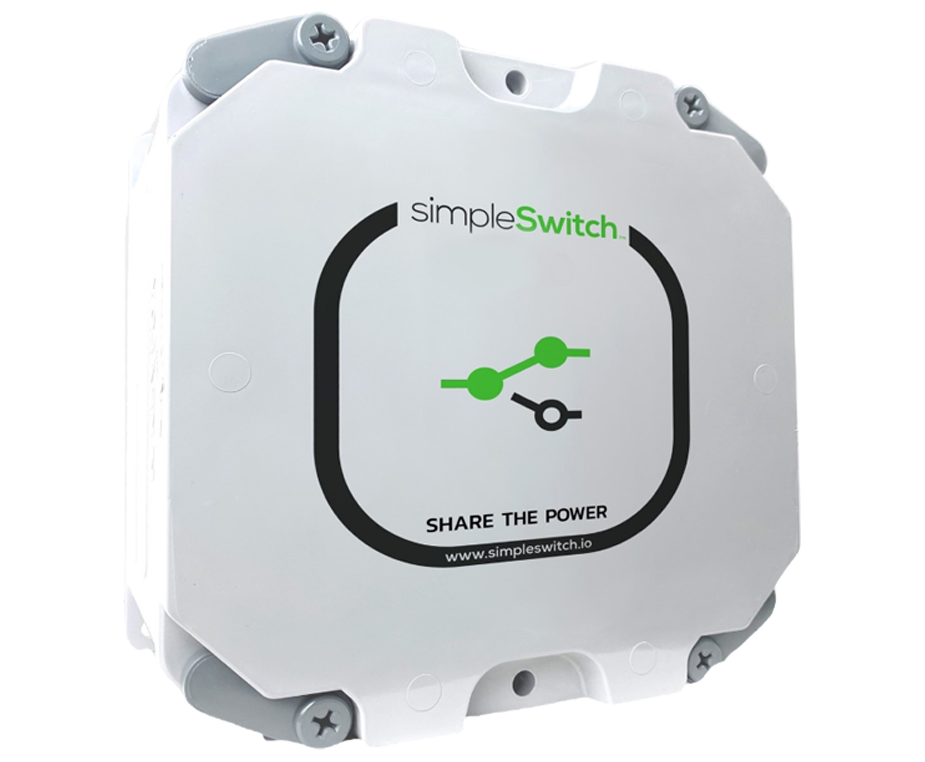
simpleSwitch lets you add a Level 2 EV charger to your home without an expensive electrical panel upgrade. Your EV charges safety without panel overload.
 30-day risk-free returns
- NEMA-rated
- Works with your existing panel
What are the factors that affect Level 2 EV charger installation cost?

When you start getting quotes for a Level 2 charger, you’ll notice that different homes get completely different cost estimates.
And honestly, that’s totally normal.
After all, the price isn’t just for the charger itself. Instead, it’s for what your home needs to safely power the charger.
Think of it like adding a new appliance. Some homes are already set up for it, while others need a little extra work behind the scenes.
Here are the biggest factors that determine the cost of installing a Level 2 EV charger:
1. Your electrical panel’s capacity
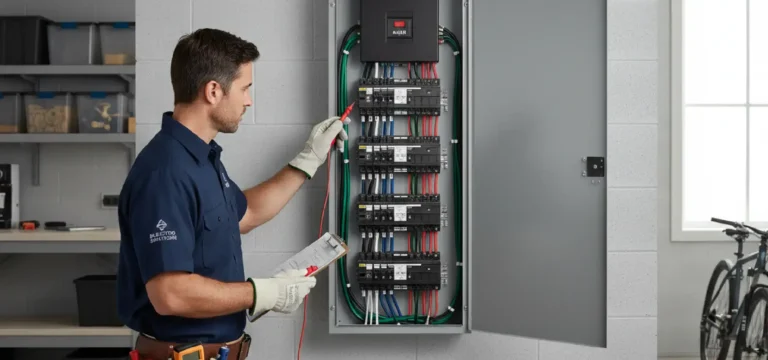
Your electrical panel is basically the controller of your home’s power. And a Level 2 charger needs its own 40–60 amp dedicated circuit.
Now, the big question is whether your panel has the space and capacity for that.
If you have a 200 amp electrical panel, or a newer setup with open breaker slots, you’re usually in great shape as the job stays simple and inexpensive.
But if you’ve got an older 100 amp or 125 amp panel, or if your panel has reached its capacity, you might need to upgrade it. This is essential to safely support an EV charger, but it increases the cost of Level 2 charger installation significantly.
Here’s how much a panel upgrade costs:
- $800-$1,800 for a small upgrade
- $1,500-$4,500 (or more) for a full service upgrade
- In rare cases, the cost of utility-side upgrades like transformer or pole work can be an extra up-to $6,000
Pro tip: You need not go for an expensive upgrade. Instead, ask your electrician to get an electrical load sharing device. This can safely manage your electrical load, save thousands of dollars in panel upgrades, and use surplus panel capacity to safely charge your EV.
2. Distance between panel and charger location
This is simple: The further your charger is from your electrical panel, the more the installation will cost.
You see, electricians charge based on the time and materials needed. And long wiring runs require more of both.
So, if your panel is right next to your garage, you’ll usually pay on the lower end.
But if the panel is on the opposite side of the house or you’re running wiring out to a detached garage, the cost goes up. That’s because there’s more conduit, more wiring, and more labor involved.
Here’s how much wiring length adds to the cost:
- Short run with panel next to garage costs between $400-$800
- Medium run with panel on opposite side of house costs between $800-$1,500
- Long run with detached garage or outdoor route costs between $1,500-$3,000 (or more)
3. Installation location (indoor or outdoor)
Installation location plays a key role in determining your Level 2 charger installation cost.
For instance, indoor installations often cost on the lower end of the cost average.
However, installing your charger outdoors adds a few extra steps, which can bump up the price.
That’s because outdoor setups need weatherproof conduit, exterior-rated boxes, and sometimes extra sealing to keep moisture out.
Also, if the wiring has to run along the outside of your home or underground, that adds even more time and materials.
How much does Level 2 charger outdoor installation add to the cost?
You can expect to pay $200-$1,000 more for outdoor setups compared to indoor.
4. Plug-in vs hardwired installation
You’ll also choose whether you want a plug-in charger (using a NEMA 14-50 outlet) or a hardwired unit.
Plug-in setups tend to be cheaper and more flexible, because you’re essentially adding a high-powered outlet that the charger plugs into.
Also, they’re easy to replace or upgrade later, which a lot of EV owners appreciate.
Hardwired chargers, on the other hand, connect directly into your electrical system.
They offer a cleaner look and are often better for outdoor installs. But they need slightly more labor, which increases the cost a bit.
Both options work great, it really comes down to your preferences and the charger you choose.
Here’s how much plug-in and hardwired installations cost:
- Plug-in (NEMA 14-50 outlet): $400-$1,000
- Hardwired: $700-$1,500
5. Permits for Level 2 EV charger installation
Most cities require a permit to install EV charger at home. And while it’s not the most exciting part of the process, it’s an important one.
Permits ensure your work is done safely and meets local electrical codes, which is something your insurance company will definitely appreciate.
The cost is pretty low compared to the rest of the cost to install Level 2 charger at home, but skipping it is never worth the risk. Think of it as your final safety check.
How much do Level 2 charger permits add to the cost?
Costs typically range between $50-$300.
6. Trenching (if the charger is far from your home)
Trenching is needed if your charger needs to be installed in a detached garage, a parking pad, or anywhere that requires running wiring underground.
This is one of the more expensive add-ons because it involves digging, laying conduit, protecting the wiring, and then restoring the ground after.
The price depends on how far the trench needs to go and what type of surface is being cut through.
Although it is not something every homeowner needs, when you do, it adds noticeable cost to the project.
How much does trenching add to the cost?
Typical trenching cost ranges between $300-$2,000 (or more) depending on length and surface type.
TL;DR, here’s a component-wise breakdown of Level 2 EV charger installation cost:
| Cost Component | Typical Range |
| Charger Hardware (Level 2) | $300-$900 |
| Electrician Labor + Wiring | $400-$1,200 |
| Permit & Inspection | $50-$300 |
| Panel Upgrade (If Needed) | $1,500-$4,500+ |
| Optional: Trenching / Outdoor Run | $300-$2,000+ |
| Total Typical Cost | $800-$2,500 |
| Total with Panel Upgrade | $2,500-$7,000+ |
How to reduce the total cost to install Level 2 EV charger at home?
You don’t have to spend more than what’s really needed for an EV level 2 charger installation.
There are some very simple ways to keep your Level 2 EV charger installation cost on the lower side without cutting corners.
For starters, I suggest you install your charger as close to your electrical panel as possible. This will ensure the wiring run is shorter, and thus, less material and labor required, reducing the overall installation cost.
Next, don’t oversize your charger.
You see, most everyday EVs, including Tesla Models S, X, Y, and 3, charge perfectly well on a 40-48 amp setup.
Meaning, using higher EV charger amperage doesn’t always give you real benefits. Instead, it only ends up increasing installation costs.
Also, always get at least 2-3 quotes from electricians before hiring one for charger installation. You’ll be surprised how much pricing can vary for the exact same job.
And finally, if your panel is tight on capacity, don’t jump straight to an expensive electrical panel upgrade. Ask your electrician for an EV energy management system like SimpleSwitch as it can help you avoid expensive upgrades and still safely charge your EV at home.
Are there any tax credits or rebates on level 2 EV charger installation?
The federal tax credit that covered 30% of your total installation cost, up to $1,000, expired on June 30, 2026 under the One Big Beautiful Bill Act. And it no longer applies to any equipment installed after that date.
So if you’re installing your charger today, this federal credit is off the table.
Thankfully, state and utility rebates are still very much alive. Many states and utility companies offer their own incentives, and these can range anywhere from a couple hundred dollars to even $1,000 depending on where you live.
Not to mention, some utility companies also offer special EV charging rates, especially for nighttime charging, which helps reduce your long-term cost even further.
So before you finalize your installation, I suggest you check what incentives are available in your area. It can bring your actual out-of-pocket cost down quite a bit, even without the federal credit.
You might also want to read: What’s The Difference Between Level 2 & Level 3 EV Chargers?
No More $10k Electrical Panel Upgrade to Charge Your EV at Home
simpleSwitch lets you add a Level 2 EV charger to your home without an expensive electrical panel upgrade. Your EV charges safety without panel overload.
- 30-day risk-free returns
- NEMA-rated
- Works with your existing panel
Final words
By now, I am sure you know how much you’ll likely pay for a Level 2 EV charger installation.
Here’s a simple way to understand which range you’ll pay in:
- If your home is newer or has a strong panel, you’ll pay between $1,000-$1,800
- If you need trenching, you’ll pay between $2,500-$4,000
- If you need a panel upgrade, $3,000-$7,000+
But most homeowners land solidly in the middle.
How?
Well, they skip a panel upgrade altogether.
And so can you.
With an energy management system for EV chargers, you can avoid panel upgrades and still safely charge your EV at home on a dedicated Level 2 charger.
Frequently asked questions about Level 2 EV charger installation
Do I need a permit to install a Level 2 charger?
In most areas, you need a permit.
But it’s nothing to stress about. It’s usually inexpensive, doesn’t affect how much to install Level 2 charger much, and gets approved quickly.
The main reason cities require it is to make sure the installation is safe and follows local electrical codes.
It also protects you if you ever file an insurance claim or sell your home.
Do I need a panel upgrade?
Not usually. A lot of homeowners assume an upgrade is necessary.
But in reality, most homes have enough capacity for a Level 2 charger, especially when using load management technology.
Devices like simpleSwitch use a flexible current transducer to connect to your home’s electrical panel. And they help your home balance power automatically, which means you can charge your EV without a costly panel upgrade.
Can I install a Level 2 charger myself?
It depends on the type of installation.
If you’re installing a simple plug-in charger using a NEMA 14-50 outlet and the outlet is already there, that can be DIY-friendly.
But anything involving electrical wiring, panel work, or adding a new outlet should always be done by a licensed electrician.
EV chargers pull a lot of power, so proper installation is important for safety and to keep your home’s electrical system protected.
Level 1 vs Level 2: Is the upgrade really worth it?
The short answer is yes, it is really worth it.
Level 1 charging is slow. You’re usually getting just a few miles of range per hour, which means your car can take a full day or more to charge.
Level 2 charging, on the other hand, is much faster. You can add anywhere from 20 to 40 miles of range per hour, which means your car is fully charged overnight.
So instead of planning your charging around your schedule, it just becomes part of your routine.
Will Level 2 charging increase my electric bill?
Yes, your electric bill will go up.
But it’s still almost always cheaper than buying gas.
Charging an EV at home costs just a few dollars, depending on your local rates.
A lot of utilities also offer special nighttime or EV-only rates that make charging even more affordable. If you set your charger to run overnight, you can often charge at the lowest possible price.
Which charger should I buy?
The best choice is a reputable, UL-listed charger from a trusted brand.
Look for smart features like WiFi connectivity, scheduling, and usage tracking. These features make daily charging much easier.
You can go through my blog on the best Level 2 EV chargers to decide which charger is right for your home.