You’ve probably seen advertisements from EV manufacturers talking about ultra-fast charging, hundreds of miles of range in minutes, and incredibly fast EV charging speeds.
So when your vehicle takes much longer than expected to charge, it can feel frustrating. You might start wondering why it is taking longer to charge than what the car dealership claimed.
But let me tell you that slower EV charging doesn’t always mean something is wrong.
You see, your total EV charging time depends on several different factors. Some have to do with the charger itself, while others are about your vehicle, battery condition, and even the weather outside.
To put it simply, not every EV charges at the same speed all the time.
In this blog, I will explain it all. I will talk you through the five biggest factors affecting how long it takes to charge your EV and what you can do to get the best charging speed.
So, let’s get started.
Key takeaways
- Your battery’s charge level has a major impact on charging speed
- Battery temperature can significantly affect EV charging time
- The type of charger you’re using also plays a huge role in charging performance
- Every EV has a maximum charging speed it cannot exceed
- Battery age and health can influence charging efficiency in the long run
Why is my EV charging slowly?
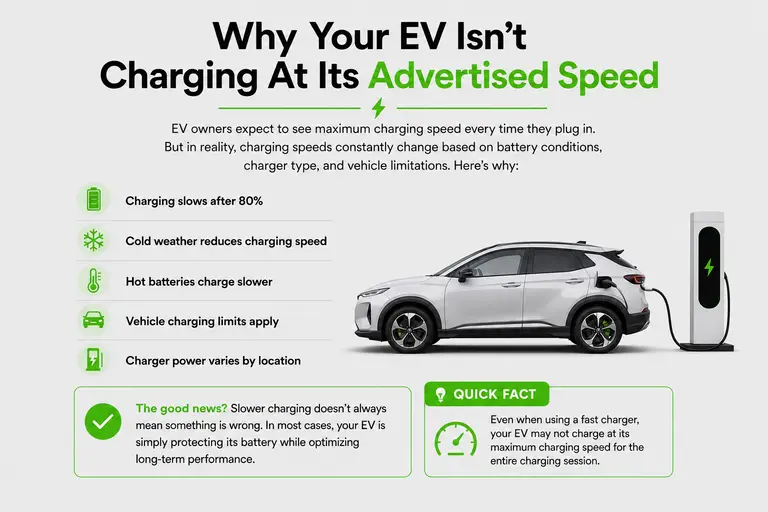
Your overall home EV charging speed might be slower than expected because you assume your vehicle should charge at its advertised charging speed every time they plug in.
But that’s not how EV charging works.
You seem most electric vehicles charge at different speeds throughout the charging session. Also, there are also several factors that can temporarily reduce charging performance.
For instance, a charger that delivered excellent charging speeds yesterday might charge slowly today because of battery temperature, charge level, or vehicle limitations.
This is why it is essential you understand what affects EV charging speed. Once you know what’s happening behind the scenes, it becomes much easier to set realistic expectations and optimize your charging experience.

No More $10k Electrical Panel Upgrade to Charge Your EV at Home
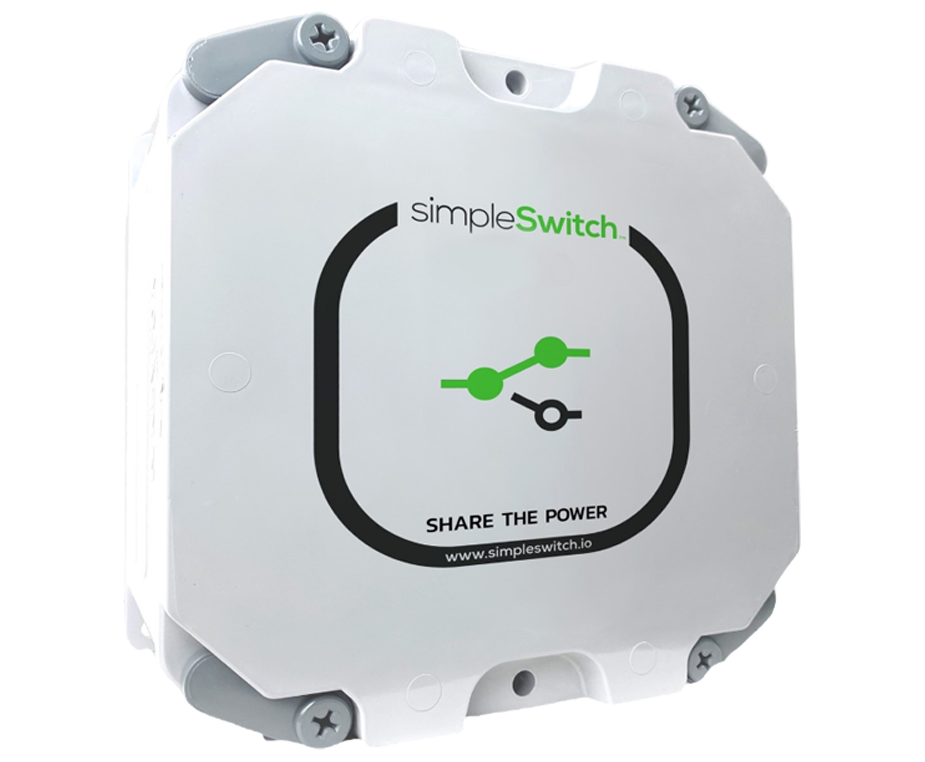
simpleSwitch lets you add a Level 2 EV charger to your home without an expensive electrical panel upgrade. Your EV charges safety without panel overload.
 30-day risk-free returns
- NEMA-rated
- Works with your existing panel
Here are the 5 biggest factors that affect EV charging time
1. Battery’s state of charge
One of the biggest factors affecting EV charging speed is how full the battery already is.
You might assume that charging speed stays constant from 0% to 100%. But that’s not the case.
EV batteries charge fastest when they’re at a lower state of charge. And as the battery fills up, the vehicle gradually reduces charging speed to protect battery health and prevent overheating.
For instance:
- Charging from 10% to 50% is very fast
- Charging from 50% to 80% remains relatively quick
- Charging from 80% to 100% slows down significantly
For EV owners, this means the last 20% of charging can sometimes take almost as long as the first 60%. And that’s completely normal.
In fact, this is also why EV manufacturers recommend charging to around 80% for daily driving rather than charging to 100% every time.
2. Battery temperature
Another major factor affecting EV charging time is battery temperature.
EV batteries perform best within a specific temperature range. However, when the battery becomes too cold or too hot, the EV automatically limits charging speed to protect the battery.
This is especially noticeable during winter.
On cold mornings, you might notice slower EV charging speeds even when using the exact same charger you used the day before. This happens because cold batteries cannot accept energy as quickly as batteries that have reached their ideal operating temperature.
The same thing can happen during extremely hot weather. If the battery gets too warm, the vehicle’s battery management system might reduce charging speed to prevent excessive heat buildup.
Note: Many EVs include battery preconditioning systems. These systems help bring the battery closer to its ideal temperature before charging begins, which improves charging performance significantly.
3. The type of EV charger
Not all EV chargers deliver power at the same rate. In fact, one of the biggest reasons for slow EV charging is simply using a lower-powered charger.
Generally speaking, EV chargers fall into three categories:
- Level 1 charging
- Level 2 charging
- DC fast charging
Level 1 charging uses a standard household outlet and is the slowest option available. And while it’s convenient, it’s often not practical for most EV drivers.
Level 2 charging is what most people use for regular EV charging. It uses higher EV charger amperage and provides much faster charging.
DC fast charging is the fastest option currently available and is commonly found along highways, major travel routes, and public charging networks.
Here’s a quick EV charging speed comparison of different EV chargers:
| Charger Type | Typical Power Output | Charging Speed |
| Level 1 | 1-2 kW | Slow EV charging, typically overnight or longer |
| Level 2 | 7-19 kW | Faster home EV charging speed |
| DC Fast Charging | 50-350+ kW | Fastest charging currently available |
4. Your EV has a maximum charging speed
This is one of the most misunderstood aspects of EV charging.
EV drivers assume that plugging their car into a faster charger will automatically give faster charging. But unfortunately, it doesn’t always work that way.
You see, every EV has a max charging speed that determines how much power it can accept from a charger.
For instance, let’s say you’re using a 350 kW DC fast charger.
Sounds like ultra-fast charging, right?
But if your EV can only accept 150 kW, then 150 kW is the fastest charging speed you’ll actually get. Here, your charger is capable of delivering more power, but your vehicle becomes the limiting factor.
Simply put, a powerful charger alone doesn’t guarantee fast charging. Your vehicle’s charging capabilities play an equally important role.
5. Battery health and age
The final factor affecting EV charging speed is battery condition.
Like any rechargeable battery, EV batteries gradually change over time.
Now, modern EV batteries are designed to last for many years. So, you’ll likely enjoy reliable performance long after the vehicle reaches six figures on the odometer, more so with regular battery and EV charger maintenance.
But that said, battery aging can still have some impact on charging performance.
As batteries age, they might:
- Store slightly less energy
- Generate more heat during charging
- Accept power less efficiently
- Require additional heat protection, which will slow down charging even further
This doesn’t mean your EV will suddenly start charging at half its normal speed. In most cases, the changes happen gradually over many years.
However, when comparing a brand-new battery to one that has been heavily used for a long time, charging performance can differ.
In short, here are the 5 biggest factors affecting EV charging time:
| Factor | What it means |
| Battery state of charge | Charging slows as the battery fills up |
| Battery temperature | Extreme temperatures reduce charging performance |
| Charger type | Different chargers deliver different charging speeds |
| Maximum charging speed | Your EV can only accept a certain amount of power |
| Battery age and health | Older batteries may charge slightly slower |
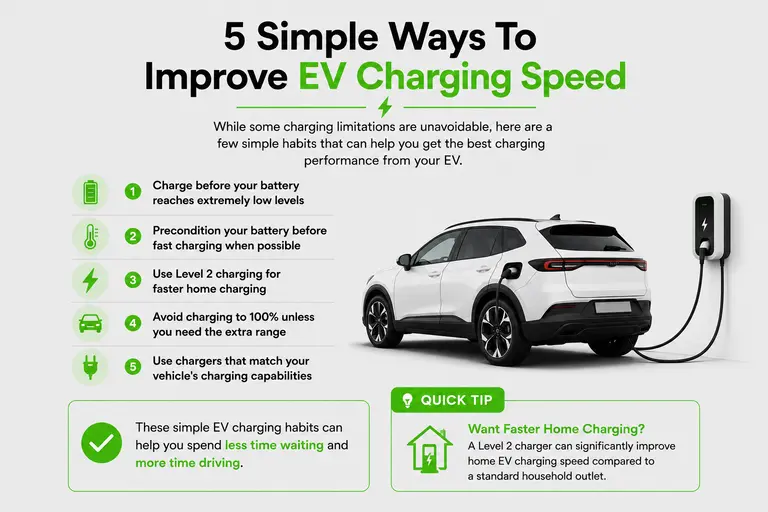
Can a load sharing device increase EV charging speeds?
Yes, it can.
In fact, for many homeowners, a load sharing device like simpleSwitch is what makes Level 2 charging possible in the first place.
Here’s how.
Many older homes were built long before electric vehicles became common. As a result, their electrical panels have limited spare capacity available.
Now, a load sharing device like simpleSwitch allows homeowners to safely install a Level 2 charger by using the available spare capacity on their existing electrical panel.
The system continuously monitors your home’s electrical usage and automatically manages power distribution, allowing you to charge your EV without overloading your electrical panel.
That’s awesome, isn’t it?
No More $10k Electrical Panel Upgrade to Charge Your EV at Home
simpleSwitch lets you add a Level 2 EV charger to your home without an expensive electrical panel upgrade. Your EV charges safety without panel overload.
- 30-day risk-free returns
- NEMA-rated
- Works with your existing panel
Final words
As you can see, EV charging time depends on much more than simply plugging your vehicle into a charger.
Factors like battery state of charge, battery temperature, charger type, vehicle charging limits, and battery health all play an important role in determining how quickly your EV charges.
The good thing is that most of these factors are completely normal. And a basic understanding of what affects EV charging speed can help you set realistic expectations, improve your charging habits, and make better decisions about your home charging setup.
Got more questions or want to install an EV energy management system?
You can get in touch with us!
At simpleSwitch, our EV energy management system is designed to automatically balance electrical loads, allowing you to make the most of your existing electrical capacity.
The result?
Safer charging, smarter energy management, and a more future-ready home.
FAQs about EV charging time
Why is my EV charging slowly?
There are several factors that can reduce EV charging speed, including battery temperature, battery charge level, charger type, vehicle charging limitations, and battery health.
In most cases, slower charging is completely normal and not a sign of a problem.
What affects EV charging speed the most?
Battery state of charge and battery temperature are typically the biggest factors affecting EV charging speed.
You see, EVs charge fastest when the battery is relatively low and within its ideal temperature range.
How fast can you charge an electric car?
Charging speed depends on both the charger and the vehicle.
Level 1 charging can take many hours, while DC fast charging can add significant range in a much shorter period. The actual speed will depend on your vehicle’s maximum charging capability.
What is considered fast charging for an EV?
Generally, DC fast chargers are considered fast charging.
Many fast chargers deliver 50 kW or more, while newer high-power chargers can provide 150 kW, 250 kW, or even higher under ideal conditions.
Does cold weather affect EV charging time?
Yes, cold temperatures can significantly reduce charging speeds because batteries cannot accept energy as efficiently when they’re cold.
That’s why modern EVs use battery preconditioning systems to help improve charging performance in colder weather.