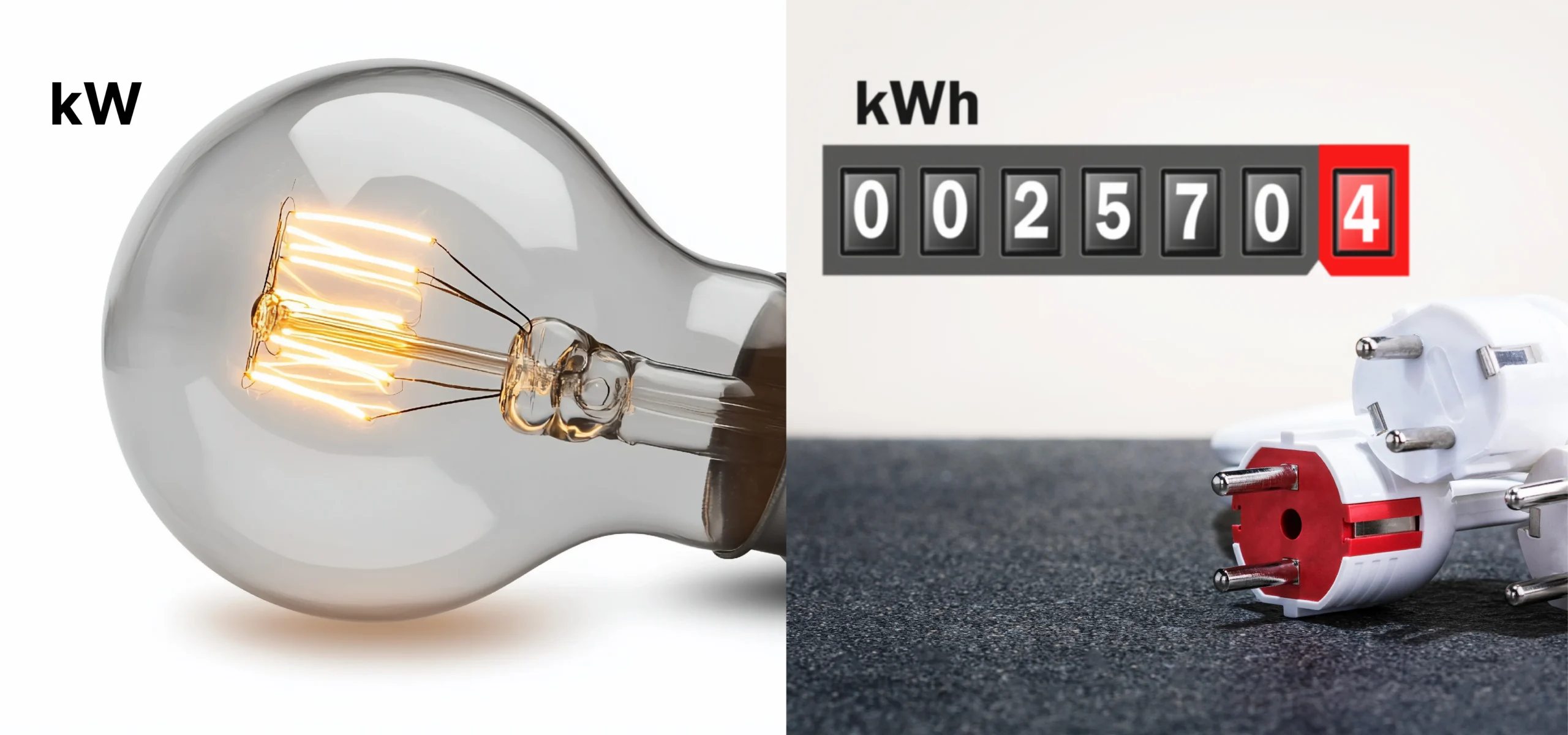
You might have looked at an EV charger, electricity bill, or even the specs of your home appliances and noticed the terms kW and kWh.
At first look, they almost seem identical. In fact, the only difference seems to be one extra letter ‘‘h.’
But despite looking similar, kW and kWh mean two completely different things when it comes to electricity.
Here, one tells you how fast electricity is being used, while the other tells you how much electricity is used over time.
this matter to you?
Well, if you plan to buy an EV, track your home’s energy use, or install a Level 2 EV charger, things can be confusing if you don’t know the difference.
In this blog, I’ll walk you through:
- What kW and kWh mean
- All the differences between kW and kWh
- How kW and kWh conversion works
- Why these units matter for your electricity bill and EV charging
And much more.
So let’s get started.
Key takeaways
- kW (kilowatt) measures electrical power, or how fast electricity is being used at a specific moment.
- kWh (kilowatt-hour) measures energy, or the total electricity used over time.
- The relationship between the two is simple: kWh = kW × hours.
- Appliances and EV chargers are rated in kW, while electricity usage is billed in kWh.
- Understanding the difference between kW and kWh helps you interpret EV charging speeds, energy usage, and electricity costs.
What does kW mean?
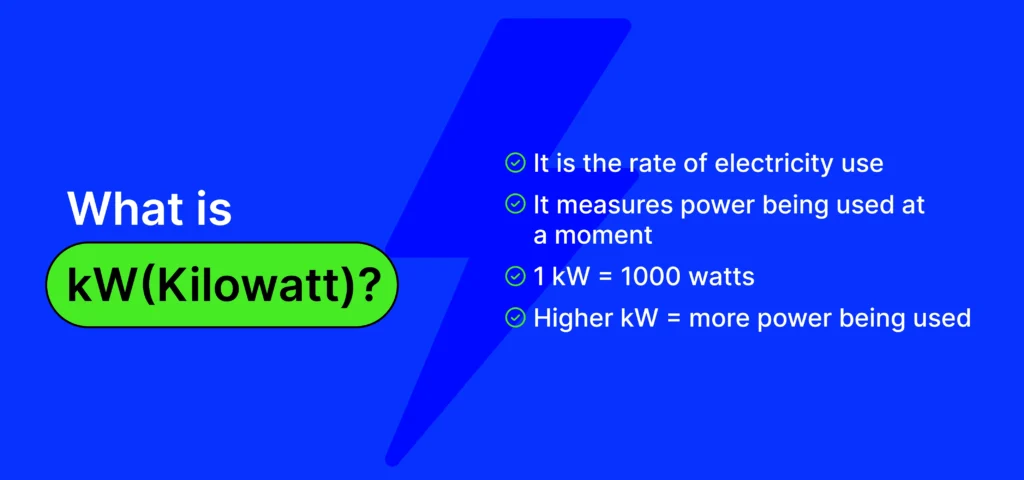
For starters, kilowatt (kW) is a unit used to measure power. And in everyday electrical terms, this simply means the rate at which electricity is being used or delivered at the moment.
In other words, kW answers the question: How fast is electricity being used right now?
Here’s a better way to understand this:
1 kilowatt (kW) equals 1,000 watts
And watts are the default basic unit of electrical power. But since our appliances use large amounts of electricity, we measure power in kilowatts instead.
For instance, you’ll find common household appliances rated in kW based on their power usage like this:
| Appliance | Typical Power Rating |
| Microwave | 1 kW |
| Hair dryer | 1.5-2 kW |
| Electric heater | 2-3 kW |
| Level 2 EV charger | 7-11 kW |
Now, if an EV charger is rated at 7 kW, that means it can deliver 7 kilowatts of power at that moment while charging. So, the higher the kW rating, the faster electricity can flow to the device.
What does kWh mean?
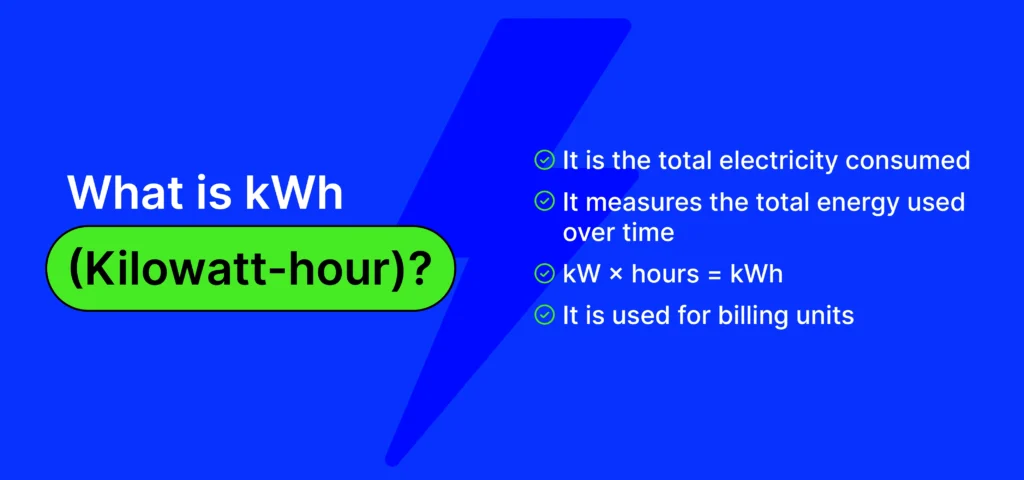
A kilowatt-hour (kWh) is the unit used to measure energy. And it tells you the total amount of electricity used over a period of time.
You see, while kW tells you fast electricity is being used, kWh measures how much electricity you’ve actually used.
In simple terms, kWh answers one question: How much electricity did a device use in total?
For instance, if a 1 kW appliance runs for one hour, it uses 1 kWh of electricity. And if that same appliance runs for 5 hours, it will use 5 kWh of electricity.
That’s also why your electricity bill shows energy usage in kWh, because utility companies charge you based on the total amount of electricity consumed during the billing period.

No More $10k Electrical Panel Upgrade to Charge Your EV at Home
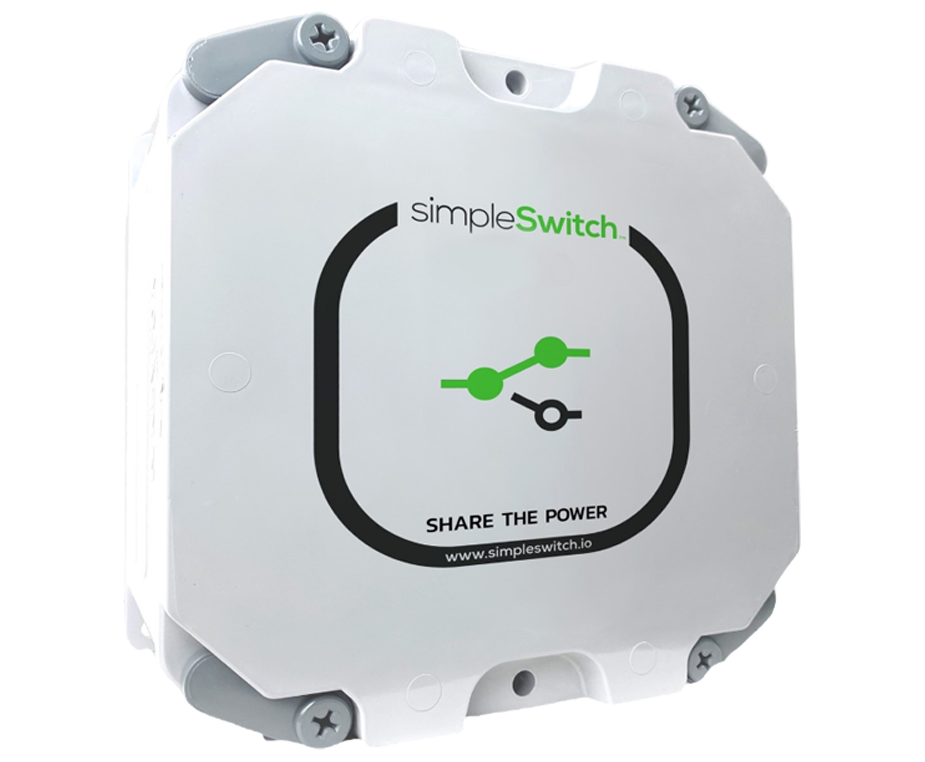
simpleSwitch lets you add a Level 2 EV charger to your home without an expensive electrical panel upgrade. Your EV charges safety without panel overload.
 30-day risk-free returns
- NEMA-rated
- Works with your existing panel
What is the difference between kW and kWh?
Now that you know the basics about kw and kwh, it’s much easier for you to understand the difference between the two.
You see, even though the two units look similar, they measure completely different things. Here’s how:
| Unit | What It Measures | What It Represents |
| kW | Power | The rate at which electricity is being used |
| kWh | Energy | The total electricity used over time |
The simplest way to understand the difference is this:
- kW = speed of electricity usage
- kWh = total electricity consumed
Both units are important, but they are used in different situations depending on what you want to measure.
kW and kWh conversion: How is it calculated?
To begin with, energy usage depends on two things:
- How much power is used (kW)
- How long it runs (hours)
That’s why the formula for kW and kWh conversion looks like this:
kWh = kW × hours
This basically means that the total energy consumed depends on both power level and time.
Let’s look at a few examples for better understanding.
Example 1: Electric heater
Let’s say you have a 2 kW electric heater.
Now, if it runs for 3 hours, the total energy used will be:
2 kW × 3 hours = 6 kWh
This means the heater used 6 kilowatt-hours of electricity.
Example 2: A light bulb
Now imagine a 100-watt light bulb. This will equal about 0.1 kW.
And if it runs for 10 hours, the energy used will be:
0.1 kW × 10 hours = 1 kWh
This means the light bulb used 1 kilowatt-hours of electricity.
Example 3: EV charger
Let’s say you’re charging an electric vehicle using a 7 kW Level 2 EV charger.
If the charger runs for 4 hours, the energy delivered will be:
7 kW × 4 hours = 28 kWh
This 28 kWh is the total energy delivered into the EV battery during the charging session.
Why does the difference between kW and kWh matter for EV charging?
If you own an electric vehicle or are planning to charge your EV at home, understanding the difference between kW and kWh becomes even more important. That’s because EV charging involves both power and energy.
For instance, EV chargers are rated in kilowatts (kW). And it tells you how fast the charger can deliver electricity to the vehicle.
Here’s how EV chargers are rated:
| Charger Type | Power Output |
| Level 1 charger | 1-2 kW |
| Level 2 charger | 7-11 kW |
| DC fast charger | 50-350 kW |
Here, a higher kW rating means the charger can charge your EV faster.
EV batteries, at the same time use kWh. And it tells you how much energy the battery can store.
Here how EV batteries are typically rated on different EVs:
| EV Model | Battery Capacity |
|---|---|
| Nissan Leaf | ~40 kWh |
| Tesla Model 3 | ~60-75 kWh |
| Ford F-150 Lightning | up to 131 kWh |
Simply put, when you’re charging your EV:
- kW determines charging speed
- kWh determines how much energy the battery holds
Here are some common mistakes people make about kW and kWh
Since kW and kWh sound so similar, it’s easy to get confused. This is why people mix them up when reading electricity bills, checking appliance ratings, or even looking at EV charging speeds.
Here are a few mistakes I see people make about kW and kWh:
1. Thinking kW measures electricity usage
A lot of people assume kW tells you how much electricity a device uses, but it doesn’t. kW only shows the power level at a given moment.
2. Thinking kWh means kilowatts per hour
This is a common myth!
kWh does not mean kilowatts per hour. It actually measures the total energy used over time.
So, if a 1 kW appliance runs for 1 hour, it uses 1 kWh of electricity.
3. Using kW and kWh interchangeably
Even though the terms sound alike, kW and kWh are very different. Here’s how:
- kW is the rate at which electricity is used
- kWh is the total energy consumed over time
And mixing them up can make bills, appliance labels, or EV charging numbers confusing.
No More $10k Electrical Panel Upgrade to Charge Your EV at Home
simpleSwitch lets you add a Level 2 EV charger to your home without an expensive electrical panel upgrade. Your EV charges safety without panel overload.
- 30-day risk-free returns
- NEMA-rated
- Works with your existing panel
Conclusion
By now, you should have a clear understanding of the difference between kW and kWh.
Although the two units look very similar, they measure completely different things in electricity.
- kW measures power, which tells you how fast electricity is being used.
- kWh measures energy, which tells you how much electricity is used over time.
Got more questions or want to install an EV charger without the extra cost of electrical panel upgrade?
You can get in touch with us!
At simpleSwitch, we provide an advanced EV charger load management system that helps homeowners safely run high-power appliances like EV chargers without upgrading their electrical panels.
Our load management systems are UL-listed and proudly made in the USA, delivering reliable protection and smarter power management for modern homes.
FAQs about kW and kWh
What is the difference between kW and kWh?
The difference between kW and kWh is that kW measures power, while kWh measures energy usage over time.
kW tells you how fast electricity is being used, while kWh represents the total electricity consumed.
How does kW and kWh conversion work?
The basic formula is: kWh = kW × hours
For instance, if a 5 kW appliance runs for 2 hours, it will consume 10 kWh of electricity.
Why are EV chargers rated in kW?
EV chargers are rated in kW because that number represents the charging power, or how quickly electricity can flow into the vehicle’s battery.
Why are electricity bills measured in kWh?
Electric utilities charge customers based on the total electricity used over time, which is measured in kilowatt-hours (kWh).
Your electricity meter tracks how many kWh your home consumes during the billing period.