One of the first questions that comes up when you buy an electric car, or even think about buying one, is: How do I charge it at home?
The good news is, it’s easier than you might think.
In fact, most EV owners do the majority of their charging right at home, often overnight while they sleep.
Think of it like plugging in your phone before bed.
You wake up in the morning, and your car is fully charged and ready to go. There’s no waiting in line at a gas station or detours to find a charger on your way to work.
Sounds awesome, doesn’t it?
In this blog, I will break down exactly how to charge electric car at home. You’ll learn:
-
- The different ways you can charge your EV at home
-
- Charging equipment you’ll need
-
- How much it costs
-
- Some smart tricks to make it easier and more affordable
By the end, you’ll know to what extent home EV charging is possible and what steps you can take next.
So, let’s get started.
Key takeaways
-
- Most EV owners charge at home overnight using a standard or Level 2 charger.
-
- Level 1 charging uses a regular wall outlet but is slow (3-5 miles/hour).
-
- Level 2 chargers offer faster charging (20-30 miles/hour) and need a 240V outlet.
-
- DC fast chargers (Level 3) are not suitable for home use.
-
- Smart chargers and apps help monitor costs, schedule charging, and save money.
-
- Smart energy systems like simpleSwitch prevent panel overloads without upgrades.
-
- Charging costs are much lower than gasoline, especially during off-peak hours.
-
- You can start with Level 1 and upgrade to Level 2 as needed.
Why should you charge your EV at home?

For electric car owners, charging at home is the most convenient and affordable option. So much so that the latest estimates suggest 83% of all EV charging in the country happens at home.
And it makes sense.
After all, you don’t have to drive out of your way or wait around at a public station. Instead, your car charges in your garage while you go about your life.
Plus, there’s also the cost factor. Plugging in at home is usually much cheaper than using public fast chargers or paying for gas.
Moreover, utility companies offer special off-peak rates at night. So you can fill up your car for a fraction of what you’d normally spend on fuel.
Now to mention the peace of mind knowing you’ll wake up every morning with plenty of range for the day.
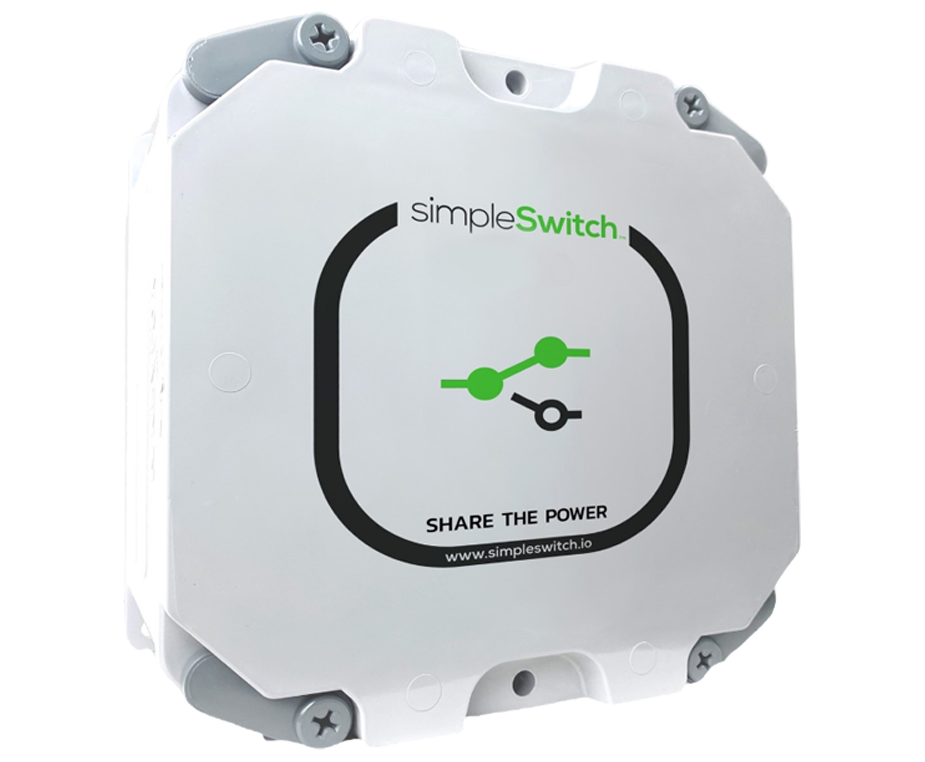
simpleSwitch lets you add a Level 2 EV charger to your home without an expensive electrical panel upgrade. Your EV charges safety without panel overload.
No More $10k Electrical Panel Upgrade to Charge Your EV at Home
 30-day risk-free returnsNEMA-ratedWorks with your existing panel
How to charge your electric car at home?
Charging your electric car at home is surprisingly simple. At the most basic level, you just plug your car into a power source and let it charge.
This is very much like charging your phone or laptop.
The only difference comes down to how fast your car charges. And this depends on the type of outlet or charger you use.
Now, there are three main levels of EV charging, namely: Level 1, Level 2, and Level 3. These levels are what determine how fast your car charges and the type of power outlet you use.
Let me walk you through them all.
Level 1: Charging with a regular 120V wall outlet

This is the slowest but simplest way to charge your EV at home. All you need is a regular household outlet, the same kind you use for your TV or toaster.
You see, every electric car comes with a basic charging cable that plugs right into it.
But the downside is that it’s pretty slow. You’ll usually get about 3-5 miles of range per hour of charging.
Meaning if your car has a big battery, a full charge could take a couple of days.
Still, Level 1 works well if:
-
- You don’t drive very far each day
-
- You can leave your car plugged in overnight
-
- You’re just getting started with EV ownership and want something simple
Many EV owners begin with Level 1 and then upgrade later once they get a feel for their daily driving needs.
Level 2: Faster charging with a 240V Outlet

Level 2 charging is the sweet spot for most EV owners. Here, you plug your EV into a 240-volt outlet instead of using a standard wall outlet.
This is the kind of outlet you’d normally see for big appliances like a dryer or oven.
With this setup, charging is 4-6 times faster than Level 1.
On average, you’ll get about 20-30 miles of range per hour of charging. This means an overnight charge can easily take you from near-empty to full.
Now, setting up Level 2 charging usually requires an electrician to install a dedicated 240-volt outlet or wall-mounted charging station in your garage or driveway. And although it’s an upfront investment, most EV owners find it worthwhile for the convenience it offers.
Level 3: DC fast charging (this is not for home use)

Level 3, also called DC fast charging, is what you’ll see at public charging stations along highways or in big parking lots. These chargers are incredibly powerful and can add 100+ miles of range in just 20-30 minutes.
That’s amazing, isn’t it?
The only catch is that DC fast charging requires special equipment and a massive amount of power, far more than what a typical home can provide. And that’s why these chargers aren’t practical (or affordable) to install at home.
Think of Level 3 as your road trip buddy. You’ll mostly rely on Level 1 or Level 2 at home, and use DC fast chargers when you need a quick top-up on longer drives.
Here’s a quick comparison of all three EV charging levels:
| Charging Level | Power Source | Miles of Range per Hour | Best For | Notes |
| Level 1 | Standard 120V outlet | 3-5 miles | Short daily commutes, overnight trickle charging | Easiest to start with, but very slow |
| Level 2 | 240V outlet / home charger | 20-30 miles | Most EV owners, daily charging needs | Requires installation by an electrician |
| Level 3 | DC fast charger (public) | 100+ miles in 20-30 mins | Road trips, quick top-ups on the go | Not practical for home use |
How to set up electric vehicle charging at home?
Once you’ve decided to charge your EV at home, the next step is figuring out what equipment you’ll need and setting up your charging station.
The best part is that you don’t have to be an electrician yourself as most setups are straightforward once you know your options.
For some people, a standard wall outlet (Level 1) is enough. But I suggest you go for a Level 2 charger for speed and convenience.
Let me break down what goes into setting up home charging, from the basics to a professional installation.
1. Choose between a standard outlet or Level 2 charging

The first big decision you’ll have to make is whether to stick to your standard wall outlet or install a Level 2 charger.
Most professionals suggest you go for a Level 2 charger. This will give you enough miles on an overnight charge for your everyday commute.
In fact, a lot of EV owners say they can drive their car for days on a single charge from a Level 2 charger.
But then you can also begin with a standard charger.
Overall, here’s how both charging options compare:
| Charging Option | Installation Required? | Charging Speed | Best For | Notes |
| Level 1 (Standard plug) | No | Slow (3-5 mi/hr) | Beginners, light daily driving | Uses the charger that comes with the car |
| Level 2 (240V charger) | Yes (Electrician needed) | Fast (20-30 mi/hr) | Daily drivers, long commutes | Needs dedicated outlet or hardwiring |
A. Standard outlet charging
If you’re new to EVs, the easiest way to start charging at home is with the outlet you already have.
Every electric car comes with a basic charging cable that plugs into your regular 120V wall socket. There’s no special installation required, just plug it in and let it charge.
But the trade-off here is speed.
Level 1 charging only adds about 3-5 miles of range per hour.
Nevertheless, if your daily commute is short, or if you only drive a little each day, this method might be all you need in the beginning.
B. Level 2 charging
Installing a Level 2 charger usually requires a licensed electrician. They’ll either add a dedicated 240V outlet or mount a charging unit on your garage wall or driveway.
While there’s an upfront cost for equipment and installation, most drivers find the convenience and faster charging speed well worth it.
2. Figure out how to use EV charging apps

Modern EV chargers often come with smart features that make home charging even easier.
These chargers can connect to Wi-Fi or Bluetooth and be controlled through a smartphone app. And with just a few taps, you can:
-
- Schedule charging to start at night when electricity rates are lower
-
- Monitor energy use and see how much each charge costs
-
- Get alerts if your car isn’t charging properly
-
- Track charging history to understand your driving and charging habits
These features aren’t required, but they’re handy for saving money and giving you peace of mind. Think of it as putting your car charging on autopilot.
3. Decide whether you want professional or DIY installation

When it comes to installing a Level 2 charger, you might wonder if you can do it yourself.
Technically, if you’re handy and comfortable working with electrical systems, some chargers are designed for DIY installation.
But in most cases, hiring a licensed electrician is the safer and smarter choice.
A professional can:
-
- Make sure your home’s wiring can handle the extra load
-
- Install the right circuit breaker for safety
-
- Set up your charger to meet local codes and permit requirements
Here’s a comparison of DIY vs professional installation:
| Installation Type | Who Should Do It? | Pros | Cons |
| DIY | Handy individuals | Lower upfront cost | Safety risk, may not meet code |
| Professional | Licensed electrician | Safe, code-compliant, peace of mind | Involves cost of installation labor |
In short: While DIY might save you a little upfront, professional installation gives you peace of mind and ensures your setup is both safe and reliable for years to come.
What if you can’t charge your electric car at home?
Not everyone has a garage or a dedicated parking spot to plug in an EV, and that’s alright. You can charge your EV even if you live in an apartment, condo, or rental home.
You see, there are several practical alternatives that let you keep your car charged without a private outlet.
Here’s how you can keep your EV ready to go even if home charging isn’t available:
| Option | Where to Use | Benefit | Tools to Help |
| Workplace charging | Office or company parking lots | Convenient daytime charging | Workplace support, possible subsidies |
| Public Level 2 stations | Malls, gyms, public areas | Widely available, good for top-ups | PlugShare, ChargePoint apps |
| Shared residential chargers | Multi-unit buildings, rentals | Shared cost and space | Load-sharing tech like simpleSwitch for multi-family homes. Ask for HOA approval |
| Smart energy management | Homes with full panels | Avoid panel upgrades, manage load safely | Devices like simpleSwitch |
Let’s have a closer look.
1. Go for workplace charging and public L2 stations
If home charging isn’t an option, charging at work is a convenient alternative.
How?
Many workplaces provide Level 2 chargers in their parking lots, letting you top up your EV during the day. Here, even a few hours plugged in can give you enough range for daily errands or your commute home.
Similarly, public Level 2 chargers are also widely available at shopping centers, gyms, and municipal lots. Apps like PlugShare or ChargePoint make it easy to find nearby chargers, see availability, and check prices.
2. Talk to your landlord or explore shared chargers
Installing a personal charger might not be as straightforward if you rent or live in a multi-unit building.
But you still have options.
You can start by talking to your landlord or HOA about adding EV charging stations in shared parking areas. A lot of building owners are open to installing Level 2 chargers, more so if multiple residents are interested.
Also, in some municipalities building owners are required to allow EV charging by law.
Another option is shared chargers: A single Level 2 unit can serve several parking spots with a load-sharing technology.
This keeps installation costs lower and ensures everyone can charge safely without overloading the building’s electrical panel.
3. Install a smart energy management system
Charging your EV at home doesn’t have to include expensive panel upgrades. That’s because there are smart energy management systems that monitor your entire home’s electricity usage and automatically manage your EV charger.
For instance, there are EMS devices like simpleSwitch that help you charge your EV even if your home’s panel load is already close to full.
Here’s how it works:
-
- The device monitors your entire home’s electricity usage
-
- It temporarily pauses EV charging if the electrical panel’s load gets past 80% of its total capacity
-
- It then safely resumes EV charging when the electrical panel’s load gets below 80%
This lets you:
-
- Avoid costly panel upgrades by intelligently sharing power across your home
-
- Charge safely without overloading circuits
-
- Save money by using existing electrical capacity more efficiently
Note: Just make sure your charger app is set to ≤48A, and the system handles the rest, keeping your home and car safe while maximizing convenience.
Pro tip: Make the most out of off-peak charging
Many utility companies offer lower electricity rates at night, which is perfect for EV owners who charge overnight. Just plug in your car while you sleep and it will cost a fraction of daytime electricity.
In fact, some programs even give you special EV rates, making your overnight charging cheaper.
And it’s simple to take advantage of this.
Schedule your Level 2 charger to start late in the evening, or use the timer built into many smart chargers.
How to calculate the cost of EV charging at home?
Calculating what home charging will add to your electricity bill is easier than you might think. Here’s how you can get a rough estimate:
-
- Find your car’s battery size (in kWh).
-
- Multiply by your local electricity rate (cents per kWh).
For instance, a 60 kWh battery charged at $0.15 per kWh costs about $9 for a full charge. So, if you charge every day, that’s roughly $270 per month.
simpleSwitch lets you add a Level 2 EV charger to your home without an expensive electrical panel upgrade. Your EV charges safety without panel overload.No More $10k Electrical Panel Upgrade to Charge Your EV at Home
30-day risk-free returnsNEMA-ratedWorks with your existing panel
Conclusion
By now, I am sure you know exactly how to charge electric car at home. Also, you know how charging an electric car at home is easier and more convenient than most people expect.
From using a standard wall outlet to installing a fast Level 2 charger, there are options for every home and lifestyle.
Plus, smart systems like simpleSwitch, make it even easier by managing your home’s electricity automatically.
Got more questions or need a smart energy management system for EV charging at home?
We’ve got you covered.
At simpleSwitch, our smart electrical load management systems help you avoid costly electrical panel upgrades, manage your home’s electricity efficiently, and safely charge your EV. We’ll help you enjoy faster, smarter, and stress-free home charging every day.
FAQs about electric vehicle charging at home
Can I use a regular outlet to charge my EV?
Yes!
Every electric car comes with a standard charging cable that works with a regular 120V wall outlet.
It’s slow, but works fine if you drive short distances or can leave your car plugged in overnight.
How long does it take to charge an EV at home?
It depends on the type of charger. For instance:
-
- Level 1 (120V) charger gives you 3-5 miles of range per hour
-
- Level 2 (240V) charger gives you 20-30 miles of range per hour
Level 2 chargers are usually the best balance of speed and convenience for daily use.
Do I need an electrician?
For Level 1 charging, usually no.
For Level 2 chargers, a licensed electrician is recommended to install a dedicated 240V circuit safely and meet local codes.
How much will charging increase my electric bill?
It depends on your battery size and electricity rate.
For instance, charging a 60 kWh battery at $0.15/kWh costs about $9 per full charge.
Charging daily could add roughly $270/month, far less than gasoline for the same driving distance.
What’s the difference between a plug-in vs hardwired charger?
-
- Plug-in chargers can be unplugged and moved if needed.
-
- Hardwired chargers are permanently connected, usually faster, and often more reliable for everyday use.
What if my panel is already full?
You don’t have to give up home charging.
Devices like simpleSwitch allow whole-home circuit sharing with the help of external clamp style current transformers. They pause your EV charger if the panel load gets too high and resume it safely when there’s capacity.
This avoids expensive panel upgrades and keeps charging safe.
Is charging at home cheaper than public charging?
Yes.
Home charging, especially at night using off-peak rates, is usually far less expensive than public fast chargers or gasoline.
You also save time and gain convenience by charging overnight while you sleep.