Whether you are planning to buy an electric car or setting up commercial EV charging infrastructure, you might be curious about EV charging station installation cost.
After all, while the cost of charging an EV is low, setting up your home charging station does require some upfront investment.
Now, the good part is, EV charging stations are quite affordable for homeowners. So much so that in many cases, installing a home EV charger costs less than what you might spend on gas in a few months.
But I can’t say the same for commercial charging stations as these can easily cost you tens of thousands of dollars per charger.
In this blog, I will break down the cost to install EV charging station in simple terms, so you know exactly what to expect.
So, let’s get started.
Key takeaways
- Most home EV charging station installations cost between $800 and $2,500
- Complex home installs can go up to $3,000-$6,000+
- EV charger hardware typically costs $300-$800
- Panel upgrades can add another $1,000-$5,000 (this is avoidable)
- Commercial EV charging stations cost $70,000-$200,000+ per charger
- Federal tax credit can reduce costs by up to 30% (max $1,000)
What is the average EV charging station installation cost?
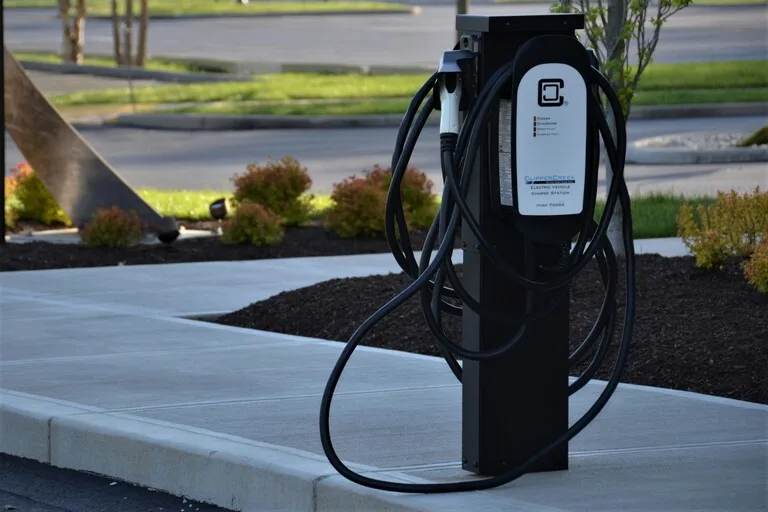
The average EV charging station installation cost is:
- $800-$2,500 for a home EV charging station
- $70,000-$200,000 for a commercial EV charging station (per charger)
However, the exact cost of installation will depend on where you’re installing the charger, the EV connector type, and how complex the work is.

No More $10k Electrical Panel Upgrade to Charge Your EV at Home
simpleSwitch lets you add a Level 2 EV charger to your home without an expensive electrical panel upgrade. Your EV charges safety without panel overload.
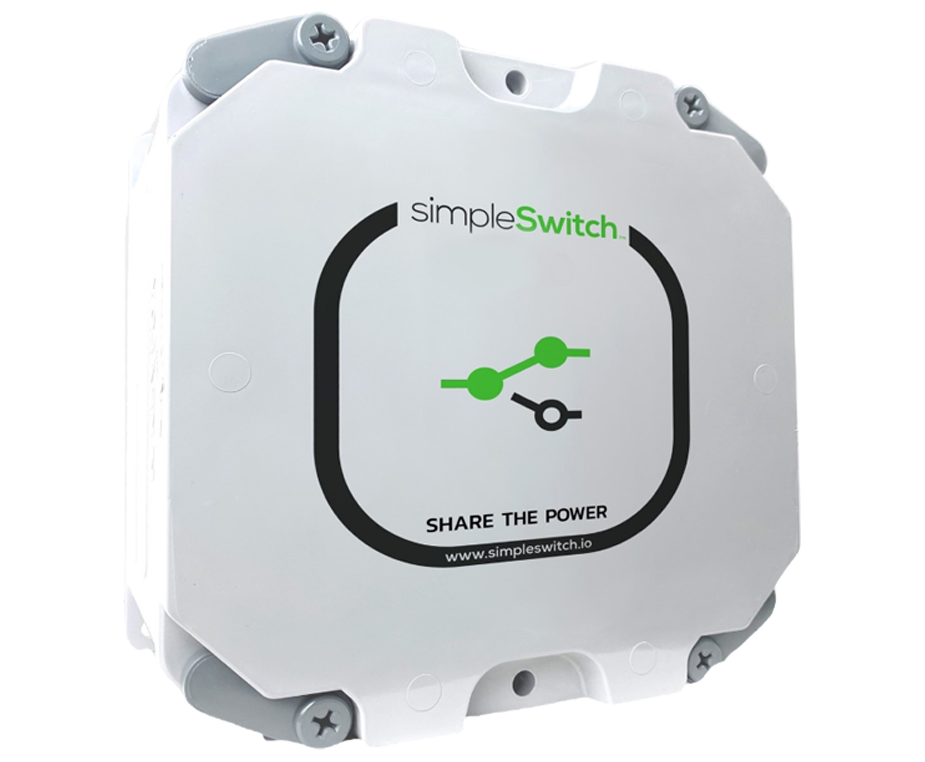
 30-day risk-free returns
- NEMA-rated
- Works with your existing panel
Here’s a more detailed breakdown of charging station installation cost:
A. Home EV charging station cost
For most homeowners, installing a Level 2 EV charger costs somewhere between $800 and $2,500 in total.
This price range includes the following:
- Charger hardware
- Electrician labor
- Permits and inspection
Now, if everything goes as planned, say your electrical panel is modern and close to your garage, your cost will likely stay on the lower end.
But if your home needs additional electrical work, costs can increase. In fact, more complex installations can go up to $3,000 to $6,000 or more.
However, most homes fall under $2,000 unless major upgrades are needed
B. Commercial EV charging station cost
Now, if you’re thinking about installing EV chargers for a business, the numbers look very different.
Commercial charging stations, especially DC fast chargers, are significantly more expensive.
On average, a commercial EV charging station can cost anywhere between $70,000 and $200,000 per charger installed.
But why is a commercial EV charging station so expensive, you might wonder?
Well, that’s because commercial setups involve:
- High-power electrical infrastructure
- Transformer upgrades
- Site preparation and construction
- Network and software integration
Plus, DC fast chargers themselves are more expensive, which adds significantly to the cost.
In short, here’s the average EV charging station installation cost:
| Type | Cost range |
| Home EV charger | $800-$2,500 |
| Complex home setup | $3,000-$6,000+ |
| Commercial charger | $70,000-$200,000+ |
What is included in the EV charging station cost?
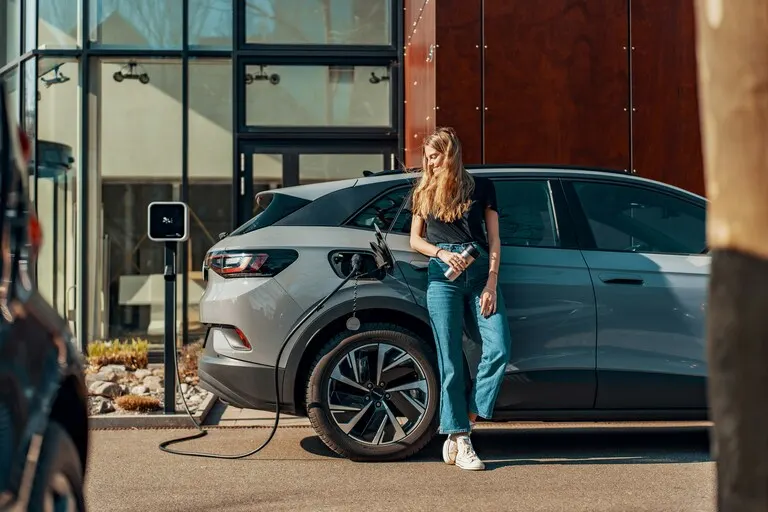
For starters, the EV charger itself doesn’t constitute the total charging station cost. It is only a part of the equation.
In reality, your total EV charging station installation cost is made up of four main components, which includes:
1. Charger hardware
This is the actual EV charger you buy.
Most Level 2 home chargers cost between $300 and $800, depending on features and brand. Here, basic chargers are cheaper, while smart chargers with Wi-Fi, scheduling, and app control cost more.
On the other hand, the charging hardware for DC fast chargers cost between $20,000-$80,000+.
2. Electrician labor
This is usually the biggest part of your cost.
Electrician labor can range from:
- $200 to $500 for simple installs
- Up to $1,800 or more for complex setups
The price depends on how much work is needed, especially wiring and circuit installation.
3. Permits and inspection
Most cities require EV charger permits for installing a Level 2 charger. And these permits typically cost between $50 and $300.
This is a small cost, but still part of the total cost of EV charging station installation.
4. Electrical panel upgrades (this is avoidable)
If your home doesn’t have enough electrical capacity, you might need a panel upgrade.
And this is where costs jump as electrical panel upgrades can cost anywhere between $1,000 and $5,000.
Thankfully, with an electrical load sharing device like simpleSwitch, you can easily avoid this cost.
In short, here’s what is included in the EV charging station cost:
| Component | Cost range |
| Charger hardware | $300-$800 |
| Electrician labor | $200-$1,800+ |
| Permits | $50-$300 |
| Panel upgrade | $1,000-$5,000 |
What factors affect the cost to install EV charging station?
You might be wondering why one person pays $900 for an EV charging station, while another pays $4,000 for the same charger.
Well, it comes down to a few important factors. And understanding these can help you estimate your own cost much more accurately.
So, let’s have a look at them.
1. Distance from electrical panel
The farther your charger is from your electrical panel, the higher the cost. That’s because longer distance calls for more wiring, more labor, and more materials.
In fact, even a 30-50 foot wire run can significantly increase installation cost.
2. Electrical panel capacity
If your panel already has enough capacity, installation is simple and cheap.
But if it doesn’t, you’ll either need a panel upgrade or a load management device like simpleSwitch.
3. Type of installation
Not all homes are the same. And the cost of installing an EV charging station in homes can be very different depending on a few factors.
For instance:
- Charging station installation in homes with a garage next to panel is cheaper
- Charging station installation in homes with a detached garage is more expensive
- Charging station installation in homes with underground wiring is much more expensive
Also, some complex installations can even exceed $6,000+ due to trenching and upgrades.
4. Type of charger
Your choice of EV charger also affects the cost.
For instance, basic chargers cost less. However, smart chargers with features like Wi-Fi connectivity, scheduling, and energy monitoring cost more upfront but can save money over time.
In short, here are the factors that affect the cost to install EV charging station:
| Factor | Impact |
| Distance from panel | More distance ,means higher cost |
| Panel capacity | Low capacity might need an expensive upgrade |
| Home layout | Detached garage increases cost |
| Charger type | Smart chargers cost more |
How much does it cost to install different types of EV chargers?
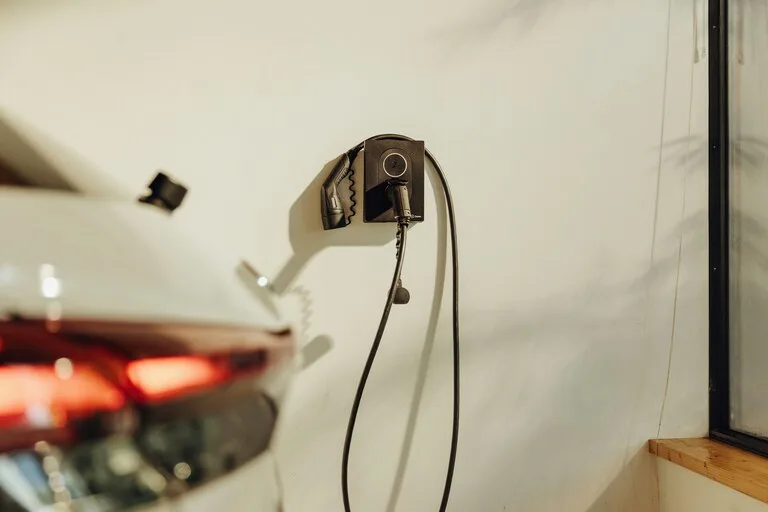
Not all EV chargers are the same. And that’s exactly why the cost to install an EV charging station can vary quite a bit depending on the charger type you choose.
Now, most homeowners go with a Level 2 charger. But to give you the full picture, let’s break down the cost of all three EV charger types.
1. Level 1 charger (basic home charging)
A Level 1 charger just plugs into a standard 120V outlet,the same one you use for everyday appliances.
So, in most cases, there’s no installation cost at all. If you already have a working outlet in your garage, you’re good to go.
But that said, Level 1 charging is very slow. You’ll only get about 3 to 5 miles of range per hour, which makes it practical only for:
- Very short daily driving
- Backup charging
2. Level 2 charger (most popular home option)
A Level 2 charger uses a 240V connection (like a dryer or oven), and it’s significantly faster. You can expect 20-40 miles of range per hour for a full charge overnight.
Now, this is where real installation costs come in.
As we discussed earlier, the cost of Level 2 EV charger installation ranges between $800-$3,000, depending on your home’s electrical setup.
3. DC fast chargers (for commercial use)
These are the chargers you see on highways and public charging stations. And they can charge your EV up to 80% in just 20-40 minutes.
But that speed comes at a cost.
A single DC fast charger can cost anywhere between:
- $30,000 to $80,000 (hardware only)
- $70,000 to $200,000+ (fully installed)
This is why DC fast chargers are mostly used by businesses, charging networks, and fleet operators.
In short, here’s how much different EV charger types cost:
| Type | Cost | Speed | Use case |
| Level 1 | $0–$200 | Slow | Basic backup charging |
| Level 2 | $800–$2,500 | Fast | Home charging (most common) |
| DC fast charger | $70,000–$200,000+ | Very fast | Commercial use |
Bonus: Here are some real-world EV charging station installation cost examples
Now, let me explain the cost of EV charging station installation with more practical examples.
That’s because at the end of the day, you want to know what the charger is going to cost you more than the technical details.
Here are a few real-world scenarios to give you a clearer picture.
Scenario 1: Simple installation (lowest cost)
Let’s say your electrical panel is in the garage, you already have enough capacity, and the charger is installed right next to it.
In this case, installation is quick and straightforward. You’re looking at roughly $400 for the charger, $300 for labor, and about $100 for permits, bringing your total to around $800-$1,000.
This is the best-case scenario for most homeowners.
Scenario 2: Moderate installation (most common)
Now, in a more typical setup, your panel might be inside the house while your charger is in the garage.
This means some additional wiring and labor are required.
Here, costs usually include $500-$700 for the charger, $500-$1,000 for installation, and $100-$200 for permits, totaling around $1,200–$2,000.
Scenario 3: Complex installation (high cost)
In more complicated cases, your panel might be outdated, far from the garage, or lacking enough capacity.
This can require upgrades, longer wiring runs, or even trenching.
Costs can include $600–$800 for the charger, $1,500+ for labor, and $2,000–$5,000 for a panel upgrade, bringing the total to $3,500–$6,000+.
In short, here are the real-world EV charging station installation cost examples:
| Scenario | Cost |
| Simple setup | $800-$1,000 |
| Moderate setup | $1,200-$2,000 |
| Complex setup | $3,500-$6,000+ |
Are there incentives or rebates that reduce EV charging station cost?
Yes, and this is something people often miss.
You see, the actual cost of installing an EV charger can be much lower than the upfront price you see.
That’s because there are several incentives, tax credits, and savings programs available that can bring your total cost down significantly.
Let’s look at the most common ones.
1. Federal tax credit
The federal government offers a country-wide tax credit that covers 30% of your total installation cost, up to a maximum of $1,000 for residential setups. So, if your installation costs around $2,000, you could get back about $600.
This is one of the easiest ways to reduce your upfront cost without any extra effort.
2. State and utility rebates
Apart from federal incentives, many states and utility companies offer additional rebates. These can include direct discounts, cashback offers, or reduced electricity rates for EV owners.
In many cases, you can save anywhere between $200 and $1,500, depending on where you live and your utility provider.
3. Time-of-use savings
This isn’t an upfront discount, but it helps reduce your costs over time.
A lot of utilities offer lower electricity rates during off-peak charging hours, usually at night. And if you charge your EV during these hours, your electricity cost can drop by 30-60%, making home charging even more affordable in the long run.
In short, here are the rebates that can reduce your EV charging station cost:
| Incentive | Benefit |
| Federal tax credit | 30% up to $1,000 |
| State rebates | $200-$1,500 savings |
| Utility programs | Discounts and lower rates |
| Off-peak charging | 30-60% electricity savings |
No More $10k Electrical Panel Upgrade to Charge Your EV at Home
simpleSwitch lets you add a Level 2 EV charger to your home without an expensive electrical panel upgrade. Your EV charges safety without panel overload.
- 30-day risk-free returns
- NEMA-rated
- Works with your existing panel
Final words
I am sure that, by now, you have a clear idea about EV charging station installation cost in 2026.
And as you’ve seen,most homeowners end up spending somewhere between $800 and $2,500, which is actually quite reasonable when you think about the long-term savings.
Even in more complex cases, where costs go up to $3,000-$6,000+, it’s usually due to electrical limitations and not the charger itself.
Now, the one challenge many homeowners run into is electrical panel capacity.
You see, when your panel doesn’t have enough room, your electrician recommends a full panel upgrade, which can cost up to $5,000 or more.
But that’s not always necessary.
An EV energy management system like simpleSwitch allows you to safely manage your home’s electrical load, so you can install an EV charger without upgrading your panel. And that can make a huge difference in your overall EV ownership cost.
Got more questions or want to install an EVEMS?
You can get in touch with us!
At simpleSwitch Io, we bring state-of-the-art EVEMS that intelligently shares power across high-power appliances and lets you safely charge your EV even with limited panel capacity. Our EVEMS is UL-listed and proudly made in the USA.
FAQs about EV charging station installation cost
How much does a home EV charging station cost in total?
For most homeowners, the total home EV charging station cost ranges between $800 and $2,500.
This includes:
- Charger
- Installation
- Permits
But, if your home needs electrical upgrades, the cost can go up to $3,000-$6,000+.
What is the cost to install EV charging station in a garage?
If your garage is close to your electrical panel, installation is usually straightforward.
In most cases, the cost to install EV charging station in a garage falls between $1,000 and $2,000.
However, if wiring needs to be extended or upgrades are required, costs can increase.
How much does a commercial EV charging station cost?
The cost of EV charging station for commercial use is much higher.
A fully installed DC fast charger can cost anywhere between $70,000 and $200,000+ per unit. This includes infrastructure, installation, and equipment.
Can I install an EV charging station at home myself?
Technically, yes, but it’s not recommended for Level 2 chargers.
These require:
- 240V wiring
- Dedicated circuit
- Code compliance
So, it’s always safer to hire a licensed electrician.
Why is EV charging station installation so expensive sometimes?
The main reason is electrical work, especially panel upgrades.
If your home doesn’t have enough capacity, installation costs can increase by $1,000-$5,000.
Other factors include:
- Distance from panel
- Installation complexity
- Wiring requirements
Is it worth installing a home EV charger?
Yes, absolutely.
Most EV owners save $800 to $1,500+ per year on fuel compared to gas.
Plus, home charging is:
- More convenient
- Cheaper than public charging
- Reliable
Can I avoid upgrading my electrical panel?
In most cases, yes.
Instead of upgrading your panel, you can use load management solutions like simpleSwitch.
This allows you to:
- Share power between appliances
- Prevent overload
- Install EV charger without major upgrades
How long does it take to install an EV charging station?
A standard installation usually takes 2 to 4 hours. More complex installations (with wiring or panel upgrades) can take 1 to 2 days.
Does EV charger installation increase home value?
Yes, in many cases.
Homes with EV charging are becoming more attractive to buyers, especially as EV adoption grows. So, it can be a small but valuable upgrade.