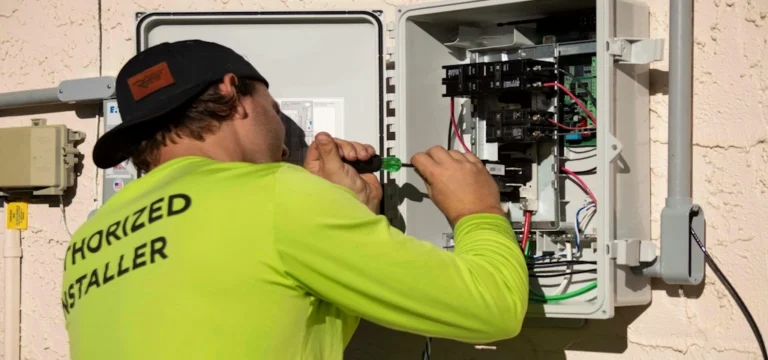
If you are planning to install an EV charger at home, the first thing you want to know is whether or not you need a permit for this.
Now, the short answer is yes, in most cases you do need a permit. More so if you want to install a Level 2 EV charger.
But this is not as complicated as you might think.
Yes, there’s a permit process involving paperwork, inspections, etc., but the process is much simpler than people expect.
In this blog, I will explain it all. You’ll know:
- When do you need a permit to install EV charger
- When you might not need any permit at all
- What the permit process looks like
- How permit rules vary from state to state
And much more.
Ready to find answers to all your questions?
Let’s get started.
Key takeaways
- Level 1 chargers usually don’t need a permit.
- Level 2 chargers almost always require a permit.
- Permits ensure your home stays safe and code-compliant.
- Electricians can handle the permit process for you.
- Permit rules vary by state and city, so always check your local rules.
- Skipping a permit can cause fines, insurance issues, or resale problems.
- Condos and HOAs might require additional approvals.
- The permit process is usually quick and straightforward.
Do I need a permit to install EV charger or not?

This is one question almost every homeowner asks me while working with us to install an ev charger load management system.
And I am sure as a new EV owner, you’re curious about it too.
Now, a simple answer is yes, most likely than not you do need a permit to install EV charger.
Here’s why.
An EV charger isn’t like your everyday home appliances. In fact, average EV charger amperage is way higher than appliances like toasters, coffee makers, etc.
These chargers run on 240 volts, draw a lot of electricity, and often require new wiring, a dedicated circuit, or even changes to your electrical panel.
This is where permits come in. They are a way to make sure everything is installed safely and correctly.

No More $10k Electrical Panel Upgrade to Charge Your EV at Home
simpleSwitch lets you add a Level 2 EV charger to your home without an expensive electrical panel upgrade. Your EV charges safety without panel overload.
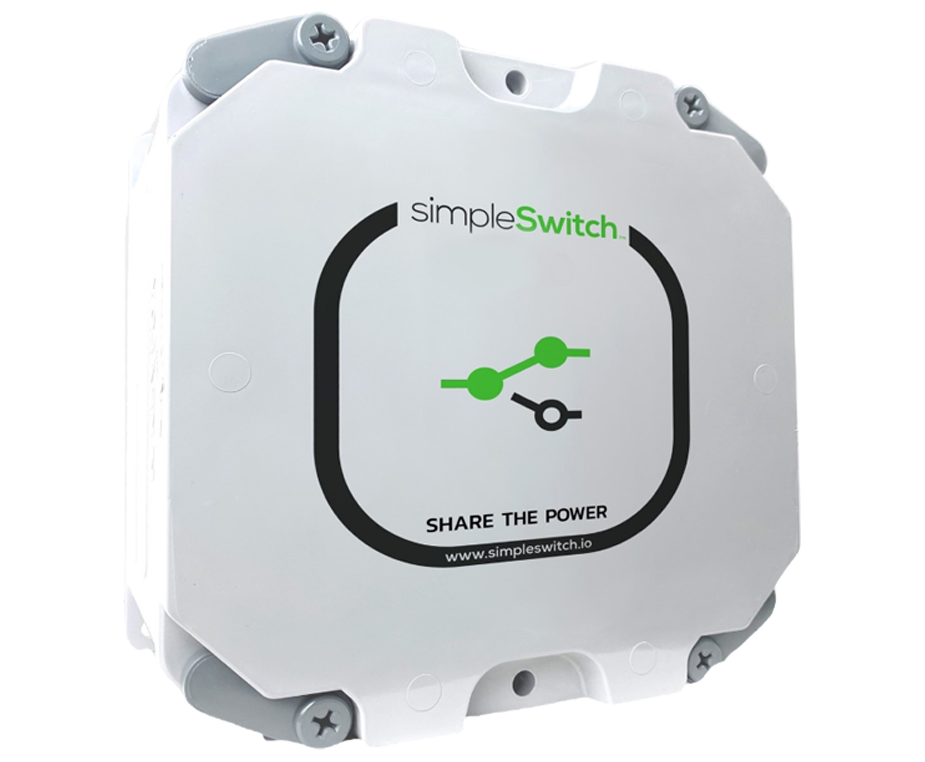
 30-day risk-free returns
- NEMA-rated
- Works with your existing panel
When do you need a permit to install EV charger and when you don’t?

Whether or not you need a permit to install EV charger comes down to what kind of charger you’re using and how much electricity it draws.
Also, whether the charger installation involves wiring upgrades, adding new circuits, etc., determine permitting.
All in all, here’s when you do need EV charger installation permit and when you don’t:
You need a permit to install EV charger if:
1. You’re installing a Level 2 charger
Level 2 chargers use a 240-volt connection, which is much more powerful than a standard household outlet.
And since these chargers use much higher voltage and continuously draw power, most cities treat this as serious electrical work.
This is why permits are usually required to make sure everything is installed safely and correctly.
2. New wiring is involved
If your garage or parking area doesn’t already have the right wiring, new electrical lines will need to be run.
Now, anytime wires are added or routed through walls or ceilings, a permit is typically required. Here, the work is inspected and approved by your local building department.
3. A new breaker is added
Adding a new breaker involves opening your electrical panel and changing how power is distributed in your home.
This directly affects your electrical system, so local building departments almost always require a permit for this type of work.
4. Electrical load is being modified
EV chargers draw a lot of power, and for long periods. And if your home’s electrical load is being adjusted to handle the high demand, a permit is needed.
You might not need a permit to install EV charger if:
1. You’re using a Level 1 charger
Level 1 chargers run on a standard 120-volt outlet, the same kind of outlet you use for everyday household items.
They draw much less power, which is why they’re often treated like regular plug-in devices.
So, if you use a Level 1 charger and a regular outlet for EV charging, you’ll not need a permit.
2. You don’t need any new electrical work
You might not need a permit if no wiring, breakers, or panel components need to be changed for EV charger installation.
3. You’re plugging the charger into an existing outlet
If the outlet already exists, is in good condition, and is not being upgraded or modified, a permit is often not needed.
However, if an electrician has to change or replace that outlet, permit rules might apply.
In short, here’s when may or may-not need a permit to install EV charger:
| Situation | Permit Needed? | Explanation |
| Installing a Level 2 charger | ✅ Yes | A 240V, high amp charger usually requires new wiring and a dedicated circuit. |
| New wiring | ✅ Yes | Anytime wires are added, permits are usually required for inspection. |
| Adding a new breaker | ✅ Yes | Changes power distribution in your home, needs official approval. |
| Modifying electrical load | ✅ Yes | Ensures your system can handle extra demand safely. |
| Using a Level 1 charger | ❌ Usually No | Standard 120V outlet, low power, no major electrical work. |
| No electrical work | ❌ Usually No | Simple plug-in without panel or wiring changes. |
| Plugging into an existing outlet | ❌ Usually No | Outlet is already installed and in good condition. |
How do EV charger permit requirements differ for Level 1 and Level 2 chargers?

When it comes to permit requirements for Level 1 and Level 2 EV chargers, the biggest difference comes down to two things:
- How much power the charger uses
- Whether or not electrical work is required
For instance, while Level 1 chargers are low-power and simple to use, Level 2 chargers use much more electricity and require changes to your home’s electrical system.
This difference is why permit rules for Level 1 and Level 2 chargers are usually very different.
Overall, here’s how permit requirements are different for both charger types:
Level 1 EV chargers
Level 1 chargers plug into a standard 120-volt household outlet, just like many everyday appliances.
Here, you can simply plug the charger in and start charging without needing a permit or inspection.
Now, since no changes are made to your electrical system, cities typically don’t require permits.
However, if an electrician needs to replace the outlet, add wiring, or make any upgrades, permit rules will apply.
Level 2 EV chargers
Level 2 chargers run on a 240-volt circuit and draw much more power than a standard outlet.
They usually require a dedicated circuit, a new breaker, and sometimes even an electrical panel upgrade.
That’s exactly why most cities and states require a permit, even if the installation seems simple or your panel already has enough capacity.
In short, here’s how permit requirements differ for Level 1 and Level 2 chargers:
| Charger Type | Voltage | Permit Required? | Notes |
| Level 1 | 120V | Usually no | Plugs into the existing outlet; no new wiring needed. |
| Level 2 | 240V | Yes | Requires dedicated circuit, possible panel upgrades, inspection needed. |
What happens during the EV charger permit process?

The EV charger permit process might sound complicated, but in reality, it’s usually very straightforward.
For most homeowners, it’s a routine checklist that happens behind the scenes. And it ensures your EV charger is installed safely and correctly.
In fact, the entire process takes just a few days and involves only one short inspection.
Here’s what you can expect the whole process to be like:
1. Permit application
This is the paperwork step where you submit the permit application either online or at your local building department. And it includes basic details like the EV charger model, how much power it uses, and where it will be installed.
If you’ve hired an electrician, they almost always handle this step for you.
2. Electrical review
Next, the city or county reviews the electrical details. They check that the wire size, breaker size, and overall electrical load are appropriate for the charger.
This step helps prevent overheating, tripped breakers, or long-term electrical issues.
3. Installation
Once the permit is approved, the charger is installed. This is typically done by a licensed electrician and usually takes a few hours.
4. Inspection
After installation, an inspector stops by to make sure everything meets safety codes. They’ll check connections, grounding, and labeling.
Most inspections take just 15-30 minutes. And once the charger set-up clears the inspection, you can now charge your EV at home.
In short, here’s what the EV charger permit process looks like:
| Step | What Happens |
| Permit Application | Submit online or in person, includes charger model, amperage, and location. |
| Electrical Review | City reviews wiring size, breaker, and load calculations. |
| Installation | Electrician installs the charger; and it usually takes a few hours. |
| Inspection | Inspector checks wiring, grounding, labeling; takes 15–30 mins. |
| Approval | Once approved, you’re cleared to charge safely. |
Bonus: You can let your electrician handle the entire permitting process

Here’s the good news: You need not deal with permits at all.
How?
You can let your electrician handle the entire permit process from start to finish. This is very common and is usually included in the installation cost.
The electrician submits the paperwork, coordinates with the city, and schedules the inspection for you. It’s the easiest and least stressful option.
What are the EV charger permit rules in Florida?
For starters, there isn’t a single rule for EV charger permits across the entire country.
The National Electrical Code (NEC) sets the general EV charger safety standards, the states adopt these standards, and then cities and counties create their own processes for permits and inspections.
This is also the case with Florida where most cities follow the 2025 Florida statutes and relevant NEC standards to enforce EV charger permits at the local level.
Some smaller towns might seem more relaxed, but officially, permits are still expected if new electrical work is involved.
Your best bet (and the safest option) is to assume a permit is required unless your local building department confirms otherwise.
No More $10k Electrical Panel Upgrade to Charge Your EV at Home
simpleSwitch lets you add a Level 2 EV charger to your home without an expensive electrical panel upgrade. Your EV charges safety without panel overload.
- 30-day risk-free returns
- NEMA-rated
- Works with your existing panel
Bonus: Here are some EV charger permit trends across different states
| State | Permit Usually Required? | Notes |
|---|---|---|
| Florida | Yes | Especially for Level 2 installs |
| California | Yes | Streamlined permitting available |
| Texas | Usually | Varies by city |
| New York | Yes | Strict enforcement |
| New Jersey | Yes | Clear EV permitting rules |
| Illinois | Yes | Electrical permits standard |
| Pennsylvania | Yes | Required for new circuits |
| Georgia | Yes | Local enforcement common |
| North Carolina | Yes | NEC-based permitting |
| Arizona | Yes | Inspection required |
| Colorado | Yes | Electrical review needed |
| Washington | Yes | EV-friendly but regulated |
| Massachusetts | Yes | Strong code enforcement |
| Ohio | Yes | New wiring requires permit |
To sum up
By now, I am sure you know whether or not do you need a permit to install EV charger.
Getting a permit for your EV charger might seem like an extra step, but it also brings you peace of mind.
A proper permit helps make sure your home stays safe, your family is protected, and your electrical system can handle the extra load.
Got more questions or want to install an EV charging load management system for your home?
You can get in touch with us!
At simpleSwitch, we bring UL-listed energy management devices for safe EV charging at home. Our devices are proudly made in the USA with the highest quality components.
FAQs about permit to install EV charger
Do I need a permit for a Level 1 EV charger at home?
In most cases, no.
A Level 1 EV charger usually plugs into a regular 120-volt household outlet, just like many other appliances.
So, if you’re not adding new wiring or changing anything in your electrical panel, a permit is usually not required.
Is a permit always required for a Level 2 EV charger?
Most of the time, yes.
Level 2 EV chargers use a 240-volt circuit and higher electrical load, which usually means new wiring, a dedicated breaker, or panel work.
This is why most cities and states require an electrical permit and inspection.
How much does an EV charger permit cost?
You can expect to pay anywhere between $50 and $200 for the permit, depending on your city.
What happens during an EV charger inspection?
An EV charger inspection is usually quick and simple. The inspector checks that the wiring size, breaker, grounding, and installation match electrical safety codes.
They might also check labeling and outdoor weather protection if applicable.
Most inspections take 15 to 30 minutes. And once approved, you’re cleared to use your charger.
What if I install an EV charger without a permit?
Installing an EV charger without a required permit can cause problems later.
You could face fines, be required to remove the charger, or run into issues with home insurance claims.
It can also create problems when selling your home, since inspectors often check for permitted electrical work.
Do EV charger permit rules differ by state or city?
Yes, permit rules can vary a lot by location.
While most states follow the National Electrical Code guidelines, cities and counties decide how permits are enforced.
For instance, Florida and California both usually require permits for Level 2 chargers, but California often offers faster, online approvals.
Can a permit delay my EV charger installation?
Usually, not by much.
Most online permits are approved in a few days, installation typically takes a day, and inspections are often done within 1-5 days.