If you own or manage an apartment building, condo, or any kind of multi-unit property, EV charging is no longer just a nice-to-have feature. It is quickly becoming something residents expect.
After all, more people are now driving electric cars than they ever did before. And if the National Renewable Energy Laboratory estimates are any suggestion, this is set to rise with 30 and 42 million cars in the country being EVs by 2030.
Now, unlike single-family homeowners, most apartment residents can’t just install a charger in their garage.
Meaning, if the building doesn’t offer EV charging, they’re stuck relying on public stations, which is expensive, time-consuming, and inconvenient.
This is why multifamily EV charging is becoming so important for property owners.
The good thing is adding EV charging isn’t very complicated or expensive.
In this blog, I will walk you through all things EV charging for multifamily properties. You’ll know:
- What EV charging really means for multifamily properties
- How it works in apartments, townhouses, etc
- Why are its benefits
And much more.
So, let’s get started.
Key takeaways
- EV charging is quickly becoming an expected amenity in apartments and condos.
- Most residents cannot install their own private chargers.
- Multifamily charging uses a shared system managed by the property.
- Residents activate chargers using an app or access card.
- Billing is automatic and tracks each user separately.
- Smart load management prevents electrical overload.
- Level 2 chargers are ideal for residential buildings.
What is multifamily EV charging all about?

Multifamily EV charging simply means offering EV charging in buildings like apartments, condos, townhomes, or co-op communities.
You see, in a single-family home, EV charger installation is easy. You install a charger in your garage and use your own power.
But in a shared building, it’s not that simple. That’s because residents park their vehicles in common garages or shared lots, and they don’t have their own private electrical setup.
This is where apartment EV charging station becomes necessary.
Here, instead of everyone installing separate chargers, the property installs a shared charging system for residents to use.
The chargers are placed in common parking areas or assigned spaces and are managed at the building level.
The goal is simple: To give residents a reliable, convenient way to charge their cars right where they live.

No More $10k Electrical Panel Upgrade to Charge Your EV at Home
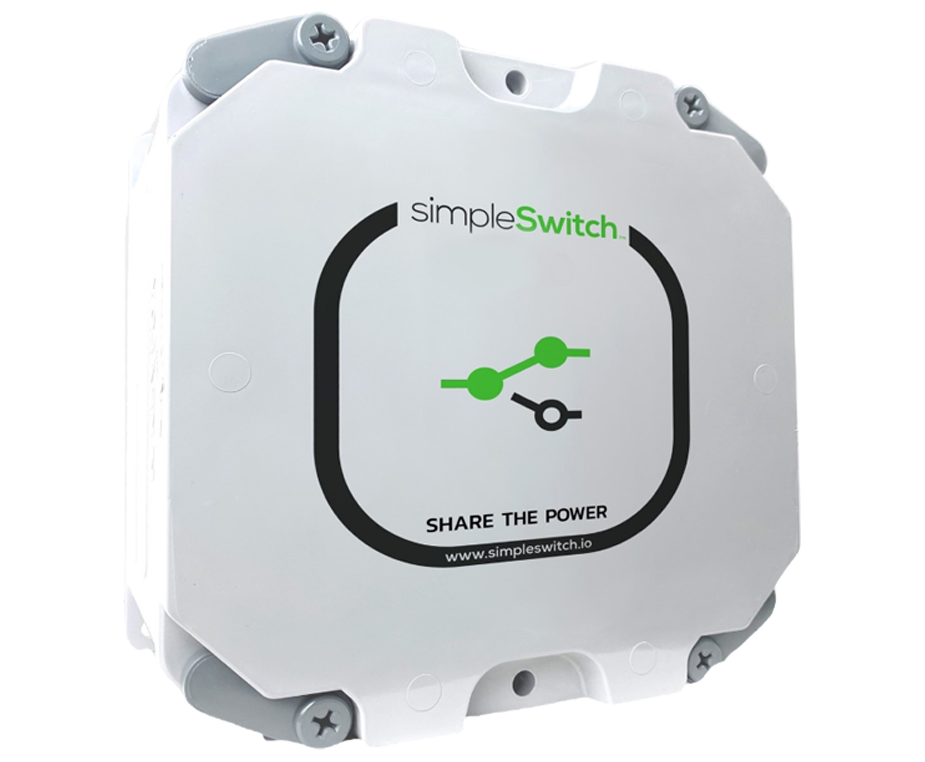
simpleSwitch lets you add a Level 2 EV charger to your home without an expensive electrical panel upgrade. Your EV charges safety without panel overload.
 30-day risk-free returns
- NEMA-rated
- Works with your existing panel
How does EV charging for multifamily properties work?

At first, EV charging in apartment buildings might sound complicated. You have multiple residents, limited electrical capacity, shared parking, and billing to think about.
But in reality, modern charging systems are designed to make everything simple and automatic.
That’s because instead of every resident installing their own separate charger, the property installs a shared system that is professionally managed. The system handles access, billing, and power distribution in the background.
Here’s how it typically works:
1. There is a shared charging system
The property installs multiple EV chargers that are connected to the building’s main electrical panel.
These chargers are placed in common parking areas, garages, or assigned spaces. And instead of residents installing individual chargers, everyone uses this shared system.
It is managed by the property, which keeps things organized, safe, and easy to access.
2. Residents charge their EVs using an app or access card
To start charging, residents don’t just plug in and walk away. They log into a mobile app or tap an RFID access card to unlock the charger.
This ensures that only approved residents can use the stations. Also, it prevents unauthorized use from visitors or the public.
The process is simple, plug in, activate through the app or card, and charging begins.
3. The system tracks usage and handles billing
One of the biggest barriers to EV adoption in multifamily properties is billing. The good news is that modern multifamily EV charging systems automatically track everything.
The software records who charged, how long they charged, and exactly how much electricity they used. Residents are then billed only for their own usage.
This means no manual tracking, no spreadsheets, and no guesswork for the property team.
4. Power is shared safely between chargers
Most multifamily buildings don’t have unlimited electrical capacity. And if every charger ran at full power at the same time, it could overload the system.
That’s why EV charging load balancing systems are used here.
These systems automatically balance power between all active chargers. So, even if many cars are charging at once, everything stays safe and within the building’s limits.
5. Level 2 chargers are mostly used
In most apartments and condos, Level 2 chargers are the standard choice. These chargers are chosen over DC fast chargers as there’s no need for extremely fast charging.
They are perfect for overnight charging or long parking periods. Residents typically plug in their EV overnight and wake up to a fully charged vehicle.
In short, here’s how multifamily EV charging works:
| Feature | What Happens |
| Shared system | Property installs chargers connected to main power |
| App or card access | Residents activate charging through an app or card |
| Automatic billing | System tracks usage and bills each resident |
| Smart power sharing | Charging power is balanced to avoid overload |
| Level 2 chargers over Level 3 | Ideal for overnight and long parking periods |
What are the benefits of multifamily EV charging?

Adding EV charging to a multifamily property is not just keeping up with a trend. It is also about meeting real demand that is growing every year.
You see, more residents are driving electric vehicles, and they expect to charge where they live.
So, properties that offer charging are seen as more convenient and modern.
Here are some of the biggest benefits of ev charger in multifamily properties:
1. It attracts and retains residents
More renters and buyers are actively looking for EV-friendly buildings. That’s because for many EV drivers, home charging is not optional, it’s essential.
So, if your property doesn’t offer charging, they will choose a different building that does.
In fact, even residents who don’t drive electric yet see it as a valuable future feature. This is why offering EV charging helps attract new tenants and buyers.
2. It increases property value and competitiveness
In competitive rental markets, small advantages do make a big difference.
This also goes for EV charging infrastructure that helps your property stand out from similar buildings nearby. It signals that the property is updated and ready for the future.
Over time, modern amenities like EV charging support stronger occupancy rates and protect long-term property value.
3. It supports sustainability goals
Properties contribute to reducing overall emissions by making it easier for residents to drive electric.
And this is not just about sustainability alone. A lot of cities and states are also encouraging EV charging infrastructure through incentives.
Meaning, not only does an EV charging station strengthen your building’s environmental profile but you also get incentives to do so.
4. It creates a better living experience
Convenience matters a lot to residents.
They don’t want to drive around looking for available public chargers or wait in line to power their car. More so if they can charge at home overnight, that too for much cheaper.
They plug in when they park and unplug when they leave. That’s it. No extra trips. No wasted time.
5. It prepares the property for future demand
EV adoption is growing quickly. So much so that according to the International Energy Agency, 40% to 50% of all new car sales in the country will be electric by 2030.
So, installing multifamily EV charging infrastructure now will help your property stay ahead instead of reacting later under pressure. That’s because even if only a few residents need charging today, that number will likely grow.
In short, here are all the benefits of multifamily EV charging:
| Benefit | Why It Matters |
| Attracts residents | EV drivers prefer buildings with charging |
| Increases property value | Makes property more competitive |
| Supports sustainability | Helps reduce emissions |
| Better living experience | Residents charge at home easily |
| Future-ready | Prepares building for growing EV demand |
Things to keep in mind before installing EV charging in apartment buildings

Installing EV chargers in a multifamily property requires more planning than adding a single charger to a private home.
In a shared building, you have to think about electrical limits, parking layout, billing, and long-term growth.
Overall, here are all the things to consider before installing apartment EV charging:
- Electrical capacity: You’ve to make sure your building can handle the extra power demand.
- Parking layout: The closer chargers are to power sources, the cheaper and easier installation will be.
- Billing and access control: You’ll need a system that tracks usage and charges residents fairly and also prevents unauthorized use.
- Ownership and management model: You’ve to decide whether you want to own and manage the chargers or use a third-party provider.
- Future expansion: EV charging demand will grow and installing adequate infrastructure for future chargers now can save money and hassle later.
In short, here’s everything you need to consider before installing apartment EV charging:
| Consideration | Why It’s Important |
| Electrical capacity | Make sure the building can handle added load |
| Parking layout | Impacts installation cost |
| Billing system | Ensures fair usage tracking |
| Ownership model | Decide who manages the chargers |
| Future expansion | Plan for more chargers later |
How can multifamily properties install EV charging without service upgrades?
One of the biggest concerns for multifamily property owners is the fear of costly electrical panel or service upgrades when adding EV chargers.
The good news?
Most buildings don’t need major electrical system overhauls to get started. All they need is an energy management device like simpleSwitch to support EV charging affordably and safely.
simpleSwitch connects to the building’s existing electrical infrastructure. And instead of letting every EV charger draw full power whenever an EV is plugged in, it continuously monitors how much electricity the building is using.
Now, when total usage reaches a set point (often around 80% of capacity), it temporarily pauses EV charging or other secondary loads to prevent overloading. Once demand drops, charging automatically resumes without human intervention.
This allows multifamily properties to offer EV charging to residents without waiting for utility approvals, costly infrastructure upgrades, or long construction delays.
No More $10k Electrical Panel Upgrade to Charge Your EV at Home
simpleSwitch lets you add a Level 2 EV charger to your home without an expensive electrical panel upgrade. Your EV charges safety without panel overload.
- 30-day risk-free returns
- NEMA-rated
- Works with your existing panel
Conclusion
By now, I am sure you know everything about multifamily EV charging.
You see, these charging setups are quickly becoming a standard amenity for apartments and multi-unit residential properties.
Yes, there are challenges when it comes to EV charging infrastructure in these properties. But with load management systems, it is possible to deploy reliable EV charging without major infrastructure upgrades.
Got more questions or want to install an EV energy management system in your multifamily property.
You can get in touch with us!
At simpleSwitch, we bring the highest-quality EV load management systems designed especially for multifamily buildings. Our systems are UL-listed and proudly made in the USA.
FAQs about multifamily EV charging
What types of properties are considered multifamily for EV charging?
Multifamily properties include apartments, condominiums, townhomes, co-ops, and any residential building where multiple households share parking and electrical infrastructure.
Do multifamily buildings usually install fast DC chargers?
Most multifamily properties install Level 2 chargers, not DC fast chargers.
Level 2 chargers are better suited for overnight and long-term parking and are far more affordable to install and operate.
Who pays for the electricity used by residents?
In most modern multifamily EV charging setups, residents pay only for the electricity they use.
The charging software tracks each charging session and automatically bills the individual user. This avoids disputes and ensures the property does not have to manually track usage.
Can older apartment buildings still install EV chargers?
Yes, many older buildings can still install EV chargers.
The main challenge is usually limited electrical capacity. This is where smart load management becomes very important.
Instead of upgrading the entire electrical service, load management allows the existing capacity to be shared safely across multiple chargers. This makes EV charging possible even in buildings that were never designed for electric vehicles.
How many chargers should a multifamily property start with?
There is no single perfect number. Most properties start with a small group of chargers and expand over time as demand grows.
A good approach is to install basic infrastructure such as conduit and electrical pathways for future chargers during the first phase.
This makes it much easier and cheaper to add more charging stations later without opening walls or redoing major electrical work.
Is it better for the property to own the chargers or use a third-party provider?
Both options can work. Owning the chargers gives the property more control, but also means handling maintenance, software, and billing.
At the same time, using a third-party provider reduces operational responsibility and often lowers upfront costs, but usually involves service agreements and revenue sharing.
Can multiple residents charge at the same time without overloading the building?
Yes. With load management technology in place, multiple residents can charge at the same time safely.
The system automatically adjusts charging power across all active chargers so the total building load stays within safe limits.