Are you someone who switched to EV only to realize how tricky it is to charge your car at home?
Maybe your breaker tripped, or maybe your car didn’t charge even halfway; more so if you use a Level 2 EV charger.
You’re not alone, as almost every new EV owner faces this problem.
Thankfully, there are EV charging load balancing systems available on the market that let you charge your EV hassle-free without a major electrical upgrade.
Now, you might be wondering, what’s that?
Well, in simple terms, it’s a way to make sure your EV charges safely and efficiently without overloading your electrical system.
In this blog, I will explain what load management for EV charging is, how it works, why it’s important, and when you’ll need it.
So, let’s get into it.
Key takeaways
- EV charging load balancing ensures safe and efficient charging.
- It adjusts power usage to avoid overloading your electrical system.
- Prevents breaker trips and electrical panel overloads.
- Avoids costly electrical upgrades by making smart use of existing power.
- Even single-EV homes can benefit from load balancing.
- Dynamic load balancing is the most efficient way to manage charging.
- You can charge multiple EVs safely without worrying about overloading.
What is EV charging load balancing?

For starters, electric vehicle charging load management is a smart way to manage how much power your EV charger uses.
It works based on the electricity your home is already using. Here, instead of letting your EV charger run at full power all the time, load balancing keeps things in check.
How?
Well, it monitors your home’s electrical usage in real time. And when other appliances or devices are using a lot of power (like your oven or dryer), load balancing temporarily pauses the charging speed to prevent overloading the system.
Also, if there’s extra power available, let’s say at night when you’re not using other appliances, your EV charger takes advantage of it to fully charge your car.
Simply put, load balancing ensures your EV charges safely, efficiently, and without straining your home’s electrical system. It keeps everything running smoothly and helps you avoid annoying power trips or expensive upgrades.

No More $10k Electrical Panel Upgrade to Charge Your EV at Home
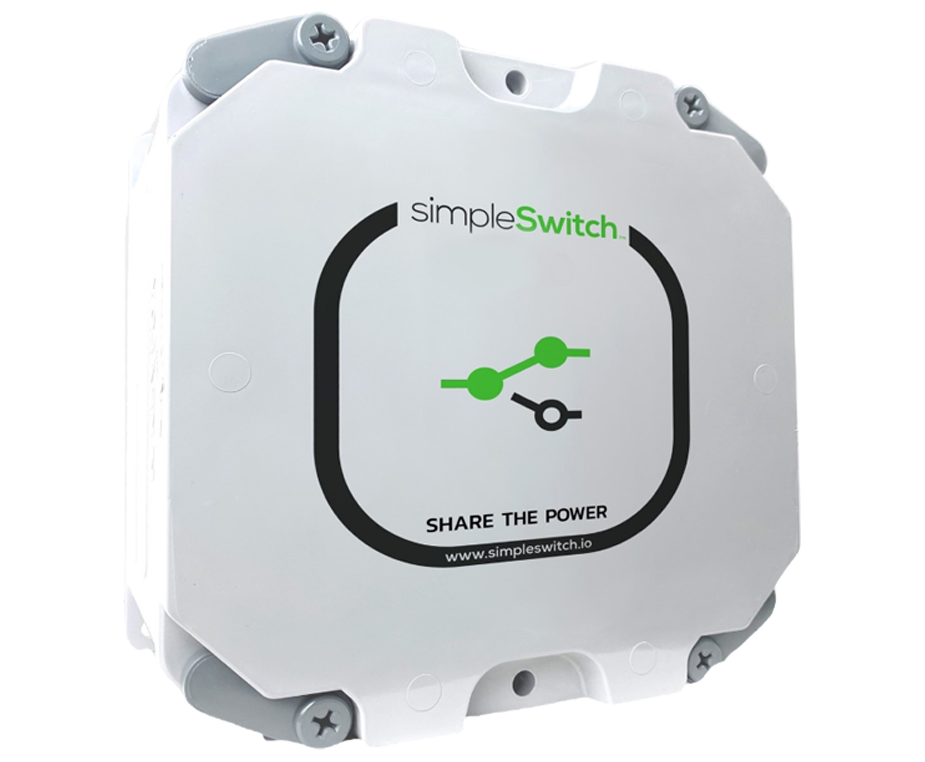
simpleSwitch lets you add a Level 2 EV charger to your home without an expensive electrical panel upgrade. Your EV charges safety without panel overload.
 30-day risk-free returns
- NEMA-rated
- Works with your existing panel
How does electric vehicle charging load management help?
Charging your EV uses a lot of electricity, especially when you’re using a Level 2 charger with high EV charger amperage.
Now, these chargers can draw as much power as some of the biggest appliances in your home, like your electric dryer, air conditioner, or oven. And when this happens, you might run into some issues without load balancing.
Here’s how load balancing helps you charge your EV at home hassle-free:
1. Prevents breaker trips
When multiple high-power devices like your EV charger, oven, and air conditioner run at the same time, you often end up with an electrical panel overload. This often causes the main breaker to trip, shutting everything down.
Load balancing prevents this by adjusting the charger’s power and helps avoid overloading the system.
2. Your electrical panel doesn’t overload
If your electrical panel gets overloaded too often, it can cause wear and tear on the system. This might lead to dangerous situations like overheating or even fire.
However, load balancing protects your system from repeated stress and ensures things stay safe.
3. Helps avoid costly electrical upgrades
Electricians often tell homeowners that they need to upgrade their electrical panel to safely charge an EV. But, these upgrades can cost thousands of dollars.
Load balancing lets you charge your EV without needing to invest in these expensive fixes, saving you money in the long run.
4. Ensures efficient charging
Without load management for EV charging, your charger either pulls power at full speed or does nothing at all. It’s not very smart or efficient.
But that’s not the case when you’re using load balancing as it ensures that your EV charges as quickly as possible without wasting power or causing electrical damage.
In short, here’s how load management for EV charging helps:
| Issue | How Load Balancing Helps |
| Breaker Trips | Prevents overload by adjusting the charger’s power when multiple high-power devices are running at the same time. |
| Electrical Panel Overload | Protects the panel from repeated stress by balancing power use, preventing overheating or potential fire hazards. |
| Costly Electrical Upgrades | Helps avoid expensive upgrades by managing power use efficiently, saving you thousands in panel or service upgrades. |
| Inefficient Charging | Ensures efficient charging by adjusting power dynamically, preventing wasted energy and optimizing charging speed. |
How does EV charging load balancing work?

Complicated as it might sound, electric vehicle charging load management is a simple process that helps keep your EV charger and other home running smoothly.
And it does so by constantly monitoring your home’s electricity usage and adjusting the power to your EV charger based on that.
Here’s how it works:
1. Monitor
First, the system keeps an eye on how much power your home is using at that exact moment. This includes things like the dryer, over, and even the AC. It measures everything in real time, very much like a smart home energy management system.
2. Compare
Next, it checks if your home’s total usage is below a safe maximum limit. If everything is within safe limits, the system lets your EV charger run at full capacity.
3. Adjust
If your home starts using more power (say, the oven or air conditioner kicks on), the system automatically pauses the power going to your EV charger. This prevents overloading the system.
4. Protect
Finally, the system ensures that everything stays within safe limits. This keeps your electrical panel from getting overloaded and avoids breaker trips.
All of this happens automatically, without you having to do anything. You just plug in your EV and let the load management device for EV charger do its job.
In short, here’s how EV charging load balancing works:
| Step | What It Does |
| Monitor | Measures how much power your home is using in real-time. |
| Compare | Checks if the home’s total usage is below a safe limit. |
| Adjust | Reduces or increases EV charging based on current usage. |
| Protect | Keeps your electrical system safe by avoiding overloads. |
Static vs dynamic load management for EV charging: What’s the difference?
When it comes to load balancing for EV chargers, there are two main types of management systems, static and dynamic.
Let’s have a look at how they work and how they’re different:
A. Static load balancing
In a static system, the EV charger is assigned a fixed power limit. This means no matter what’s happening in your home, the charger will always draw the same amount of power.
Here’s what you need to know about static load management for EV charging:
- It doesn’t adjust to how much power your home is using at the moment.
- While it’s simple to set up, it’s not very efficient.
For instance, your charger could be capped at 24A, even if the house is barely using any power. This means you could be charging slower than you need to, or worse, wasting available energy.
B. Dynamic load balancing
Dynamic load management EV charging, on the other hand, adjusts the charging power in real time.
Here’s how it works:
- It is always monitoring how much electricity your home is using and responds instantly if other appliances start using more power.
- If your home has extra power available, it speeds up the charging; if you need more power for other devices, it slows down to keep things balanced.
This makes it more efficient and helps your EV charge faster when possible, without ever risking overload.
Dynamic load balancing is the modern, smarter solution, and it is what a load sharing device like simpleSwitch uses too. It is the best option for keeping everything running smoothly, without you having to worry about anything.
In short, here are all the differences between Static and dynamic load management for EV charging:
| Feature | Static Load Balancing | Dynamic Load Balancing |
| Power Limit | Fixed power limit for EV charger. | Adjusts power in real-time based on usage. |
| Adaptability | Doesn’t adjust to household power needs. | Responds instantly to power changes in the home. |
| Efficiency | Less efficient, may waste energy. | Maximizes charging speed while preventing overload. |
| Example | Charger is capped at 24A regardless of usage. | Charger adapts to available power to ensure faster charging. |
How are home EV charging load balancing systems different from commercial ones?

EV charging load balancing works differently for homes and commercial sites, depending on the scale of the setup.
Now, most of the online resources you’ll find talk about commercial setups. But I’ve mostly kept focus on home load balancing.
Let’s look at how they differ:
Commercial charging load management
For businesses and fleet operations, load balancing handles much larger systems. It often manages dozens, if not hundreds, of chargers.
Here’s how it works:
- It helps reduce peak demand charges, which are higher costs that come from using a lot of power at once.
- Power is shared across multiple users, ensuring everyone gets charged without overloading the system.
- Load balancing makes sure chargers work efficiently, without wasting power or money.
For instance, if you use a DC fast charger at a public charging station or your workplace, chances are it uses this setup.
Home charging load management
For homes, load balancing is focused on keeping things simple, safe, and cost-effective, especially with just one or two EV chargers.
Here’s how it works:
- It helps protect limited panel capacity, so you don’t overload your home’s electrical system.
- It avoids expensive upgrades, like upgrading your electrical panel, saving you thousands of dollars.
- It shares power with other household appliances, making sure your EV charges without affecting other devices.
In short, here’s how EV charging load balancing differ for homes and commercial setups:
| Type of Setup | Homes | Commercial & Fleet |
| Scale | One or two EV chargers. | Dozens or hundreds of chargers. |
| Primary Focus | Protects home’s limited panel capacity. | Reduces peak demand charges and shares power across multiple users. |
| Cost | Avoids expensive electrical upgrades. | Manages large-scale charging efficiently, reducing costs. |
| Power Sharing | Shares power with household appliances. | Ensures chargers work efficiently across many users. |
Bonus: Here’s how to tell if you need EV charging load balancing for your home
- You have a 100A or 125A electrical panel
- You’re adding a Level 2 EV charger
- You use electric appliances (dryer, oven, heat pump)
- You want to avoid a panel upgrade
- You plan to own more than one EV
- You charge during peak household usage hours
If any of these apply, you should definitely get a load management system.
No More $10k Electrical Panel Upgrade to Charge Your EV at Home
simpleSwitch lets you add a Level 2 EV charger to your home without an expensive electrical panel upgrade. Your EV charges safety without panel overload.
- 30-day risk-free returns
- NEMA-rated
- Works with your existing panel
To sum up
By now, I am sure you know everything about EV charging load balancing, including how it helps and when you need it.
You see, as more people use EVs, managing the available power at home is the best way to keep things running smoothly without big ticket expenses.
Plus, it ensures that your home is ready to add another EV or handle bigger appliances down the line.
Got more questions or want to get an electric vehicle charging load management system installed in your home?
You can get in touch with us!
At simpleSwitch, we proudly bring made in USA UL-listed EV energy management systems to help you charge your EV safely without any major electrical upgrade whatsoever. And we’ve got all your load management needs covered on a budget.
FAQs about load management for EV charging
Why is EV charging load management important for home charging?
Home electrical panels have limits. And when an EV charger pulls too much power along with other appliances, breakers can trip or systems can overload.
Load balancing prevents this by keeping everything within safe limits. It helps you charge your EV without worrying about power outages, electrical damage, or costly panel upgrades, especially in homes with limited electrical capacity.
Can EV charging load balancing help avoid a panel upgrade?
Yes, this is one of the biggest benefits.
Many homeowners are told they need an expensive panel upgrade to install a Level 2 charger.
But, load balancing allows the charger to share available power instead of demanding more. This means you can install an EV charger using your existing panel, saving thousands of dollars while still charging safely and efficiently.
Does load balancing slow down EV charging?
Not really.
Load balancing pauses charging when your home needs power elsewhere.
When appliances turn off or power demand drops, the charger turns back on automatically.
Is EV charging load balancing only needed for multiple EVs?
No. Even one EV can overload a home’s electrical system, especially when combined with electric dryers, ovens, air conditioners, or heat pumps. k
What’s the difference between load balancing and load shedding?
Load balancing adjusts how much power your EV charger uses, while load shedding turns devices completely off.
Load balancing is smoother and less disruptive because charging continues, just at a lower speed if needed.
Load shedding, on the other hand, can interrupt charging or shut appliances off entirely.
For home EV charging, load balancing is usually the safer and more comfortable option.