



Looking to buy a new EV?
If yes, there’s a good chance your new electric car will be one with a NACS charging port.
You see, until 2023, NACS charging standard was synonymous with Tesla EVs as only Tesla used this port.
But things are different today. So much so that be it Ford, Hyundai, Rivian, or Kia, every big EV manufacturer seems to be using NACS as the default charging port.
Now, there’s already enough charging terms like J1772, CCS, SAE, CHAdeMO. And a lot of EVs still use these standards.
So, which EVs actually have NACS charging ports in 2026?
And more importantly, do you need a vehicle with NACS to use Tesla charging stations?
In this blog, I’ll explain it all. You’ll know:
- What a NACS charging port is
- Which EVs have NACS charging ports in 2026
- Which vehicles still use CCS
- Which EVs can use NACS chargers with adapters
- How NACS EV charging works
- Whether or not you should buy a car with NACS
So, let’s get started.
Key takeaways
- NACS stands for North American Charging Standard
- Tesla vehicles have used NACS for years
- Many automakers now offer EVs with NACS charging ports
- New Hyundai, Kia, Rivian, Nissan, Cadillac, and Lucid models now support NACS
- Many CCS-equipped EVs can use NACS chargers through adapters
- NACS is quickly becoming the dominant EV charging standard in North America
- Access to Tesla’s Supercharger network is one of the biggest reasons automakers are adopting NACS
For starters, what is a NACS charge port?
A NACS charge port is the charging port on an electric vehicle that accepts a NACS connector.
In simple words, it’s the opening where you plug the charging cable into your EV.
That’s it.
Think of it like the charging port on your phone. Different phones use different connectors, and EV connectors work in a similar way.
Now, the reason NACS has become so popular is because it allows both AC charging and DC fast charging through a single connector.
This means the same NACS charging port can be used for:
- Home charging
- Workplace charging
- Public charging
- DC fast charging

No More $10k Electrical Panel Upgrade to Charge Your EV at Home
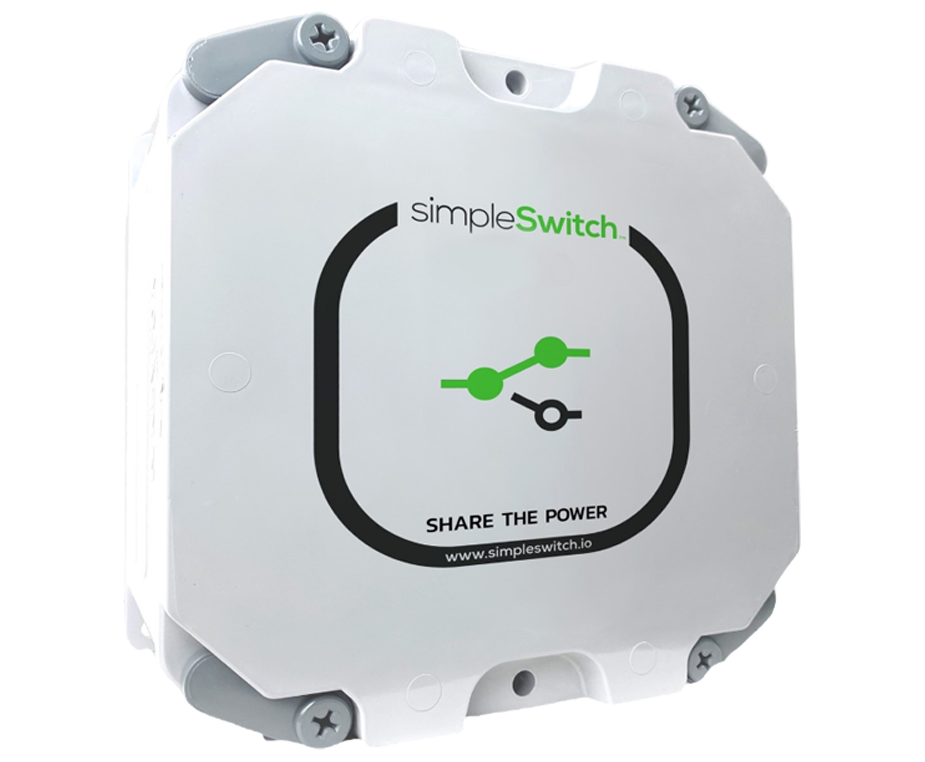
simpleSwitch lets you add a Level 2 EV charger to your home without an expensive electrical panel upgrade. Your EV charges safety without panel overload.
 30-day risk-free returns
- NEMA-rated
- Works with your existing panel
Here are all the EVs with NACS charging ports in 2026
If you’re looking for the quick answer, here’s a list of cars with NACS ports available or confirmed for the 2026 model year.
| Manufacturer | EV Model | Native NACS Port |
| Tesla | Model 3 | Yes |
| Tesla | Model Y | Yes |
| Tesla | Model S | Yes |
| Tesla | Model X | Yes |
| Tesla | Cybertruck | Yes |
| Hyundai | Ioniq 5 | Yes |
| Hyundai | Ioniq 6 | Yes |
| Hyundai | Ioniq 9 | Yes |
| Kia | EV6 | Yes |
| Kia | EV9 | Yes |
| Rivian | R1T | Yes |
| Rivian | R1S | Yes |
| Rivian | R2 | Yes |
| Lucid | Gravity | Yes |
| Cadillac | Optiq | Yes |
| Cadillac | Optiq-V | Yes |
| Genesis | Electrified GV70 | Yes |
| Genesis | GV60 | Yes |
| Nissan | Leaf | Yes |
| Toyota | bZ | Yes |
| Subaru | Solterra | Yes |
| Chevrolet | Bolt | Yes |
| BMW | i5 | Yes |
| Mercedes-Benz | CLA | Yes |
| Lexus | RZ | Yes |
Note: Availability might vary based on trim level, production date, and model year.
Now, let’s take a closer look at all the EVs that support NACS connectors.
Tesla vehicles with NACS charging ports
Let’s start with the easiest category.
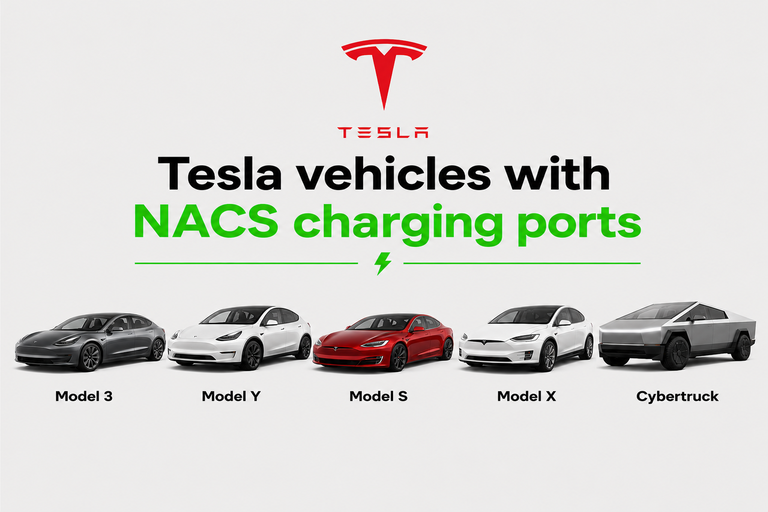
Every Tesla sold in North America already uses a NACS charging port.
After all, Tesla originally developed the connector that eventually became the North American Charging Standard.
Here are the Tesla models that come with native NACS charging ports:
Tesla Model 3
The Model 3 remains one of the most popular EVs in North America.
Every version includes a factory-installed NACS charging port and can charge at Tesla Superchargers, Level 2 chargers, and home charging stations using compatible equipment.
Tesla Model Y
The Model Y follows the same approach.
It uses the NACS connector for both everyday charging and fast charging, making it one of the simplest EV charging experiences currently available.
Tesla Model S
Tesla’s flagship sedan continues using the NACS charging standard and supports high-speed Supercharger charging throughout North America.
Tesla Model X
The Model X also uses a NACS charging port and can access Tesla’s charging network without requiring adapters.
Tesla Cybertruck
Tesla’s Cybertruck includes a native NACS connector and supports fast charging through Tesla’s Supercharger network.
Hyundai EVs with NACS charging ports

Hyundai has become one of the first major non-Tesla automakers to launch vehicles with factory-installed NACS ports.
This move gives Hyundai drivers direct access to a growing network of NACS EV charging stations.
Here are Hyundai EVs available with NACS connector:
Hyundai Ioniq 5
The updated Ioniq 5 is one of Hyundai’s first vehicles to receive a native NACS charging port.
This means owners can use Tesla Superchargers without relying on separate charging adapters. For many buyers, that’s a significant improvement in charging convenience.
Hyundai Ioniq 9
Hyundai’s three-row electric SUV also launches with NACS support.
Like the Ioniq 5, the Ioniq 9 is designed to take advantage of expanding NACS charging infrastructure across North America.
Hyundai Ioniq 6
The Ioniq 6 sedan has also been updated with a native NACS charging port, joining the Ioniq 5 and Ioniq 9. This means Hyundai’s entire refreshed EV lineup now gives owners direct access to Tesla Superchargers without needing an adapter.
Kia EVs with NACS charging ports
Hyundai isn’t the only company moving in this direction. Kia has also started transitioning its EV lineup toward NACS.
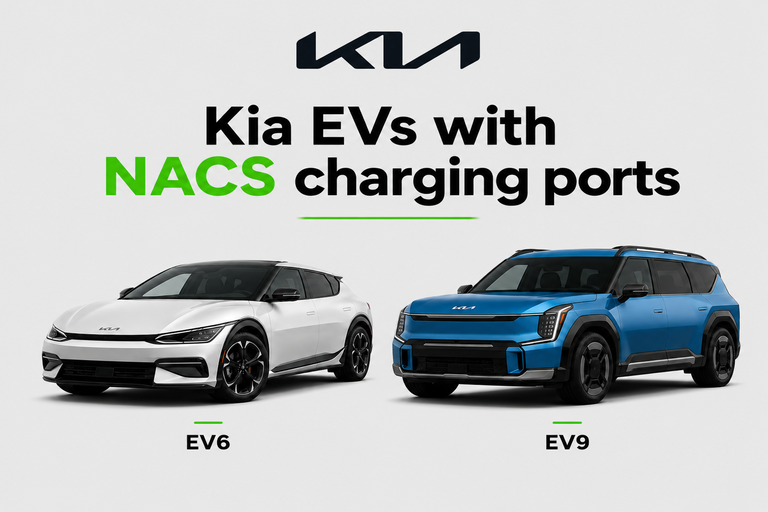
You can find NACS connectors on the following Kia EVs:
Kia EV6
The updated EV6 includes a native NACS charging port, making it one of the first Kia models to support direct charging through NACS-compatible fast chargers.
Kia EV9
The EV9 follows the same strategy.
As Kia’s flagship electric SUV, it offers NACS charging support directly from the factory, helping simplify charging for owners.
Rivian EVs with NACS charging ports

Rivian was one of the earliest automakers to publicly support native NACS adoption.
And now that transition is becoming reality with the following EV models:
Rivian R1T
The Rivian R1T electric pickup is now available with a factory-installed NACS charging port.
This gives owners direct access to Tesla Superchargers while maintaining compatibility with other charging networks.
Rivian R1S
The R1S SUV follows the same approach.
For Rivian owners who frequently travel long distances, expanded charging access is one of the biggest advantages of the switch.
Rivian R2
Rivian’s smaller, more affordable R2 SUV also comes with a native NACS charging port. It is built to bring Rivian to a wider range of buyers, and charging access is one area where it doesn’t compromise.
Lucid EVs with NACS charging ports
Lucid is another automaker that has embraced the NACS charging standard.
And for Lucid owners, that’s good news. It means easier access to one of the largest charging networks in North America.
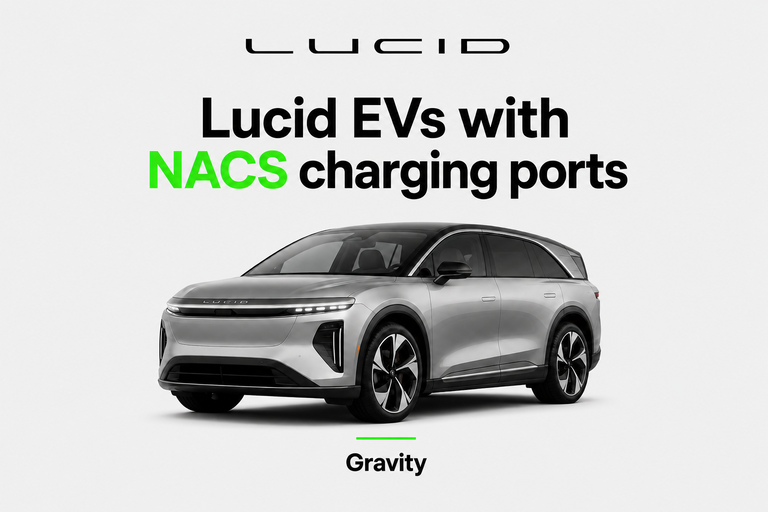
Here’s the Lucid EV that supports NACS right now:
Lucid Gravity
The Lucid Gravity comes equipped with a native NACS charging port from the factory.
This allows drivers to use compatible Tesla Superchargers without needing a separate adapter.
For families and long-distance travelers, that added charging flexibility can make a noticeable difference on road trips.
Cadillac EVs with NACS charging ports
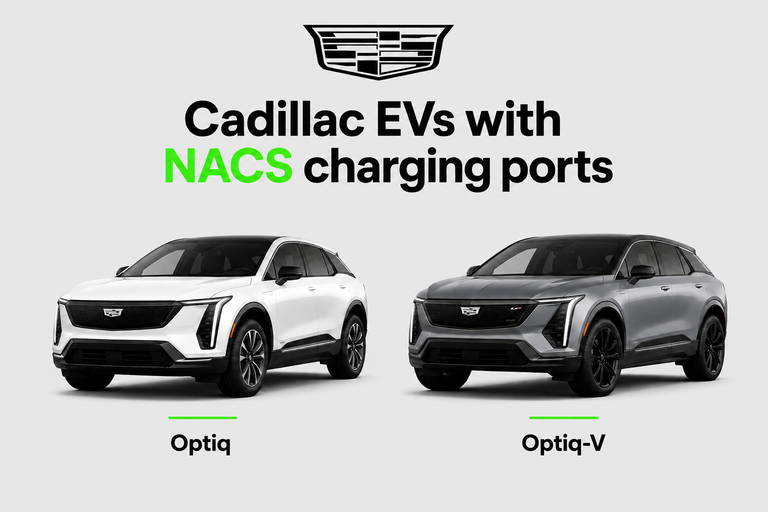
General Motors was one of the first major automakers to announce a move toward NACS.
As a result, several Cadillac EVs are now launching with NACS support, including:
Cadillac Optiq
The Cadillac Optiq includes a native NACS charging port, giving drivers access to both home charging solutions and a growing network of public NACS charging stations.
Cadillac Optiq-V
The performance-focused Optiq-V follows the same approach.
Like the standard Optiq, it supports NACS EV charging directly through its factory-installed charging port.
Genesis EVs with NACS charging ports

Genesis is also beginning its transition toward NACS with it’s signature EV model Electrified GV70.
Genesis Electrified GV70
The Electrified GV70 is among the first Genesis EVs to offer a native NACS charging port.
This helps simplify charging while improving access to public charging infrastructure across North America.
Genesis GV60
The GV60 has also joined the Electrified GV70 with a native NACS charging port of its own. Along with a bigger battery and improved range for the 2026 model year, GV60 owners now get the same direct Supercharger access.
Nissan EVs with NACS charging ports
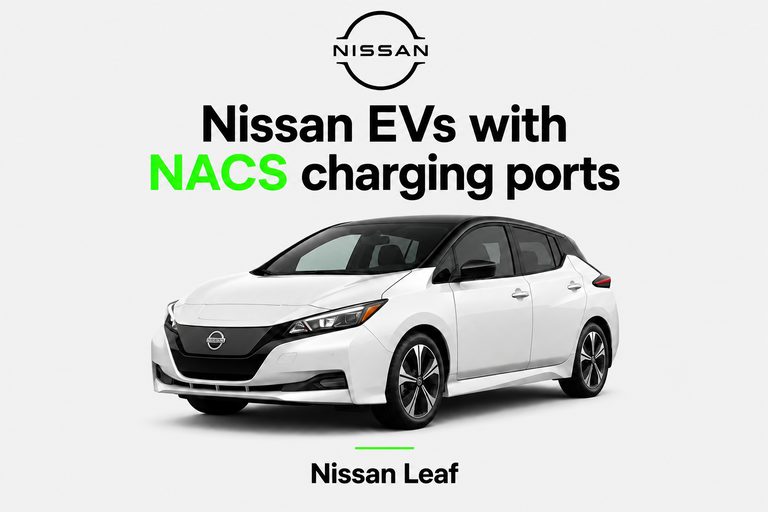
Nissan was one of the earliest EV manufacturers in North America.
Now it’s joining the industry’s move toward NACS as well with the redesigned Nissan Leaf equipped with NACS connector.
Nissan Leaf
The redesigned Nissan Leaf includes NACS support, marking a major change from previous generations.
This gives Leaf owners access to a much broader charging ecosystem than earlier models.
Toyota EVs with NACS charging ports
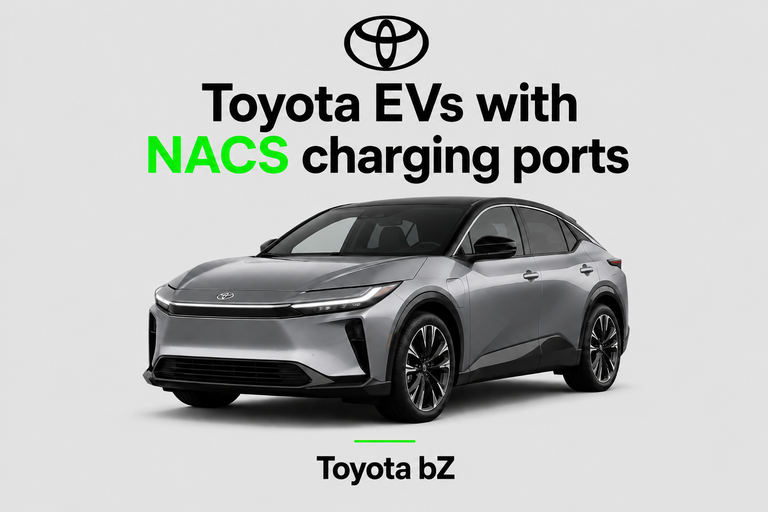
Toyota has also begun integrating NACS into its future EV strategy with it’s EV model bZ.
Toyota bZ
Toyota’s updated bZ electric crossover includes a NACS charging port, allowing owners to take advantage of both home charging and compatible public fast-charging networks.
Subaru EVs with NACS charging ports
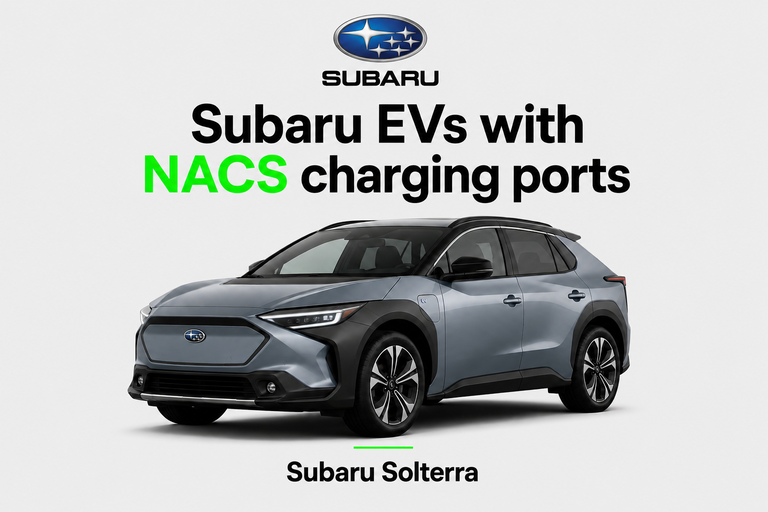
Subaru’s EV plans closely align with Toyota’s with Subaru Solterra’s latest model equipped with NACS.
Subaru Solterra
The latest Solterra includes support for NACS charging, helping improve charging convenience and network access for Subaru EV owners.
Chevrolet EVs with NACS charging ports

Chevrolet is catching up fast as part of General Motors’ broader move to NACS.
Chevrolet Bolt
The revived Bolt is the first Chevrolet model to come with a native NACS charging port. It gives Bolt owners direct access to Tesla Superchargers, all while staying one of the most affordable EVs on this entire list.
BMW EVs with NACS charging ports

BMW has also started shipping vehicles with native NACS charging ports, beginning with:
BMW i5
The i5 sedan is the first BMW model in the country to come with a factory-installed NACS charging port. It also ships standard with both AC and DC adapters in the box, so drivers can still plug into CCS1 and J1772 stations whenever they need to.
Mercedes-Benz EVs with NACS charging ports

Mercedes-Benz has joined the NACS lineup as well, starting with:
Mercedes-Benz CLA
The CLA is the first Mercedes-Benz model with a NACS charging port, though it works a little differently than most. The NACS port handles DC fast charging only, while a separate J1772 port takes care of AC charging.
Lexus EVs with NACS charging ports

Lexus has also begun rolling out native NACS charging ports, starting with:
Lexus RZ
The RZ is the first Lexus EV to come with a native NACS charging port. That gives owners direct access to Tesla Superchargers without needing an adapter, on top of a bump to 11kW onboard AC charging.
Why are automakers switching to NACS?
For years, Tesla used one charging connector while most other EV manufacturers relied on CCS.
This meant Tesla drivers had access to one charging ecosystem while non-Tesla drivers often depended on a separate network.
Then things changed.
As Tesla’s Supercharger network grew into one of the largest and most reliable charging networks in North America, automakers started looking for ways to give their customers access to it.
Ford was one of the first major companies to announce a switch to NACS.
Soon after, General Motors, Rivian, Hyundai, Kia, Honda, Nissan, Mercedes-Benz, Volvo, and several others followed.
The result?
The industry began moving toward a more unified charging experience.
Today, most new electric vehicles with NACS can charge directly at Tesla Supercharger locations without requiring a separate charging connector.
Can EVs without NACS still use NACS chargers?
Yes, they can.
You see, a lot of people assume that if their vehicle doesn’t have a NACS charging port, they’ll lose access to NACS charging stations.
But that’s not how it works.
Existing EVs with CCS charging ports can use approved adapters to charge at compatible NACS charging stations. This includes many popular EVs from:
- Ford
- Chevrolet
- GMC
- BMW
- Mercedes-Benz
- Volvo
- Polestar
- Volkswagen
- Audi
- Honda
- Acura
And the list continues to grow.
So even if your vehicle doesn’t have a native NACS connector, you might still be able to access a large portion of the NACS charging ecosystem.
NACS vs J1772: What’s the difference?
The main difference between NACS vs J1772 is that J1772 was primarily designed for AC charging.
NACS, on the other hand, supports both AC charging and DC fast charging through the same connector.
This means a single NACS charging port can handle both Level 2 home charging and public DC fast charging.
Should you buy an EV only with a NACS charging port?
For most buyers, the answer is yes.
But it depends on your situation.
If you’re shopping for a new EV in 2026, choosing one of the cars with NACS can provide several advantages, including:
- Direct Supercharger access
- Simpler charging experience
- Growing charging infrastructure
- Better long-term compatibility
- Fewer adapter requirements
That said, owning a CCS-equipped EV is still perfectly reasonable.
Millions of CCS vehicles remain on the road today and thousands of CCS charging stations continue operating across North America. Also, adapter support continues improving.
So while the industry is clearly moving toward NACS, existing EV owners don’t need to worry about their vehicles becoming obsolete overnight.
What does NACS mean for home charging?
Most conversations around NACS focus on public charging. But home is where most EV owners actually do the majority of their charging, with the best home Level 2 EV chargers now providing NACS charge ports.
Now, whether your vehicle uses NACS or CCS, you’ll still need a safe and reliable way to charge at home.
And sometimes that becomes challenging if your electrical panel has limited available capacity.
That’s where a load sharing device like simpleSwitch helps.
Instead of paying for an expensive panel upgrade, simpleSwitch allows your EV charger to safely share power with another high-demand appliance, such as an electric dryer or induction cooktop. This makes Level 2 charging installation much easier and more affordable.
No More $10k Electrical Panel Upgrade to Charge Your EV at Home
simpleSwitch lets you add a Level 2 EV charger to your home without an expensive electrical panel upgrade. Your EV charges safety without panel overload.
- 30-day risk-free returns
- NEMA-rated
- Works with your existing panel
Final words
By now, I am sure you have a solid understanding of which EVs have NACS charging ports in 2026 and how they charge.
Just remember these basics:
- NACS stands for North American Charging Standard
- Tesla originally developed the connector
- More automakers are adopting NACS every year
- Many new EVs now come with factory-installed NACS charge ports
- Existing CCS vehicles can often use NACS chargers through adapters
- Access to Tesla’s Supercharger network is driving much of the transition
The bigger picture?
EV charging is gradually becoming simpler.
And that’s good news for everyone.
As more electric vehicles with NACS hit the road, charging networks become easier to use, road trips become more convenient, and EV ownership becomes more accessible.
Thinking about installing a Level 2 EV charger at home but worried about electrical panel capacity?
You can get in touch with us!
At simpleSwitch, our award-winning, made-in-the-USA EV energy management systems help homeowners install EV chargers safely and affordably without costly electrical panel upgrades.
FAQs about EVs with NACS
What is a NACS charge port?
A NACS charge port is the charging port that accepts a North American Charging Standard connector.
It allows an EV to charge using both AC charging and DC fast charging through a single port.
Which EVs have NACS charging ports in 2026?
Several EVs now offer native NACS charging ports, including Tesla models, Hyundai Ioniq 5 and Ioniq 9, Kia EV6 and EV9, Rivian R1T and R1S, Lucid Gravity, Cadillac Optiq, Nissan Leaf, Toyota bZ, and Subaru Solterra.
What does NACS stand for?
NACS stands for North American Charging Standard.
It is the EV charging connector originally developed by Tesla and now adopted by many automakers across North America.
Can CCS vehicles use NACS chargers?
Yes, they can.
You see, when comparing NACS vs CCS connectors, a lot of EV dealerships portray CCS as a thing of the past.
But then, many CCS-equipped EVs can use compatible NACS charging stations through approved charging adapters.
Is NACS the same as Tesla charging?
Essentially, yes.
The NACS charging standard is based on Tesla’s original charging connector design.
Today, however, it is an industry-wide standard that other automakers can use as well.
Is NACS better than J1772?
For most drivers, yes.
NACS supports both AC charging and DC fast charging through a single connector, while J1772 primarily supports AC charging.
Will all future EVs use NACS?
Many automakers have announced plans to adopt NACS, and it is becoming the dominant charging standard in North America.
However, the transition will take time, and other charging standards will remain in use for years.
Do Tesla vehicles use NACS?
Yes.
All Tesla vehicles sold in North America use a NACS charging port.
Can I install a NACS charger at home?
Yes.
Many home EV chargers now offer NACS connectors or interchangeable charging cables that support NACS-equipped vehicles.
Will my EV become obsolete if it doesn’t have NACS?
No.
Many CCS vehicles can use NACS charging stations through adapters, and CCS charging infrastructure remains widely available across North America.


