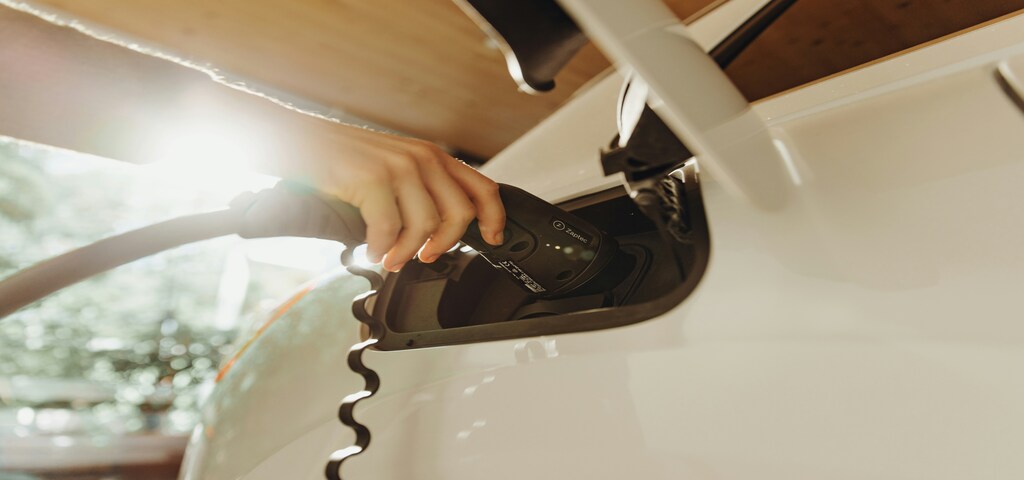
If you’ve been looking into different types of EV connectors, there’s a good chance you came across the term NACS.
Maybe you saw an automaker announce that it’s switching to NACS, or maybe you heard someone say that NACS is replacing CCS.
And all of this can sound confusing at first.
After all, EV charging already has enough acronyms floating around like J1772, CCS, CHAdeMO, Level 2 charging, DC fast charging, and now NACS.
So, what exactly is NACS charging standard?
And more importantly, why is everyone talking about it?
For starters, NACS is simply EV charging that uses the NACS charging connector. And let me tell you it is much simpler than it sounds.
In this blog, I’ll explain it all. You’ll know:
- What NACS charging is
- How NACS charging connector works
- Why automakers are switching to it
- Whether NACS is better than CCS
- Which electric vehicles use NACS
- And what NACS means for EV owners going forward
So, let’s get started.
Key takeaways
- NACS stands for North American Charging Standard
- Tesla originally developed the NACS charging connector
- NACS supports both AC and DC charging through a single port
- Many major automakers are switching to NACS
- NACS gives EV drivers access to Tesla’s Supercharger network
- The standard is quickly becoming the future of EV charging in North America
- Existing CCS vehicles will continue to work through adapters and supported chargers
For starters, what is NACS charging standard?

NACS charging standard refers to EV charging that uses the NACS charging connector. And this is simply a charging plug designed to handle both AC and DC EV charging through a single connector.
In simple words, NACS is the plug that connects an electric vehicle to a charger.
That’s it.
Think of it like the charging cable you use for your phone. You plug it in, electricity flows, and the battery charges.
Now, the reason NACS has become such a big deal is because more automakers are starting to adopt it for their vehicles.
For years, Tesla used this connector while most other EV manufacturers relied on CCS.
Today, that is changing.
Many major automakers have announced plans to switch to NACS, making it one of the most important developments in the EV industry.

No More $10k Electrical Panel Upgrade to Charge Your EV at Home
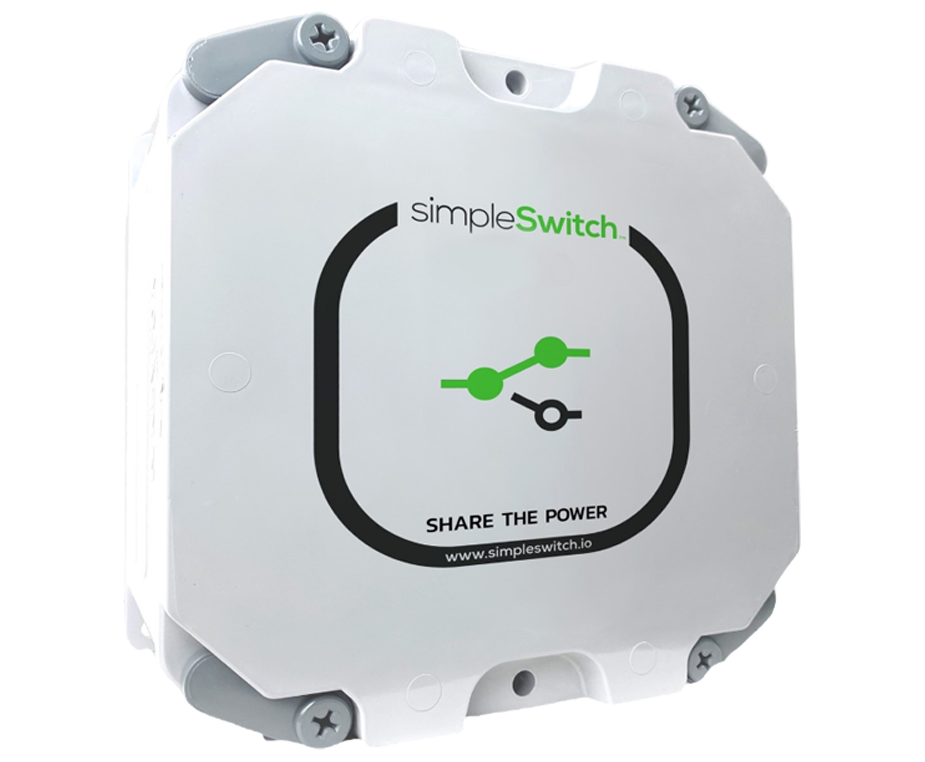
simpleSwitch lets you add a Level 2 EV charger to your home without an expensive electrical panel upgrade. Your EV charges safety without panel overload.
 30-day risk-free returns
- NEMA-rated
- Works with your existing panel
What does NACS stand for?
NACS stands for North American Charging Standard.
This standard was originally developed by Tesla and used exclusively on Tesla vehicles for many years.
Then, in 2022, Tesla made it an open EV connector design, letting other manufacturers and charging companies use it.
This allowed other automakers to begin adopting the same charging connector instead of using separate charging systems.
Why was NACS created?
For a long time, the EV charging world was fragmented.
Tesla vehicles used one connector while most non-Tesla EVs used another. Also, public charging stations needed to support multiple plug types.
This created confusion for EV owners and added complexity for charging networks.
Tesla designed its charging connector with a different approach. Instead of using separate plugs for AC charging and DC fast charging, they created a single compact connector that could handle both.
This offered a few important benefits like smaller connector size, easier handling, simpler charging experience, and compatibility for both home and public charging.
Over time, Tesla’s charging network also grew into one of the largest and most reliable fast-charging networks in North America.
And as more automakers looked for ways to improve charging access and simplify EV ownership, NACS started gaining attention across the industry.
How did NACS become the country-wide charging standard?

This is where things get interesting.
For many years, Tesla’s charging connector was mainly used by Tesla vehicles while other automakers continued supporting CCS for public fast charging.
Then things changed very quickly.
In 2023, Ford announced adoption of NACS for all Ford EVs to gain access to Tesla’s Supercharger network. Soon after, General Motors made a similar announcement.
And once those announcements happened, many other automakers followed.
Companies like Rivian, Volvo, Mercedes-Benz, Hyundai, Kia, Honda, Acura, Nissan, and several others also announced plans to adopt NACS for future vehicles.
As more manufacturers joined, charging networks began adding NACS connectors to their stations as well.
This created a snowball effect.
More vehicles supported NACS, more charging stations installed NACS connectors, and more EV owners gained access to the growing charging ecosystem.
The next major milestone came when the charging standard was formally standardized under SAE J3400. This helped turn NACS from Tesla’s proprietary connector into an industry-recognized charging standard.
Today, the NACS charging standard is no longer just a Tesla connector. It is rapidly becoming the North America charging standard for EVs.
Here’s how NACS charging standard evolved over the years:
| Year | Major milestone |
| 2012 | Tesla introduces its charging connector |
| 2022 | Tesla opens the connector design to the industry |
| 2023 | Ford announces NACS adoption |
| 2023 | GM and other automakers begin adopting NACS |
| 2024 onward | Charging networks and automakers expand NACS support |
| Today | NACS is becoming the dominant EV charging standard in North America |
Why should EV owners care about NACS?
At this point, you might be wondering: Why does any of this matter to me?
Well, that’s because your charging connector affects your everyday EV experience. It determines:
- Which charging stations you can use
- Whether fast chargers are compatible with your vehicle
- How easy road-trip charging is
- What adapters you might need
- How future-proof your EV is
As more automakers move toward NACS, you will likely see greater charging consistency across vehicles and charging networks.
More importantly, many NACS-compatible vehicles can now access Tesla’s extensive Supercharger network, which increases your public charging options. In fact, for many EV owners, that’s one of the biggest advantages of all.
What does the NACS charging connector look like?
The NACS charging connector is surprisingly small compared to many other EV charging plugs
If you’ve ever seen a Tesla charging cable, you’ve already seen a NACS connector.
The design is compact, lightweight, and easy to handle. And while that might sound like a minor detail, it actually makes a noticeable difference in everyday use.
After all, nobody wants to wrestle with a large, heavy charging cable every time they plug in their car.
The NACS charging port uses a simple design with fewer pins than many competing connectors. Yet despite its smaller size, it can support both:
- AC charging for home and workplace charging
- DC fast charging for road trips and public charging stations
This means EV owners only need one charging port on the vehicle instead of separate ports for different charging types.
How does NACS charging work?
NACS charging works like any other EV charging station in four steps:
- You plug the connector into your vehicle.
- The charger and vehicle communicate with each other.
- They verify charging conditions and power levels.
- And once everything checks out, charging begins.
The only difference is that the same NACS charging connector can handle both slow and fast charging.
For instance if you’re charging at home using a Level 2 charger, the NACS connector delivers AC power to the vehicle.
And if you’re charging at a Tesla Supercharger or another DC fast charger, the exact same connector delivers DC power directly to the battery.
Bonus: Here’s what NACS supports
| Charging type | Supported by NACS? |
| Level 1 charging | Yes |
| Level 2 charging | Yes |
| DC fast charging | Yes |
| Home charging | Yes |
| Public charging | Yes |
How fast is the NACS charging standard?
The short answer is: It depends on your charger and vehicle.
You see, charging speed isn’t determined by the connector alone. Your vehicle’s battery and the charging station both play major roles.
That said, NACS supports high charging speeds.
At home, you can use a NACS connector to charge your EV at Level 2 charging speeds. This is true even if your electrical panel capacity is limited, all you’ve got to do is use a load sharing device like simpleSwitch.
Also, you can use this connector for DC fast charging and charge your EV quickly during road trips.
NACS vs CCS: What’s the difference?

For years, CCS was the primary fast-charging standard used by non-Tesla electric vehicles in North America. Meanwhile, Tesla vehicles used their own charging connector.
But today, those two worlds are starting to merge.
Still there are some very important differences between NACS vs CCS, including:
1. Connector size
This is probably the first difference you’ll notice.
NACS is compact, lighter, and easier to plug in.
CCS connectors, on the other hand, are noticeably larger because they combine a J1772 connector with two additional DC charging pins.
2. Charging ports
NACS uses a single port for everything.
CCS uses a combined design that supports both AC and DC charging through the same vehicle port, but the connector itself is larger and more complex.
3. Charging network access
Tesla’s Supercharger network has long been considered one of the most reliable and extensive fast-charging networks in North America.
And as automakers adopt NACS, their customers gain easier access to this charging ecosystem.
4. Industry momentum
A few years ago, CCS was clearly the dominant non-Tesla charging standard.
Today, things look very different.
Many major automakers have announced plans to adopt NACS for future vehicles. This shift is one of the biggest reasons why the North America charging standard conversation has changed so quickly.
Overall, here’s how NACS and CCS compare:
| Feature | NACS | CCS |
| Connector size | Smaller | Larger |
| Supports AC charging | Yes | Yes |
| Supports DC fast charging | Yes | Yes |
| Tesla Supercharger access | Yes | Limited without adapter support |
| Ease of use | Very simple | Slightly more complex |
| Industry adoption | Growing rapidly | Still widely used today |
| Future outlook | Becoming dominant | Likely to remain during transition period |
Is NACS faster than CCS?
Not necessarily.
You often hear people say that NACS is faster than CCS.
But the connector itself isn’t what determines charging speed, the charger and the vehicle are what determine it.
So, both NACS CCS chargers deliver very fast charging when paired with compatible vehicles.
Is NACS better than CCS?
For many EV owners, the answer is yes.
But it depends on what matters most to you.
For instance, NACS offers some clear advantages if you’re looking for:
- A smaller connector
- Easier handling
- Growing charging network support
- Access to Tesla Superchargers
- Strong future adoption
However, that doesn’t mean CCS suddenly becomes a bad option.
Millions of CCS-equipped EVs are already on the road. Also, thousands of CCS charging stations continue to operate across North America.
Plus, adapters are making it easier than ever for vehicles to use multiple charging networks even with CCS. .
So yes, the EV charging world is moving toward NACS. But CCS is still very relevant.
Bonus: Here are some major automakers switching to NACS
Many automakers have announced plans to adopt the NACS charging port for future EV models. This includes:
- Ford
- General Motors (GM)
- Rivian
- Volvo
- Polestar
- Mercedes-Benz
- Hyundai
- Kia
- Honda
- Acura
- Nissan
- Jaguar
- Toyota (select future plans and discussions)
- Subaru (future EV collaboration plans)
Note: The exact rollout timeline varies by manufacturer and vehicle model.
Can existing EVs use NACS chargers?
Yes, they can.
A lot of people worry that their EV will become outdated if it doesn’t have a NACS charging port. But that’s not the case.
Automakers offer adapters that allow CCS-equipped vehicles to use compatible NACS charging stations.
This means existing EVs don’t suddenly become unusable. Adapters help bridge the gap while the industry transitions toward a common charging standard.
In fact, many EV owners are already using adapters to access charging networks that were previously unavailable to them.
Can Tesla vehicles use non-Tesla chargers?
Yes.
This works both ways.
Tesla drivers have long used adapters to access J1772 public charging stations for AC charging.
Today, Tesla also offers solutions that allow compatible vehicles to use CCS charging equipment.
And as charging standards become more unified, compatibility is actually improving rather than becoming more complicated.
What are the benefits of NACS charging standard for EV owners?
If you’re buying an EV right now, electric vehicles with NACS are something you should definitely consider.
Not because your current charging setup will stop working, but because NACS is becoming increasingly important for long-term charging convenience.
Here are some of the biggest benefits that come with an NACS charging connector:
1. Easier access to charging stations
One of the biggest challenges of EV ownership has always been charging availability.
But there’s already a huge Tesla Supercharger network across the country. And as NACS adoption grows, drivers will have access to a larger and more connected charging ecosystem.
2. Better road-trip charging
Long-distance travel is where charging infrastructure matters most. Here, a larger charging network means:
- More charging locations
- Better route flexibility
- Shorter waits
- Less range anxiety
For many drivers, this is one of the most practical benefits of NACS adoption.
3. Future compatibility
Nobody wants to buy a vehicle and wonder if it will still be easy to charge five or ten years from now.
The growing adoption of the North American Charging Standard helps reduce that concern.
As more automakers align around a common charging connector, compatibility becomes simpler for everyone.
What is the future of NACS charging standard?
Based on current industry trends, NACS is positioned to become the dominant EV charging standard in North America. That’s because:
- Automakers are adopting it
- Charging networks are installing it
- New EV models are launching with it
- And charging infrastructure investments increasingly include NACS support
Of course, transitions like this take time. The EV industry won’t switch over overnight.
You’ll continue seeing CCS charging stations, CCS vehicles, and adapter solutions for many years.
But if you look at where things are headed, the direction is pretty clear. NACS is becoming the connector that much of the industry is building around.
No More $10k Electrical Panel Upgrade to Charge Your EV at Home
simpleSwitch lets you add a Level 2 EV charger to your home without an expensive electrical panel upgrade. Your EV charges safety without panel overload.
- 30-day risk-free returns
- NEMA-rated
- Works with your existing panel
Final words
By now, I am sure you have a solid understanding of what the NACS charging standard is and why it has become such a major topic in the EV world.
Now, as an EV owner, you don’t need to memorize every charging specification. Just remember these basics:
- NACS stands for North American Charging Standard
- Tesla originally developed the connector
- NACS supports both AC and DC charging through one port
- Major automakers are adopting NACS
- Access to Tesla’s Supercharger network is driving much of its growth
- CCS isn’t going away anytime soon, and adapters help bridge the gap
The bigger picture?
EV charging is gradually becoming simpler. And that’s a good thing for everyone.
Whether you’re buying your first EV or already own one, the move toward a common charging standard will make charging more convenient, accessible, and future-proof.
Want to install a Level 2 EV charger at home but worried that your electrical panel doesn’t have enough capacity?
You can get in touch with us!
At simpleSwitch, our award-winning, made-in-the-USA EV energy management systems are designed to make EV charger installations easier and more affordable.
Our systems help you avoid costly panel upgrades while charging safely and efficiently by sharing power between your EV charger and other high-capacity appliances like dryer or induction cooktop.
FAQs about NACS charging standard
What does NACS stand for?
NACS stands for North American Charging Standard.
It is an EV charging standard originally developed by Tesla and now being adopted by many automakers and charging providers across North America.
What is NACS charging?
NACS charging refers to EV charging that uses the NACS charging connector.
The connector supports both AC charging for home charging and DC fast charging for public charging stations using a single charging port.
Is NACS the same as Tesla charging standard?
Essentially, yes.
The NACS charging standard is based on Tesla’s original charging connector design.
The difference is that NACS is now an industry-recognized standard that other automakers can adopt as well.
Is NACS better than CCS?
For many drivers, yes.
NACS offers a smaller connector, simpler design, growing charging network support, and access to Tesla’s Supercharger network.
However, CCS remains widely supported and continues to be a reliable charging option.
What vehicles use NACS?
All Tesla vehicles use NACS.
In addition, many automakers including Ford, GM, Rivian, Volvo, Mercedes-Benz, Hyundai, Kia, Honda, Acura, and Nissan are adopting NACS for future EV models.
Can a CCS vehicle use a NACS charger?
Yes.
CCS-equipped EVs can use compatible NACS charging stations with approved adapters.
Will NACS replace CCS completely?
Not anytime soon.
While NACS is becoming the dominant charging standard in North America, CCS charging stations and vehicles will remain in use for many years.
Both standards will likely coexist throughout the transition period.
Do I need a NACS charger at home?
Not necessarily.
The right home charger depends on your vehicle’s charging port.
If your EV uses NACS, a NACS-compatible charger is usually the simplest option.
If your EV uses CCS or J1772, those charging solutions will continue to work as well.
Is NACS only used in North America?
At the moment, NACS is primarily focused on the North American market.
Other regions, including Europe and China, continue to use different charging standards such as CCS2 and GB/T.
Will my EV become obsolete if it doesn’t use NACS?
No.
Existing EVs with CCS charging ports will continue to work with public charging infrastructure.
Many vehicles can also access NACS charging networks through approved adapters, helping maintain compatibility as the industry evolves.