Are you planning to install a new electric stove, calculating electricity costs of using the stove, or figuring out whether a backup battery can power your stove during an outage?
Awesome!
But before you do any of that, you need to understand a few things about your stove’s electrical requirements.
You see, electric stoves draw a lot of power. And just like electric car charger amperage, knowing electric stove amperage, wattage, and energy consumption is essential to plan the right electrical setup.
Also, it helps you understand how much electricity your stove uses and what kind of backup power you might need.
That’s why in this blog, I have explained how many amps an electric stove uses, what its voltage and breaker requirements are, and how you can calculate its electricity consumption.
So, let’s get into it.
Key takeaways
- Most full-size electric ranges in the country use a 240-volt supply and need a 40-amp or 50-amp circuit, depending on the model.
- Electric stove wattage tells you how much power the appliance can draw, while kWh measures the electricity it consumes.
- A stove’s maximum rated wattage doesn’t mean it draws that much power continuously while cooking.
- Running a full-size electric range on backup power depends on the battery’s capacity, inverter output, voltage, and compatibility.
Electric stove amperage: How many amps does a stove use?
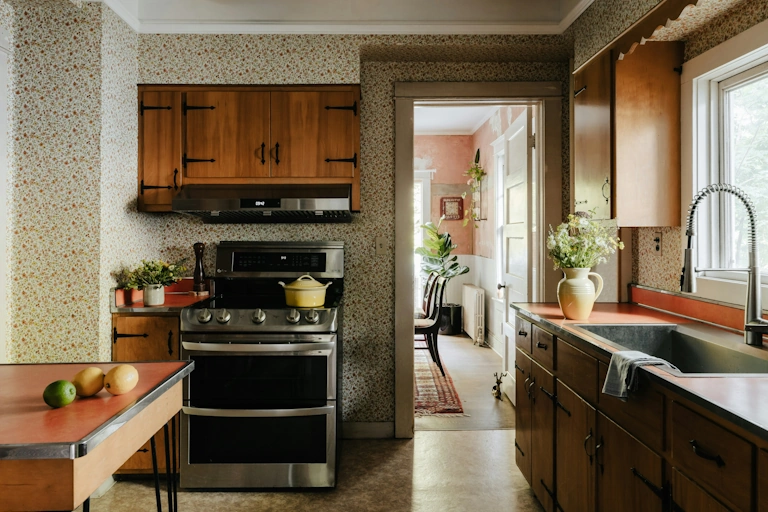
Most full-size electric stoves in the country are designed to operate on a 240-volt outlet supply. And depending on the stove model, they can use a 40-amp or 50-amp circuit, although some stoves have different electrical requirements.
But why do electric stoves need so much power?
That’s because an electric range has many heating elements, an oven, and other electrical components too. And when all of these work together, the stove draws a lot more power than a small household appliance.
For instance, a single cooktop burner might draw about 1,500 to 2,500 watts, depending on its size and model. But when you use many burners and the oven together, the total power demand can be much higher.

No More $10k Electrical Panel Upgrade to Charge Your EV at Home
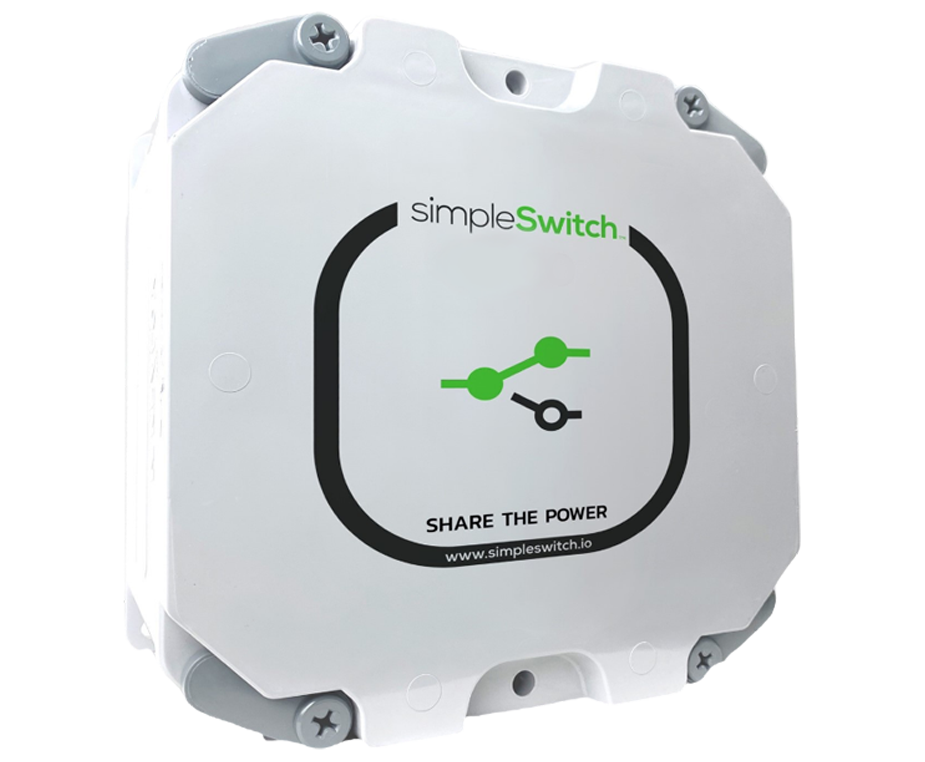
simpleSwitch lets you add a Level 2 EV charger to your home without an expensive electrical panel upgrade. Your EV charges safety without panel overload.
 30-day risk-free returns
- NEMA-rated
- Works with your existing panel
Here’s a quick look at electric range amperage requirement based on the appliance type:
| Appliance type | Amperage requirement |
| Full-size electric range | Commonly a 40A or 50A circuit |
| Electric cooktop | DIffers by model; but most use a 40A or 50A circuit |
| Wall oven | It depends on the rated load and installation instructions |
| Portable electric hot plate | Mostly operates on a standard 120V outlet |
Bonus: A lot of homeowners assume that the amperage printed on a breaker tells them exactly how much current their stove uses at every moment. But in reality, the breaker rating shows the circuit’s protection, while the stove’s actual current draw keeps changing with its operating conditions.
What does wattage, voltage, and breaker size mean for electric stoves?
Now that you know about electric range amperage, let’s understand the wattage, voltage, and breaker size you’ll find on the stove’s label or installation manual.
| Term | What it means |
| Volts (V) | The electrical pressure supplied to the appliance |
| Amps (A) | The amount of electrical current flowing |
| Watts (W) | The power an appliance uses at a particular moment |
| Kilowatt-hours (kWh) | The amount of electrical energy consumed over time |
Note: Most full-size electric ranges are designed for a nominal 240V supply, but some models also operate on a compatible 208V supply. You should always check the manufacturer’s instructions to determine what voltage requirements apply to your particular appliance.
How do you calculate electric stove amperage?
You can calculate how many amps an electric stove uses by dividing the stove’s wattage by volts. Here’s how:
Watts ÷ Volts = Amps
For instance, let’s say your stove draws 9,600 watts at 240 volts. In this case you can divide 9,600 by 240, which will give you 40 amps. Here’s how:
9,600 ÷ 240 = 40 amps.
What size breaker does an electric stove need?
Most full-size electric ranges use a 40A or 50A circuit. But this is not a standard breaker size that applies to all stoves.
The correct electric range breaker size depends on your appliance’s specifications, the applicable code requirements, and the suitability of the existing wiring and installation.
Pro tip: A stove’s total rated wattage can confuse you when you compare it with the breaker rating. Yes, dividing the wattage by volts is useful for estimating current. But selecting the circuit requires more than that calculation. You should also factor in the appliance’s specified supply requirements and applicable NEC range-circuit rules.
How many kWh does an electric stove use?

For starters, kWh or kilowatt-hours measures how much energy your electric stove use over a period of time. Your electricity bill is calculated using the number of kWh you consume.
Now, to calculate your stove’s total kWh or energy consumption, you can use this formula:
kWh = Watts × Hours Used ÷ 1,000
Going by this calculation, if a 2,000-watt burner operates at full power for 30 minutes, it will consume 1 kWh of electricity. Here’s how:
2,000 x 0.5 ÷ 1,000 = 1 kWh
Curious how much your electricity cost will be for the same 2,000-watt burner?
Here’s a quick example where we assume the electricity rate to be $0.173 per kWh.
| Cooking time at 2,000W | Electricity used | Electrcity cost |
| 30 minutes | 1 kWh | $0.17 |
| 1 hour | 2 kWh | $0.35 |
| 2 hours | 4 kWh | $0.69 |
Pro tip: A stove’s maximum rated wattage doesn’t tell you exactly how much electricity you’ll use to prepare a meal. The total depends on cooking time, heat settings, and which elements are operating. This calculation can at best help you roughly estimate your electricity bill.
Can a backup battery or power station run an electric stove?
Well, it is possible.
But running a full-size electric range on backup power isn’t as simple as plugging it into an inverter.
Whether or not an electric stove can run on a backup battery depends on two things, the battery’s energy capacity and the power its inverter can supply.
The battery’s energy capacity is measured in watt-hours (Wh) or kilowatt-hours (kWh) and it tells you how much energy is stored.
The inverter output, at the same time, is measured in watts and it tells you how much power the backup unit can deliver at a given moment.
Now, a power station with a 2,000Wh battery might seem sufficient for a 2,000W burner. But that doesn’t mean it can run the burner for one full hour. Here, inverter limits, conversion losses, and the amount of energy actually available for use all affect runtime.
Here’s an example for better understanding:
| Backup power calculation | Estimated result |
| Battery capacity | 2,000Wh |
| Assumed usable energy after losses | 1,600Wh |
| Burner power draw | 2,000W |
| Estimated runtime | 48 minutes |
As you can see, the battery’s usable energy after losses is lesser than the listed battery capacity. And although it can power the burner, the runtime might be lower than expected.
Can a portable power station run a full-size electric range?
A full-size electric range needs a 240V supply and can draw several thousand watts. And since most portable power stations provide only 120V output, they cannot directly power a 240V range.
Even if you have a bigger backup system that offers 240V output, you will still need to check its continuous power rating, connector, circuit requirements, and compatibility with the appliance. You should never improvise an electrical connection to make an incompatible power station work.
It might be possible to power a smaller countertop cooking appliance using a portable power station, given its wattage is within the backup unit’s limits. But I can’t say the same for traditional electric cooktops.
Does adding an electric stove mean you need a panel upgrade?
Not really.
While an electrician might recommend upgrading the electrical panel before you install an electric stove if your panel capacity is limited, it is not always necessary.
In most cases, you can use a load management device like simpleSwitch. This helps you safely run high-power appliances like electric stoves using the panel capacity you already have.
Frequently asked questions about electric stove amperage
How many volts does an electric stove use?
Most full-size electric ranges in the country use a nominal 240V supply. Some models also use 208V supply. But you should always check the manufacturer’s specifications for your electric stove.
What size breaker does an electric range need?
Most full-size electric ranges use a 40A or 50A circuit. However, the right breaker size depends on your appliance’s specifications, applicable electrical code, and installation requirements.
How many watts does an electric stove use?
Individual burners use around 1,000-3,000W, while a full-size range can have a total rated load of several thousand watts. The exact wattage differs by model.
How much electricity does an electric stove use per hour?
It depends on the power draw and how long the heating elements operate. A burner drawing 2,000W continuously for one hour consumes 2kWh electricity.
No More $10k Electrical Panel Upgrade to Charge Your EV at Home
simpleSwitch lets you add a Level 2 EV charger to your home without an expensive electrical panel upgrade. Your EV charges safety without panel overload.
- 30-day risk-free returns
- NEMA-rated
- Works with your existing panel
To sum up
I am sure you now know how electric stove amperage, wattage, voltage, and kWh work together.
As you can see, amps and watts help you understand an appliance’s electrical demand, while kWh tells you how much electricity it consumes over time.
And if you’re considering using backup power, you should check both battery capacity and the power output it can provide.
Got more questions or want to install an EV energy management system to avoid electrical panel upgrade for induction cooktop?
You can get in touch with us!
At simpleSwitch, our award-winning EVEMS devices can help you save up-to $10,000 on unnecessary electrical panel upgrades for electric stove use. Our EVEMS devices are all UL-listed and proudly made in the USA.