Have you recently bought an EV?
If yes, there’s a good chance you’re already thinking about installing a Level 2 EV charger at home.
After all, home Level 2 chargers are way cheaper to use compared to public DC charging and they fully charge your EV overnight.
But here’s the catch: Before you install an EV charger, you need to figure out if your home’s electrical system can handle the charger.
Here, you’ll think about all the EV charger electrical requirements such as voltage, breaker size, charger outlet type, and electrical panel capacity.
Now, before you get confused and give up on your plans, let me tell you this isn’t so difficult either.
In this blog, I have explained all the electrical requirements for EV charger in detail, including:
- How to calculate the electrical load for an EV charger
- What breaker size you need for a Level 2 charger
- Whether or not you need a 240V outlet
- How to know if your electrical panel can handle an EV charger
- The wiring requirements for EV chargers
- And a lot more.
So, let’s get right into it.
Key takeaways
- Most residential Level 2 EV chargers use 240V electricity, although some Level 2 equipment can operate at 208V.
- Level 2 chargers can operate anywhere from 16 to 80 amps, but 30 to 40 amps are common for residential charging.
- EV charging is treated as a continuous electrical load, so the circuit and breaker generally need to be sized at 125% of the charger’s maximum current.
- Your electrical panel needs to have enough capacity for the additional EV load.
What are the EV charger electrical requirements for home charging?
For starters, the EV charger power requirements depend on the type of charger you’re installing.
You see, for home EV charging, you’ll likely be choosing between Level 1 and Level 2 charging.
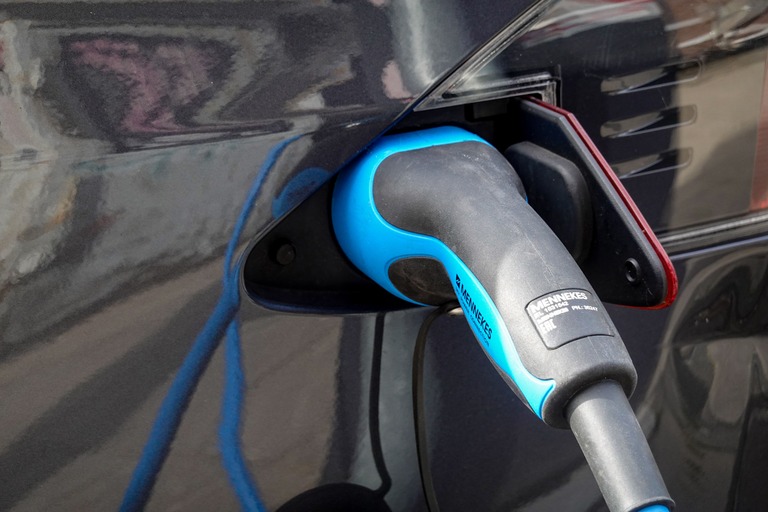
A Level 1 charger uses a standard 120V household outlet and draws between 8 and 16 amps. Here, you simply plug EV into a regular outlet.
Level 2 chargers, on the other hand, use 240V outlets in most residential installations and provide significantly more power.
As per EPA, Level 2 chargers can range from 16 to 80 amps, although 30 to 40 amps are most common for home charging. Even at a higher amperage, this is the most practical option to charge EV at home if you drive long distances everyday and want to fully recharge your vehicle overnight.
However, installing a Level 2 charger isn’t simple. You’ll need a dedicated circuit, the correct breaker, properly sized wiring, and enough capacity in your home’s electrical panel.

No More $10k Electrical Panel Upgrade to Charge Your EV at Home
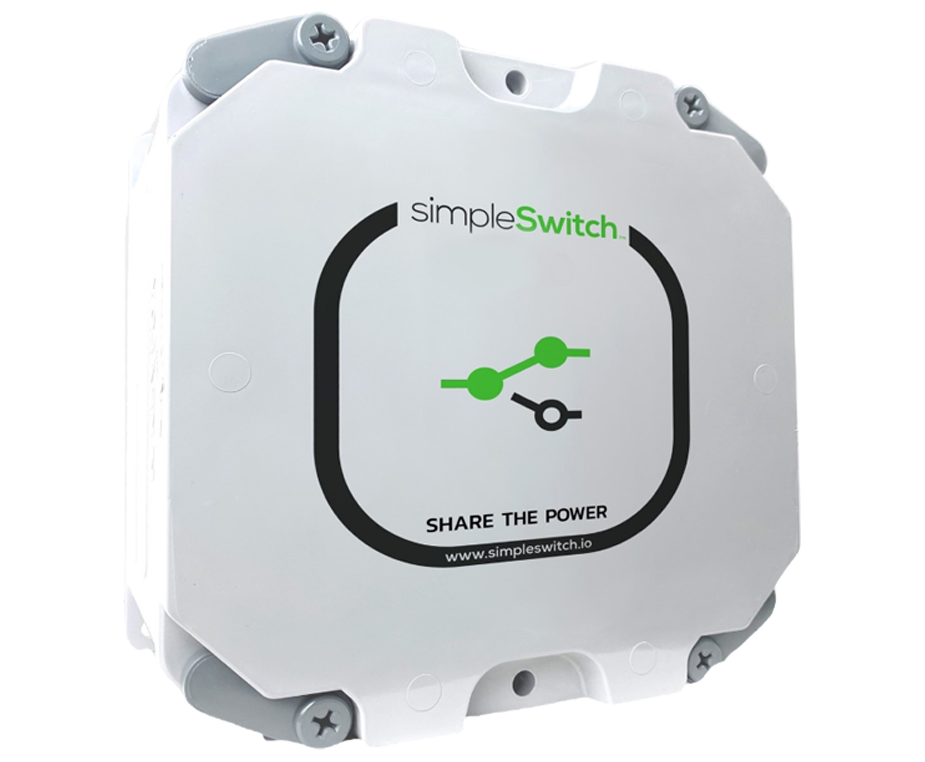
simpleSwitch lets you add a Level 2 EV charger to your home without an expensive electrical panel upgrade. Your EV charges safety without panel overload.
 30-day risk-free returns
- NEMA-rated
- Works with your existing panel
Here’s basic Level 2 EV charger electrical requirements for home charging:
| Requirement | Typical Level 2 home charger |
| Voltage | 240V |
| Charger Amperage | 16-80 amps |
| Circuit | Dedicated circuit |
| Breaker | Sized according to charger load |
| Outlet | NEMA 14-50 or another compatible outlet, if plug-in |
| Installation | Professional electrical installation recommended |
Note: The exact requirements can vary depending on your EV charger. You should always check the manufacturer’s specifications before installation.
Alright, now let’s look at all these EV charger power requirements in detail.
What breaker size for EV charger do you need?
EV charging is considered a continuous electrical load because your charger can draw electricity for several hours at a time. This is why the breaker size for EV charger is sized at 125% of the charger’s maximum current under NEC requirements.
For instance, if your Level 2 charger draws 40 amps, you don’t install it on a 40-amp breaker. Instead, you’ll need a 50-amp dedicated circuit.
Here’s how:
40 amps × 125% = 50 amps
Here’s ideal Level 2 charger breaker size based on charger amperage:
| EV charger amperage | Typical circuit/breaker size |
| 16 amps | 20 amps |
| 24 amps | 30 amps |
| 32 amps | 40 amps |
| 40 amps | 50 amps |
| 48 amps | 60 amps |
| 80 amps | 100 amps |
Note: These examples are based on the 125% continuous-load calculation, and they’re not a universal recommendation for every installation. Your charger’s specifications, wiring, equipment listing, and local electrical requirements still need to be considered.
What outlet size do you need for a home EV charger?
If you’re installing a Level 2 charger at home, you’ll need a 240v outlet for EV charger.
You see, Level 2 chargers are designed to operate at higher voltages than the 120V power used by a standard household outlet. This is what allows a Level 2 charger to deliver much more power than a Level 1 charger.
For instance, a 32-amp charger operating at 240V can provide roughly 7.68 kW to your EV: That’s significantly more power than you’d get from a standard 120V outlet.
Now, when it comes to the types of NEMA plugs for this outlet size, a NEMA 14-50 receptacle is a common option for plug-in chargers. Also, you can go for a NEMA 6-50 receptacle if you want simple, hassle-free installation as it gives you the same charging speed.
However, some EV chargers don’t use NEMA connectors at all. Instead, they’re hardwired directly into the electrical system, especially if the charger is rated at 48 amps or higher.
How to do EV charger load calculation?
Before installing a Level 2 charger, you also need to do EV charger load calculation to make sure your home’s electrical system can handle the additional load.
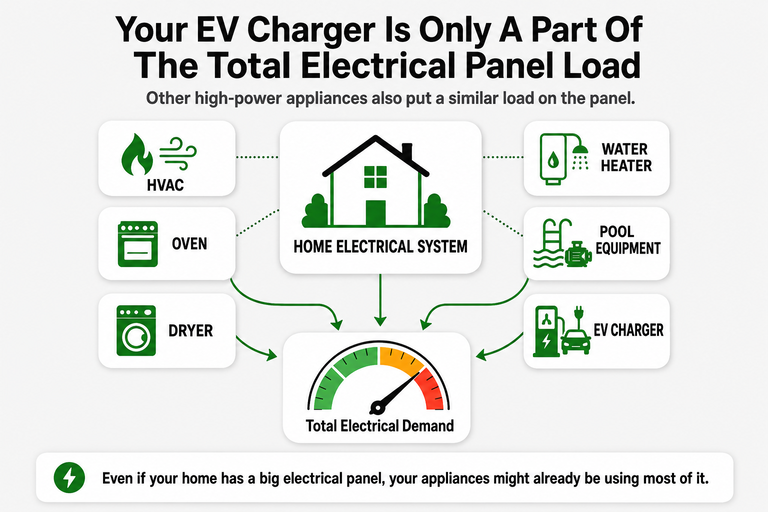
You see, even if you have a 200-amp electrical panel, your home might already be using electricity for things like your:
- Electric range
- Clothes dryer
- Water heater
- Air conditioner
- Heat pump
- Pool equipment
- Other major appliances
That’s why an electrician needs to look at your home’s existing electrical loads and then account for the additional load from your EV charger.
Here’s what an electrician does during EV charger load calculation:
- Determine the maximum current your EV charger can draw.
- Account for the charger as a continuous electrical load.
- Calculate the required circuit size.
- Add the EV load to your home’s existing electrical demand.
- Compare the resulting load with the available capacity of your electrical service.
For instance, if you install a 40-amp Level 2 charger, the charger itself can draw up to 40 amps. So the branch circuit is sized at 125% of that load in order to ensure continuous load.
But that’s only part of the calculation.
Your electrician also needs to determine whether your home’s electrical system has enough capacity to support that additional load safely.
The EPA specifically recommends having an electrician perform a load calculation to determine whether your existing panel can handle the charger or whether an upgrade might be needed.
Overall, here’s how EV charger load calculation is done:
| What is checked? | Why it matters |
| Charger amperage | Determines the EV load |
| Continuous load | Helps determine circuit size |
| Existing appliances | Shows current electrical demand |
| Panel capacity | Determines available capacity |
| Total calculated load | Shows whether additional capacity is needed |
Can your electrical panel handle an EV charger?
Your electrical panel has a maximum service capacity, which is shown by the rating of the main breaker. You might have a 100-amp, 150-amp, or 200-amp electrical service, for instance.
But that number doesn’t tell you how much capacity is actually available for an EV charger.
A 200-amp electrical panel can already have a significant amount of its capacity taken up by your home’s existing electrical loads. At the same time, a 100-amp service isn’t disqualified from having a Level 2 charger.
It all comes down to the actual electrical load of your home.
As per EPA, even 100-amp service can sometimes be sufficient for Level 2 charging, depending on how much electricity the home’s other appliances use.
So, when an electrician evaluates your electrical panel for an EV charger, they look at things like:
- The main service rating
- Existing electrical loads
- Available breaker spaces
- Major appliances in your home
- The charger’s maximum power requirements
- Whether the existing wiring and equipment can support the new circuit
What if your electrical panel doesn’t have enough capacity?
Even if your home’s electrical system doesn’t have enough capacity for EV charging, you can still install a Level 2 charger and use it safely.
There are many ways to do so, including:
- Installing a lower-amperage Level 2 charger.
- Using a load management device like simpleSwitch.
- Using circuit sharing between appliances where appropriate.
- Upgrading the electrical panel or service if necessary.
Load management is particularly useful here because it can monitor your home’s electrical demand and adjust the EV charger’s power consumption when other high-power appliances are running. This can help you make better use of the electrical capacity you already have instead of automatically adding more capacity..
What are the EV charger wiring requirements?
Once you’ve figured out EV charger electrical requirements such as the charger, breaker, and electrical panel requirements, you need to finish wiring.
Here, the wiring for your EV charger needs to be properly sized for the amount of current the charger will draw.
For instance, you can’t install a 40-amp EV charger and assume that any wire connected to a 50-amp breaker will work.
The correct wire size depends on several factors, including:
- The charger’s maximum current
- The circuit and breaker size
- The type of conductor being used
- How the wiring is installed
- The distance between the electrical panel and charger
- Applicable electrical code requirements
- The manufacturer’s installation instructions
This is why you should always let a licensed electrician determine the appropriate EV charger wiring based on the EV charger and your home’s electrical system.
No More $10k Electrical Panel Upgrade to Charge Your EV at Home
simpleSwitch lets you add a Level 2 EV charger to your home without an expensive electrical panel upgrade. Your EV charges safety without panel overload.
- 30-day risk-free returns
- NEMA-rated
- Works with your existing panel
Conclusion
I am sure that you now have a much better understanding of EV charger electrical requirements.
As you can see, installing a Level 2 EV charger at home involves more than simply choosing a charger and plugging it in.
You need to consider the charger’s voltage and amperage, breaker size, wiring, outlet or hardwired connection, and most importantly, whether your electrical panel has enough capacity to handle the load.
The good thing is even if your home doesn’t have enough available capacity, that doesn’t mean you need an expensive electrical panel upgrade. That’s because EV energy management systems can help balance the power between your EV charger and other high-power appliances in your home, letting you safely use the same panel.
Got more questions or want to install an energy management system in your home?
You can get in touch with us!
At simpleSwitch, our EV energy management systems help homeowners install Level 2 EV chargers without overloading their electrical systems. Our EVEMS devices automatically share power between your EV charger and other high-power appliances, helping you make better use of your existing electrical capacity.
FAQs about EV charger electrical requirements
What are the EV charger power requirements for a Level 2 EV charger?
Most residential Level 2 EV chargers use 240V power and require a dedicated circuit.
The exact amperage, breaker size, wiring, and outlet requirements depend on the specific charger you’re installing and your home’s electrical system.
What size breaker do I need for a 40-amp EV charger?
A 40-amp EV charger generally requires a 50-amp dedicated circuit because EV charging is a continuous load and the circuit is typically sized at 125% of the charger’s maximum current.
Does an EV charger need a 240V outlet?
Most residential Level 2 chargers use a 240V circuit, but not all of them require a plug-in outlet. Some chargers are designed to be hardwired directly into your home’s electrical system.
Can my electrical panel handle an EV charger?
It depends on your home’s existing electrical load and available capacity.
Even if you have a 200-amp electrical panel, you might not have enough available capacity for a high-powered EV charger. An electrician can perform a load calculation to determine whether your panel can safely support the additional load.
Is it better to hardwire or plug in an EV charger?
Neither option is automatically better.
A plug-in charger is convenient and portable, while hardwired chargers are better suited to permanent installations and higher-powered charging. The right option depends on your charger, electrical system, and installation requirements.