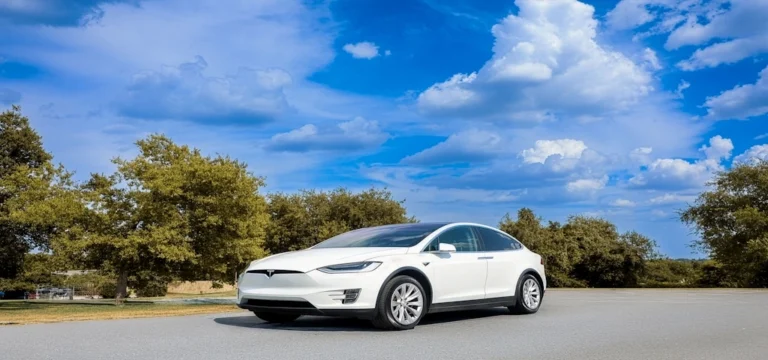
While Level 2 EV chargers take an entire night to fully charge your car, Level 3 chargers get you back on the road in minutes.
So why doesn’t everyone just install a Level 3 charger at home?
This is one of the most common questions new EV owners ask. And it makes sense.
After all, faster charging sounds better, more convenient, and, thus, the obvious choice.
But what if I told you that Level 2 and Level 3 chargers are completely different in how they work, what they cost, and where they’re meant to be used.
Yes, that’s right.
In this blog, I will explain all things you’ll ever need to know about Level 2 vs Level 3 EV charger, including:
- What Level 2 charging actually is and why it is ideal for home use
- What Level 3 (DC fast charging) does differently
- How speed, cost, and installation compare for Level 2 and 3 chargers
- Why Level 3 isn’t something homeowners can just add to their garage
So, let’s get started.
Key takeaways
- Level 2 chargers are ideal for home and everyday charging.
- Level 3 (DC fast chargers) are meant for highways and commercial use.
- Level 2 chargers use 240V AC; Level 3 chargers send high-power DC directly to the battery.
- Level 2 charging takes hours; Level 3 charging can take total charge to 80 percent in 20-40 minutes.
- Level 3 systems are extremely expensive and cannot be installed at home.
- Level 2 chargers are affordable, practical, and enough for daily commuting.
- Load management devices like simpleSwitch help you avoid expensive panel upgrades for Level 2 charging.
What is a Level 2 EV charger?

A Level 2 EV charger is what most electric car owners use at home. Also, you’ll find one at workplaces, condos, and public parking garages.
These chargers run on a 240 volt power outlet. This is the same type of power outlet your electric dryer or oven would use.
For those of you who charge your EV at home, this is a faster way to charge than plugging your car into a normal household outlet.

No More $10k Electrical Panel Upgrade to Charge Your EV at Home
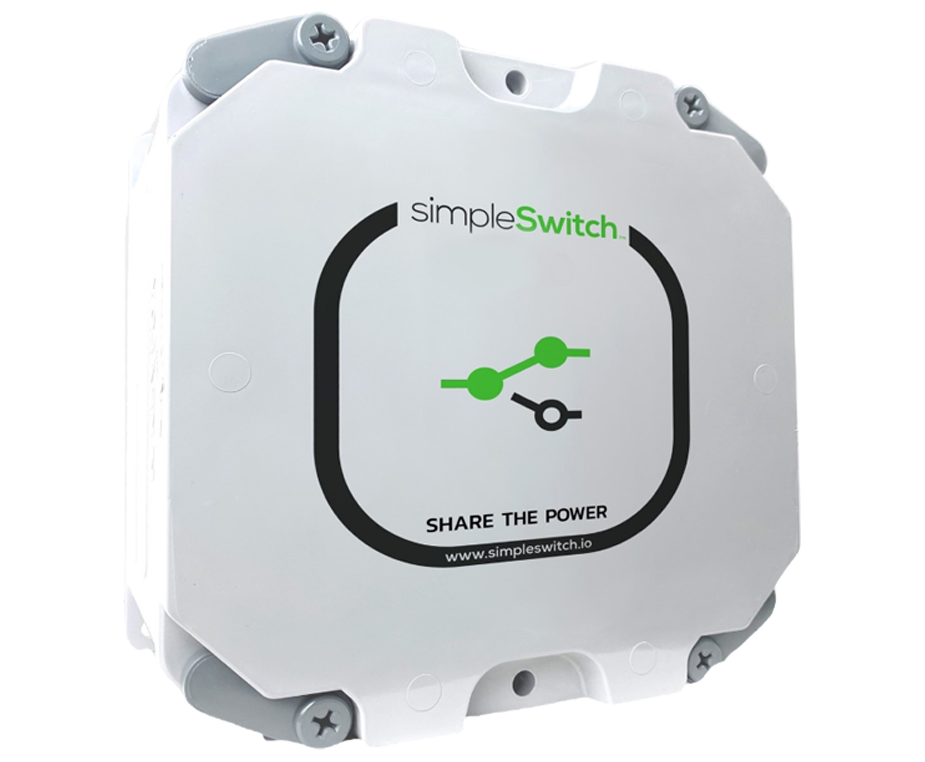
simpleSwitch lets you add a Level 2 EV charger to your home without an expensive electrical panel upgrade. Your EV charges safety without panel overload.
 30-day risk-free returns
- NEMA-rated
- Works with your existing panel
How fast are Level 2 chargers?
Level 2 chargers usually deliver 3.7 kW to 22 kW of power as per manufacturers. In practice, however, you can expect about a 6-11.5 kW range.
Here’s what this means for you:
- You can expect 20-40 miles of range per hour of charging.
- For many EVs, this means going from nearly empty to full in about 4-10 hours, perfect for overnight charging.
- Even a quick 1-2 hour charging during the day can add enough range for most of your daily commutes.
Simply out, you plug in your car at night and wake up to a fully charged battery.
Where are Level 2 chargers commonly installed?
The most ideal places for Level 2 charging stations are:
- Homes
- Workplaces offering employee charging
- Public parking garages
- Hotels and retail lots
What are the pros and cons of Level 2 chargers?
Pros
- Fast enough for daily driving needs. If you plug in your car overnight, you’ll have it fully charged by morning.
- These are ideal for homes and perfect for anyone who owns or has access to a garage or driveway outlet.
- This is a cost-effective solution as chargers typically cost $400-$700, with installation, if your electrical panel can handle the extra load.
- Level 2 chargers are compatible with almost every EV out there.
Cons
- It requires a 240V circuit and not every home has spare capacity.
- It might need extra electrical work. In some cases, installation could require wiring or a panel upgrade if your panel is full.
- It is not designed for ultra-fast charging, so don’t expect to refill your battery in minutes.
What is a Level 3 charger?

For starters, Level 3 chargers are built for speed, convenience, and getting you back on the road fast.
Also known as DC fast Chargers, Level 3 chargers deliver direct current at extremely high levels, usually between 50 kW to 350 kW.
This is exactly why these chargers are suited best for dedicated public charging stations and not for homes.
How is a Level 3 charger different from Level 2?
The difference between Level 3 and Level 2 chargers lies in how they charge your car.
For instance, a Level 2 charger sends AC power to your car. This is sent to your car’s onboard charger which converts it to DC power before it goes into the battery.
Level 3 chargers, on the other hand, skip the AC power step altogether. They send DC power directly into your battery.
This bypass is what makes charging so much faster.
So why does a Level 3 charger bypass your car’s onboard charger?
You see, every EV has a built-in AC-to-DC converter (or the onboard charger). But it can only handle about 7-11 kW of power.
Level 3 chargers are built to avoid that bottleneck entirely.
They have massive industrial-grade power electronics built into the station itself. This means:
- They handle the heavy electrical conversion on the outside
- Your battery receives high-voltage DC power instantly
- Charging speeds jump from hours to minutes
This is why EVs can go from low battery to road-trip-ready without waiting forever.
Now, here’s the catch
Level 3 chargers can get you from 10 percent to about 80 percent in 20-40 minutes. But you might have to wait much longer to get to 100 percent.
Why?
That’s because charging slows down after 80 percent to protect the battery.
Where are Level 3 chargers commonly installed?
You can-not install a Level 3 charger at home or even at most workplaces as it needs a huge amount of electricity.
As such, you’ll find Level 3 stations at:
- Highways / interstates
- Travel plazas and rest stops
- Gas stations
- EV charging networks like Tesla Superchargers, Electrify America, EVgo
- Commercial fleet depots (for delivery vans, buses, rideshare fleets)
What are the pros and cons of Level 3 chargers?
Pros
- They’re extremely fast, you can charge your car within minutes and not hours
- Perfect for road trips as you can have a full charge at a short rest stop
- They’re also ideal for commercial EV fleets like delivery vans
- You get minimal downtime while on the move
Cons
- They’re very expensive to install
- Higher charging costs per kWh at public stations
- Not ideal for daily use because frequent fast charging can increase battery wear
- Requires heavy-duty electrical infrastructure
Level 2 vs Level 3 EV charger: Here’s a quick look at all the differences
| Feature | Level 2 charger | Level 3 / DC fast charger |
| Voltage | 240 V AC (same as dryer/oven outlets) | 400-800 V DC delivered directly to battery |
| AC vs DC | Alternating Current (AC), the car’s onboard charger converts AC to DC | Direct Current (DC) charger does the conversion and feeds DC straight to the battery |
| Typical charging power (kW) | 3.7-22 kW (most homes charge between 6-11.5 kW) | 50-350 kW (some ultra-fast stations exceed 350 kW) |
| Miles added per hour | 20-40 miles/hour (depends on car & charger) | Varies widely. At 50 kW you might get 60-100 miles in an hour; at 150-350 kW you can add hundreds of miles in an hour. |
| Time to meaningful charge | Full overnight charge about 4-10 hours for most EVs | 20-40 minutes of charging adds 80 percent charge (can vary by car, charger power, and battery) |
| Typical locations | Homes, workplaces, condos, parking garages | Highway corridors, travel plazas, fleet depots, commercial charging hubs |
| Installation requirements | Needs a dedicated 240 V circuit. Also, possible panel upgrade if home capacity is low. | Heavy electrical infrastructure, utility coordination, transformers, engineering studies, and large breakers. This is commercial-scale work. |
| Upfront equipment cost | $400-$1,200 | $30,000-$150,000 |
| Installation / infrastructure cost | $500-$3,000 for a typical home installation (it can be higher with panel upgrades) | $50,000-$200,000 (this includes site preparation, transformer, and grid upgrades) |
| Cost to charge EV | Monthly costs range between $25-$60 | Typically $0.25 to $0.80 per kilowatt-hour (kWh), one full charge can cost $10-$30 |
| Best for | Daily charging, overnight top-ups, workplaces, multi-EV homes | Fast top-ups on road trips, commercial vehicles, fleet charging, highway charging needs |
Level 2 EV charger vs Level 3: Which one should you use?

Now that you know all the differences between Level 2 vs Level 3 EV charger, you might be curious which one is best suited for your everyday needs.
So, let’s have a look at which one could be your go-to EV charger:
Here’s when you should use a Level 2 charger:
If you park at home or at work and plug in overnight, Level 2 is always the right call. It is fast enough to refill a typical EV overnight, affordable to install compared with DC fast chargers, and it fits your daily commuting needs.
In fact, families, single commuters, and multi-car households benefit the most as Level 2 turns charging into a background task and not a chore.
Moreover, with an electrical load sharing device like simpleSwitch, you don’t even need to spend thousands of dollars extra to upgrade your electrical panel. A device like this manages your home’s electrical load, and when your home is using a lot of electricity (over 80 percent of capacity), it automatically stops EV charging.
Here’s when using a Level 3 charger makes sense:
A Level 3 charger is best when you need a very quick top-up.
For instance, let’s say you’re going on a long road trip, driving on through highway corridors, or you run a ride-hailing or delivery business that must turn vehicles around fast. In these cases, Level 3 chargers are your best bet.
You might also want to read: How Much Does It Cost To Install An EV Charging Station At Home?
No More $10k Electrical Panel Upgrade to Charge Your EV at Home
simpleSwitch lets you add a Level 2 EV charger to your home without an expensive electrical panel upgrade. Your EV charges safety without panel overload.
- 30-day risk-free returns
- NEMA-rated
- Works with your existing panel
To sum up
As you can see, both Level 2 and Level 3 chargers work differently and they’re meant for completely different purposes.
If you’re someone who uses your EV for daily workplace commute or for regular errands, Level 2 chargers are definitely the best solution.
But if you need a quick charge while on the move or if you’re using your EV for commercial purposes, using Level 3 chargers make sense.
Got more questions or need help upgrading to Level 2 EV charging at home?
You can get in touch with us!
At simpleSwitch, we’ve got state-of-the-art electrical load management systems that let you safely install a Level 2 EV charging station at home without upgrading the electrical panel.
This is smart, automatic, seamless, and saves you up-to $5000 on electrical upgrades.
FAQs about Level 2 vs Level 3 EV charger
Is Level 3 the same as DC fast charging?
Yes, Level 3 is the same thing as DC fast charging (DCFC).
The big difference here from Level 1 and 2 chagrin is that Level 3 delivers direct current (DC) straight to the battery at very high power levels (typically 50-350 kW). Meaning it charges your EV much faster.
Level 2 and below supply AC power that the car’s onboard charger converts to DC. Level 3 skips that step, which is why it’s so much quicker.
How much faster is Level 3 than Level 2?
A lot faster, but it depends on the charger and the car.
Level 2 home chargers usually deliver about 3.7-22 kW and add roughly 20-40 miles of range per hour.
The charging speed at a Level 3 charging station is between 50-350 kW. Here, cars can go from low to about 80 percent charge in just 20-40 minutes.
Can any EV use Level 3?
Not always.
Most modern battery-electric vehicles do support DC fast charging, but the maximum rate they accept depends on the car’s DC input capability.
Some plug-in hybrids and older EVs either don’t support DC fast charging or accept it at much lower speeds.
Does Level 3 damage the battery?
Not usually, if used sensibly.
Fast charging creates more heat and stress than slow charging, so very frequent DC fast charging over years can slightly accelerate battery wear.
But modern battery management systems limit charge power when needed (temperature, state-of-charge) to protect cells.
The rule many pros follow: use Level 2 for everyday charging and Level 3 occasionally for road trips or when you really need the speed.
Can I install a Level 3 charger at home?
No.
Level 3 charging requires huge power, heavy-duty infrastructure (transformers, large breakers), and often utility upgrades and engineering work. Here, costs usually run into tens of thousands of dollars or more.
It is built for commercial sites and highway hubs, not residential garages. For home use, Level 2 is the realistic, cost-effective choice.
Do I need a panel upgrade for Level 2?
Not always.
Level 2 needs a dedicated 240V circuit (often 30-60 amps), and if your electrical panel is already at capacity you may be told to upgrade.
But you don’t always need a full panel replacement. You can use a load-management system like simpleSwitch that connects to your panel using a flex core current transformer. It automatically balances loads so you can run Level 2 safely without an expensive upgrade.