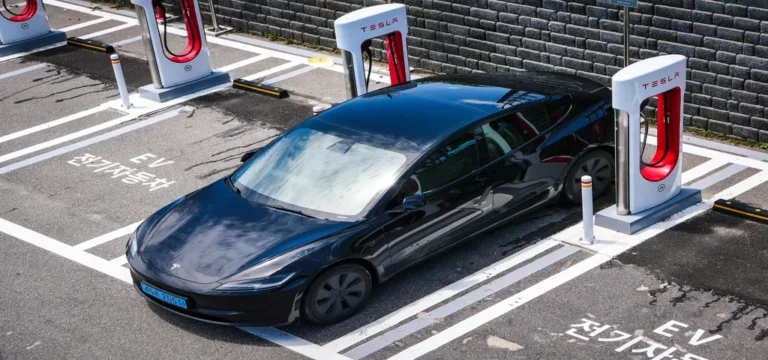
Planning to move a fleet from gas-powered vehicles to EVs?
If yes, I am sure you have already figured out which EV to buy for your fleet.
But buying the vehicles is only one part of the equation. You also need to plan EV fleet charging, including where your vehicles will charge, at what time they will charge, and how much power they need.
You see, charging a personal EV is not as big of a deal, as you can simply plug it into your home charger and let it charge overnight. At the most, you have to take care of a few EV charging best practices, and that’s it.
However, when you have a fleet of commercial EVs, several vehicles need to charge around the same time, which complicates things a little. That’s because you’ve got to make sure your EVs get the required energy without landing into electrical load problems.
In this blog, I have explained everything about EV charging for fleets, including charging solutions you can use and how to plan charging infrastructure while accounting for potential problems.
So, let’s get started.
Key takeaways
- EV fleet charging involves managing the charging of multiple EVs in a fleet so they are ready for their next duty cycle.
- Fleets can use depot, public, workplace, on-route, or home charging, depending on how their vehicles operate.
- Level 2 charging is the most efficient option for fleet vehicles that sit overnight. DC fast charging is useful when vehicles have short turnaround times.
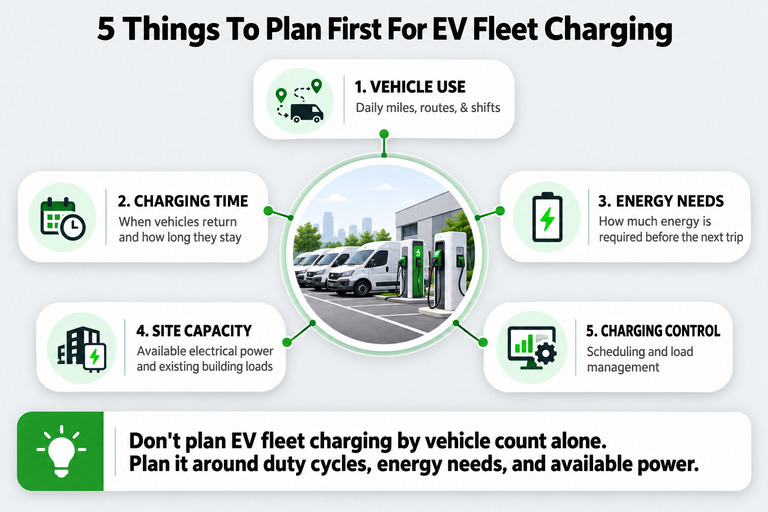
- You should plan charging around vehicle duty cycles, daily energy needs, dwell time, and electrical capacity.
What is EV fleet charging?
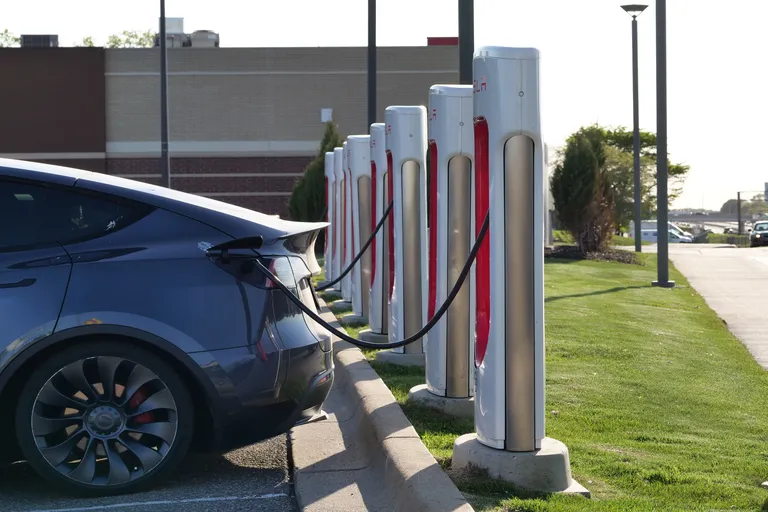
EV fleet charging is the process of charging and managing EVs in a fleet so they have enough energy for their next trip or work shift. This can apply to almost any type of fleet, including delivery vans, service vehicles, company cars, municipal vehicles, buses, and commercial trucks.
Fleet charging can happen at a private depot, workplace, employee home, public charging station, or somewhere along the vehicle’s route.

No More $10k Electrical Panel Upgrade to Charge Your EV at Home
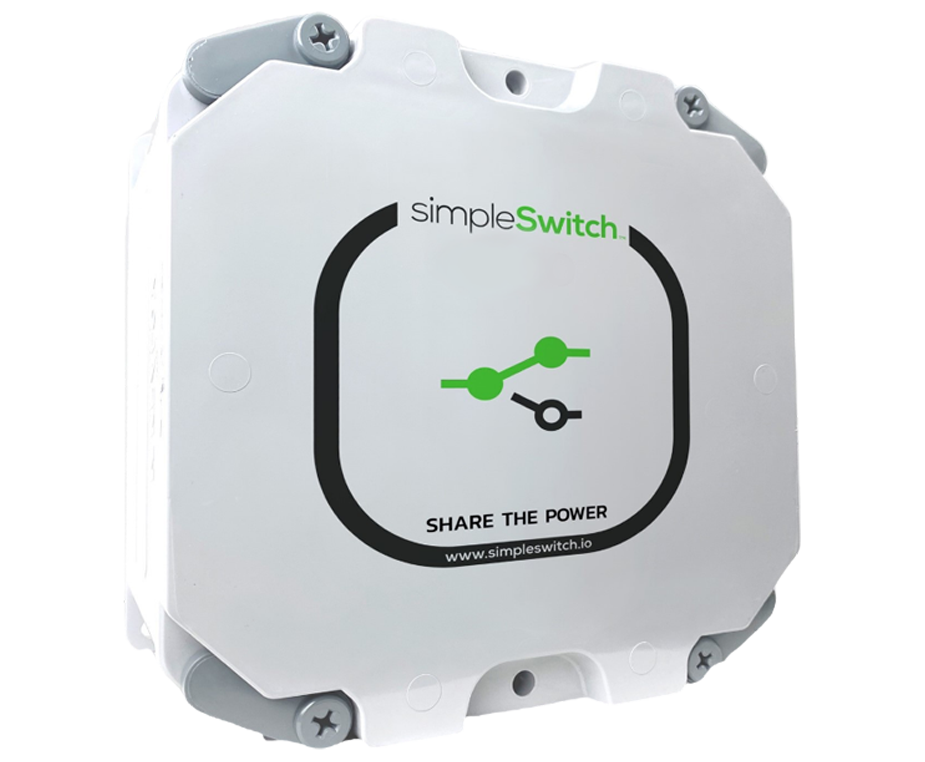
simpleSwitch lets you add a Level 2 EV charger to your home without an expensive electrical panel upgrade. Your EV charges safety without panel overload.
 30-day risk-free returns
- NEMA-rated
- Works with your existing panel
How is fleet charging different from charging a personal EV?
The main difference between fleet and personal EV charging is that a fleet has to meet a strict operating schedule.
For instance, if a vice van needs to leave at 7 AM, it can’t be waiting for a charge at 7:05 AM. So, the fleet charging infrastructure has to work around the vehicle’s exact duty cycle and ensure that it is ready when needed.
While you can simply plug in your vehicle for personal EV charging, fleet charging needs to be planned around a few important questions like:
- How far does each vehicle in the fleet travel each day
- When does each vehicle return to the depot
- How long does it stay there
- How much energy does it need before its next shift
- Which vehicles need priority
- How much electrical capacity is available for charging
What are the main EV fleet charging solutions?
Unlike home EV charging for personal vehicles where just one charging solution is sufficient, different EV charging for fleets needs different charging solutions. This includes depot charging, on-route public charging, home charging, and a combination of all these solutions.
Here, the right solution for your EV fleet will depend on parking location, duration, how much energy charging consumes, and how quickly the EVs need to be back on road.
Let’s look at each of the EV fleet charging solutions and their best uses in detail.
1. Depot charging
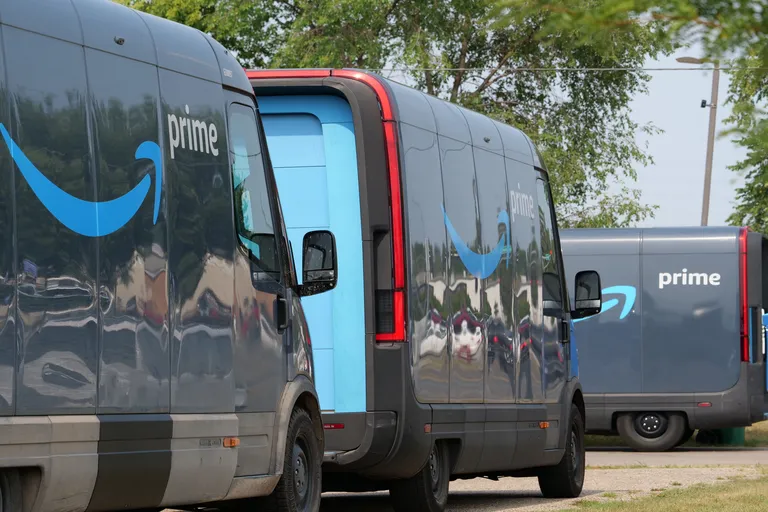
Depot charging is the main charging solution for most commercial EV fleets out there. Here, EVs return to a depot or a central location after their trips and they charge while they are parked.
This works particularly well for delivery vans, service vehicles, municipal fleets, and other vehicles with predictable schedules.
Take Amazon’s electric delivery fleet, for instance, particularly its Rivian Electric Delivery Vans. These vans return to Amazon delivery stations after completing their routes and are plugged in while parked.
The biggest advantage of this charging solution is that a fleet operator can decide where chargers are installed, when vehicles charge, how charging is prioritized, and how electricity is managed.
The only catch
If several vehicles return around the same time and all begin charging at full power, the site’s electrical demand can increase quickly. This is why I suggest you fleet depot charging charging while taking into account the site’s existing electrical loads.
2. Public and on-route charging
As the name suggests, public charging is where your fleet vehicles charge at any public charging station out there. This is useful when your vehicles spend most of their time away from a central depot or need extra charge during the day.
This is especially helpful for fleets with unpredictable routes, long-distance travel, or vehicles that cannot return to a charging location between shifts.
Take Ford Pro’s commercial EV fleet, for instance, which charges through the BlueOval Charge Network when vehicles need extra energy while out on the road. This network provides Ford’s commercial fleet access to more than 180,000 chargers across North America, including DC fast chargers from networks like ChargePoint, EVgo, and Tesla Superchargers.
The only catch
Charger availability, pricing, charging speed, and location can all differ for different fleets. Also, if you are just starting out with an EV fleet, you might need to coordinate with multiple charging network providers.
This is why I suggest new EV fleet owners to focus on depot charging and see public chargers as a secondary option, unless you can coordinate across charging network providers.
3. Home charging
If you have a small or mostly distributed EV fleet, home charging can be a reliable EV fleet charging solution.
Here’s how you can make it work: Let’s say your company has service technicians or sales employees who take the fleet EVs home at the end of the day. These employees can charge your fleet vehicles at their homes overnight using a Level 2 EV charger.
You can reimburse these employees for Level 2 EV charger installation. Also, you can track the charging session and reimburse electricity use.
The only catch
It can be a challenge to manage the business side of charging, especially on what basis you reimburse your employees for electricity use. You will need to reliably track charging sessions for each vehicle, which isn’t easy.
Bonus: You can also use a combination of these EV fleet charging solutions
A combination of depot, public, and home charging can be the best solution for your EV fleet. Here, fleet depot charging can be the primary solution, public charging can be a backup solution, and home charging can be an optional solution for employees who take vehicles home.
This will give your fleet more flexibility without requiring every vehicle to depend on the same charging location.
Which EV charging levels are best for fleets?
When it comes to EV fleet charging, the fastest charger method is not the best. The best method is instead the one that charges your fleet vehicles reliably and efficiently.
For instance, if your vehicle sits in the depot for hours, a Level 2 EV charger is the most efficient solution. That’s because the whole set-up costs way less than a DC fast charger and it also helps the EV battery last longer.
However, if your fleet vehicles don’t have a fixed daily route and they might need to top-up while on the move, public chargers are a reasonable solution.
Now, although there are three levels of EV charging, Level 2 and DC fast chargers are the only reliable way to charge fleet vehicles. I don’t suggest using a Level 1 charger as it is very slow and can take days to fully charge your EV.
Let’s see how the different EV charging levels stack for EV charging:
| Charger type | Best suited for | Why it works for fleets |
| Level 1 | Very small fleets with minimal daily mileage | Simple to install and suitable when vehicles have very long dwell times |
| Level 2 | Depot-based fleets with overnight or extended parking | Lower installation and operating costs make it a practical choice for regular depot charging |
| DC fast charging | High-utilization fleets, short dwell times, and on-route top-ups | Quickly adds range when vehicles need to get back on the road |
How should you plan your EV fleet charging infrastructure?
The biggest thing that you should factor in when planning an EV fleet charging infrastructure is the vehicles in your fleet and their operation.
For instance, you can start by getting a complete picture of how your fleet functions, how much electricity it needs to charge, and the electrical capacity available at the site.
Here’s how you can go about planning fleet charging infrastructure:
1. Understand your fleet’s duty cycles
The first thing you want to do is see how the vehicles are used. You should have a full picture of:
- How many miles each vehicle travels per day
- When vehicles leave and return
- How long they remain parked
- How much battery energy they typically use
- What state of charge they have when they return
- When they need to leave again
This information tells you how much charging each vehicle really needs.
A vehicle that uses 50% battery and sits at the depot overnight has different charging requirement from a vehicle that returns with 20% battery and leaves again in two hours. This is why simply counting the number of vehicles in your fleet is not enough.
2. Determine how much energy the fleet needs
Once you understand the duty cycles, estimate the amount of energy your fleet vehicles need between operating periods.
You need not replace 100% of a battery every night. If a vehicle comes back with plenty of usable range and only needs enough energy for the next day’s route, charging the battery to full might not be necessary.
Your goal should be to provide enough energy for the next duty cycle while making efficient use of the charging infrastructure.
3. Decide where the vehicles will charge
Next up, determine where fleet charging will happen. Here, you will decide between depot, public, or home charging, or whether you will use a combination of all.
4. Assess the site’s electrical capacity
If you have decided to go for fleet depot charging, look at the site’s existing electrical service and determine how much capacity is available after accounting for normal loads. Think about lighting, HVAC systems, machinery, refrigeration, office equipment, and other large electrical loads that might already be operating.
This also applies to employees who take the fleet vehicles home and want to use home charging.
Now, if the electrical capacity is not sufficient for fleet EV charging, you need not upgrade your electrical service immediately. You can ask your electrician about load sharing instead. Here, a load sharing device like simpleSwitch can use spare electrical power from high-power appliances like dryer, induction cooktop, etc., to safely power a Level 2 EV charger.
5. Plan for fleet growth
Finally, do not design the charging infrastructure with just today’s fleet in mind. If you have 10 EVs today and you expect 30 within a few years, the charging infrastructure should leave room for that growth.
Don’t install 30 chargers yet. Just make sure the electrical design, equipment layout, conduit, software, and power management are planned with future expansion in mind.
Bonus: Here’s how to optimize fleet EV charging
| Charging strategy | How to do it |
| Charging Scheduling | Stagger charging sessions based on when vehicles are needed. |
| Off-Peak Charging | Shift charging to lower-cost periods and reduce peak demand. |
| Monitor State of Charge | Prioritize vehicles with lower battery levels and earlier departures. |
| Integrate Telematics | Use state of charge (SOC), departure times, mileage, and route data to optimize charging. |
Frequently asked questions about EV fleet charging
What is EV fleet charging?
EV fleet charging is the process of charging and managing multiple EVs in a commercial fleet so they have enough energy for their next duty cycle.
Depending on the fleet, charging can happen at a depot, workplace, employee homes, public stations, or along vehicle routes.
What type of charger is best for an EV fleet?
There is no single best charger for every fleet. Level 2 charging works well for vehicles that remain parked for several hours or overnight, while DC fast charging makes more sense for vehicles with short turnaround times.
How many EV chargers do I need for my fleet?
You do not necessarily need one charger for every EV. The number of chargers depends on how often vehicles return, how long they remain parked, how much energy they need, charger power, and when vehicles need to leave again.
Can EV charging load management help a fleet avoid an electrical upgrade?
It can, depending on your site’s existing capacity and the fleet’s charging requirements. Load management can control how much power is being delivered to multiple vehicles and prevent unnecessary simultaneous charging. This can help keep total demand within the site’s available capacity and reduce or defer the need for additional electrical infrastructure.
No More $10k Electrical Panel Upgrade to Charge Your EV at Home
simpleSwitch lets you add a Level 2 EV charger to your home without an expensive electrical panel upgrade. Your EV charges safety without panel overload.
- 30-day risk-free returns
- NEMA-rated
- Works with your existing panel
Conclusion
I am sure that you now have a good idea about EV fleet charging, including charging solutions for EV fleets and how you can plan charging infrastructure.
As you can see, a successful EV fleet charging system is much more than just installing charging stations. You also need to factor how the vehicles operate, when they return, how much energy they need, how long they can charge, and how much electrical capacity your site has.
From there, you can choose the right combination of chargers, charging locations, scheduling, and EV charging load management.
Got more questions or want to install an EV load management system for fleet charging?
You can get in touch with us!
At simpleSwitch, we bring state-of-the-art EV energy management systems that help you install a Level 2 EV charger without an expensive electrical panel upgrade. Our EVEMS devices are all UL-listed and proudly made in the USA for top-notch quality.