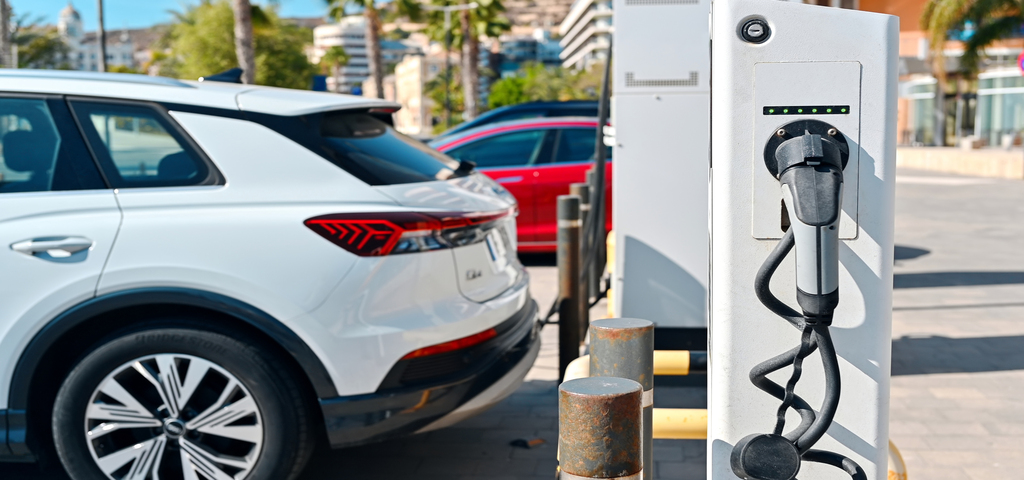
If you’ve been plugging your EV at a charging station for a while, you might be curious how do EV charging stations work?
And honestly, I had the same question when I first started driving an EV.
After all, we’ve all spent years using gas stations where we pull up, fill the tank, and are done in a few minutes.
But with EVs, things feel a bit different. There’s no fuel, no pump, and no familiar process.
Instead, you simply plug your car into a charger, and that’s it.
In this blog, I will walk you through exactly how electric car charging stations work, step by step. You’ll know what happens when you plug in your EV in detail.
So, let’s get started.
Key takeaways
- EV charging stations supply electricity to your car’s battery
- Your car converts and stores this electricity for driving
- Charging speed depends on the charger type and your vehicle
- Level 1, Level 2, and DC fast charging stations all work differently
- Most of the work actually happens inside the car, not the charger
How do EV charging stations work?
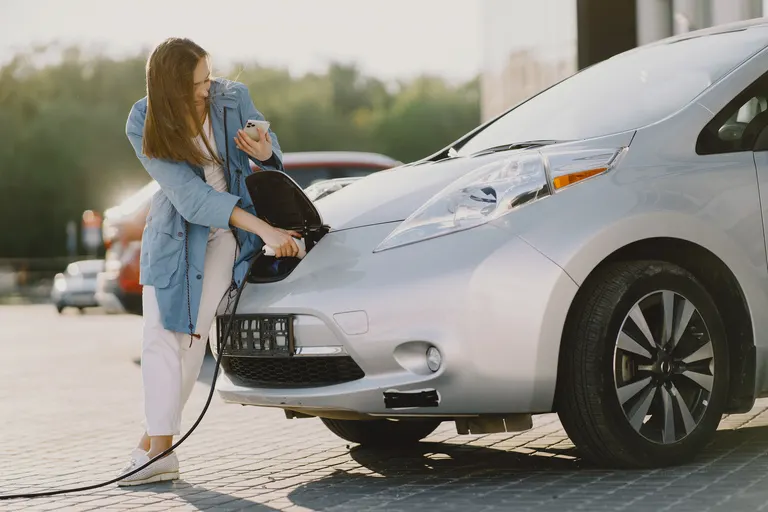
At its basic, EV charging simply involves transferring electricity from a power source to your car’s battery.
That’s it.
Here’s how it works when you plug your electric car into a charging station:
- Electricity flows from the grid to the charger
- The charger sends power to your car
- Your car’s battery stores that energy
- And that stored energy is what powers your drive
You can think of it like charging your phone. You plug it in, electricity flows in, and the battery fills up.
EV charging stations apply the same idea, but on a much larger scale using a range of EV charging standards and protocols.

No More $10k Electrical Panel Upgrade to Charge Your EV at Home
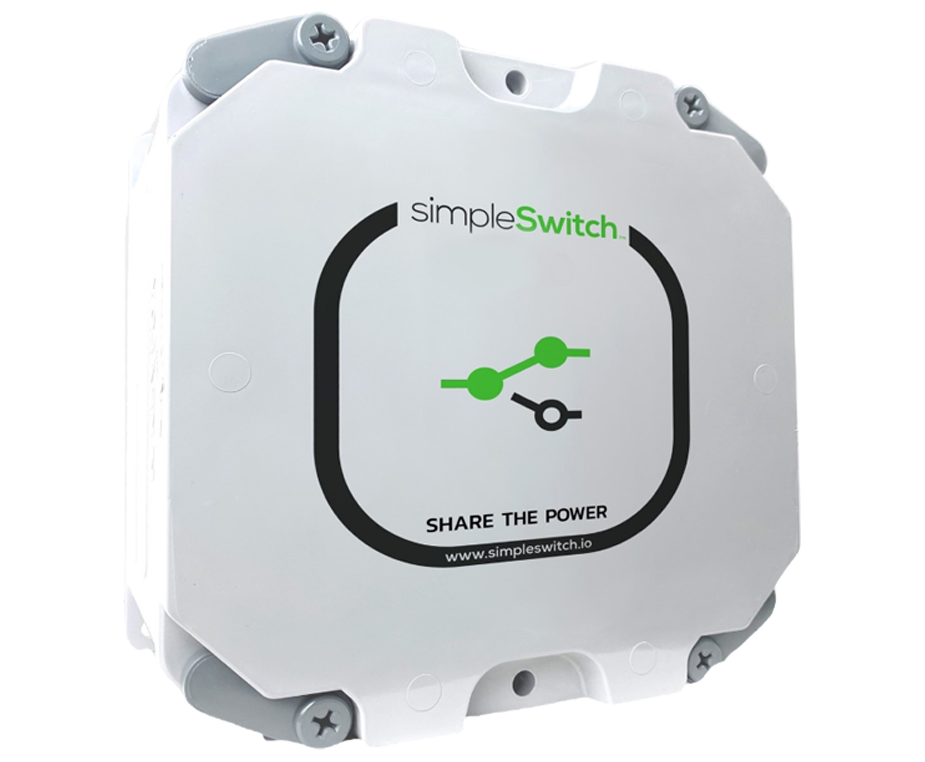
simpleSwitch lets you add a Level 2 EV charger to your home without an expensive electrical panel upgrade. Your EV charges safety without panel overload.
 30-day risk-free returns
- NEMA-rated
- Works with your existing panel
What really happens when you plug in your EV?
Even though the EV charging process sounds simple, there’s a smart system working in the background.
Here’s what happens the moment you plug in your car:
First, the charger and the car communicate with each other. They check things like:
- How much power the car can accept
- The battery’s current charge level
- Safety conditions
And once everything is confirmed, the charging begins. Electricity starts flowing into your car, and the battery begins storing energy.
Now, as the battery fills up, the car automatically manages the speed to protect itself. And when the battery is full (or reaches your set limit), charging stops on its own.
The best thing here is that you don’t need to monitor anything. That’s because the entire process is designed to be safe and automatic.
Bonus: The charging station doesn’t do all the work
While it is easy to assume that the charging station is doing most of the heavy lifting, in reality, your car plays a much bigger role.
The charger mainly supplies electricity. But your car:
- Controls how fast it charges
- Converts power when needed
- Protects the battery
Here’s a step-by-step explanation of how EV charging stations work
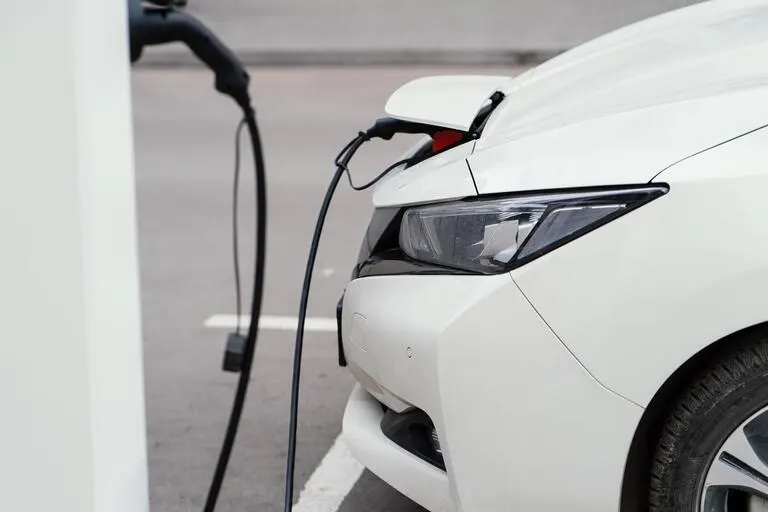
Now that you know the basics of how do EV charging stations work, let me break it down into a simple step-by-step process.
This will give you a much clearer picture of what happens at a charging station from the moment you plug in to when you’re ready to drive.
Overall, here’s how EV charging stations work:L
Step 1: You plug in your car
It all starts with plugging your EV into a charging station.
Here, the charting station can be anything from a home charger in your garage, a public charging station, or a fast charger on the highway.
Once the connector is plugged into your car, a secure connection is established.
At this point, electricity hasn’t started flowing yet. The system is till making sure everything is safe.
Step 2: The car and charger communicate
Before charging begins, your car and the charging station talk to each other.
Also called EV charging handshake, this happens in just a few seconds and is done to check the following:
- Is the connection secure?
- How much power can the car handle?
- What’s the battery level right now?
This step is very important because it ensures safe and efficient charging. And only after everything checks out does the system move forward.
Step 3: Power starts flowing
Once communication is complete, electricity begins flowing from the charger to your car.
Here’s what’s happening behind the scenes:
- Power comes from the electrical grid
- It passes through the charging station
- Then it flows into your car’s battery system
Now, depending on your EV charger type, this flow can be slow, moderate, or very fast.
Step 4: The battery stores the energy
As electricity enters the car, the battery starts storing that energy. This is what will later power your vehicle when you drive.
At the same time, your car also carefully manages:
- Charging speed
- Battery temperature
- Energy flow
This is also why charging is faster at the beginning and slows down as the battery fills up.
Step 5: Charging slows down near full
Now, as your battery gets closer to full, the charging speed gradually reduces as part of the in-built EV charging best practice.
This usually happens after your EV battery has charged to about 80 percent.
And the reason is simple: It helps protect the battery from heat and long-term wear.
So even though charging might feel slower after 80 percent, it is actually a good thing for your car’s battery health.
Step 6: Charging stops automatically
Once your battery is full (or reaches your set limit), charging stops automatically.
You don’t need to unplug immediately or monitor anything. The system is designed to:
- Prevent overcharging
- Keep everything safe
- Maximize battery life
And just like that, your EV is ready to go.
In short, here’s how EV charging stations work step-by-step
| Step | What happens |
|---|---|
| Plug in | You connect the charger to the car |
| Communication | Car and charger check safety & power |
| Power flow | Electricity starts flowing into the car |
| Storage | Battery stores energy for driving |
| Slow down | Charging reduces near full battery |
| Stop | Charging ends automatically |
Are all charging stations the same?
Not exactly.
You see, although the basic idea behind EV charging is the same, not all EV charging stations work in the same way.
The main difference comes down to charging levels or how fast they charge your car and how much power they deliver.
For instance, Level 1 chargers are slow and mainly designed for home use.
On the other hand, Level 2 and 3 charging stations deliver much faster charging. Here, while Level 2 stations take a few hours, Level 3 stations are built for super quick charging when you’re on the road.
Let’s see how each EV charger or charging station works:
1. Level 1 charging (basic home charging)
Level 1 charging is the simplest way to charge an electric car. Here, you plug your EV into a regular wall outlet, the same one you use for everyday appliances.
There’s no charging station or any special setup, which makes it an easy starting point for many new EV owners.
But here’s the catch.
Since a standard outlet provides very little power, charging is quite slow. In most cases:
- It can take 20 to 50 hours to fully charge an EV
- You gain only about 3 to 5 miles of range per hour
That’s why Level 1 is usually best if:
- You drive very short distances daily
- Your car stays parked for long periods
- You’re just topping up the battery
For most people, though, this isn’t practical as a main charging method.
2. Level 2 charging stations
Level 2 charging stations are what make EV charging truly convenient.
This type of charger uses a 240-volt power supply, similar to what large home appliances use. And it is the most common setup for home charging.
With Level 2 charging:
- A full charge usually takes 4 to 10 hours
- You get about 20 to 30 miles of range per hour
This makes it perfect for overnight charging. You simply plug in your car when you get home, and by morning, it’s fully charged and ready to go.
Also, if you have a similar charging station at your workspace, common parking, etc., you can plug in your car, go about your work, and return to a fully charged battery.
That’s exactly why most EV owners rely on Level 2 for their daily needs.
3. DC fast charging stations
DC charging is the quickest way to charge an electric car. Common DC fast charging station locations include:
- Along highways
- At public charging stations
- In commercial areas
And they deliver a much higher amount of power compared to home chargers. As a result, you can charge from low to about 80 percent charge in 20 to 60 minutes
In fact, some DC fast chargers can add 100 to 300 miles of range in about 30 minutes.
This makes them ideal for:
- Road trips
- Long-distance travel
- Quick top-ups when you’re in a hurry
However, fast chargers aren’t typically used at home. They’re designed more for convenience on the go rather than everyday charging.
In short, here are the different EV charging station types:
| Level | Speed | Where used | Best for |
| Level 1 | Slow | Regular wall outlet | Light daily driving |
| Level 2 | Medium-fast | Home charger | Everyday charging |
| DC Fast | Very fast | Public stations | Road trips |
What’s happening inside the charger?
To understand how EV charging stations work behind the scenes, you just need to know one simple idea: Electricity comes in two forms, AC and DC.
Now, our home and the power grid supply AC (Alternating Current), but your EV battery can only store DC (Direct Current).
So, the electricity has to be converted before it can be stored.
With Level 1 and Level 2 charging, this conversion happens inside your car using its onboard charger. That’s one reason home charging is slower.
However, with DC fast charging, the conversion happens inside the charging station itself, and DC power is sent directly to your battery. That’s why fast chargers can deliver much more power in less time.
Can you set up an EV charging station even if your electrical panel capacity is limited?
Yes, you can.
Although your electrician is likely going to recommend an electrical panel upgrade, you need not spend thousands of dollars on that.
Instead, you can get an energy management device like simpleSwitch.
With a system like simpleSwitch, your EV charger can safely share available power with other large appliances in your home. This helps prevent overloads while still allowing efficient charging.
This means:
- No expensive electrical panel upgrade
- Safe, controlled power usage
- Hassle-free Level 2 charging at home
Sounds awesome, doesn’t it?
No More $10k Electrical Panel Upgrade to Charge Your EV at Home
simpleSwitch lets you add a Level 2 EV charger to your home without an expensive electrical panel upgrade. Your EV charges safety without panel overload.
- 30-day risk-free returns
- NEMA-rated
- Works with your existing panel
Final words
I am sure that, by now, you know exactly how do EV charging stations work, including what’s happening behind the scenes.
When you break it down, it’s actually quite simple, as charging an electric car is all about:
- Supplying electricity
- Converting it when needed
- Storing it in your battery
- And managing the process safely
You simply plug in your car, and the charging station takes care of everything else. And just like that your EV is ready when you need it
Got more questions or want to install an EV energy management system in your home.
You can get in touch with us!
At simpleSwitch Io, we bring state-of-the-art EVEMS designed to allow safe EV charging at home without expensive panel upgrades. Our EVEMS devices are all UL-listed and proudly made in the USA.
Frequently asked questions
Can I charge my electric car at home?
Yes, you can.
In fact, most EV owners charge their cars at home using either a regular outlet (Level 1) or a Level 2 charger.
Home charging is convenient because you can simply plug in overnight and wake up to a full battery.
Do EV charging stations work in the rain?
Yes, they do.
EV charging stations are designed to be weatherproof and completely safe to use in rain or snow.
The connectors are sealed, and the system only allows power to flow when everything is securely connected.
How does an electric car know when to stop charging?
Your car automatically stops charging when the battery is full or reaches a set limit. This is managed by the car’s battery system, so there’s no risk of overcharging.
Are all EV charging stations compatible with every car?
Most EVs use standard connectors, but compatibility can vary depending on the region and charger type.
However, adapters are often available, and most public charging stations support common standards.
Is it better to charge to 100% every time?
Not always.
For daily use, experts recommend charging up to about 80–90% to help maintain battery health.
But, you can charge to 100% when you need the extra range, like before a long trip.