



When it comes to EVs, there’s a whole ecosystem of charging standards and communication protocols. They work behind the scenes to make charging safe, reliable, and seamless.
You might have heard terms like CCS, CHAdeMO, ISO 15118, OCPP, or even NACS thrown around.
These are EV charging standards and protocols. And without them, charging EV at home or at public charging stations is almost impossible.
In this guide, I will explain it all. You’ll know:
- What electric vehicle charging standards are
- The major connector types and how they differ
- The important EV charging protocols that make charging smarter and safer
- How these standards work across vehicles, chargers, and networks
- What’s the future of these charging standards and protocols like
So, let’s get started.
Key takeaways
- EV charger standards define how electricity flows between the charger and the vehicle.
- EV charging protocols define how vehicles, chargers, and backend systems communicate with each other.
- There are multiple connector standards like SAE J1772, CCS, CHAdeMO, GB/T, and NACS that vary by region and charging speed.
- EV charging protocols like OCPP, ISO 15118, OCPI, etc., are what let you use smart charging features.
What are EV charging standards?

At its basic, an EV charging standard is a set of technical rules that define how an electric vehicle and a charger physically connect and safely transfer electrical power. This includes:
- Connector shape and pin layout
- Electrical safety requirements
- Power levels (voltage, current, kW)
- Compatibility between vehicles and chargers
You can think of these standards as the physical handshake between your EV and a charger.
Without these standards, EVs from different brands wouldn’t be able to charge at home or third‑party EV charging stations.
These standards vary by region and have evolved over time as technology and markets matured.

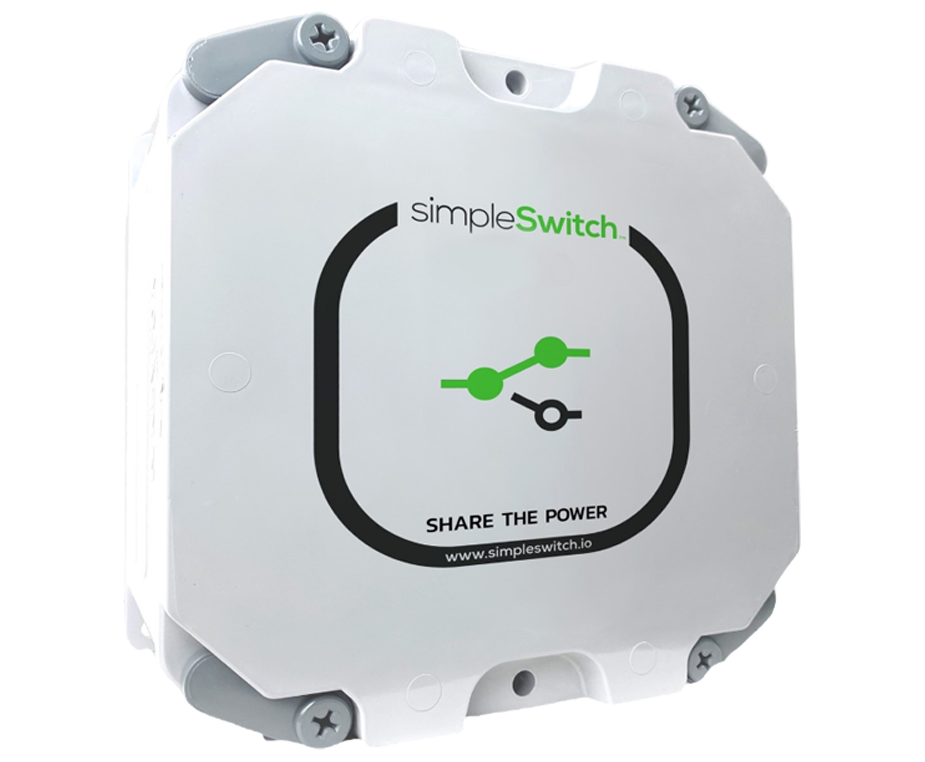
No More $10k Electrical Panel Upgrade to Charge Your EV at Home
simpleSwitch lets you add a Level 2 EV charger to your home without an expensive electrical panel upgrade. Your EV charges safety without panel overload.
 30-day risk-free returns
- NEMA-rated
- Works with your existing panel
Here are the most common EV charging standards

1. SAE J1772 (Type 1)
This is the standard plug used for AC charging (Level 1 and Level 2) in North America and even parts of Asia. It is often what you’ll see at most homes and public charging stations across the country.
This EV charger standard:
- Supports single‑phase AC power
- Typically rated up to ~19.2 kW
- Used for slower, everyday charging
Although still widely recognized, J1772 is not used for fast DC charging. This is handled by other systems like CCS.
2. Combined Charging System (CCS)
The Combined Charging System (CCS) is one of the most widely adopted EV charger standards for both AC and fast DC charging. It is designed around a single physical plug that works for multiple charging scenarios.
There are two main versions of CCS:
- CCS1: Used mainly in North America
- CCS2: Used in Europe and other global regions
What makes CCS really versatile is that it builds on the J1772 design for AC charging, but adds extra DC pins below for rapid DC fast charging. This makes it capable of delivering hundreds of kilowatts even as a standard daily-use EV connector type.
So whether you’re charging at home (Level 2 AC) or on a long road trip (DC fast charge), CCS can handle both.
That’s exactly why companies like Ford, GM, Volkswagen, BMW, and more have adopted CCS for their vehicles.
3. CHAdeMO
Originating from Japan, CHAdeMO was one of the first widely used fast‑charging standards. And it is still found in some public charging networks, especially for older EV models.
However, it’s gradually declining in popularity in many parts of the country (and the world), as CCS and newer standards like NACS take over.
4. GB/T (China standard)
In China, EV charging follows its own national standards known as GB/T, covering both AC and DC charging.
It is technically distinct from the systems used in North America and Europe, which can sometimes complicate international interoperability.
5. NACS or North American Charging Standard
Tesla developed its own proprietary system early on, called North American Charging Standard or NACS.
And this system has been widely deployed across the country, especially because Tesla’s Supercharger network uses it.
More recently, many major automakers (like Ford, GM, Rivian, and others) have announced plans to adopt NACS as a standard, helping unify charging across brands.
NACS supports both AC and DC charging, and in many installations delivers very high power levels, making it suitable for both home and fast public charging.
In short, here are all the common EV charging standards:
| Standard | Region | Charging Type | Key Features |
| SAE J1772 (Type 1) | North America, parts of Asia | AC Level 1 & 2 | Single-phase AC, up to ~19.2 kW, home/public use |
| CCS (Combined Charging System) | Global | AC & DC fast | Builds on J1772, DC pins for rapid charging, widely adopted by Ford, GM, VW, BMW |
| CHAdeMO | Japan / global | DC fast | Early fast-charging standard, gradually being phased out |
| GB/T | China | AC & DC | National standard, different from US/Europe systems |
| NACS (Tesla) | North America | AC & DC | Proprietary Tesla plug, high power levels, adopted by multiple automakers |
EV charging protocols: What are they?

Now that we know how power physically flows into your EV, let’s talk about how things work behind the scenes.
You see, EV charging isn’t just about dumping electricity into a battery. There’s a digital conversation going on between:
- The vehicle
- The charger hardware
- The network/server backend
- Sometimes even a payment or roaming service
That’s where EV charging protocol comes in.
While charging standards deal with physical and electrical compatibility, EV charging protocols define things like:
- How your EV and the EV charger communicate
- How charging sessions are managed
- How billing and authorization are handled
- How chargers and backend systems coordinate with each other.
These protocols are critical if you want to:
- Automatically start charging without apps or cards
- Enable roaming across networks
- Control charging dynamically (smart charging)
- Provide billing and energy usage data
- Enable future features like vehicle‑to‑grid (V2G)
Let’s look at some of the most important electric vehicle charging protocols.
Here are the most important EV charging protocols

1. Open Charge Point Protocol (OCPP)
OCPP is arguably the most important communication protocol in the EV charging world today. It defines how a charging station talks to a central management system (the backend that manages chargers).
You can think of it like the communication language between a charger and the network operator software. It handles messages like:
- Start charging
- Stop charging
- Meter and session data reporting
- Firmware updates
- Authorization and configuration
OCPP was developed to prevent vendor lock‑in. In simple words, this ensures any charger manufacturer’s hardware can communicate with any EV charging system that supports OCPP, even if they’re from different companies.
2. ISO 15118 for EV to charger communication
If OCPP is about charger‑to‑backend communication, ISO 15118 is about vehicle‑to‑charger communication.
This protocol defines how an EV and a charging station exchange digital information during a charging session. Think of things like authentication, power limits, pricing data, and even billing.
One of its most exciting features of ISO 15118 is Plug & Charge. Here, your EV can authenticate and pay for charging automatically as soon as you plug in, without apps, RFID cards, or user interaction.
ISO 15118 supports:
- Automated authentication
- Secure data exchange
- Billing and invoicing
- Smart charging integration
- Bidirectional charging (V2G, V2H), where the vehicle can even send power back to the grid during peak demand times
So this protocol is a big part of what makes charging smarter and more user‑friendly.
3. OCPI or Open Charge Point Interface
OCPI is used for interoperability between networks.
For instance, when you want to use your charging account across different charging networks (like roaming between ChargePoint, EVgo, Electrify America, etc.), OCPI determines how you use these networks.
It helps with:
- Charger availability and location information
- Tariff and pricing exchange
- Reservation support
- Charging session authorization
- Roaming and settlement
To put it simply, OCPI enables you to use one account or app to access many different networks without needing dozens of accounts or interfaces.
4. Other protocols like OCHP, eMIP, and more
There are more specialized protocols that help with things like roaming settlement and clearing between networks. For instance:
- OCHP or Open Clearing House Protocol, focuses on settlement data exchange
- eMIP or eMobility Interoperation Protocol, is yet another roaming framework
In short, here are all the important EV charging protocols:
| Protocol | What It Does | Examples / Features |
| OCPP | Charger ↔ Network backend | Start/stop charging, session data, firmware updates, prevents vendor lock-in |
| ISO 15118 | EV ↔ Charger | Plug & Charge, automated authentication, billing, smart charging, bidirectional charging (V2G/V2H) |
| OCPI | Network ↔ Network | Roaming, availability, pricing, session authorization, reservations |
| OCHP / eMIP | Specialized roaming & settlement | Settlement data exchange between networks, interoperability support |
What’s the difference between EV charging standards and protocols?

EV charging standards and protocols might sound similar, but they do very different jobs.
Standards are about the physical connection. This includes the connectors, pins, and electrical specifications that make sure your EV can safely draw power from a charger.
Examples of EV charger standards include J1772, CCS, CHAdeMO, and Tesla’s NACS.
Protocols, on the other hand, are about communication. They let your car, charger, and network talk to each other, and handle things like smart charging, billing, and roaming.
ISO 15118, OCPP, and OCPI are common examples.
Simply put, standards handle the hardware, while protocols handle the software. Together, they make charging safe, smooth, and smart.
In short, here are all the differences between EV charger standards and protocols:
| Aspect | Standards | Protocols |
| Focus Area | Physical connection | Communication & software |
| Purpose | Ensures plug fits and electricity flows safely | Manages charging sessions, billing, smart features |
| Examples | J1772, CCS, CHAdeMO, NACS | ISO 15118, OCPP, OCPI |
Bonus: Here are the EV charging standards currently in trend across the country
- CCS1 is currently the most common fast charging standard
- NACS is growing fast, especially as many automakers announce support
- ISO 15118 is becoming the base for Plug & Charge experiences
- OCPP is widely used by charging networks for backend management
- OCPI and other roaming protocols are expanding interoperability
So, if you’re installing charging equipment, planning to build EV charging infrastructure, or even just buying an EV, you’re most likely to deal with:
- CCS1 or NACS physical standards
- ISO 15118 and OCPP communication protocols
No More $10k Electrical Panel Upgrade to Charge Your EV at Home
simpleSwitch lets you add a Level 2 EV charger to your home without an expensive electrical panel upgrade. Your EV charges safety without panel overload.
- 30-day risk-free returns
- NEMA-rated
- Works with your existing panel
Final words
I am sure that by now you know what are EV charging standards and protocols. Also, you should now be able to tell the difference between the two easily.
To put things very simply:
- Standards make sure your EV and chargers speak the same electrical language.
- Protocols make sure all the parts of the EV charging ecosystem communicate smoothly for authorization, billing, data, and smart features.
They’re both essential pieces of the EV charging puzzle. And they work together to make charging more seamless, safe, interoperable, and future‑ready.
Got more questions or want to install an EV energy management system in your home?
You can get in touch with us!
At simpleSwitch, we bring state-of-the-art EV load management systems that let you add a Level 2 EV charger to your home without an electrical panel upgrade. Our EVEMS is UL-listed and proudly made in the USA.
Frequently asked questions
What’s the difference between a charging standard and a charging protocol?
EV charging standards define the hardware and electrical specifications for connecting an EV and a charger, while charging protocols define the communication rules between vehicles, chargers, and backend systems.
Is one connector standard better than the others?
It depends on your region and usage.
Today, CCS and NACS are leading for fast charging in many markets, while older standards like CHAdeMO are being phased out in favor of more universal systems.
Do all EVs support Plug & Charge?
Not yet, the vehicle must support ISO 15118. But many new EVs and chargers are adopting it, so Plug & Charge is becoming more common.
Why are EV charging protocols like OCPP important?
Without protocols like OCPP, charging stations from different manufacturers wouldn’t be able to work with central management systems. This would mean less interoperability and higher operating costs.
Will EV charging standards ever unify globally?
There’s already movement toward convergence, especially with NACS and ISO 15118 gaining global traction. It might take time, but the industry is moving closer to global harmonization.


