A lot of new electric vehicle owners ask me this one question: Can I use my dryer outlet to charge my car?
And it makes complete sense.
After all, you already have a 240V outlet sitting right there. And you’d want to take advantage of it instead of setting up a whole new charging station.
Now, here’s the thing: Yes, you can use the dryer outlet to charge your electric vehicle at home.
But it’s not always the safest or most practical option. It is surely possible, but there are a few important things to keep in mind before you plug in your car.
In this post, I will break down the good, the bad, and the ugly side of dryer outlet EV charging.
By the end, you’ll be able to figure out if a dryer outlet is good enough to charge your EV or you should look for other options.
So, let’s get started.
Key takeaways:
- Yes, you can charge your EV using a dryer outlet, but only if it’s safe.
- Use only 4-prong outlets (like NEMA 14-30) for EV charging.
- Make sure the outlet and wiring are in good condition.
- Always use a UL-listed, EV-rated adapter for safety.
- Don’t run your dryer and EV charger at the same time.
- Charging from a dryer outlet is slower than using a Level 2 charger but works fine for daily use.
- Old or loose outlets and 3-prong outlets are not safe for EV charging.
Why do people want to use a dryer outlet for EV charging?

When you get an electric vehicle, one of the first things that might come to mind is: Can I just plug it in somewhere I already have power?
And the dryer outlet seems like an easy choice. That’s because it’s already there, it has 240 volts capacity, the same as a Level 2 EV charger outlet, and you don’t have to install a brand-new charging setup.
In fact, if you can charge your EV from a regular outlet, a dryer outlet should be more than just ideal.
This is what EV owners think:
- It’s already in my house, why not use it?
- It’s way cheaper than installing a new charging circuit!
- I don’t want to deal with upgrading my electrical panel!
But that said, before you plug in your EV into a dryer outlet, there are some important things you need to know.

No More $10k Electrical Panel Upgrade to Charge Your EV at Home
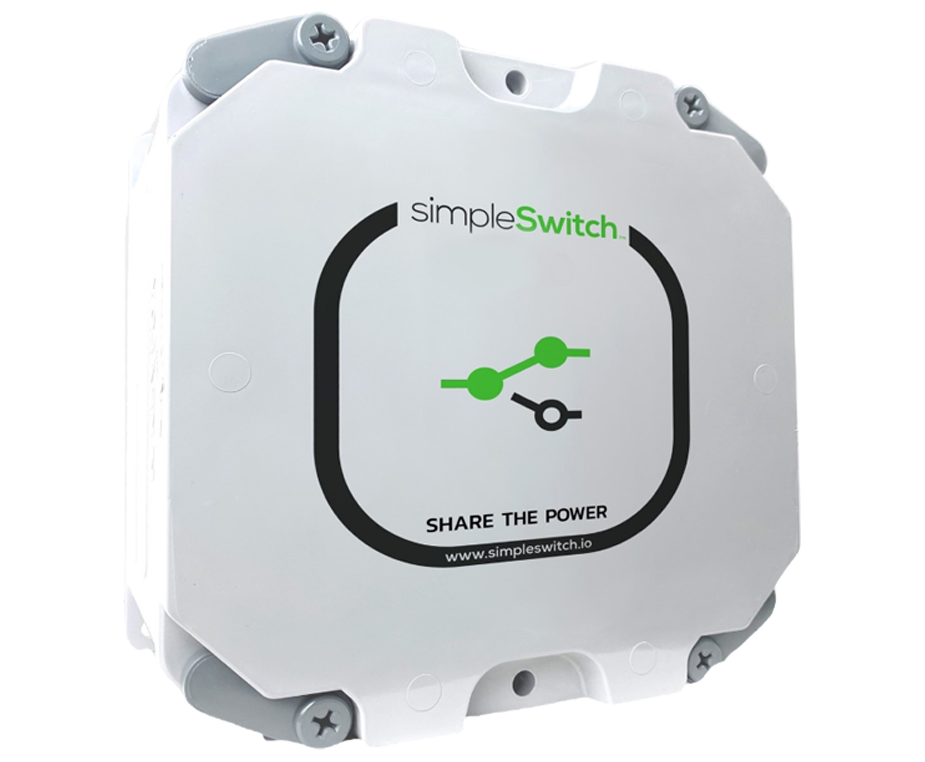
simpleSwitch lets you add a Level 2 EV charger to your home without an expensive electrical panel upgrade. Your EV charges safety without panel overload.
 30-day risk-free returns
- NEMA-rated
- Works with your existing panel
What are the different outlets for dryers and which one is safe for EV charging?
Not all dryer outlets are the same.
There are different types of dryer outlets in homes, and they’re not all suitable for EV charging.
Here’s what you should know:
- NEMA 14-30 dryer outlet: This is the most common dryer outlet type and it is safe for EV charging.
- NEMA 10-30 dryer outlet: This is an older outlet type that doesn’t have a ground, and should be avoided for EV charging.
- NEMA 14-50: These are not exactly dryer outlets. They’re meant for RVs and are sometimes confused with dryer outlets.
Simply put, for safety reasons, you should use only 4-prong outlets like the NEMA 14-30 outlet for EV charging. The older 3-prong versions like the NEMA 10-30 don’t have a ground and pose safe risks.
Dryer outlet EV charging: Is it safe or not?

For starters, you can safely charge your EV using a dryer outlet. But there are a few important things you need to do for safe charging.
To begin with, you’ll have to make sure the outlet, wiring, and overall charging setup are in good condition and properly configured.
If everything is up to code, it’s fine to charge your EV from a dryer outlet.
However, if things aren’t quite right, you could be looking at potential problems like overheating, tripped breakers, or worse.
Let’s understand exactly what’s safe and what’s not.
Dryer outlet EV charging is safe if:
1. The outlet is in good condition
First and foremost, your dryer outlet needs to be in good shape. If it’s cracked, loose, or worn out, it can’t safely handle the load of charging an EV.
Worse, a damaged outlet could overheat or even spark, which is a fire hazard.
So, make sure it’s secure. And if you’ve got any doubt, get an electrician to inspect it.
2. It is a grounded 4-prong outlet
Only 4-prong outlets (like the NEMA 14-30) are safe for EV charging. These outlets are grounded, which helps protect you from electrical shocks or fires.
If your dryer outlet has only 3 prongs, don’t use it for charging your EV.
3. The breaker is sized correctly
Every dryer outlet is connected to a circuit breaker that’s designed to shut off the power if the circuit gets overloaded.
For a 30-amp dryer outlet, your breaker should be rated for 30 amps. If it’s too small or too big, it could trip too easily or fail to protect your home from electrical issues.
4. You use the right adapter
When charging your EV through a dryer outlet, you can’t just plug it in directly. Instead, you need a special adapter that’s built for EV charging.
So, do buy a good quality, UL-listed adapter designed for your car. Avoid cheap or unapproved adapters as they can easily break down or overheat.
5. Your charging amperage is limited to the outlet’s safe load
It is important not to pull too much power from your dryer outlet.
For instance, a 30-amp outlet can safely provide around 24 amps for EV charging. And if you try to draw more than that, you risk overloading the circuit and causing a fire hazard.
Pro tip: I suggest you check that the dryer outlet adapter for EV charger you use limits the amperage to the safe level for the outlet.
6. You don’t run the dryer at the same time
The dryer and your EV charger shouldn’t share the same outlet. Both use a lot of power, and running them simultaneously could overload the circuit.
So, either charge your car or run the dryer, but never both at once.
Dryer outlet EV charging is not safe if:
1. The outlet is old or loose
If your dryer outlet is old, loose, or showing any signs of damage, it’s not safe to use.
That’s because over time, connections can wear out, which could lead to overheating or short circuits.
Pro tip: If the dryer outlet is giving you troubles already (like the plug doesn’t fit securely), get it checked out by an electrician before you try to charge your EV.
2. It is a 3-prong dryer outlet
Older 3-prong dryer outlets are not safe for EV charging as they lack a ground wire, which means there’s a higher risk of electrical shock or fire.
In fact, even if the outlet looks fine, using one without a ground is a dangerous gamble. So stick with a grounded 4-prong outlet.
3. You use a cheap adapter
While some adapters are designed to handle the high power requirements of EV charging, others are cheaply made and could fail under the load.
You should not use the dryer outlet for EV charging until you’ve sourced a high-quality, UL-listed adapter designed specifically for EV charging.
4. You try to pull more power than the circuit can handle
If you try to charge your EV at a higher amperage than the outlet is designed to provide, you could overload the circuit.
For instance, let’s say you upgrade your level 2 home charger to a much faster one. This can cause your outlet, wiring, or even the entire breaker panel to overheat or fail.
That’s exactly why it’s important to never exceed the outlet’s safe power load and stick to around 24 amps for a 30-amp circuit.
5. You have other appliances on the same circuit
If you’re running the dryer, charging your car, or powering any other appliances on the same circuit, it could easily get overloaded.
So, my advice is that you use the outlet for one appliance at a time, especially when charging your car.
Sharing the circuit with other devices can trip breakers or even cause electrical fires.
6. The panel is already overloaded
If your home’s electrical panel is already at capacity, it’s not safe to add another heavy load like EV charging. In such cases, using a load management system for EV charger can help safely balance power without overloading your system.
An overloaded panel can overheat, which is a serious fire risk.
If you’re not sure about your panel’s capacity and if it can safely charge your car, do read my blog on what size electrical panel is needed for EV charging.
TL;DR, Here’s when dryer outlet EV charging is safe and when it isn’t:
| When It Is Safe | When It Is Not Safe |
| Grounded 4-prong outlet (e.g., NEMA 14-30) | Old, loose, or damaged outlets |
| Properly sized breaker (e.g., 30-amp for NEMA 14-30) | 3-prong dryer outlets (no ground) |
| Use of a high-quality, UL-listed EV adapter | Cheap or unapproved adapters |
| Charging at or below 24 amps on a 30-amp circuit | Pulling too much power than the outlet can handle |
| Charging without using the dryer at the same time | Using the dryer and EV charger together |
| Proper maintenance of the electrical system | Overloaded electrical panels |
Note: Dryer outlets are not originally designed for long charging sessions
A dryer outlet is meant to power a dryer for short bursts of time.
Charging an EV, however, is a long, continuous process that can last several hours. This extended load isn’t what the outlet was designed for, and it could overheat or wear out the wiring.
To be on the safe side, it’s always best that you have a dedicated EV circuit for long charging sessions.
Can you use an extension cord with a dryer outlet for EV charging?
Short answer: You really shouldn’t.
You see, using an extension cord for EV charging is one of the most common mistakes people make. And here’s why it’s risky:
- Most extension cords aren’t built for high, continuous loads
- They can overheat quickly
- Longer cables can cause voltage drop
- Loose connections can lead to sparking or melting
In fact, even if the cord says ‘heavy-duty,’ chances are that it isn’t rated for EV charging. So it’s best not to use it.
What EV charging speed can you expect out of a dryer outlet?

When you use a dryer outlet (like the NEMA 14-30 outlet), you’re looking at a charging power of around 5.7 kW. And this is pretty solid for daily use.
In terms of how much range you get, expect to add about 18-22 miles of range per hour of charging.
So, if you’re charging overnight, you can get a full charge by morning without any issues.
This speed is perfect for most people’s daily commuting needs. In fact, if you drive about 20-40 miles a day, a full overnight charge will have you ready to go without needing to stop at a public charger.
However, if you need faster charging for longer trips, you might want to install a dedicated Level 2 charger.
In short, here’s the charging speed you expect from a dryer outlet:
| Outlet Type | Charging Power | Miles Added per Hour | Full Charge Overnight |
| NEMA 14-30 (30-amp) | ~5.7 kW | 18-22 miles | Usually possible |
| NEMA 14-50 (50-amp) | ~9.6 kW | 30-40 miles | Faster than 14-30 |
4 Things to know before using your dryer outlet for EV charging
A dryer outlet definitely works for EV charging. But there are some things you need to keep in mind.
Let’s take a look at them.
1. You can’t use your dryer while charging your car
This is one of the most obvious but annoying problems. Since both your dryer and your EV charger use the same outlet, you can’t run them at the same time.
If you’re charging your car, you’ll have to wait to use the dryer, which can be a pain, especially if you need both at the same time.
2. There is always a risk of of overloading or overheating
Here’s the thing: Dryer circuits weren’t designed for long and continuous use like EV charging.
Charging your car could cause extra heat, and if your outlet, wiring, or connections are old or damaged, you risk overheating.
This could lead to:
- Burnt outlets
- Tripped breakers
- Melted plugs
- Fire hazards
Even a small issue in the wiring can become a serious safety concern, so it’s important to use caution.
3. Insurance and code issues
Using a dryer outlet for EV charging can sometimes violate local electrical codes. This is also why some municipalities don’t allow charging without a dedicated EV circuit.
Also, if you run into any electrical issues or an accident, some insurance companies might refuse to cover the damage. More so if they find you’re using improper charging equipment like a cheap adapter or an old outlet.
So, do check your local rules and insurance policy before going this route.
4. You need a special EV-safe adapter
A regular adapter from the hardware store isn’t enough for EV charging. You’ll need a UL-listed, EV-rated adapter that’s designed to safely handle the high power needed for charging.
Cheap and low-quality adapters can overheat or fail, which is one of the biggest reasons people run into problems. Always make sure the adapter you use is specifically made for EVs to keep everything safe.
Dryer outlets wear out faster with EV charging, here’s why
If you’re charging EV from dryer outlet on a daily basis, here’s something you should know.
Dryer outlets were never designed for:
- Daily plugging and unplugging
- Long EV charging sessions
- Continuous heavy loads
So, if you use this outlet to charge your car regularly, it might cause the following:
- Loose connections
- Worn-out contacts
- Increased resistance
- Heat buildup
And once the outlet becomes loose, things can go downhill fast. You might notice the plug not fitting tightly, burn marks, and even a slight burning smell.
Bonus: You can use a load sharing device like simpleSwitch for safe dryer outlet EV charging
If you’re looking for a safer and smarter way to charge your EV from a dryer outlet, a load sharing device like simpleSwitch is the perfect solution. A dryer outlet splitter for EV like this lets you safely share power between your dryer and your EV without the need for a new dedicated charging circuit or an electrical panel upgrade.
Here’s how it works:
simpleSwitch automatically balances the power demand between your home appliances and your EV, prioritizing whatever you need at the moment.
If your panel’s capacity reaches 80 percent, the device automatically pauses EV charging to prevent overload. And once there’s enough spare capacity, it resumes charging your car, so you don’t have to worry about managing it yourself.
Sounds awesome, doesn’t it?
No More $10k Electrical Panel Upgrade to Charge Your EV at Home
simpleSwitch lets you add a Level 2 EV charger to your home without an expensive electrical panel upgrade. Your EV charges safety without panel overload.
- 30-day risk-free returns
- NEMA-rated
- Works with your existing panel
Final words
As you can see, not only is dryer outlet EV charging possible but with the right outlet, amperage, and adapter you can do so safely.
The key is to set up everything correctly and make sure the outlet is in good condition, properly grounded, and not overloaded.
Also, it’s best to use a device like simpleSwitch to ensure the power is shared safely between your dryer and your car.
Want to buy our smart energy management device simpleSwitch?
Get in touch with us today and get the best deal on both load sharing device and its accessories.
FAQs about dryer outlet ev charging
Is it safe to charge an EV with a dryer outlet?
Yes, it can be safe if the outlet is in good condition, grounded, and you’re using the correct EV-rated adapter or smart splitter.
But charging from a dryer outlet isn’t as safe or reliable as using a dedicated EV charging circuit, which is specifically designed for long, continuous use.
So while it works, it’s not the ideal choice for long-term charging.
Can I use a 3-prong dryer outlet to charge?
It’s not recommended. 3-prong dryer outlets don’t have a ground wire, which is really important for safety.
Without that grounding, you’re at a higher risk of electrical shock or damaging your equipment.
Will charging from a dryer outlet damage my home’s wiring?
It can if your wiring is old, loose, or too small for the load.
Continuous charging produces heat, and older circuits weren’t designed for that kind of constant use.
If your wiring isn’t in top shape, it could lead to overheating, tripped breakers, or even a fire.
How fast is charging from a dryer outlet?
Charging from a dryer outlet typically adds about 18-22 miles of range per hour on a 30-amp circuit.
For most daily commuters, this is fast enough to fully recharge the car overnight. So, if you drive around 20-40 miles a day, charging overnight is usually all you need.
Can I run the dryer while charging?
No, you cannot run the dryer while charging. Both the dryer and the EV charger use the same outlet, so they can’t operate at the same time.
Unless you’re using a load sharing device like simpleSwitch that can safely share the power, you’ll have to alternate between charging your car and using the dryer.
Do I need an adapter?
Yes, you do need an adapter.
EVs don’t plug directly into dryer outlets, so you’ll need a special adapter to connect your car.
It’s important to get a UL-listed, EV-safe adapter (and not a cheap one from a hardware store) to make sure your car charges safely without damaging your equipment or outlet.
Do I need to upgrade my electrical panel to charge an EV?
Not always.
If your electrical panel is older or nearly full (like with a 100-amp panel), you might need to upgrade it.
However, a load sharing device like simpleSwitch can help you avoid an expensive panel upgrade by managing the power load and keeping everything balanced.
Is a dryer outlet a long-term EV charging solution?
An EV charger dryer outlet is more of a workaround. And it is not a long-term or permanent solution.
It works, and for many people, it works well.
But it does come with limitations, such as:
- Slower charging compared to higher-capacity setups
- Wear and tear on the outlet
- Code and safety concerns
- Limited scalability as your needs grow
So, if you plan to own an EV for years or upgrade to a bigger battery in the future, you’ll eventually want a dedicated EV charging outlet.
What’s the best outlet for EV charging?
The best outlet for EV charging is a dedicated EV charging circuit. This gives you the fastest, safest, and most reliable charging experience.