Installing EV chargers at an apartment building or condo is way more complex than charging an EV in a single-family home. That’s because everything is bigger and a bit more complicated in multifamily properties.
There are more residents to cater, more parking setups, and more rules to follow. Plus, you might often end up dealing with utility companies.
It is mind-boggling, and I get it.
You could be a property manager, owner, or HOA board member trying to figure out where to start.
And for those of you, this is the only guide you need to figure out everything that matters.
Read on, as I list the 9 things you should consider before any EV charging installation project.
Key takeaways
- Start with understanding the demand from residents and don’t take a guess.
- Map parking logistics and know who parks where.
- Pick an ownership and billing model (it can be owner-run, tenant-run, or third-party).
- Check electrical capacity and go for load management over panel upgrades wherever possible.
- Look for EV charging incentives.
- Plan permits, HOA rules, and tenant agreements early.
- Choose chargers that match use case, durability, and cloud policies.
- Decide billing and access controls (who pays and how).
- Plan operations and maintenance, including monitoring and repairs
EV charging for multifamily properties: Things you need to consider before installing

1. What the demand really is for EV charging
Before you buy anything or call an electrician, the first step is simply understanding what your residents actually need.
You see, guessing almost always leads to overbuilding which is a waste of money, or underbuilding which frustrates the residents.
Even a quick survey is enough to give you clarity. You can ask who currently drives an EV, how often they use it, and whether they plan to get one in the next year.
You’ll also want to know when they usually park at the property. That’s because someone parking overnight every day has very different charging needs than someone who’s in and out all day.
This information helps you size your initial install and choose a charging setup that fits how people really live, not how you think they live.
For instance, you can choose between Level 2 vs Level 3 EV charger, based on whether your tenants charge their vehicles overnight or they need something quick on-the-move.
Also, while you’re at it, ask whether people would pay for a reserved EV spot or if they prefer a shared, first-come/first-serve system. Little insights like this make planning much easier.\
In short:
| What to check | Why it matters |
| Who owns an EV today | Helps you size chargers correctly |
| Who plans to buy one soon | Shows future growth |
| When residents park | Overnight vs. daytime needs |
| Preferred charging style | Reserved spots vs. shared use |
| Charging speed needs | Level 2 vs Level 3 decisions |

No More $10k Electrical Panel Upgrade to Charge Your EV at Home
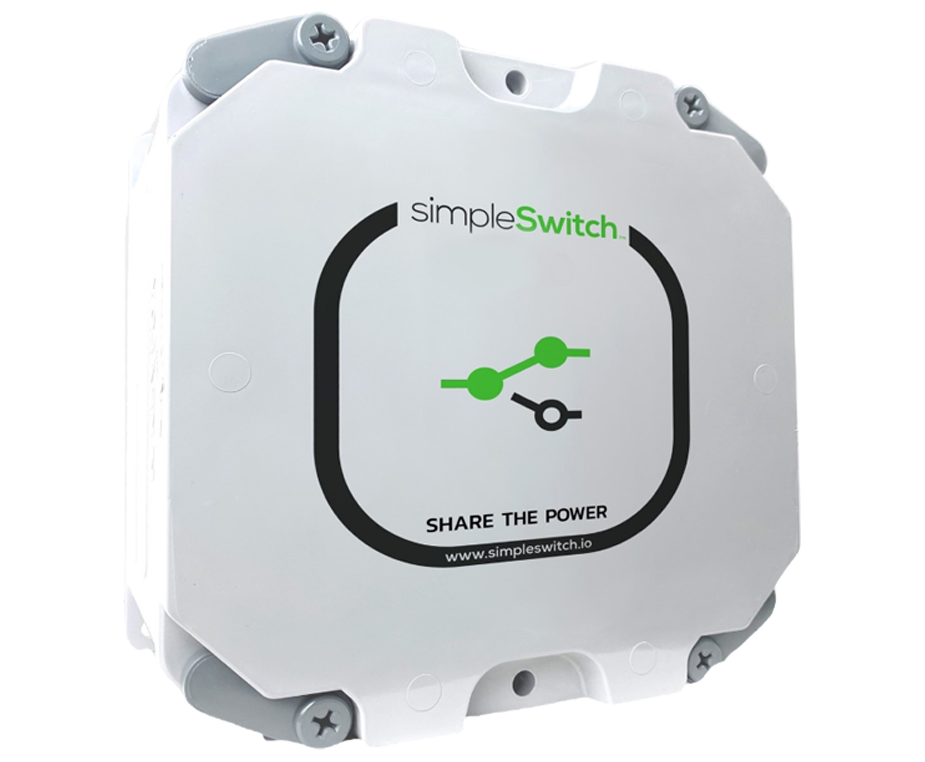
simpleSwitch lets you add a Level 2 EV charger to your home without an expensive electrical panel upgrade. Your EV charges safety without panel overload.
 30-day risk-free returns
- NEMA-rated
- Works with your existing panel
2. Who is parking their EV and where
The next step is figuring out where they actually park. This sounds simple, but it’s one of the most important parts of a successful project.
Make a basic map of your parking layout, nothing fancy. And mark which spots are assigned, which are shared or guest parking, and whether any stalls are already EV-ready.
Also, note accessibility features, obstructions, and any areas where running conduit would require digging or trenching.
Once you understand these daily parking patterns, you can make decisions much easier.
For instance, if most residents park overnight in one specific lot, that area becomes your prime candidate for Level-2 chargers.
Similarly, if some sections are used mainly by guests or short-term parkers, those might be better suited for shared chargers with a booking system.
In short:
| Parking detail | What to do |
| Assigned spots | Plan for long-term chargers |
| Guest/shared spots | Use shared or bookable chargers |
| EV-ready stalls | Use these first to save money |
| Trenching needed | Avoid if possible; increases cost |
| Accessibility areas | Keep these clear and compliant |
3. Whether you want owner-run, tenant-run, or third-party charging
Before you start comparing hardware or calling vendors, decide who will actually own the chargers and handle billing. This affects cost, control, and long-term maintenance.
Here’s how it works:
A. Owner-owned
The property buys the equipment, controls the pricing, and manages the chargers. This gives you the most flexibility and keeps the amenity value in-house.
The downside is that you’re responsible for the upfront cost and ongoing upkeep.
B. Tenant-owned
Residents install chargers at their assigned spots. This sounds easy, but in multifamily settings it’s rare because coordinating wiring, permits, and access can get messy quickly.
C. Third-party model
A charging company installs and operates the equipment, and they bill users directly. You get the amenity without paying for the infrastructure, but you’ll share revenue and commit to a contract.
In short:
| Model | Who owns? | Pros | Cons |
| Owner-owned | Property | Full control, adds value | Upfront cost, administrative work |
| Tenant-owned | Resident | Low cost for property | Hard to coordinate |
| Third-party | Vendor | No capital required | Revenue share, contract terms |
4. Whether to upgrade electrical panel or install a load management device
Many property owners are told that they’ll need a major electrical upgrade to support EV chargers. But that’s often not true.
Why?
Nowadays, there are load sharing devices on the marker that let you charge your EV without upgrading the electrical panel. They share available power across appliances so you don’t need full power to every port all at once.
This avoids maxing out your electrical panel, and in many cases, completely eliminates the need for a new transformer or costly service upgrade.
In fact, this single device can save your property tens of thousands of dollars.
In short:
| Option | What it means | Cost impact |
| Panel/utility upgrade | New transformer or big wiring | Very expensive |
| Load management | Shares power between appliances | Saves thousands |
5. What are the available incentives
Take a detour and look for incentives before you finalize any quote.
You see, a lot of utility companies, cities, and states offer rebates on EV charging infrastructure installation. This can sometimes go up-to thousands of dollars per charging port.
And multifamily properties often qualify for these special programs. These incentives can cover everything from the charger itself to the wiring, conduit, and even panel upgrades.
Here’s a simple approach:
- Start with your utility’s EV charging incentive page
- Check state or regional clean-energy programs
- Look for grants specifically for multifamily or affordable housing
- See if tax credits apply to your project
In short:
| Where to look | What you may get |
| Local utility | Per-port rebates |
| State programs | Grants & tax credits |
| City programs | Extra support for multifamily |
| Affordable housing grants | Higher rebates |
| Note | Many require pre-approval |
The only catch: Some rebates require pre-approval before work begins, so don’t skip this step.
6. What are the required permits and HOA rules for EV charging
EV charging installations come with more rules than most of us expect. And you don’t want your project stuck in limbo because someone discovers a parking restriction or HOA clause halfway through.
So, I suggest you start by checking your city’s permit requirements for EV charging. Some places only need a basic electrical permit, while others require site plans or inspections.
Also, it’s worth reviewing any HOA rules related to parking modifications, electrical work, or exclusive-use stalls.
Now, once the building-side rules are clear, think about resident agreements.
You should set out expectations around charging hours, etiquette (like unplugging when done), fee structure, and what happens if a charger is damaged. These guidelines prevent misunderstandings and help keep the system running smoothly.
In short:
| Item | What to confirm |
| Local permits | Electrical permit, site plan |
| HOA/CC&R rules | Whether parking changes are allowed |
| Resident agreements | Etiquette, hours, damage rules |
| Inspection needs | Final approval timelines |
7. What’s the best charger for your property
You’ll agree when I say that selecting the best EV charger isn’t just about picking a box with a cable. After all, multifamily properties have unique needs.
These properties have shared parking, outdoor exposure, and they need long-term reliability.
So, start by choosing the right power level.
While 48-amp chargers sound impressive, they’re often unnecessary for multifamily use where cars sit parked for hours. Go for lower amps as they can power more charging ports without overloading your system.
Next, decide whether you need networked chargers.
If you plan to track usage, bill residents, or control access, then networked models are the way to go.
But if you want simplicity and no cloud dependency, a local-control charger is worth it. Just be sure you have a plan for managing costs.
Also, check weather ratings for outdoor placements, and pay attention to cloud policies.
In short:
| Factor | What it means |
| Power level (amps) | Lower amps = more ports on same capacity |
| Networked or not | Networked = billing + control |
| Weather rating | Needed for outdoor areas |
| Cloud policy | Avoid vendors with shutdown risk |
| Access method | RFID, app, key, or plate ID |
Note: Some vendors have shut down remote services in the past, leaving properties with hardware that can’t bill or authenticate users. So, look for chargers with clear SLAs or local fallback modes.
8. Figure out billing and charger access
Once the chargers are installed, you need a simple and fair way to handle costs.
Billing is more flexible than you might realize. Just choose a model that fits how your property operates.
Some buildings provide EV charging as a free amenity, especially when demand is low. It’s simple, but not always sustainable as more residents buy EVs.
Others charge a flat monthly fee, which is predictable and easy to manage.
And then there’s pay-per-use billing, which works through a networked charger. It charges residents based on actual electricity consumption or total charging time.
You’ll also need a way to control who can access the chargers. Your options include RFID cards, mobile apps, license plate recognition, or simple keys for locked stations.
In short:
| Billing option | Good for | Notes |
| Free to use | Early-stage demand | Simple but may grow costly |
| Flat monthly fee | Predictable usage | Easy for accounting |
| Pay-per-use | Fair for shared spots | Needs networked chargers |
| Third-party billing | No admin work | Less control |
9. What kind of operations and maintenance model you want
Installing EV charging stations for multifamily property is only half the job. And keeping them working is what takes a lot of planning and commitment.
Chargers are like any other building system, they need occasional updates, cleaning, and the occasional repair.
The best approach you can follow is to set up a basic operations and maintenance plan from day one.
Make sure someone gets alerts when a charger goes offline, whether that’s your team or a vendor. Also, have a clear or service arrangement for repairs so issues don’t linger.
Here’s what you can do:
- Monthly checks to confirm chargers are online
- Firmware updates (for networked models)
- Cable management and basic cleaning
- Good signage to prevent misuse
- A way for residents to report problems quickly
You see, when chargers go down, frustration builds fast, especially if someone relies on them daily. So, a small investment in operations and maintenance can help you keep uptime high and make your EV charging infrastructure feel reliable.
In short:
| Task | Why it matters |
| Remote monitoring | Quick problem detection |
| Firmware updates | Keeps chargers reliable |
| Physical checks | Clean cables, safe stalls |
| Repair SLA | Fast fixes prevent frustration |
| Resident reporting | Helps catch issues early |
No More $10k Electrical Panel Upgrade to Charge Your EV at Home
simpleSwitch lets you add a Level 2 EV charger to your home without an expensive electrical panel upgrade. Your EV charges safety without panel overload.
- 30-day risk-free returns
- NEMA-rated
- Works with your existing panel
Final words
As you can see, EV charging for multifamily properties needs electrical know-how, resident engagement, and a plan that grows with demand.
There are two things property owners tell me they want most. And they’re predictable cost and reliable uptime.
This is exactly where simpleSwitch enters the picture. Here’s how we help:
- Our residential load management system helps you avoid costly utility upgrades.
- Our device works with a wide range of Level-2 chargers and vendor models.
- We offer all-weather reliability and easy monitoring.
Get in touch with us today to install an EV charger in your multifamily building without upgrading your electrical panel.
You might also want to read: The 7 Biggest Barriers To EV Adoption In The Country.
FAQs about multifamily EV charging

How many charging ports should I install at first?
Most multifamily properties don’t need to go big on day one. The smartest approach is to install just enough chargers to meet current demand, plus a small buffer for near-term growth.
This keeps costs reasonable and avoids having expensive equipment sit unused.
What really matters is planning for the future. This includes ensuring pre-wiring or conduit runs to additional parking stalls so you can add more ports later without ripping up concrete or redoing electrical work.
It also makes it easier to take advantage of future incentives or resident requests.
So, instead of trying to guess the long-term future, build something that’s small, flexible, and expandable.
Think of your initial install as Phase 1, not the final version. Start with real demand and make it easy to grow as more residents switch to EVs.
Will adding chargers trigger a utility or electrical upgrade?
It can, but not always.
Property owners are often told they’ll need a new transformer or major panel upgrade, which can be expensive and time-consuming.
The truth is that a lot of buildings can avoid these upgrades by using smart load management devices.
This technology allows chargers to share available power so they don’t overload your existing electrical system, even if multiple cars are plugged in at the same time.
Who should handle billing, the owner, the tenant, or a third party?
There’s no one-size-fits-all answer, which is why this question comes up often.
If you want full control and want to treat EV charging like any other building amenity, owner billing is usually the cleanest choice.
You can charge a flat monthly fee, a per-kWh rate, or even offer the first few hours free.
However, if you don’t want the administrative hassle, a third-party operator can handle everything: payments, access, maintenance, and reporting.
Tenants paying individually work too, but usually only when they have assigned parking or their own charger.
So, pick a model that matches your building’s culture and your state’s rules.
Do I need networked chargers, or are basic chargers enough?
For multifamily properties, networked chargers usually make life much easier. They allow you to track usage, manage access, bill residents, and monitor performance remotely.
This is a big help when chargers are shared or located outdoors.
Basic non-networked chargers are cheaper, but they work best only when a resident owns the charger at their assigned stall.
The downside is there’s no built-in way to bill fairly, troubleshoot remotely, or prevent unauthorized use.
If you want a low-maintenance system that works for many residents, networked chargers are almost always the better long-term choice.
How long does an installation typically take?
Most people expect a long, complicated process. But the actual install is often pretty quick, usually a couple of days to a couple of weeks depending on how much wiring and trenching is required.
The longest part is usually the paperwork that includes permits, site planning, and utility checks.
Those steps can take anywhere from a few weeks to a few months depending on your city. A good installer will handle most of this for you and keep the project moving.