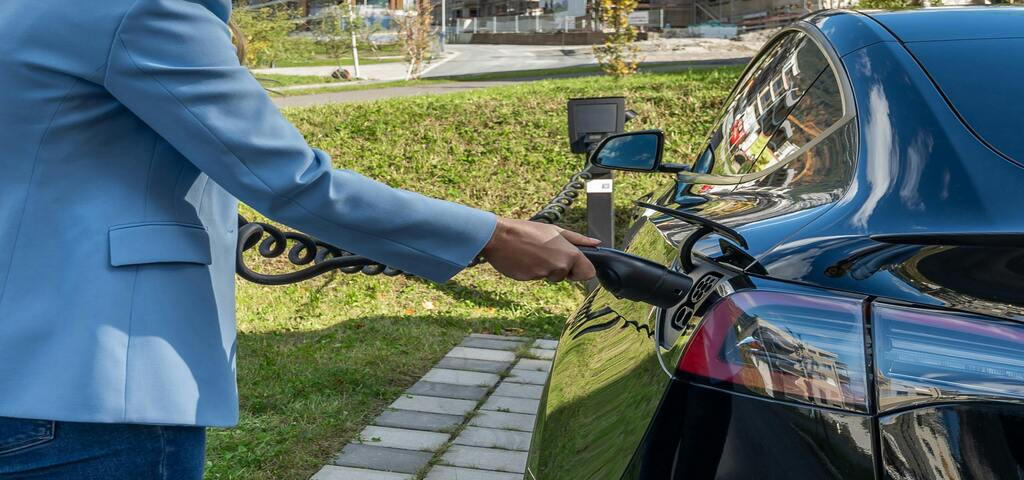
You might have heard people talk a lot about portable EV chargers across online forums. They say these chargers help them drive their EVs just about anywhere without worrying about charging.
In fact, portable chargers have become very popular among EV owners lately. More so among people who travel often, live in apartments, don’t have a permanent home charging setup, or simply want a backup charging option for emergencies
Now, if you’re new to EVs, the idea of portable chargers can seem confusing. After all, they’re not as mainstream as wall-mounted home chargers or public charging stations.
So, if you’re trying to figure out if portable chargers are ideal for your everyday EV charging needs, this blog is for you.
I have explained everything about portable EV charging, including:
- What a portable EV charger is
- How portable EV charging works
- Different types of portable EV chargers
- Benefits of using a portable charger for electric cars
- Whether a portable charger is enough for daily charging
- And how to choose the right portable electric car charger
So, let’s get into it.
Key takeaways
- A portable EV charger is a movable charging device you can carry with your EV
- It allows you to charge your car using standard electrical outlets
- Portable EV charging is useful for travel, emergencies, and flexible charging
- There are Level 1 and Level 2 portable EV chargers
- Portable Level 2 chargers are significantly faster than Level 1 chargers
- Most portable chargers include built-in safety protections
- A portable charger can work as both a primary and backup charging solution
What is a portable EV charger?
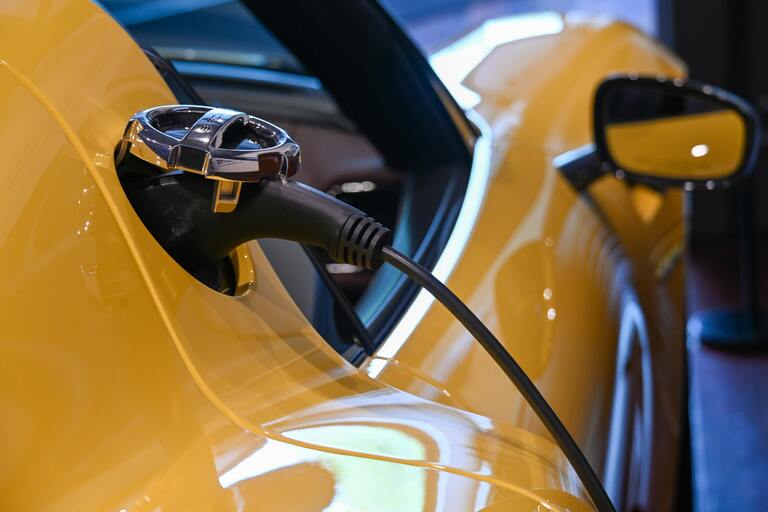
For starters, a portable EV charger is a compact charger that allows you to charge your EV from different power outlets without needing a permanently installed charging station.
These are the chargers you can carry around with you in your vehicle for travel or emergencies.
Also, unlike a fixed wall-mounted charger that stays installed in one place, a portable electric car charger can be plugged in when needed and unplugged after charging.
Most EV portable chargers come with a power plug, a control box, and EV charging connector that plugs into your car.
And depending on the charger type, you can plug it into a regular household outlet, a higher-power 240V outlet, or even certain RV-style outlets.
At this point, you might be wondering, isn’t that just the charging cable that comes with the car?
Well, sometimes yes.
Automakers include a basic portable charger for electric cars with the vehicle.
But there are also aftermarket portable Level 2 chargers that offer faster charging, adjustable power settings, longer cables, better durability, and more charging flexibility.
So while both are portable, aftermarket portable EV chargers usually offer more features and convenience.

No More $10k Electrical Panel Upgrade to Charge Your EV at Home
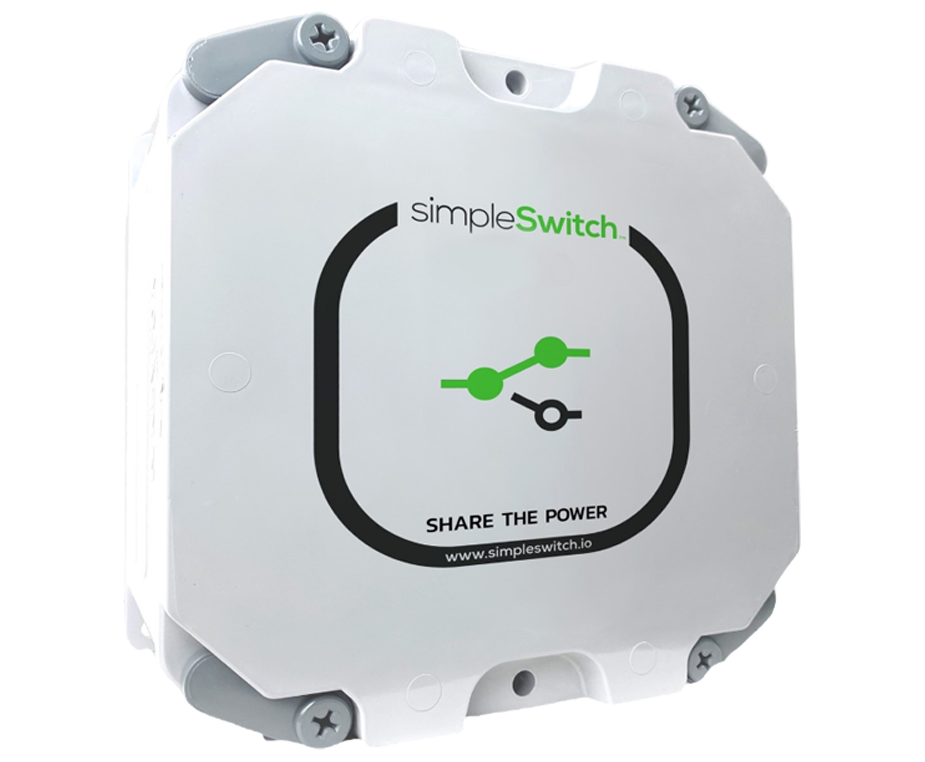
simpleSwitch lets you add a Level 2 EV charger to your home without an expensive electrical panel upgrade. Your EV charges safety without panel overload.
 30-day risk-free returns
- NEMA-rated
- Works with your existing panel
How does a portable EV charger work?
At its basic, a portable electric car charger draws electricity from a power outlet and safely delivers it to your EV battery.
The process itself is actually pretty simple. And here’s how it works:
Step 1: You plug the charger into a power outlet
First, you connect the charger to a compatible outlet. This could be a standard 120V wall outlet, a 240V outlet, or another compatible high-power outlet.
Step 2: Then, you connect the charger to your EV
Next, you plug the charging connector into your EV charging port.
Most portable EV chargers in the country use either the J1772 connector for non-Tesla EVs or NACS/Tesla connectors for Tesla vehicles. But if your car uses neither, you can still use an adaptor to charge your EV.
Step 3: The charger communicates with the vehicle
Before charging starts, the charger and vehicle communicate through what is called a charging handshake to ensure safe power delivery, proper grounding, correct current flow, and safe charging conditions
Once everything checks out, charging begins automatically.
Step 4: Charging continues until complete
The charger keeps supplying power until the battery reaches the set level (mostly 80 percent), the vehicle is fully charged, or charging is manually stopped. And just like that, your EV gets charged.
Are portable EV chargers slow?
This is one of the biggest questions people ask before buying a portable charger. And the answer is, it depends on the type of portable charger you’re using.
You see, not all portable EV chargers charge at the same speed. Some are designed mainly for convenience and emergency charging, while others can charge surprisingly fast.
For instance, a portable Level 1 charger uses a standard 120V household outlet. And this is the simplest type of electric car charger that you get along with your EV.
Now, these chargers are very slow and give you about 3 to 5 miles of range per hour. So if your battery is heavily drained, a full charge can easily take 20 hours or more
On the other hand, aftermarket portable home Level 2 EV chargers use a 240V outlet and add 20 to 40 miles of range per hour. This means you can easily get a full charge in 6-8 hours.
Why are portable EV chargers becoming so popular now?
Portable EV charging has grown rapidly over the last few years. And honestly, it makes sense why.
You see, EV owners today want flexibility. They don’t always want to rely entirely on public charging stations, fixed home chargers, or complicated installations.
And a portable charger for electric car charging gives you that freedom.
Here’s how:
- You can keep the charger in your trunk during long trips
- Use it while visiting family
- Charge at vacation rentals
- Plug in at RV parks
- Or use it as a backup during emergencies
For many EV owners, this extra flexibility brings a lot of peace of mind. More so during situations where EV charging infrastructure might not be easily available.
What are the benefits of a portable EV charger?
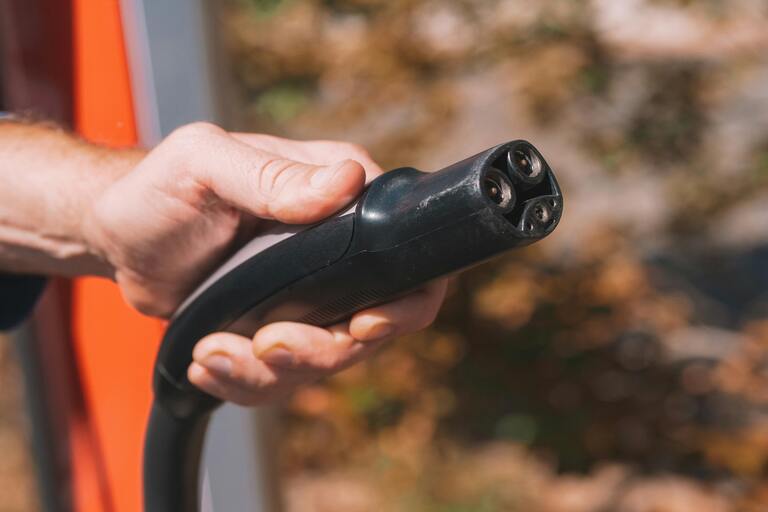
Now that you know what a portable EV charger is and how it works, let’s talk about why so many EV owners are buying one.
You see, the biggest advantage of portable EV chargers is convenience. But that’s not the only benefit.
There are several other reasons why portable charging has become such an important part of EV ownership today.
Here are some of the biggest benefits of portable chargers:
1. Charge your EV almost anywhere
Unlike fixed charging stations, a portable charger electric vehicle setup gives you flexibility to charge from different locations.
For instance, you can use it at home, at a friend’s house, during road trips, at cabins or vacation rentals, at RV parks, or even at workplaces with compatible outlets.
This can be incredibly useful when public charging stations are unavailable or crowded.
A lot of EV owners actually keep an EV portable charger in their trunk all the time for this exact reason.
2. Great for emergencies
Portable EV charging can be a lifesaver in unexpected situations.
Picture this: You’re traveling somewhere unfamiliar, your battery is running low, and the nearest charging station is either occupied or out of service.
In situations like these, having a portable charger for electric cars can make a huge difference.
Even if charging is slower, you can still recover enough battery range to safely continue your trip.
3. No permanent installation needed
One of the biggest barriers to home EV adoption is charger installation. After all, not everyone owns their home, can afford expensive electrical upgrades, or can install a wall-mounted charger.
This is especially true for apartment residents, renters, or those using shared parking spaces.
A portable electric car charger solves this problem because you can simply plug it into a compatible outlet when needed.
4. Portable Level 2 chargers can be surprisingly fast
A lot of people assume all portable chargers are slow. But that’s not really true anymore.
Modern portable Level 2 EV chargers deliver charging speeds that are very similar to wall-mounted chargers. In fact, some portable EVSE charger models can provide 32 amps, 40 amps, or even higher power outputs.
This means you can still get relatively fast charging without installing a fixed charging station.
5. Useful for road trips and travel
This is another major reason portable EV charging has become popular.
When traveling long distances, charging availability can sometimes be unpredictable depending on the area, charging network coverage, or station reliability.
A portable charger for electric car solves this problem by giving you a backup option during travel. You can use campground outlets, RV hookups, vacation rental outlets, or hotel power connections to charge your EV overnight while traveling.
6. Works as both primary and backup charging
For some people, a portable EV charger is simply a backup tool. But for others, it becomes their main charging setup.
For instance, even though most homeowners keep portable chargers for emergencies only, apartment dwellers use them for daily charging.
This flexibility is one of the biggest reasons portable charger for electric cars have become so widely used.
In short, here are all the benefits of a portable EV charger:
| Benefit | What it means for you |
| Flexibility | Charge from different locations |
| Convenience | Easier travel charging |
| Emergency backup | Extra peace of mind |
| No installation | Great for renters |
| Fast charging options | Portable Level 2 support |
Are portable EV chargers safe?
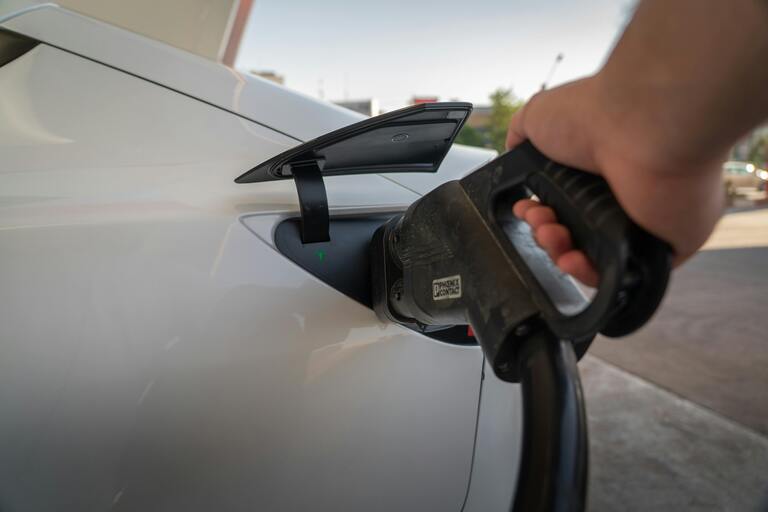
Yes, they are.
Modern-day portable EV chargers are designed with multiple built-in safety protections. These include:
- Overcurrent protection
- Overheating protection
- Ground fault protection
- Surge protection
- Automatic shutoff systems
So in general, portable EV charging is very safe when the charger is certified, used properly, and connected to safe electrical outlets.
For instance, if you use a portable charger in your home along with a load share device like simpleSwitch, it is completely safe.
Bonus: Here are some portable EV charging safety tips
| Safety tip | Why it is important |
| Use certified chargers | Improves electrical safety |
| Avoid damaged outlets | Prevents overheating |
| Avoid cheap extension cords | Reduces fire risk |
| Keep charger dry | Protects equipment |
Here are all the differences between portable and wall-mounted EV chargers
| Feature | Portable EV Charger | Wall-Mounted EV Charger |
| Portability | Can be carried anywhere | Fixed in one location |
| Installation | Usually minimal | Professional installation required |
| Charging flexibility | Very high | Limited to home location |
| Charging speed | Moderate to fast | Usually fast |
| Convenience | Flexible but manual setup | Extremely convenient daily charging |
| Best for | Travel, backup, apartments | Dedicated home charging |
| Cost | Usually lower upfront | Higher installation cost |
Are portable EV chargers worth it?
For most EV owners, yes.
That’s because even if you don’t use portable charging every day, having access to charging almost anywhere can be incredibly useful.
A portable EV charger can you help reduce range anxiety, provide emergency backup, support travel charging, avoid dependence on public stations, and add flexibility to your EV ownership experience
Now, whether it’s really worth it depends on your situation. For instance:
A portable charger makes a lot of sense if:
- You travel frequently
- You rent your home
- You don’t have a fixed charging setup
- You want a backup charger
- You need flexible charging options
But it might be less important if:
- You already have reliable home charging
- You rarely travel long distances
- You have dependable public charging nearby
No More $10k Electrical Panel Upgrade to Charge Your EV at Home
simpleSwitch lets you add a Level 2 EV charger to your home without an expensive electrical panel upgrade. Your EV charges safety without panel overload.
- 30-day risk-free returns
- NEMA-rated
- Works with your existing panel
Final words
I am sure that, by now, you know exactly what a portable EV charger is and whether or not it makes sense for your EV setup.
Here’s the simplest way to think about it: A portable EV charger gives you flexibility. So much so that instead of depending completely on fixed charging stations, you get the freedom to charge your EV from different locations whenever needed.
That’s why, while some people use it as a backup charging solution, for others, it becomes their primary everyday charger.
And with EV adoption growing rapidly, portable EV charging is becoming more useful than ever.
Got more questions or planning to install an EV energy management system at home?
You can get in touch with us!
At simpleSwitch, we build state-of-the-art EVEMS systems designed to safely manage EV charging loads, prevent panel overloads, and help you avoid expensive electrical upgrades. Our EVEMS devices are UL-listed and proudly made in the USA.
FAQs about portable EV chargers
What is a portable EV charger?
A portable EV charger is a movable charging device that allows you to charge your EV using compatible electrical outlets instead of a permanently installed charging station.
What is a portable EVSE charger?
You’ll often notice the term portable EVSE charger whenever you search for portable chargers.
Technically, EVSE stands for Electric Vehicle Supply Equipment. And it is the equipment that safely delivers electricity from the power source to your EV.
So both portable EVSE and portable electric vehicle charger mean the same thing.
Is there a portable charger for electric cars?
Yes.
Portable chargers for electric cars are widely available and can charge EVs using standard household outlets or higher-power 240V outlets.
Are portable EV chargers safe?
Yes, most modern portable EV chargers are designed with built-in safety protections like overheating protection, surge protection, and automatic shutoff systems.
Can I use a portable EV charger every day?
Yes.
Many EV owners use portable EV chargers daily, especially portable Level 2 chargers with properly installed outlets.
How fast does a portable EV charger charge?
Charging speed depends on the charger type.
Portable Level 1 chargers are slower, while portable Level 2 chargers can add around 20–40 miles of range per hour.
Do portable EV chargers work with all EVs?
Most portable EV chargers work with many EVs, but connector compatibility and charging standards should always be checked before purchase.
Can I plug a portable EV charger into a regular outlet?
Yes.
Portable Level 1 chargers can plug into standard 120V household outlets, although charging speeds will be slower.
Is a portable EV charger better than a wall-mounted charger?
Not necessarily.
Portable chargers offer flexibility and mobility, while wall-mounted chargers provide more convenience and faster long-term home charging.