



One of the best things about owning a Tesla is that you can charge it right from your driveway.
No more stopping at gas stations or planning fuel stops. You simply plug in your car when you get home and let it charge.
But this is also where many homeowners run into a problem.
Once they decide to install a home EV charger, they’re told they also need an electrical panel upgrade. And depending on the home, that upgrade can cost up-to $10,000.
Now, the good thing is that you can charge a Tesla at home without upgrading your electrical panel. There are several ways to safely charge your Tesla at home using your home’s existing electrical capacity.
In this blog, I will explain it all, including:
- How to charge Tesla at home without an electrical panel upgrade
- How smart load management helps avoid electrical re-wiring
- How long charging a Tesla at home takes
- How much it costs to charge a Tesla at home
- And how to safely set up home charging
So, let’s get started.
Key takeaways
- You can often charge a Tesla at home without upgrading your electrical panel.
- A panel upgrade isn’t necessary if your home’s electrical capacity is managed properly.
- Smart load management devices help balance electricity usage and prevent panel overload.
- Charging overnight is enough for most daily driving needs.
- Home charging is much cheaper than Tesla superchargers.
How to charge Tesla at home?
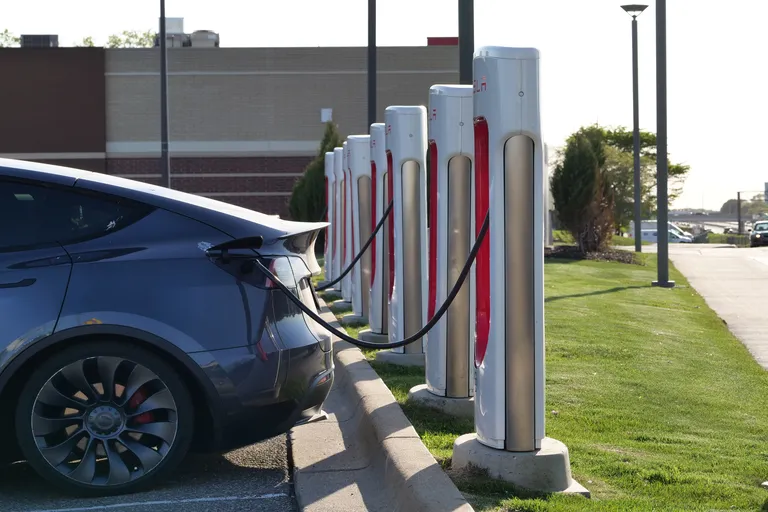
Charging a Tesla at home is pretty simple. Once you have the right charging setup, all you have to do is plug your Tesla in and it takes care of the rest.
There are two Tesla home charging options you can choose between, namely:
1. Level 1 charging
Level 1 charging uses a standard 120-volt household outlet. And if you have a Tesla Mobile Connector, you can plug it into a regular outlet and start charging immediately.
The biggest advantage here is convenience. You don’t need to install any additional charging equipment if a compatible outlet is already available.
But the downside is speed.
Level 1 charging is the slowest way of charging a Tesla at home as it adds only a few miles of driving range each hour. And for drivers with longer daily commutes, this usually isn’t enough.

No More $10k Electrical Panel Upgrade to Charge Your EV at Home
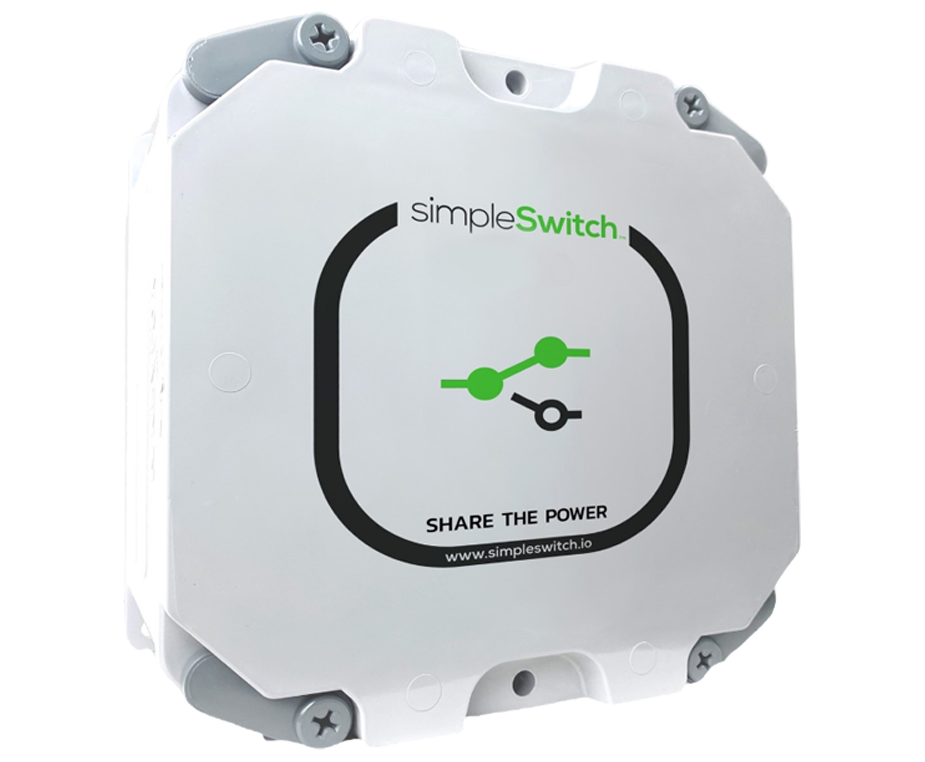
simpleSwitch lets you add a Level 2 EV charger to your home without an expensive electrical panel upgrade. Your EV charges safety without panel overload.
 30-day risk-free returns
- NEMA-rated
- Works with your existing panel
2. Level 2 charging
Most Tesla owners eventually switch to Level 2 charging.
A Level 2 EV charger uses a dedicated 240-volt circuit, allowing your Tesla to charge several times faster than a standard outlet.
This is much more practical for everyday use. Whether you’re driving to work, running errands, or taking weekend trips, your car can fully charge overnight.
Here’s the equipment you need for Tesla charging at home:
| Charging option | What you need |
| Level 1 charging | Tesla Mobile Connector and a standard 120V outlet |
| Level 2 charging | Tesla Wall Connector or another compatible Level 2 EV charger with a dedicated 240V circuit |
Note: If you’re unsure about 120V and 240V outlet compare, you can read my blog – 120V Vs 240V Outlet: What’s the Difference?
Why do some homes need an electrical panel upgrade?
For starters, your home’s electrical panel has a maximum amount of electricity it can safely supply at one time. And that electricity might be shared by your:
- Air conditioner
- Water heater
- Oven
- Dryer
- Lighting
- Kitchen appliances
- And every other electrical device in your home
Now, when you add an EV charger, you’re adding another large electrical load.
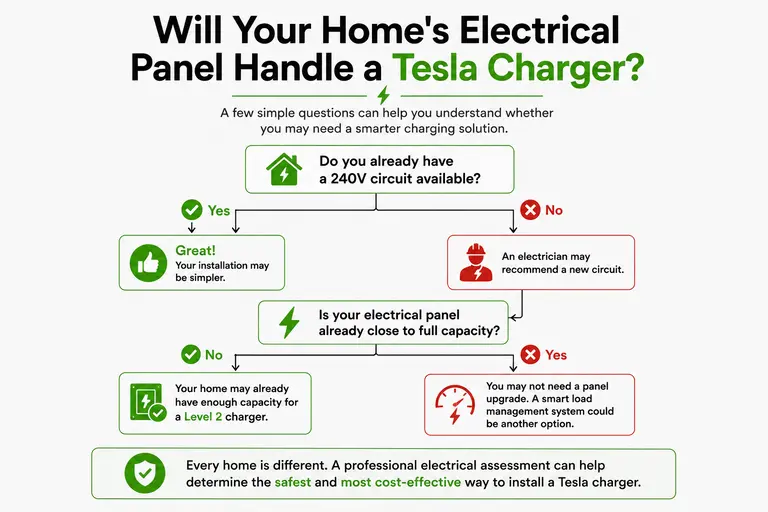
So, if your existing panel doesn’t have enough available capacity, your electrician might recommend an electrical panel upgrade to ensure safety and prevent breaker trips.
Pro tip: Even if your panel is close to its capacity doesn’t mean you need to upgrade it. There are ways to manage your home’s electrical load and avoid a costly panel upgrade, just ask your electrician about load sharing options.
How to charge Tesla at home without an electrical panel upgrade?
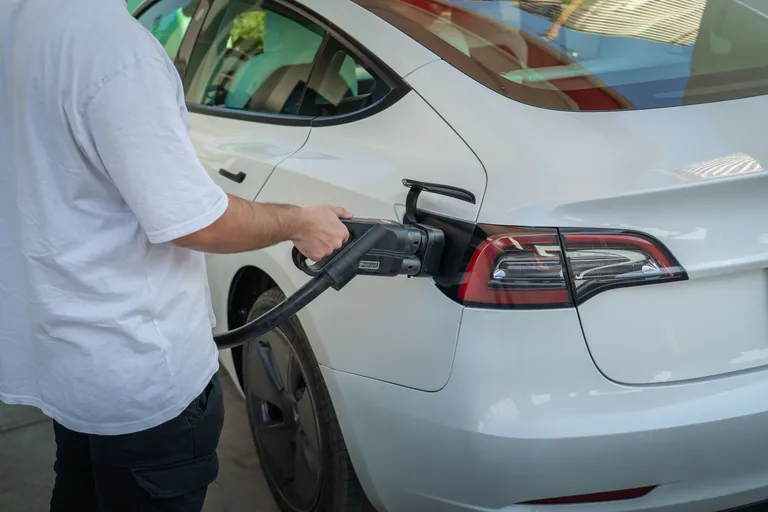
If your home’s electrical panel is operating at its full capacity, you still have a few options before you get a full panel upgrade.
Mostly, one of the following solutions is enough to safely support Tesla charging at home:
1. Charge at a lower amperage
The simplest way to avoid a panel upgrade is to reduce your EV charging amperage.
Level 2 chargers allow you to adjust the charging amperage. And when you charge at a lower amperage, your EV uses less electricity, reducing the load on your electrical panel.
Yes, charging might take a little longer. But if you’re charging your EV overnight anyway, the extra charging time won’t make much difference.
2. Charge when other appliances aren’t running
Think about when your home uses the most electricity.
For most homes this is during the evening when the oven, dryer, dishwasher, and air conditioner are all running at the same time.
So if you schedule your Tesla to charge later at night when most of these appliances aren’t running, your electrical panel might be able to handle the extra EV charger electrical requirements.
3. Use a smart load management device
This is one of the most effective ways to faster charge your Tesla without upgrading their electrical panel.
A load management device like simpleSwitch shares power between your EV and other high-demand appliances like an oven.
Here’s how it works: If you’re using your oven, the device turns off EV charging . And when the oven is off, it lets your Tesla charge at a higher rate again.
Everything happens automatically in the background, all you need to do is plug in your EV.
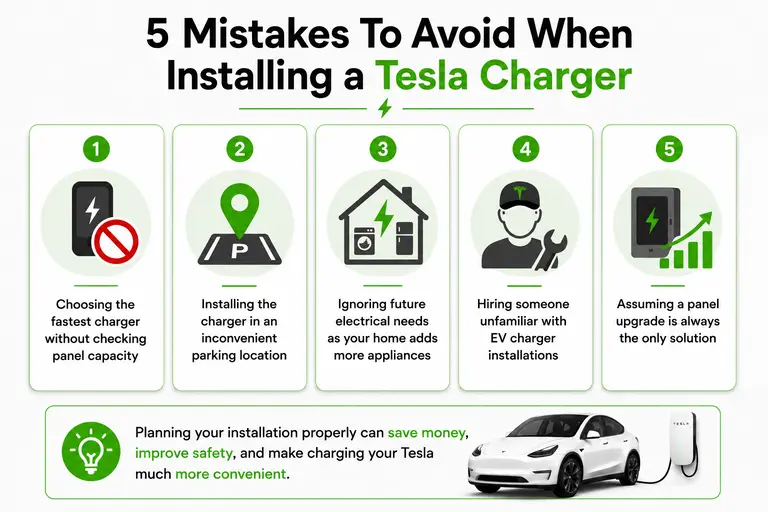
How long to charge a Tesla at home?
The total time to charge your Tesla at home depends on the type of EV charger you’re using.
For instance, if you’re using a Level 2 charger, charging will be much faster than on a Level 1 charger.
Here’s a simple comparison:
| Charging method | Typical charging time |
| Level 1 (120V outlet) | 2-4 days for a full charge |
| Level 2 (240V charger) | Overnight or about 6-12 hours |
Note: The actual charging time will depend on your Tesla model, battery size, charging settings, and current battery level.
How much to charge a Tesla at home?
The cost to charge Tesla at home depends on two main factors:
- Your Tesla’s battery size
- Your local electricity rates
Generally speaking, home EV charging is much cheaper than buying gasoline or relying exclusively on public DC fast chargers.
Here’s a simple example:
| Electricity rate | Estimated cost for a full charge* |
| $0.12 per kWh | Around $7-$10 |
| $0.18 per kWh | Around $11-$15 |
Pro tip: If you have rooftop solar panels, your charging costs could be even lower by using the electricity your home generates during the day.
No More $10k Electrical Panel Upgrade to Charge Your EV at Home
simpleSwitch lets you add a Level 2 EV charger to your home without an expensive electrical panel upgrade. Your EV charges safety without panel overload.
- 30-day risk-free returns
- NEMA-rated
- Works with your existing panel
Bonus: Here are some tips for charging a Tesla at home safely
| Tip | Why it matters |
| Use a Level 2 charger for daily driving | It offers faster, cheaper, and convenient way to charge up-to your Tesla charging limit |
| Schedule charging overnight | It helps you take advantage of lower household electrical demand and lower utility rates |
| Have your electrical panel checked | It ensures your system can safely support EV charging |
| Install a load management device | It helps avoid unnecessary electrical panel upgrades |
| Hire a qualified electrician for EV charger installation | It helps ensure a safe and code-compliant installation |
Final words
I hope you now have a much clearer understanding of how to charge Tesla at home without upgrading your electrical panel.
The best part is that most homeowners can safely install a Level 2 Tesla charger without replacing their existing electrical panel.
Sometimes, charging at a lower amperage or scheduling your charging overnight is enough. If not, an EV energy load management system can safely balance your home’s electrical usage and help you avoid a costly panel upgrade.
Have questions about charging a Tesla at home or looking for a smarter way to avoid an electrical panel upgrade?
You can get in touch with us!
At simpleSwitch, we design advanced EV energy management systems that help homeowners safely charge their electric vehicles without overloading their electrical panels. Our systems are UL-listed and proudly manufactured in the USA.
FAQs about charging a Tesla car at home
Can I charge Tesla at home without upgrading my electrical panel?
Yes, in many cases you can.
If your electrical panel has enough available capacity, or if you use a smart load management device, you can be able to install a home EV charger without panel upgrade.
How do you charge a Tesla at home?
Most homeowners charge their Tesla using either a Level 1 charger plugged into a standard outlet or a Level 2 charger connected to a dedicated 240V circuit. Level 2 charging is the faster and more practical option for everyday use.
How long does it take to charge a Tesla at home?
It depends on your charging method. A Level 1 charger can take several days for a full charge, while a Level 2 charger can often recharge your Tesla overnight.
How much does it cost to charge a Tesla at home?
The cost depends on your local electricity rates and your Tesla model. In many parts of the country, a full charge typically costs somewhere between $7 and $15.
Can I use a regular outlet for charging a Tesla?
Yes. A standard 120V outlet works with Tesla’s Mobile Connector, but charging is much slower than using a Level 2 charger.
Is a Level 2 charger worth it for Tesla charging at home?
For most homeowners, yes. A Level 2 charger provides significantly faster charging and is much more practical if you drive your Tesla regularly.


