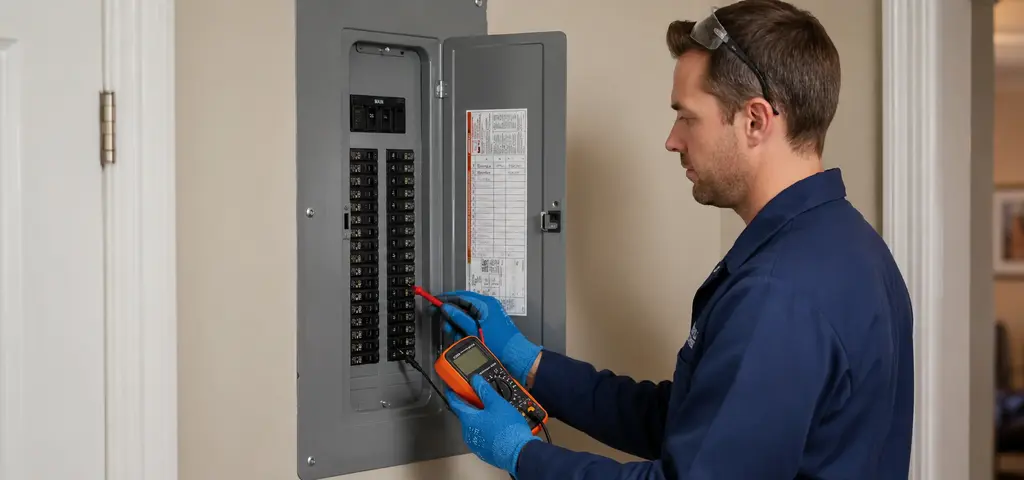
One of the most common EV charging queries that almost every homeowner has is the size of electrical panel they need.
After all, they’ve been constantly told that they need an electrical panel upgrade for installing a Level 2 charger in their home. And this isn’t entirely wrong either.
You see, EV chargers, especially Level 2 chargers, pull a significant amount of power. And if your home’s electrical panel isn’t able to support it, you’ll end up with flickering lights, tripped breakers, and even damaged appliances.
So, what size electrical panel do you need?
Also, how do you know whether or not your panel is up to the task for safe EV charging?
In this blog, I will explain it all. You’ll learn:
- The basics of electrical panel size and capacity
- What electrical panel size you need for EV charging
- When a panel upgrade is necessary and when it isn’t
Let’s get started.
Key takeaways
- EV chargers draw significant power, and the panel should be able to handle the extra load safely.
- A 100 amp panel can often support EV charging, especially with a 30-40 amp charger.
- Panel size needed depends on total home power usage and the EV charger’s demand.
- Upgrading to a 200 amp panel might be necessary for homes with multiple heavy appliances.
- Load management devices can help safely charge your EV without upgrading the panel.
First, let’s understand the basics of electrical panel size and capacity

Before we get into the exact electrical panel size that you need to charge your electric car at home, let’s first know the basics of these panels.
When electricians talk about panel size, what they really mean is how much total electricity your home can safely use at once, and whether there’s room for more. If the capacity is too low, you might not be able to charge your car; but if it’s high enough, you’re good to go.
Now, your main service panel is where it all happens.
Here, the main breaker has a capacity ranging from 60 amps to 100 amps to 200 amps, and more. This capacity determines how much electricity your house can draw at any given moment.
For instance, while old homes usually have 100 amp panels, modern homes are wired with 200 amps or even higher panels.
You might think that having a 200 amp panel automatically means you’re safe to add an EV charger, but not necessarily.
Here are a few things you should know:
- A 200 amp panel sounds great. But if you’re already using a lot of power for things like air conditioning, electric stoves, or other high-demand appliances, your available capacity for EV charging might be limited.
- At the same time, if you have a 100 amp panel but aren’t running heavy appliances at the same time, you might still have plenty of room for an EV charger.
So, how much power your other appliances are drawing matters a lot. If you’re using a lot of energy, your panel might be getting close to its limit.
TL;DR, basics of electrical panel capacity
| Panel Size | Total Capacity | Typical Home Use | Ideal for EV Charging? |
| 60 amps | 60 amps | Very limited use, older homes | Not Recommended for EV charging |
| 100 amps | 100 amps | Older homes, smaller households | Usually fine with 30-40A chargers |
| 200 amps | 200 amps | Modern homes, larger households | Great for most EV chargers (even 60A) |
In short: The standard breaker panel sizes (like 100 amps or 200 amps) tell you the maximum amount of power you can use. But whether your panel can handle an EV charger depends on how much you’re already using and what you plan to add.

No More $10k Electrical Panel Upgrade to Charge Your EV at Home
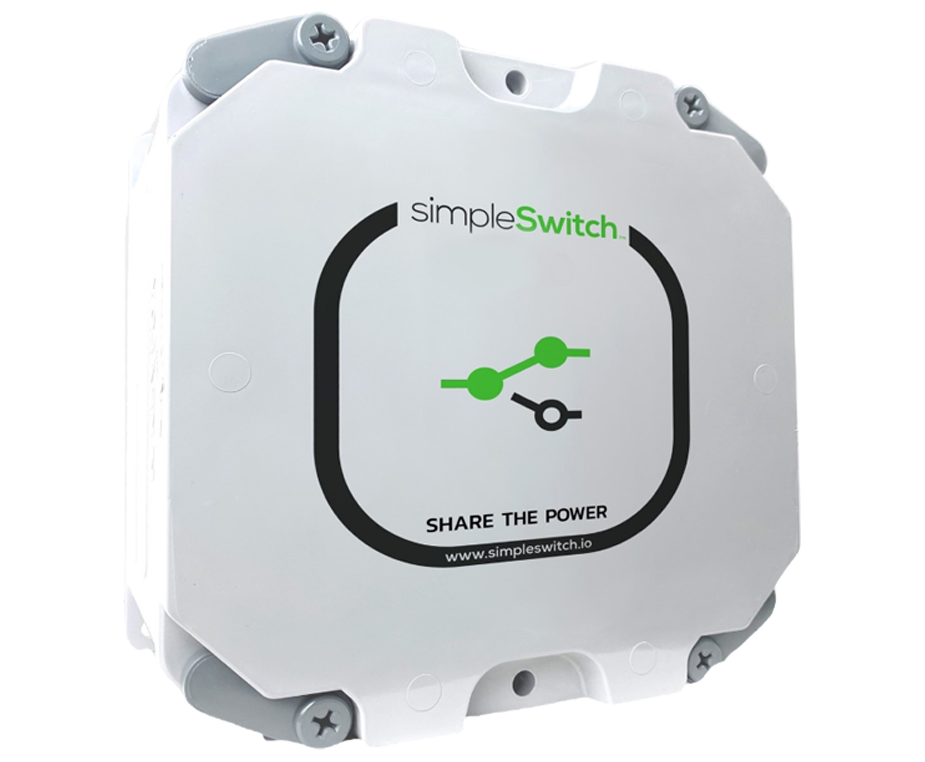
simpleSwitch lets you add a Level 2 EV charger to your home without an expensive electrical panel upgrade. Your EV charges safety without panel overload.
 30-day risk-free returns
- NEMA-rated
- Works with your existing panel
What size electrical panel do you exactly need to charge your EV?
Now that you know the basics of electrical panels, let’s get straight to what electrical panel size you need for EV charging.
A typical Level-2 EV charger operates on 240 volts and requires anywhere from 30 to 60 amps of power.
But the exact amount of power it will draw depends on two things:
- The model of your charger
- The charging capacity of your electric vehicle
For instance, 30-40 amps of power is plenty for most homes with an EV. A charger in this range strikes a good balance between how quickly it charges your vehicle and how much power it pulls from your panel.
In fact, if you’re just charging overnight and don’t need a fast charge, a 30-40 amp charger is all you need.
However, fast chargers or bulkier EVs pull more power, about 50-60 amps. For instance, Tesla Cybertruck charges at 48 amps, but it needs a 60 amp breaker to charge.
So, what size electrical panel is ideal here?
Both 100 amp and 200 amp electrical panels are apt for EV charging.
Here’s how it works:
- If you have a 100 amp panel, a 40 amp charger would take up 40 percent of your total panel capacity.
- if you have a 200 amp panel (a typical modern panel size), a 40 amp charger would take up 20 percent of your total panel capacity.
Meaning, if you use less appliances and only about half of your panel capacity is in use, you can add an EV charger even on a 100 amp panel.
However, if you use a lot of appliances at a time, and you want to charge your EV alongside, you’ll ideally need a 200 amp panel.
This should not be a problem if your home is not too old, as you might already have a 200 amp electrical panel. But if your panel capacity is lower, say 60 or 100 amps, you’ll likely need an EV charger electrical panel upgrade.
In short:
| Charger Type | Voltage | Amps Needed | Suitable Panel Size |
| Level-2 Charger (Standard) | 240 volts | 30-40 amps | 100 amp or 200 amp panel |
| Fast Charger (Heavy Duty) | 240 volts | 50-60 amps | 200 amp panel preferred |
2 Things to consider when deciding what electrical panel size you need
When it comes to deciding your ideal electrical panel size, the question isn’t whether you can charge your EV on your existing panel capacity.
That’s because even if you’ve got a 60 amp electrical panel, you’ll still be able to charge your EV. After all, Level 2 EV chargers mostly draw 40 amp electricity at a time.
So, the only questions you should be looking answers to is:
1. Apart from EV charger, what else is running at the same time
For instance, if you’re running the air con, using the stove, or doing laundry while charging your car, the total demand on your panel can push things to the limit.
Think about it this way: An EV charger is like any other big appliance, such as a dryer or an oven. And if you want to run them all at the same time, you certainly need a larger electrical panel capacity.
2. What time of the day do you want to charge your vehicle
If you charge your EV during day-time when other appliances are also likely running, you’ll need a much larger electrical panel.
But then, this is not usually the case.
Home EV charging is mostly done at night, when other heavy electrical loads (like HVAC, oven, or washing machine) aren’t running.
So, the demand on your electrical panel is much lower and you’ve got more leeway to charge your car without overloading the system.
Bonus: You need not upgrade electrical panel even if you use multiple appliances at a tome
Yes, that’s right. You don’t need an electrical panel upgrade for EV charging.
There are load sharing devices like simpleSwitch that let you charge your EV safely while using household appliances.
A device like this safely balances electrical load.
For instance, let’s say you’re using the dryer while the EV charger is still on, and your panel capacity reaches 80 percent. In this case, the device will automatically stop EV charging.
And it will resume charging once your panel has enough spare capacity.
Sounds amazing, doesn’t it?
How do electricians decide what electrical panel size you need?

When it comes to determining whether your panel can handle an EV charger, eyeballing it isn’t enough.
A good electrician won’t just look at the number of empty slots in your panel or guess based on the size of your panel.
Instead, they’ll run a load calculation, a process that follows specific electrical codes, like the National Electrical Code.
Here’s how it works:
1. They evaluate existing load
The electrician first sums up how much electricity your existing appliances (like your fridge, washing machine, microwave), HVAC system, water heaters are using, or could use.
2. They check panel capacity
They then compare this total demand to the maximum capacity of your panel, which is the number listed on your main breaker (like 100 amp, 200 amp, etc.).
3. They build in a safety margin
An electrician will usually recommend that you don’t load your panel beyond about 80 percent of its total capacity. That’s because running your panel at full capacity all the time can increase the risk of overheating or causing electrical issues.
The idea is to leave a little wiggle room so that your home’s electrical system remains safe.
4. They will calculate EV charging demand and add the EV charger
Next, they’ll factor in the EV charger’s demand. For instance, if you plan to install a 40 amp charger, they’ll check your total panel load, including after installing the charger.
The idea is to have it all under the 80 percent safety threshold.
Now, if the load is within safe limits, great. They’ll proceed with installing the charger without any need for a panel upgrade.
But, if the load is too high, they might recommend adding a subpanel, using a load-management device, or in some cases, doing a full panel upgrade.
Pro tip: Don’t confuse between panel capacity and panel space
At this point, you might be thinking that even if your panel doesn’t have spare capacity you can still install an EV charger using a load sharing device.
But there’s something many homeowners confuse. I am talking about electrical panel space.
You see, your electrical panel doesn’t just have a capacity limit. It also has a physical limit or the number of breaker slots available.
This is what we call a panel space.
Now, EV chargers typically require a double-pole breaker, which takes up two slots in the panel.
So even if your panel has enough spare electrical capacity, you still need:
- Available panel space for the breaker
- Or room to add one
But it’s not something to worry about. Even if your panel is already full, you still have a few options like:
- Installing tandem breakers (if allowed)
- Adding a subpanel
- Or making minor adjustments
In most cases, you won’t need a full panel upgrade, just a way to create extra panel space.
What are the risks of ignoring electrical panel limits for EV charging?
If you plug a high-draw EV charger into a panel that’s already near its limit, you could run into some serious issues.
Here’s what can happen:
- Frequent breaker trips: If your panel is overloaded, your circuit breakers will trip to prevent overheating or damage. This can happen if the load exceeds the panel’s safe capacity.
- Voltage drops and flickering lights: When you’re charging your EV, especially while running other heavy appliances (like a dryer or air conditioner), you might notice your lights flickering or a drop in voltage. This happens when the system is under strain and struggling to meet the demand.
- Overheating wiring: If you’re using an old panel or outdated wiring, they may not be designed to handle continuous high-amp loads, like those from a 240V EV charger. Over time, this could lead to overheating, which is a major fire risk.
Also, it’s important for you to know that many areas have specific code requirements for breaker sizing. For instance, a 50 amp breaker is required for a 40 amp Level-2 charger to meet electrical code.
No More $10k Electrical Panel Upgrade to Charge Your EV at Home
simpleSwitch lets you add a Level 2 EV charger to your home without an expensive electrical panel upgrade. Your EV charges safety without panel overload.
- 30-day risk-free returns
- NEMA-rated
- Works with your existing panel
Final thoughts
By now, I am sure you’ve got a good idea about what size electrical panel you need for EV charging at home.
If you’re buying an EV and thinking that you need a big panel or full upgrade, take a pause and think again.
In reality, EV charger installation is far more flexible and a lot less costly than you might think.
With ev charger load management, efficient charger sizing, and proper load calculations, your home panel almost always works for Level-2 charging.
Got more questions or need a load management device for your home?
You can get in touch with us!
At simpleSwitch, our UL-listed energy load management devices let you safely charge your EV without any electrical panel upgrade at all.
FAQs about electrical panel size for EV charging
What size electrical panel is recommended for EV charging?
Most EV chargers work perfectly fine on a 100 amp or 200 amp electrical panel, depending on your home’s existing electrical load.
A lot of homes already have 200 amp panels, which offer plenty of capacity. But even 100 amp panels can support Level-2 EV charging without an upgrade, especially if you use a 30A-40A charger or a load-management device.
The only time panel size becomes a major issue is when:
- Your house has a very old 60 amp panel
- You already use several heavy 240V appliances at the same time
- Your panel is outdated or unsafe
For most people, a 100 amp panel with smart load management is more than enough.
Can my electrical panel handle an EV charger?
Yes, in many cases, your electrical panel can handle an EV charger without an upgrade. It really depends on your panel size, how much power your home already uses, and the charger you choose.
For instance, if your electrical total load stays within safe limits, you don’t need an EV charger panel upgrade. Your electrician can do a quick load calculation to confirm it.
Also, if your electrical load exceeds the overall limit of the panel, you can still use a load sharing device to skip panel upgrade.
Can I install an EV charger on a 100-amp panel?
Yes, you usually can. In fact, thousands of homeowners with 100 amp panels install Level-2 EV chargers without upgrading. The key is to:
- Use a 30A-40A charger
- Charge mostly at night
- Make sure your panel’s loads do not exceed safe limits
- Use a load-management device (like simpleSwitch Io) if needed
Is 150 amp service enough for EV charging?
Yes, it is sufficient.
In fact, it gives you more flexibility than a 100 amp panel. This means:
- You can charge your EV just about anytime of the day
- You might not need a load sharing device either
Is a 200 amp panel required for Level-2 EV charging?
No, 200 amps are not required.
A 200 amp panel simply gives more breathing room for heavy appliances running together.
But a 100 amp panel is usually enough if you:
- Charge overnight
- Use a moderate 30–40A charger
- Don’t run major appliances at the same time
- Have a load-sharing device installed
How do I know if my electrical panel can handle an EV charger?
Electricians determine this using a load calculation, which compares:
- Your panel’s maximum capacity
- The electrical demand from your home’s appliances
- The additional load from your EV charger
If your total load stays within safe limits (usually under 80 percent of panel capacity), your panel can support EV charging. You do not need to guess as this calculation gives a clear answer.
Can I use a Level-2 charger with a 60 amp electrical panel?
Most of the time, no.
60 amp panels are usually too old and too limited for EV charging. They lack available capacity, may use outdated breakers or fuse boxes, and are often tied to older wiring that isn’t rated for high continuous loads.
If you have a 60-amp panel, expect your electrician to recommend:
- A panel upgrade
- A service upgrade
- Or a load-management solution
It’s not impossible, but a 60 amp service is almost always considered too small for Level-2 EV charging.
Do EV chargers need a dedicated circuit?
Yes, in most cases, they do.
A Level-2 EV charger is usually installed on a dedicated 240V circuit.
What that means is:
- The circuit is used only for EV charging
- It doesn’t share power with other appliances
Why is this important?
Well, because EV chargers draw a steady and significant load. And if they share a circuit with other appliances, it can increase the risk of overloads or breaker trips.
That’s why electricians always recommend a dedicated circuit for EV charging.
Now, there are exceptions to this.
With smart load management devices, you can safely share power between your EV charger and other appliances. But without that, a dedicated circuit is the standard and safest approach.