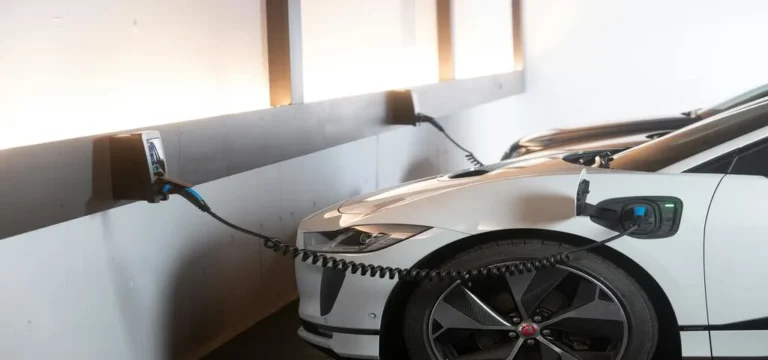
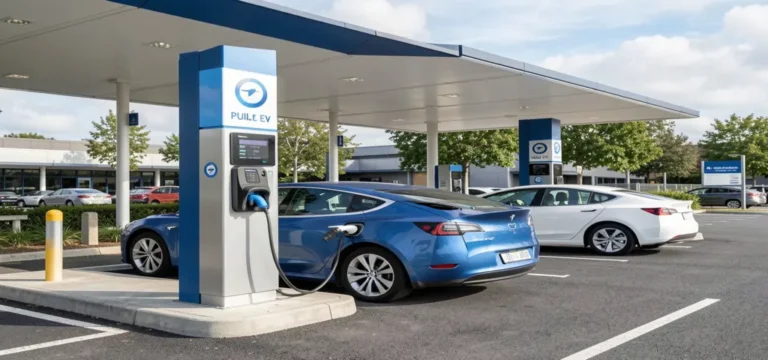
With ever-growing demand, the Level 2 charger market is also maturing fast. So much so that you get everything from smart charging models to rugged workhorses and even compact chargers optimized especially for small garages.
Now, as someone wanting to charge your EV at home, you’d definitely be looking for one of these Level 2 chargers and wondering what you should install?
And for those of you, I’ve put together the best home EV Level 2 charger models out there.
I’ve handpicked these chargers based on performance, user reviews, safety, and value.
Whether you’re charging a Tesla, a Rivian, a Hyundai, or anything else, these chargers are the best you can install in your home today.
So, let’s get started.
Key takeaways
- Level 2 chargers make home charging faster, safer, and more convenient.
- Your home’s electrical panel determines what charger you can install.
- Smart chargers on this list offer scheduling, energy tracking, and cost savings.
- 22-25 ft long charging cables give the best flexibility for parking.
- Outdoor setups need weather-rated chargers (NEMA 4 or higher).
- A 48A charger helps future-proof your home for larger EV batteries.
The 8 best home EV Level 2 charger units
1. ChargePoint Home Flex (50A)

This is the overall best home EV Level 2 charger out there. And it is ideal for every homeowner, notwithstanding your EV model.
In fact, ChargePoint’s Home Flex has been the default premium choice for years and it’s still one of the smartest and most flexible chargers you can buy.
Why is this charger on the list?
ChargePoint Home Flex offers a rare combination of high power, broad compatibility, excellent app features, and a trusted brand with real customer service. So, for homeowners wanting a reliable, future-proof option, this is an easy recommendation.
Specs and features
- Up to 50A (≈12 kW) of charging power
- Adjustable current: 16A-50A
- Options for NEMA 6-50, NEMA 14-50, or hardwire
- Long 23 ft cable
- Excellent Wi-Fi app that allows scheduling, energy tracking, and cost monitoring
- ENERGY STAR certified and UL listed
- Works with any EV brand
Why do EV owners like it?
ChargePoint’s app and hardware are both rock solid. This is also why users call it the Apple of EV chargers that’s intuitive, stable, polished.
It rarely glitches, and the charger delivers consistent amperage even in tough weather.
Potential downsides
- It needs a dedicated 40-50A circuit, which means older homes might require panel upgrades
- Charger settings must match your breaker size or it can throw warnings
The charger is best for:
- Homeowners wanting a fast, smart, long-term charger
- Anyone with multiple EV brands
- People who value reliability over bargain pricing

No More $10k Electrical Panel Upgrade to Charge Your EV at Home
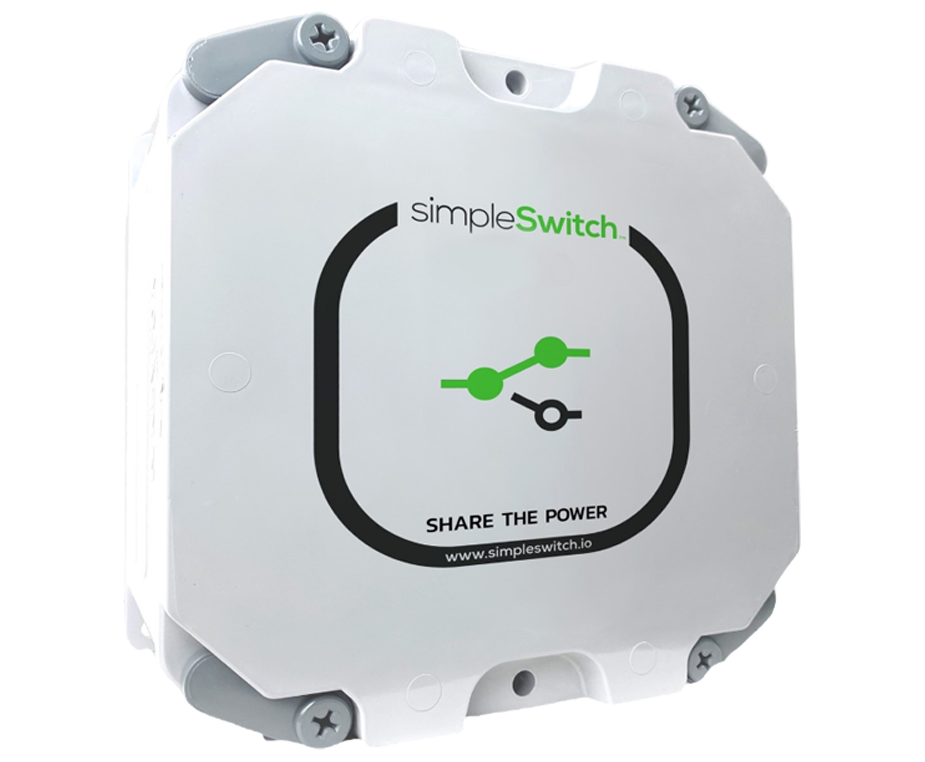
simpleSwitch lets you add a Level 2 EV charger to your home without an expensive electrical panel upgrade. Your EV charges safety without panel overload.
 30-day risk-free returns
- NEMA-rated
- Works with your existing panel
2. Emporia Level 2 (Classic/Pro, 48A)

This charger is indeed the best home EV charger Level 2 on a budget.
Emporia has become the sweetheart of smart home energy nerds. And for good reason as it delivers premium smart features at an unbeatable price.
Why is this charger on the list?
The charger offers solar integration, incredibly detailed usage stats, and dependable performance, all priced below $450.
That’s amazing, isn’t it?
Specs and features
- Up to 48A hardwired charging
- 40A on NEMA 14-50
- Comes in J1772 or NACS
- Full-featured app offering scheduling, off-peak charging, real-time energy monitoring, load management, and optional whole-home energy dashboard
- NEMA 4 weather rating
- UL certified
- Optional compatibility with solar systems for true excess-solar charging
Why do EV owners like it?
EV owners praise Emporia’s value and reliability. The charging app isn’t flashy, but it’s extremely functional, making it perfect for homeowners who want to understand their energy usage.
Potential downsides
- App design is focused on usefulness rather than looks or style
- Hardwired installation is slightly more technical than plug-in units
The charger is best for:
- Budget-conscious buyers who want smart features
- Homeowners with solar power
- Data lovers who want deep usage analytics
3. Wallbox Pulsar Plus (48A)

Pulsar Plus is hard to ignore for those homes where space is tight and you still want something that looks sleek and modern.
In fact, this is one of the best compact Level 2 EV chargers on the market right now. And it is perfect for those who are forced to plug EV into a regular outlet because of space constraints.
Why is this charger on the list?
Wallbox squeezes 48 amps of power into one of the smallest charger footprints on the market. Plus, its app integration is excellent.
Specs and features
- Available in 40A or 48A charging
- Built-in Wi-Fi and Bluetooth
- Adjustable amperage (6A-48A)
- Compact unit with size about 8″ square
- 25 ft durable cable
- Load sharing if you install two Wallbox units
- NEMA 4 weather rating and UL listing
- Works with Alexa and Google Assistant
Why do EV owners like it?
Homeowners love its simple, modern design and the powerful app. Also, the voice control is surprisingly convenient with Alexa and Google Assistant helping you start charging the car.
Potential downsides
- Needs a 60A breaker for 48A power
- Some users report occasional Wi-Fi quirks
The charger is best for:
- Small garages or tight wall spaces
- Homes planning for multiple EVs (as the charger’s oad sharing is excellent)
- Anyone who values design and technology working together
4. Grizzl-E Classic/Ultimate (40-48A)

Grizzl-E is the OG workhorse charger offering you the most durable & weatherproof EV charging at home.
These chargers are legendary in cold climates and harsh environments. After all, they are built like industrial equipment and not like smart home gadgets.
Why is this charger on the list?
This is by far the best outdoor EV charger.
Although there are no smart charging apps, this is a charger that will run forever, whether it is snow, rain, heat, and freezing temperatures, Grizzl-E is your answer.
Specs and features
- 40A (Classic) or 48A (Ultimate) charging available
- Thick, rugged 24-25 ft cable
- Heavy-duty aluminum housing
- Optional smart features available on Grizzl-E Ultimate
- Adjustable current
- No cloud features are required to use the charger
Why do EV owners like it?
People buy Grizzl-E for one reason, and that’s reliability. It doesn’t rely heavily on Wi-Fi or firmware updates.
This is an appliance, not a tech gadget, and that’s exactly what many EV owners want.
Potential downsides
- Classic model has no app for scheduling
- Cable is stiff in very cold climates
- It is heavier than most chargers
The charger is best for:
- Outdoor installations
- Harsh-weather climates
- Anyone who values durability over smart tech
5. Tesla Universal Wall Connector (48A)

Not only is Tesla’s Universal Wall Connector best for Tesla owners, it is also great for multi-EV homes. It is clean, minimalist, powerful, and tightly integrated into the Tesla experience.
Why is this charger on the list?
Tesla Universal Wall Connector is the best hardwired EV charger offering the most seamless home charging experience for Tesla drivers. And because Tesla now supports J1772/NACS universal compatibility, it works for non-Tesla EVs too.
Specs and features
- Up to 48A charging
- Hardwired only
- 24 ft premium cable
- Integrates with Tesla App (for Tesla owners)
- Elegant minimalist design
- High reliability and great build quality
Why do EV owners like it?
Tesla owners love the automatic charging, scheduled charging, and effortless cable ergonomics. Plus, the cable feels lighter and easier to handle than many third-party units.
Potential downsides
- The charger must be hardwired as there’s no plug-in option
- There are fewer advanced smart features compared to Emporia or Wallbox
The charger is best for:
- Tesla households
- Mixed EV households wanting NACS support
- People upgrading from Tesla Mobile Connector
6. Autel MaxiCharger Lite 50 (50A)

Autel is well known in commercial EV charging, and their home chargers bring that commercial-grade feel into residential setups.
So, if you want maximum power and smart features in one package, this is the best Level 2 charging station package for your home.
Why is this charger on the list?
If you want power and polish, Autel’s 50A model delivers both. Its app is clean and intuitive, and the hardware feels a lot more premium than most consumer gadgets.
Specs and features
- Up to 50A charging
- Smart app offers scheduling, monitoring, load balancing
- Rugged weather-resistant enclosure
- Long cable options
- LED design
Why do EV owners like it?
EV owners who use Autel appreciate its excellent cable management, strong build quality, and fast charging speeds.
Potential downsides
- Requires a high-capacity breaker
- Some features might be different depending on model configuration
The charger is best for:
- Homes with large EV batteries (Rivian, Mercedes, etc.)
- Buyers wanting both design and performance
- People planning multi-EV setups later
7. EVIQO Level 2 (48A)

EVIQO is truly the best high-amp charger at a value price. And it is one of those newer brands that’s gaining a lot of traction.
In fact, it is carving out a prime space in the EV charger market by offering high power and smart features at a great price point.
Why is this charger on the list?
It competes with players like Wallbox and Emporia, but usually at a lower price and without cutting major corners.
Specs and features
- Up to 48A charging
- Smart charger app offers scheduling, energy tracking, current control
- Weather-sealed enclosure
Why do EV owners like it?
Most feedback focuses on build quality and the value for the price. The units feel solid, and the app is simple but effective.
Potential downsides
- As a newer brand, rebate support might vary significantly compared to established players
- Plug-in vs. hardwired options differ by model, so double-check before buying
The charger is best for:
- Buyers wanting 48A performance without paying premium-brand prices
- Homes needing smart features but not luxury aesthetics
8. JuiceBox 48 (48A)
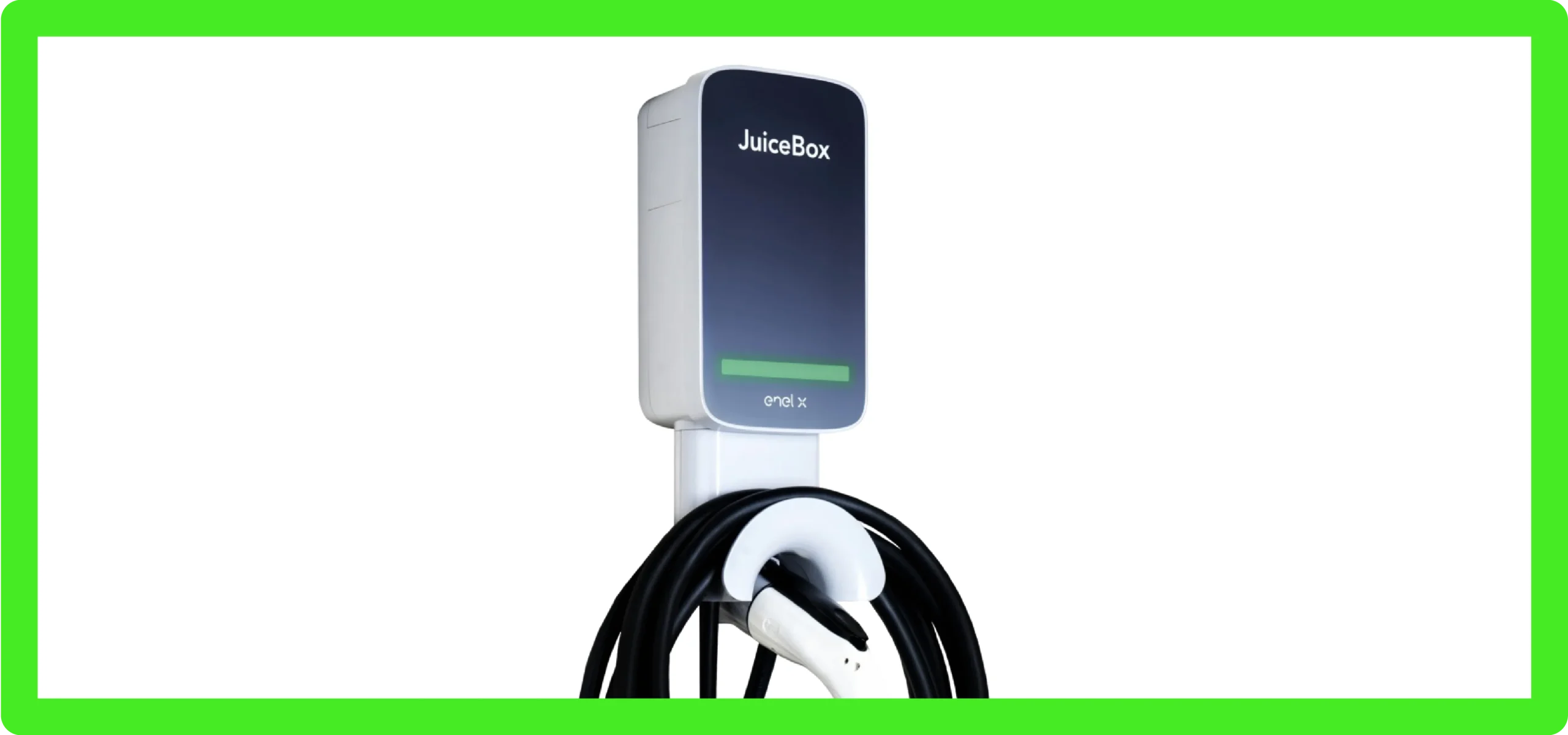
JuiceBox has been around for a long time and is one of the most recognized names in the EV charging space.
And it strikes a great balance between smart features, solid performance, and long-term reliability.
Why is this charger on the list?
JuiceBox 48 is the best home car charger for well-rounded charging with strong smart features, a reliable app, and proven performance over the years. It is a safe choice for homeowners who want something dependable without overthinking it.
Specs and features
- Up to 48A charging
- Hardwired installation
- 24 ft cable
- Wi-Fi-enabled smart charging via app
- Scheduling, notifications, and energy tracking
- UL certified and ENERGY STAR rated
- Works with most EV connectors via adapter
Why do EV owners like it?
JuiceBox has a strong track record, and users appreciate its consistent performance and solid app features. It’s not flashy, but it gets the job done reliably.
Potential downsides
- Hardwired only, so installation is a bit more involved
- App experience can feel slightly dated compared to newer competitors
The charger is best for:
- Homeowners who want a proven, no-nonsense smart charger
- People looking for a balance of features and reliability
- Buyers who prefer established brands over newer ones
TL;DR, here are the best home EV Level 2 charger models:
| Charger | Max Amps | Best For | Key Strengths | Potential Downsides |
| ChargePoint Home Flex | 50A | Most homeowners | Excellent app, reliable, future-proof | Needs strong circuit (40-50A) |
| Emporia Level 2 (Classic/Pro) | 48A | Best budget smart charger | Solar integration, detailed analytics | App is utilitarian, not stylish |
| Wallbox Pulsar Plus | 48A | Small garages | Compact, sleek, voice control | Occasional Wi-Fi quirks |
| Grizzl-E Classic/Ultimate | 40-48A | Harsh weather | Extremely durable, simple | No smart features (Classic) |
| Tesla Universal Wall Connector | 48A | Tesla + mixed EV households | Seamless Tesla integration, great build | Hardwired only |
| Autel MaxiCharger Lite 50 | 50A | High-power needs | Premium build, strong app | Needs high-capacity breaker |
| EVIQO Level 2 | 48A | High power at low price | Great value, solid build | Newer brand, rebate support varies |
| JuiceBox 48 | 48A | Proven reliability seekers | Trusted brand, solid app, dependable performance | Hardwired only, app feels dated |
How to choose the right Level 2 EV charger for your home?
With so many options out there, choosing the right EV charger can feel overwhelming.
But honestly, it comes down to just a few important things. Let me break them down for you:
1. Start with amperage
The first thing you need to check is how many amps your home and your car can handle.
For most homeowners 32A-40A EV charger is more than enough. And higher amperage, such as 48A, is great only if you want much faster charging.
Don’t just go for the highest number. Pick what actually fits your needs.
2. Plug-in vs hardwired charger
You’ll need to decide how you want the charger installed.
Plug-in chargers are easier to install and can be moved if needed
Hardwired chargers, at the same time, are more permanent, safer, and support higher power. And if you’re going for a charger above 40A, hardwired is usually the way to go.
3. Cable length matters more than you think
A 22-25 ft cable gives you flexibility in how you park your car.
Anything shorter can get annoying really fast, especially if you have multiple vehicles or a tight garage setup.
4. Smart features
Smart chargers let you:
- Schedule charging
- Track energy usage
- Help you save on electricity
They’re great if you want control and insights and are willing to pay a slightly higher electric car charger cost.
But if you just want something simple, a basic charger works fine too.
5. Indoor vs outdoor installation
If your charger is going outside, make sure it has:
- NEMA 4 (or better) weather rating
- Strong build quality
After all, not all chargers are built to handle rain, heat, or snow.
6. Think long-term
Your EV might change in a few years.
So ask yourself:
- Will I upgrade my car later?
- Will I add another EV?
If yes, going for a slightly higher-capacity charger now can save you money later.
At the end of the day, the best charger isn’t the most powerful one. It’s the one that fits your home, your car, and your daily routine.
You might also want to read: Is It Safe To Charge EV In The Rain?
No More $10k Electrical Panel Upgrade to Charge Your EV at Home
simpleSwitch lets you add a Level 2 EV charger to your home without an expensive electrical panel upgrade. Your EV charges safety without panel overload.
- 30-day risk-free returns
- NEMA-rated
- Works with your existing panel
Conclusion
By now, I am sure you’ve made your mind about which Level 2 charger is best suited for your home.
Now, before you go ahead and buy any of these chargers, remember that the right Level 2 home charger isn’t just about faster charging.
Instead, the right charger should be one that makes your EV fit smoothly into your daily life.
Got more questions or want to install a Level 2 EV charger without expensive electrical panel upgrades?
Well, that’s exactly what we help you do. An EV charger load management system like simpleSwitch lets you skip an electrical panel upgrade altogether and safely charge your EV at home while still using household appliances as normal.
Sounds awesome, doesn’t it?
FAQs about home EV Level 2 chargers
Do I need a 50A or 60A circuit for a Level 2 charger?
Not necessarily.
In fact, this is one of the biggest misconceptions about home charging.
Here’s how it really works:
- A 40A charger usually needs a 50A breaker
- A 48A charger typically needs a 60A breaker
- A 32A charger often works on a 40A breaker
But most modern smart chargers let you dial down the amperage so they work with whatever circuit you already have.
For instance, if you only have a 40A breaker available, you can set a 48A charger to operate at 32A or 40A instead. It will still charge overnight, just a bit slower.
Can scheduling my charging really save money?
Yes, and in many areas, the savings are surprisingly big.
Many utility companies have time-of-use (TOU) electricity rates, which means electricity costs are cheaper late at night and more expensive during the day or early evening.
If you charge during the cheapest hours (usually midnight–6am), you can save hundreds of dollars per year, especially if you drive a lot.
Smart chargers make this even easier as:
- You set a schedule in the app
- Your car starts charging only during off-peak hours
- You get the same full battery in the morning, but at a lower cost
Does Level 2 charging damage my EV battery?
No, Level 2 charging is very gentle on EV batteries.
It is DC fast charging that might harm your battery in the long run.
Here’s the important distinction between Level 2 vs Level 3 EV charging:
- DC fast charging can warm the battery and accelerate long-term wear if used constantly.
- Level 2 AC charging (what you install at home) is slow and battery-friendly. It’s actually the best way to charge daily.
So, using a Level 2 charger at home does NOT shorten your battery’s lifespan.
Can I install a Level 2 charger myself?
In most places, no.
Installing a Level 2 charger usually requires:
- A dedicated 240V circuit
- A correctly sized breaker
- Proper grounding
- Code-compliant wiring
- A permit (in many cities)
- Inspection after installation
- Knowledge of local electrical code
- Safe handling of high-current connections
Even plug-in chargers often require a licensed electrician to install the 240V outlet itself.
Why, you might wonder?
You see, electric vehicle chargers pull more continuous electricity than almost any other appliance. And a DIY mistake can:
- Overheat wiring
- Damage your panel
- Void your home insurance
- Create a fire hazard
- Fail inspection (which matters when you sell the home)
So, Level 2 EV chargers should always be installed by professionals.