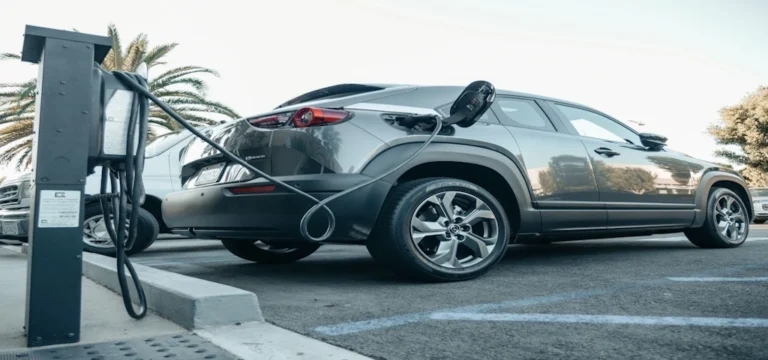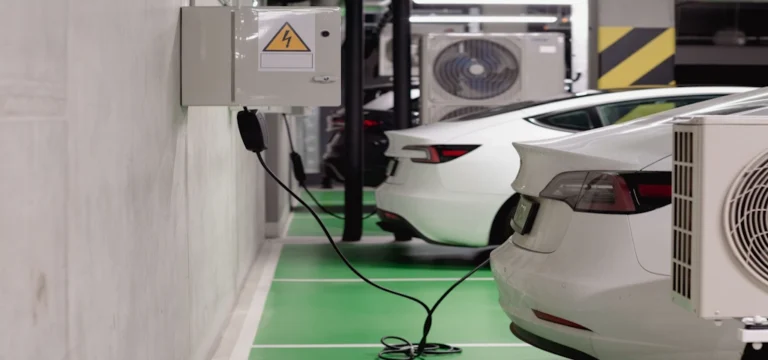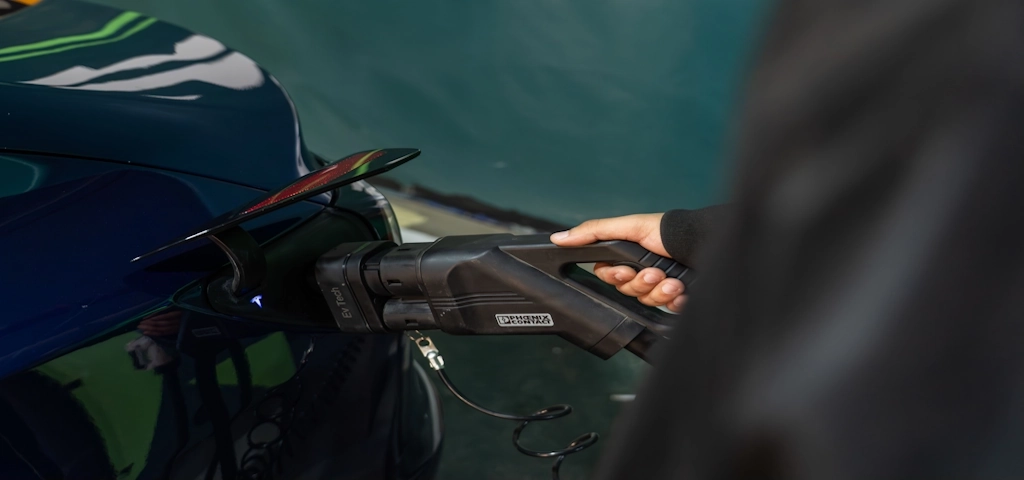
A lot of new EV owners, and some old ones, mistake an EVSE for an EV charger. And that is mainly because these two are used interchangeably at a lot of places.
But let me tell you there is an important technical difference between an EVSE and your EV’s onboard charger.
EVSE stands for Electric Vehicle Supply Equipment and it is the equipment that connects your EV to a power source for charging.
Also, an EVSE supplies AC power to your EV while also controlling the total power flowing in. Your vehicle’s onboard charger then converts this AC power to DC for EV charging.
Now, I know this might sound like a lot. But once you understand the basics of EVSE, you will also understand how home EV charging much more clearly.
That’s exactly why I have explained all things EV supply equipment in this blog, including how it works, different EVSE types, and more.
So, let’s look at things in detail.
Key takeaways
- EVSE stands for Electric Vehicle Supply Equipment.
- You might find EVSE called an EV charger or charging station at some places.
- EVSE supplies AC power and the vehicle’s onboard charger converts it to DC.
- Level 1 EVSE uses a standard 120V AC supply, while Level 2 EVSE uses a 208V-240V AC supply.
- EVSE has in-built electrical controls, safety equipment, connectors, and smart systems.
What is an electric vehicle supply equipment?
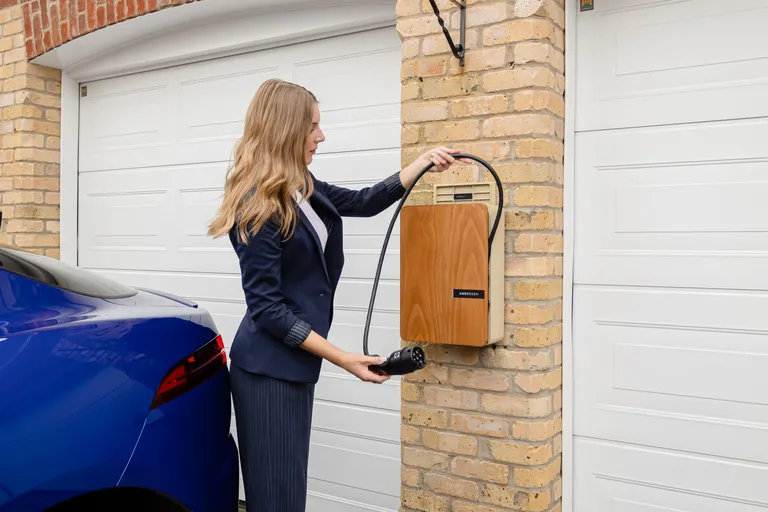
An electric vehicle supply equipment is the equipment that provides the electrical connection between the power source and your electric vehicle.
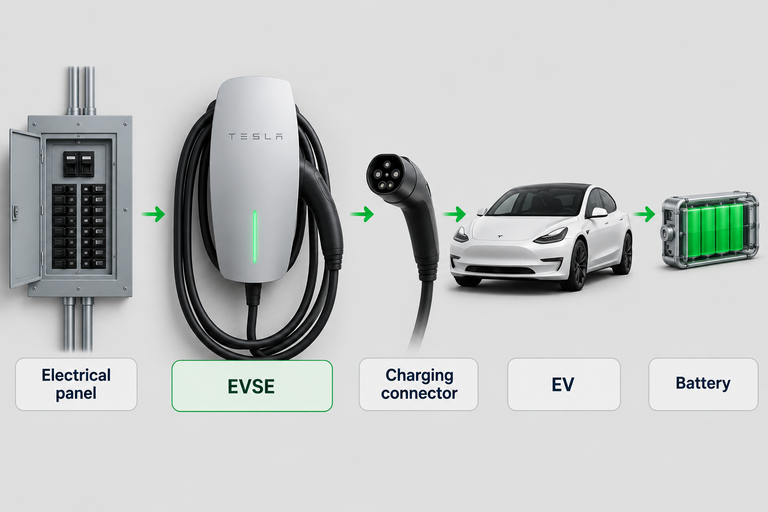
It sits between your electrical panel and EV connector, and controls the connection and power delivery to the EV. Also, it provides essential safety functions during EV charging.
Now, an EVSE is also something that people confuse with an EV charger. And that is mainly because a lot of online platforms use it interchangeably with chargers.
However, an EVSE is not the same thing as the onboard charger inside your EV.
You see, for both Level 1 or Level 2 charging, the EVSE supplies AC current to your EV. And your vehicle’s onboard charger converts that electricity into DC current.

No More $10k Electrical Panel Upgrade to Charge Your EV at Home
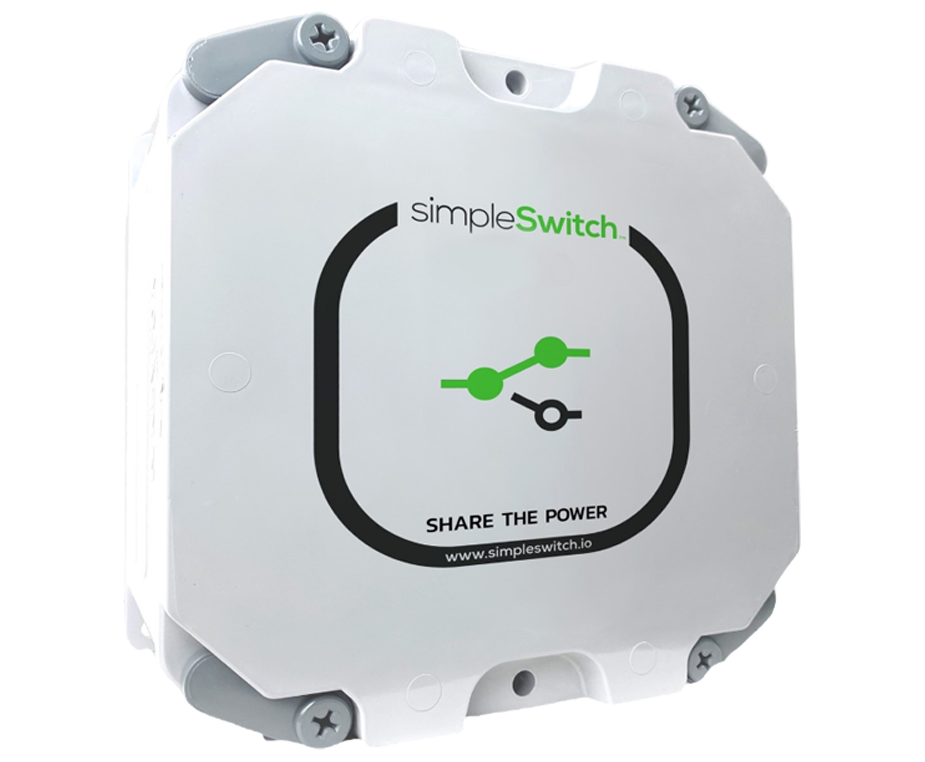
simpleSwitch lets you add a Level 2 EV charger to your home without an expensive electrical panel upgrade. Your EV charges safety without panel overload.
 30-day risk-free returns
- NEMA-rated
- Works with your existing panel
Here’s how an EVSE is different from your EV’s onboard charger:
| EVSE | Onboard charger |
| Connects the EV to the electrical supply | Located inside the EV |
| Controls and supplies AC power | Converts AC power to DC |
| Includes safety/control equipment | Sends converted power toward the battery |
| Located outside the vehicle | Part of the vehicle |
How does an EVSE work?
Although it might sound complicated at first, the working of an EVSE is simple.
First, electricity comes from your utility and reaches your home’s electrical panel. From there, electricity travels through the circuit to the EVSE.
Now, once your EV is connected, the EVSE communicates with the vehicle and controls the charging connection. Then, the electricity enters the EV as AC current and the onboard charger converts it to DC to charge the battery.
Also, modern EVSEs come with communication and networking capabilities. These features enable functions like charging schedules, remote monitoring, charger usage tracking, etc. In fact, as per Department of Energy, some EVSEs are outfitted with network connectivity and they can report the charge status to you.
What are the main components of EVSE?
An EVSE might look like a simple box mounted on your garage wall. But there are a lot of components inside it.
While the exact components depend on the type and model of your EVSE, most charging equipment includes a combination of power connections, control electronics, safety systems, charging cable and connector. The latest smart EVSEs also include communication and networking hardware.
Here are all the components that make up an EV supply equipment:
| EVSE component | What it does |
| Enclosure | Protects the internal electrical components |
| Power connection | Connects the EVSE to the electrical supply |
| Control electronics | Controls the charging process |
| Safety systems | Helps protect against electrical faults and unsafe conditions |
| Cable and connector | Provides the physical connection to the EV |
| Communication system | Allows the EVSE to communicate with the vehicle and, in smart systems, external networks |
Pro tip: For safety and in order to be code compliant, always use an electric vehicle supply equipment that meets the UL 2594 standards.
What are the different types of EVSE?
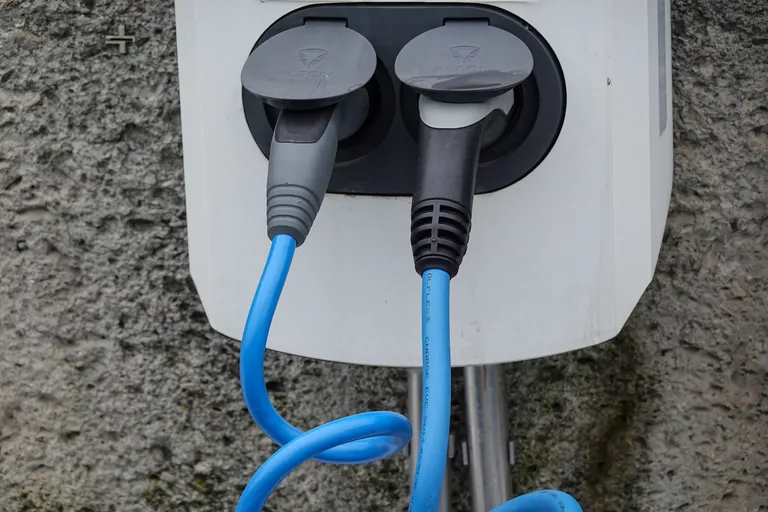
Just like there are three EV charging levels, there are also three EVSE types, Level 1, Level 2 or DC fast charging.
Here’s a detailed look at each of the EVSE types:
A. Level 1 EVSE
Level 1 EVSE uses a standard 120V AC household outlet to power the onboard EV charger. This is also the slowest EV charging method supplying just about 5 miles of range per hour to your EV.
B. Level 2 EVSE
Level 2 EVSE uses 208V or 240V AC and delivers a lot more power than Level 1 EVSE. At level 2, the equipment can provide roughly 2.9 to 19.2 kW power and help charge your EV fully in about four to eight hours.
C. DC fast charging EVSE
DC fast charging EVSE directly supplies DC current to your EV’s onboard charger. This is why the charging speed is much higher with EVs gaining up-to 80 percent battery in just about half an hour
What do you need for EVSE installation?
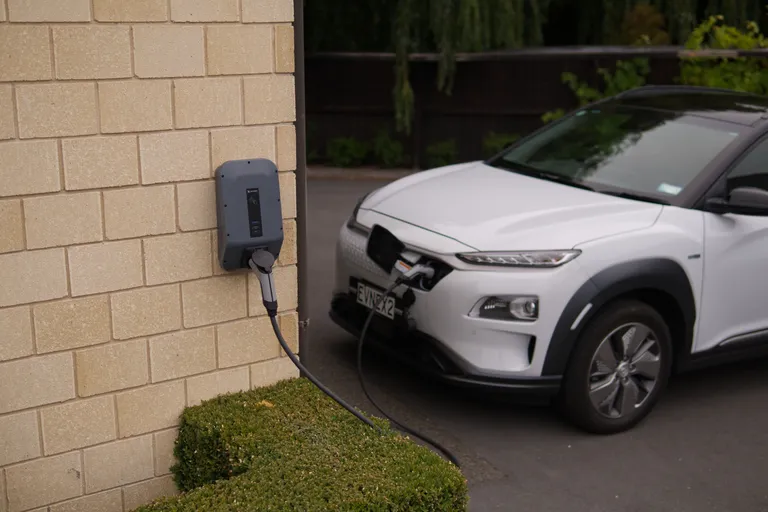
If you are installing a Level 1 EVSE, you don’t need any extra effort. Your home already has enough 120V outlets and the EVSE can connect to any of that using a NEMA 5-15 plug.
But if you are installing a Level 2 EVSE, your electrician will to check a few things like:
| Things to be checked | Why they need to be checked |
| Electrical service | Determines the overall capacity available |
| Existing electrical loads | Shows how much of that capacity is already being used |
| EVSE power rating | Determines the additional electrical demand |
| Circuit and breaker | Must be appropriate for the installation |
| Panel | Needs to be suitable for the installation |
| Wiring | Must be properly sized and rated |
| Installation location | Indoor and outdoor installations have different considerations |
| Local requirements | Permits and inspections might be needed |
What if your home’s electrical panel does not have enough capacity for EVSE?
Generally speaking, if your home’s electrical panel is short on capacity, an electrician might recommend expanding the panel capacity.
But this is also something that costs up-to $10,000. And you don’t always need it.
With a load sharing device like simpleSwitch, you can install an EVSE and safely use it with your existing electrical panel capacity.
Load sharing allows EV charging by sharing spare electrical power from other similar high-power appliances like dryer or induction cooktop. Here, the load sharing device can temporarily stop or reduce EV charging when the dryer is running and allow charging to resume when capacity becomes available
Now, that’s awesome, isn’t it?
FAQs about electric vehicle supply equipment
What does EVSE stand for?
EVSE stands for Electric Vehicle Supply Equipment. It is the equipment that connects an electric vehicle to an electrical power source and controls the delivery of electricity during charging.
Is EVSE the same as an EV charger?
The terms are commonly used interchangeably, but technically they are different. EVSE supplies AC current while the vehicle’s onboard charger converts it to DC for the battery.
What is Level 1 EVSE?
Level 1 EVSE uses a 120V AC electrical supply and is the simplest but slowest type of home EV supply equipment.
What is Level 2 EVSE?
Level 2 EVSE uses a higher-voltage AC supply, usually 208V or 240V, and provides much faster charging than Level 1.
Do I need an electrician for EVSE installation?
You might not need an electrician for a Level 1 EVSE. But for Level 2 EVSE, you will need an electrician to evaluate the electrical service, circuit, wiring and other installation requirements.
No More $10k Electrical Panel Upgrade to Charge Your EV at Home
simpleSwitch lets you add a Level 2 EV charger to your home without an expensive electrical panel upgrade. Your EV charges safety without panel overload.
- 30-day risk-free returns
- NEMA-rated
- Works with your existing panel
Final words
I am sure you now have a much better idea about electric vehicle supply equipment, including what EVSE means, how it works, and what to consider before installing one.
Now, if you are already out there looking for an EVSE, my suggestion is to not choose the fastest equipment out there. Do take into account your home’s electrical system and see if it can safely support the charging equipment.
And if your available capacity is limited, ask your electrician whether load management can be an option before investing in a big-ticket electrical upgrade is necessary.
Got more questions or want to install an EV energy management system?
You can get in touch with us!
At simpleSwitch, we EV energy management systems that are currently installed in homes and buildings across the country. Our EVEMS devices are UL-listed and proudly made in the USA.