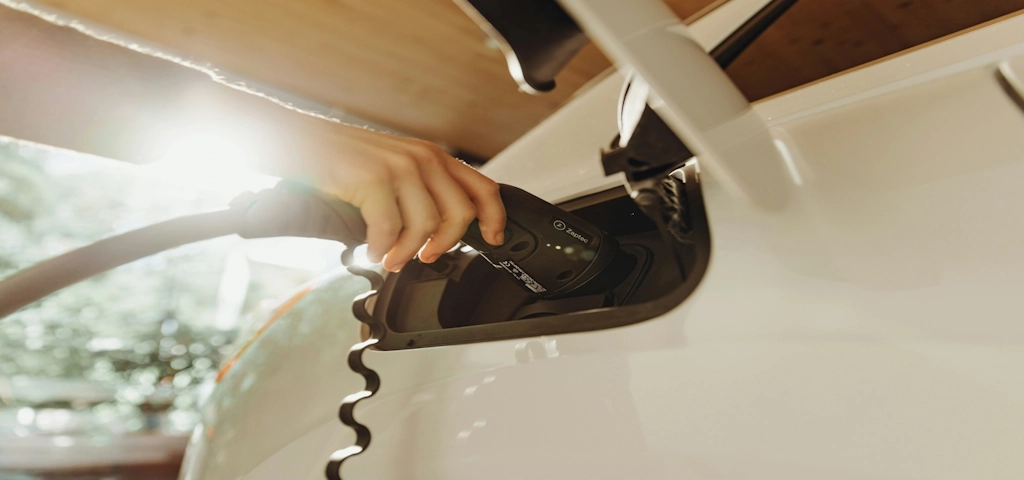
A majority of electric vehicles in the market today come with two EV charging connectors, namely NACS and CCS. So, if you’re planning to buy an EV, you might be curious which one is better.
For starters, most new EVs are now switching to NACS, making it the default EV connector across the country.
But then, millions of existing electric cars still use CCS. In fact, they are even able to access NACS-only public chargers with the help of an adapter.
In this blog, I have explained all the differences between NACS vs CCS connectors, including their charging speeds and compatibility with public chargers. Also, I have shared tips to help you figure out which connector makes the most sense for your EV.
So, let’s get started.
Key takeaways
- NACS is becoming the default charging standard in North America.
- CCS is still widely supported across public charging networks.
- Both connectors support AC home charging and DC fast charging.
- Charging speed depends more on your EV and the charger than the connector.
- Adapters make it easier to charge across different connector types.
What is the main difference between NACS vs CCS connectors?

For starters, both NACS and CCS are common EV charging connector standards you’ll find in North America. They’re the plugs that connect your electric vehicle to a charging station.
Both do the same job, i.e., charging your EV, but they have different designs and aren’t always directly compatible.
Also, whether you use a CCS vs NACS connector determines which charging stations you can plug your EV into directly and whether you’ll need an adapter for EV charging.
Let’s look at both the charging port types in detail to understand better.

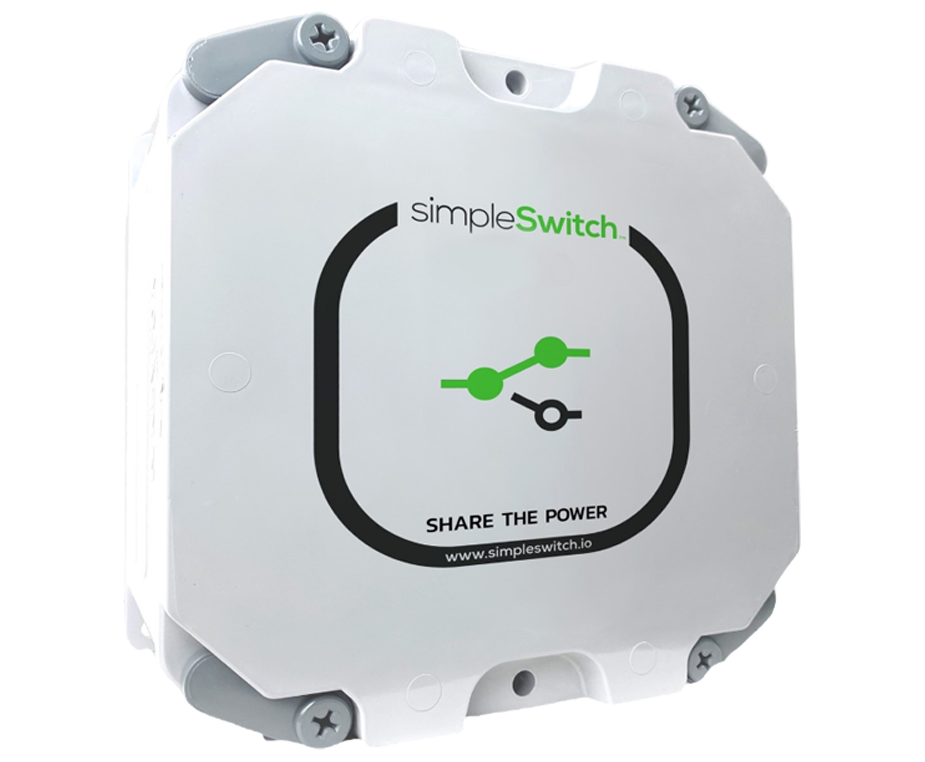
No More $10k Electrical Panel Upgrade to Charge Your EV at Home
simpleSwitch lets you add a Level 2 EV charger to your home without an expensive electrical panel upgrade. Your EV charges safety without panel overload.
 30-day risk-free returns
- NEMA-rated
- Works with your existing panel
What is NACS charging connector?
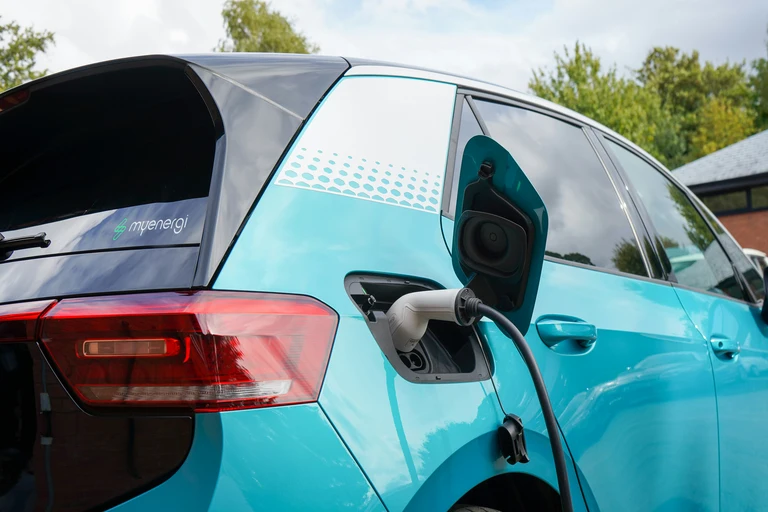
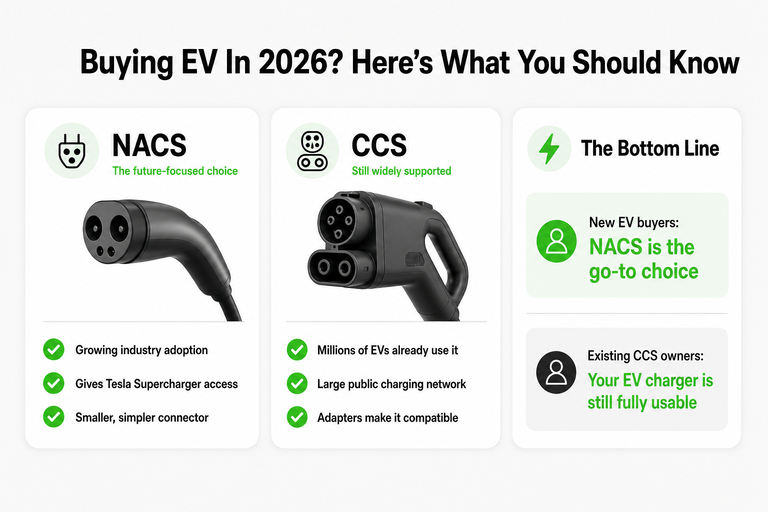
NACS stands for North American Charging Standard, and it is the charging connector originally developed by Tesla.
Unlike some other EV connectors, NACS uses a single compact port for both AC charging at home and DC fast charging on the road.
For years, it was used almost exclusively on Tesla vehicles. But that is changing quickly.
Most major automakers, including Ford, General Motors, Rivian, Volvo, Mercedes-Benz, Hyundai, Kia, Honda, and Toyota, have announced plans to adopt NACS for their North American EVs. In fact, some of their EVs with NACS charging ports have already hit the road.
One of the biggest reasons for this shift is access to Tesla’s extensive Supercharger network, which has built a strong reputation for reliability and ease of use.
This is also why people now consider NACS to be the future of EV charging throughout North America.
What is CCS charging connector?
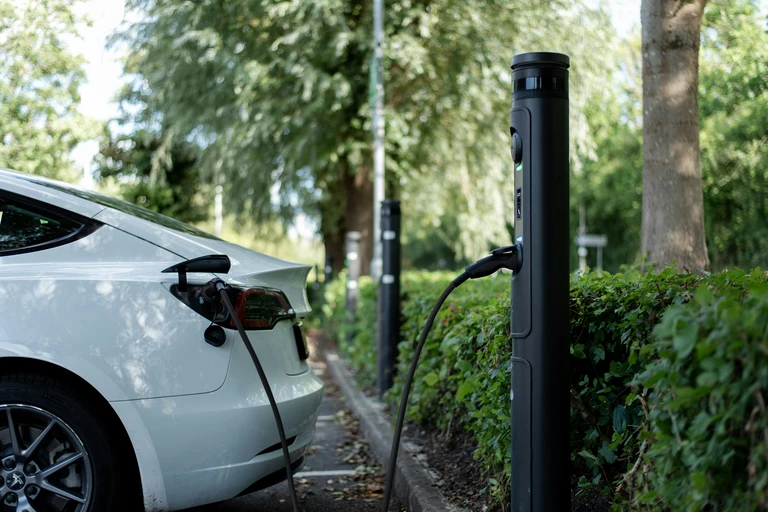
CCS, or Combined Charging System, has been the primary charging standard for most non-Tesla electric vehicles in North America for many years.
The connector combines a standard AC charging plug with two additional pins for DC fast charging, allowing the same vehicle port to support both types of charging.
If you’ve driven or owned an EV from brands like Volkswagen, BMW, Chevrolet, Hyundai, Kia, Ford, or Nissan, there’s a good chance it uses, or originally used, a CCS connector.
Even though automakers are transitioning to NACS, CCS is still one of the most widely supported charging standards across public fast-charging networks.
So, if your EV has a CCS charging port, there’s no reason to worry. You’ll continue to find plenty of places to charge, and adapter support is making compatibility even better as the industry evolves.
Which EVs use NACS?
When NACS was first introduced, it was almost exclusively a Tesla thing.
Every Tesla sold in North America, from the Model 3 and Model Y to the Model S and Model X, uses the NACS connector.
But things have changed quickly. Over the last few years, many major automakers have announced plans to switch their North American EVs from CCS to NACS.
Some of the most well known brands moving toward NACS include:
- Ford
- General Motors
- Rivian
- Volvo
- Mercedes-Benz
- Hyundai
- Kia
- Honda
- Toyota
- Volkswagen Group brands
That means more new EVs will come with a NACS charging port instead of CCS.
And this is important because your charging connector affects more than just the plug itself. It affects which public charging networks you can access, what adapters you need, and how easy charging feels during road trips.
Tesla also continues expanding access to its Supercharger network for compatible non-Tesla EVs, making NACS even more attractive for future EV owners.
Is NACS better than CCS?
The short answer: For people buying a new EV in 2026, NACS is likely the better choice.
And the reason isn’t because NACS charges faster. EV charging time anyways depends on your EV’s battery, charging hardware, and charger power output rather than the connector.
The bigger advantage of NACS is where the industry is going.
You see, buying an EV with NACS today is similar to choosing the charging standard that most manufacturers are building around for the future.
Here are the biggest reasons NACS has an advantage over CCS:
1. More automakers are adopting it
More EV manufacturers are moving toward NACS. And as adoption grows, you’ll likely see more NACS-equipped vehicles, home chargers, and public charging options.
2. Access to Tesla’s Supercharger network
One of the biggest advantages of NACS is access to Tesla’s charging ecosystem.
Tesla built one of the largest fast-charging networks in North America, and many automakers are moving toward NACS partly because their customers can benefit from this network.
3. Smaller and simpler connector design
The NACS connector is smaller and easier to handle compared to CCS.
For everyday charging, this might seem like a small thing. But when you’re plugging in your EV every day, a lighter and simpler connector can make the experience much more convenient.
Does that mean CCS EVs are a bad choice?
Not at all.
If you already own a CCS EV, you don’t need to worry.
CCS vehicles will continue to work, and adapters are helping bridge the gap between the two charging standards.
Millions of CCS EVs are already on the road, and charging networks will continue supporting them for years.
Also, the transition to NACS is not happening overnight. It is more like a gradual shift.
So if you already have a CCS vehicle, you can continue driving and charging normally.
But if you’re buying a new EV in 2026, NACS is the more future-ready option.
No More $10k Electrical Panel Upgrade to Charge Your EV at Home
simpleSwitch lets you add a Level 2 EV charger to your home without an expensive electrical panel upgrade. Your EV charges safety without panel overload.
- 30-day risk-free returns
- NEMA-rated
- Works with your existing panel
NACS vs CCS: Which one should you choose in 2026?
Here’s a simple answer:
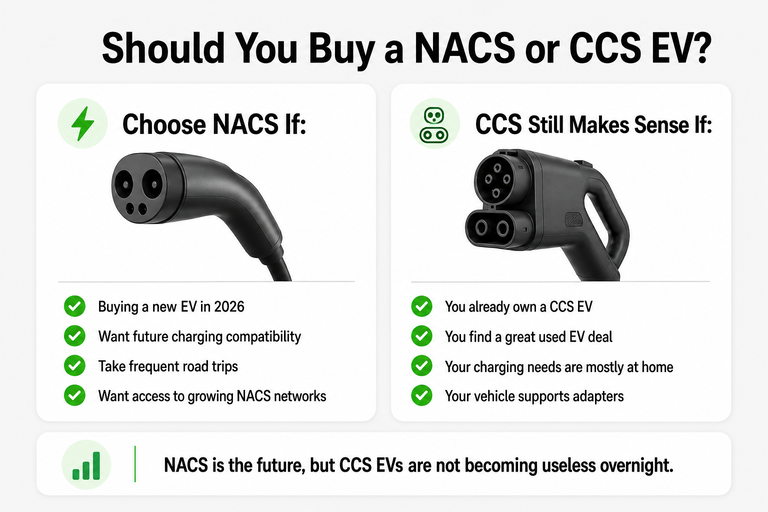
| Situation | Better choice |
| Buying a new EV | NACS |
| Already own a CCS EV | Keep using CCS |
| Want maximum future compatibility | NACS |
| Need a used EV at a good price | CCS can still make sense |
| Mostly charge at home | Either works |
If you’re buying a brand-new EV today, choose one with a NACS charging port as it will give you the smoothest EV experience over the next several years. Also, if you own or manage an EV fleet, NACS ports is where you should invest for seamless EV fleet charging.
You will be aligned with where the market is heading, and you will have access to a growing charging ecosystem, and you’ll likely need fewer adapters in the future.
Final words
I am sure that you now have a much better idea about the difference between NACS vs CCS and what it means for everyday EV owners.
The good part is that you don’t need to overthink charging connectors. Both NACS and CCS can charge your EV at home and at public charging stations.
But if you’re buying a new electric vehicle in 2026, choose NACS because it is clearly becoming the direction the industry is moving toward.
Got more questions or want to install a Level 2 EV charger without upgrading your electrical panel?
You can get in touch with us!
At simpleSwitch, our award-winning made-in-the-USA EV energy management systems help homeowners safely install EV chargers without unnecessary electrical upgrades.
simpleSwitch intelligently manages power between your EV charger and other high-load appliances like dryers, ovens, and induction cooktops.
This saves up to $5,000 in unnecessary electrical upgrades while still enjoying fast, reliable EV charging at home.
FAQs about NACS vs CCS
What is CCS charging?
CCS, or Combined Charging System, is an EV charging connector standard used by many non-Tesla electric vehicles.
It combines AC charging and DC fast charging into one vehicle port, allowing EV owners to charge at home and at public fast-charging stations.
CCS has been one of the most common charging standards in North America for many years, although many automakers are now moving toward NACS.
Is NACS better than CCS?
For most people buying a new EV in 2026, NACS is likely the better choice because it is becoming the dominant charging standard in North America.
However, CCS is still a capable charging system and will continue to support existing EV owners for years.
Which EVs use NACS?
All Tesla vehicles use NACS.
Also, many automakers including Ford, GM, Rivian, Volvo, Mercedes-Benz, Hyundai, Kia, Honda, Toyota, and Volkswagen have announced plans to adopt NACS for their North American EVs.
As a result, more new EVs will come equipped with NACS charging ports in the future.
Can Tesla use CCS chargers?
Yes.
Tesla vehicles can use many CCS fast chargers with a Tesla-approved CCS adapter, as long as the vehicle supports CCS charging.
Tesla owners can also access some non-Tesla charging networks using compatible adapters.
Will CCS disappear?
No, not anytime soon.
While NACS is becoming the preferred standard for new EVs, millions of CCS vehicles are already on the road.
Charging networks will continue supporting CCS, and adapters will help bridge compatibility between the two systems.
The transition to NACS will happen gradually.
Can I install a Level 2 NACS charger at home?
Yes.
A Level 2 NACS charger works just like other home EV chargers. It uses a 240-volt electrical connection to provide faster charging than a standard household outlet.
If you own a Tesla or a newer EV with a NACS port, a Level 2 NACS charger can be an excellent option for overnight home charging.
However, before installation, you should make sure your home’s electrical system can support the additional load. And if it can’t, you can ask your electrician to install a load management device like simpleSwitch to safely support EV charging.
Do I need an adapter if my EV has CCS?
It depends on the charging station you want to use.
A CCS EV might need an approved adapter to access certain NACS charging stations, including compatible Tesla Superchargers.
Similarly, NACS vehicles will also need adapters to use some CCS charging stations.