So, you’ve decided to install a Level 2 EV charger at home. You’ve picked the right charger and also figured out where to mount it.
But there is one thing you still need to figure out: The wire size that you need.
Check it up online, and you will come across recommendations for 6 AWG, 8 AWG, or even 4 AWG wires. And this only makes things more confusing.
So, how do you choose the right EV charger wire gauge?
To begin with, you’ll have to factor in your EV charger’s amperage, breaker rating, type of wire, installation method, distance from the electrical panel, and manufacturer’s specifications. This is important because a wrong combination of any of these can cause overheating, voltage drop, and a generally unsafe installation.
Read on, as I have explained everything about how to choose the right wire size for your EV charger in detail.
Key takeaways
- There isn’t one universal wire gauge for every EV charger. The correct size depends on charging current, circuit rating, conductor material, and installation conditions.
- EV charging is treated as a continuous load, and the circuit is sized at 125% of the charger’s maximum current.
- Copper, aluminum, NM-B, and THHN/THWN-2 conductors have different ampacity characteristics.
- Longer wire runs, temperature, conduit conditions, and terminal ratings all affect the required conductor size.
- Always check your EV charger’s installation manual and applicable local electrical code before selecting wire.
What is the right wire gauge for an EV charger?
The right wire gauge for an EV charger depends on its charging current, circuit breaker size, wire type, and installation conditions.
Under NEC Section 625.41, EV charging is treated as a continuous load. This means the circuit must be sized at 125% of the charger’s maximum charging current. Here’s what this means:
| EV Charger Current | Minimum Circuit Rating |
| 32 amps | 40 amps |
| 40 amps | 50 amps |
| 48 amps | 60 amps |
So, a 48-amp EV charger usually requires a 60-amp circuit.
But what about the wire size?
A 6 AWG copper conductor will be suitable for this circuit. But only when you use an appropriate wiring method, such as THHN/THWN-2 in conduit; and when the equipment terminal ratings and installation conditions permit it.
Also, the same wire gauge will not be suitable with every cable type. That’s why you need to consider more than just the breaker size when choosing the right wire size.
To determine the right wire gauge size, I personally factor in the charger being installed, how much current it is going to draw, what type of wire is being used.

No More $10k Electrical Panel Upgrade to Charge Your EV at Home
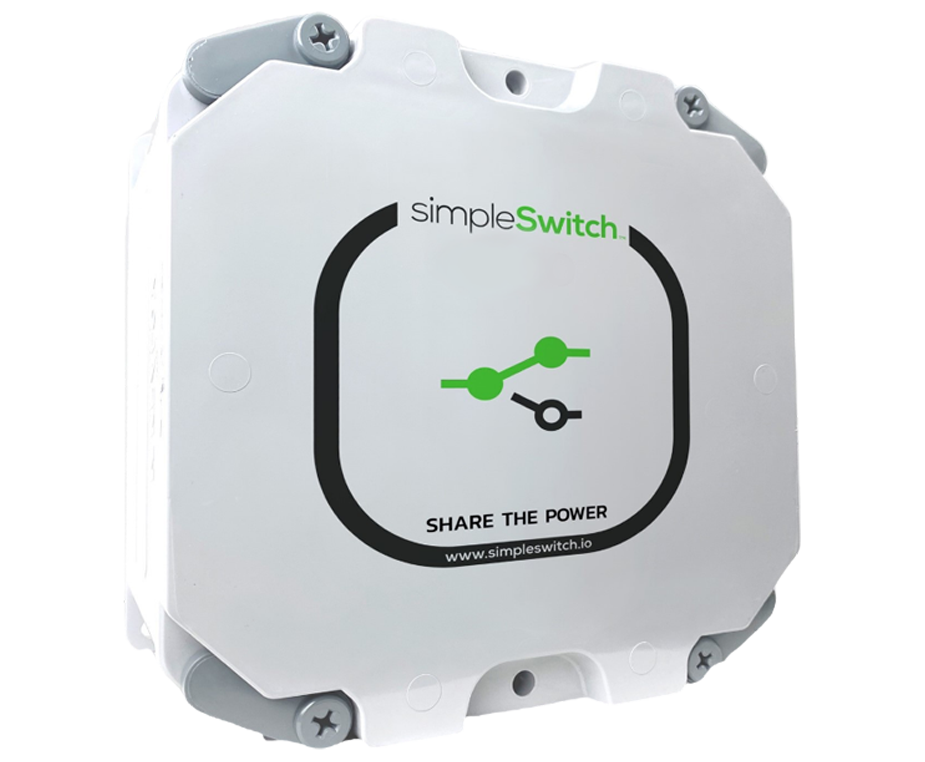
simpleSwitch lets you add a Level 2 EV charger to your home without an expensive electrical panel upgrade. Your EV charges safety without panel overload.
 30-day risk-free returns
- NEMA-rated
- Works with your existing panel
EV charger wire gauge depends on breaker size, here’s how:
The EV charger breaker and wire gauge always have to be sized together. Here’s how they are typically sized in residential Level 2 EV charger installations:
| Charger Output | Circuit Breaker | Typical Copper THHN in Conduit | Typical Copper NM-B |
| 32 amps | 40 amps | 8 AWG | 8 AWG |
| 40 amps | 50 amps | 8 AWG | 6 AWG |
| 48 amps | 60 amps | 6 AWG | 4 AWG |
Note: These are illustrative examples based on typical residential installations. THHN examples assume copper conductors, suitable 75°C-rated equipment terminals, and no additional ampacity adjustments. NM-B cable is subject to the 60°C ampacity limitation.
Actual wire size requirements can vary depending on installation conditions, conductor specifications, terminal ratings, and applicable local electrical codes. Always check your EV charger’s installation manual and consult with a qualified electrician before selecting wire.
What size wire gauge do you need for a 40-amp EV charger?
A 40-amp EV charger requires a 50-amp circuit because of the 125% continuous-load calculation.
Here, with suitable 75°C-rated terminals, 8 AWG copper THHN in conduit is a common choice.
However, if you’re using NM-B cable, 6 AWG copper is the right starting point because of its lower applicable ampacity rating.
What size wire gauge do you need for a 48-amp EV charger?
A 48-amp EV charger requires a 60-amp circuit. Here, for a typical conduit installation using 75°C-rated copper THHN conductors and suitable equipment terminals, 6 AWG copper is a common option.
But here’s where homeowners can get caught out: 6 AWG copper NM-B isn’t suitable for the same 60-amp circuit. Its ampacity is limited to the 60°C column, where 6 AWG copper is rated at 55 amps. You will need a larger conductor, such as 4 AWG copper NM-B, in this case.
What size wire gauge do you need for a 32-amp EV charger?
A 32-amp EV charger requires a 40-amp circuit because of the 125% continuous-load calculation.
With suitable 75°C-rated equipment terminals, 8 AWG copper THHN in conduit is a common choice for this charger.
An 8 AWG copper NM-B is also suitable for this circuit. In fact, this is a noticeable difference between 32-amp vs 40-amp EV chargers where the former offers more uniformity in terms of wire size.
My take: I have seen people (mostly DIYers) compare two cables that are both marked 6 AWG and assume they’re interchangeable. But the insulation, cable type, temperature rating, and installation method are all just as important. That’s why I always look at the actual wire specifications before deciding whether it’s suitable for a charger or not.
What is the difference between copper, aluminum, NM-B, and THHN wire?
When choosing an EV charger wire gauge, you need to look beyond the AWG number. The conductor material and insulation type also affect how much current the wire can safely carry.
Let me break down the common wire gauge options for you along with how they all differ.
1. Copper vs. aluminum wire
Copper and aluminum are both used in electrical installations, but they have different electrical properties.
Copper has higher conductivity, so a smaller copper conductor can generally carry the same current as a larger aluminum conductor.
Aluminum, on the other hand, is lighter and can be less expensive for certain installations, but it requires appropriately rated terminals and connectors.
For most residential EV charger installations, copper is a go-to choice. However, aluminum can also be suitable when the charger and electrical equipment are specifically rated for it.
2. NM-B cable (Romex)
NM-B, commonly called Romex, is a sheathed cable frequently used for residential wiring inside walls and other permitted dry locations.
Here’s an important thing you should know about NM-B: Under NEC 334.80, NM-B ampacity is limited to the 60°C column, even though its individual conductors might have insulation rated for higher temperatures.
That’s why 6 AWG copper NM-B and 6 AWG copper THHN don’t necessarily have the same usable ampacity.
3. THHN/THWN-2 wire
THHN/THWN-2 consists of individual insulated conductors commonly pulled through conduit. These wires have a 90°C insulation temperature rating, although the final allowable ampacity might be limited by the equipment terminals and other installation conditions.
For instance, a 6 AWG copper THHN conductor has a higher ampacity in the 75°C column than 6 AWG copper NM-B has under its 60°C limitation.
Overall, here’s how all of these wire gauges compare:
| Wire Type | Common Application | Important Consideration |
| Copper | Residential EV circuits | Higher conductivity |
| Aluminum | Suitable larger circuits | Requires compatible terminals |
| NM-B | Residential wiring inside permitted locations | 60°C ampacity limitation |
| THHN/THWN-2 | Individual conductors in conduit | Terminal ratings are essential |
What factors affect EV charger wire size?
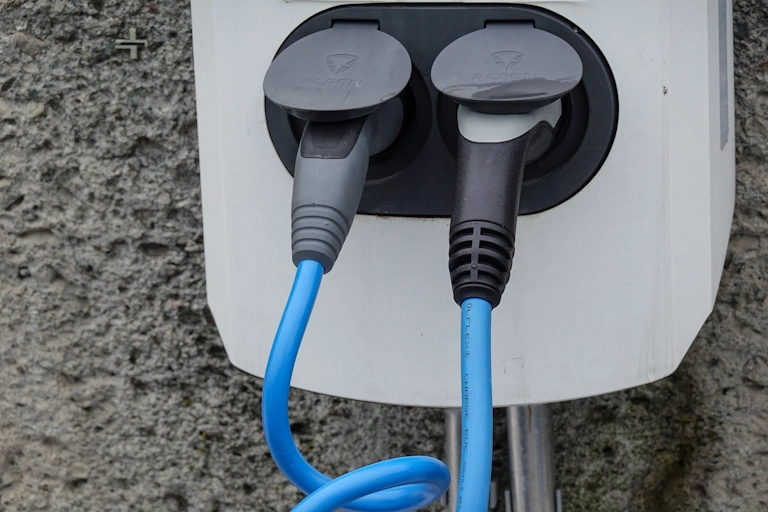
Even after you’ve worked out the electrical requirements for EV charger, such as current and circuit breaker rating, there’s still more to consider. The distance between your electrical panel and the charger, installation conditions, and equipment specifications can all affect the final wire size.
Here are some of the most important factors that affect EV charger wire size:
1. Distance between the electrical panel and EV charger
The longer the wire run, the more electrical resistance the current encounters. This can cause voltage drop, meaning the charger receives slightly less voltage than what’s supplied at the panel.
For a short run, the minimum conductor size that meets ampacity requirements can be sufficient. But if you’re installing a charger in a detached garage or at the far end of your property, a larger wire might be worth considering.
2. Ambient temperature and conduit conditions
Wires installed in hot environments might need to be derated. The same applies when multiple current-carrying conductors are bundled together in a conduit.
For instance, an installation running through a hot attic might have different conductor-sizing considerations from one installed in a cooler garage.
3. Charger and breaker terminal ratings
This is another detail homeowners often overlook. The temperature rating of the charger’s terminals and circuit breaker can limit the usable ampacity of the wire.
Even if a conductor has 90°C-rated insulation, you cannot use its 90°C ampacity when selecting the final wire size.
Should you install a larger wire for future EV charging?
If you’re installing an EV charging circuit, my advice is to also consider what you might need a few years from now.
For instance, you might need to upgrade from a 32-amp charger to a 48-amp model, buy a second electric vehicle, or move the charger to a different location. If you plan these things ahead, it can save you from expensive electrical work later.
It doesn’t mean you should install the largest possible wire right now. Here’s what you should do instead:
- Choose the conduit with future needs in mind: If you’re installing conduit during construction or a garage renovation, a larger raceway can make it easier to pull additional or larger conductors later.
- Leave room for future electrical work: Consider available panel spaces and whether your home might eventually need another EV charging circuit.
- Don’t oversize conductors blindly: A larger wire must still fit the charger’s terminals and comply with the equipment’s specifications and applicable electrical code.
Pro tip: You might not need a 48-amp charger at all. If you park your EV overnight and drive a moderate distance each day, a lower charging rate can comfortably meet your needs.
You might also want to read: How Much Does It Cost To Upgrade To 200 Amp Service?
FAQs about EV charger wire gauge
What gauge wire do I need for a 48-amp EV charger?
A 48-amp EV charger generally requires a 60-amp circuit. A common option is 6 AWG copper THHN in conduit when the installation conditions and terminal ratings permit it. NM-B cable might require a larger conductor.
Is 6 AWG wire enough for a 60-amp EV charger?
It can be, depending on the conductor type and installation. For instance, 6 AWG copper THHN might be suitable with appropriate 75°C-rated terminations, but 6 AWG copper NM-B has a 55-amp ampacity under its 60°C limitation.
Can I use 6/2 Romex for an EV charger?
It depends on your charger’s requirements and circuit design. Six AWG NM-B copper has a 55-amp ampacity under the 60°C limitation, so it isn’t automatically suitable for a 60-amp circuit. The charger manual and applicable electrical code must be checked.
Is copper or aluminum wire better for an EV charger?
Copper is commonly used because it offers higher conductivity for a given conductor size. Aluminum can also work when the charger and electrical equipment have compatible terminals and the conductors are correctly sized.
Does a longer wire run require a larger gauge?
Not always, but a longer run can increase voltage drop. An electrician will need to increase the conductor size to keep voltage drop within recommended limits while also meeting ampacity requirements.
Can I use 8 AWG wire for a 40-amp EV charger?
It might be suitable in certain installations, such as a properly designed conduit installation using copper conductors and appropriate terminal ratings. However, 8 AWG NM-B has a different ampacity limitation, so the wiring method is equally important.
No More $10k Electrical Panel Upgrade to Charge Your EV at Home
simpleSwitch lets you add a Level 2 EV charger to your home without an expensive electrical panel upgrade. Your EV charges safety without panel overload.
- 30-day risk-free returns
- NEMA-rated
- Works with your existing panel
To sum up
As you can see, choosing the right EV charger wire gauge involves more than matching a wire to a breaker. You need to consider charging current, conductor material, insulation type, installation conditions, wire distance, and the charger’s specifications.
That’s why I always recommend having a qualified electrician evaluate the complete installation rather than relying on a generic wire-size chart.
Got more questions about EV charger wire gauge or concerned if your home’s electrical panel can’t handle the additional demand of EV charging?
You can get in touch with us!
At simpleSwitch, our state-of-the-art load management devices help you seamlessly charge EV at home using a Level 2 charger, even if your electrical panel capacity is limited. This saves you thousands of dollars in unnecessary electrical panel upgrades.
Our load management devices are all UL-listed and made in the USA.